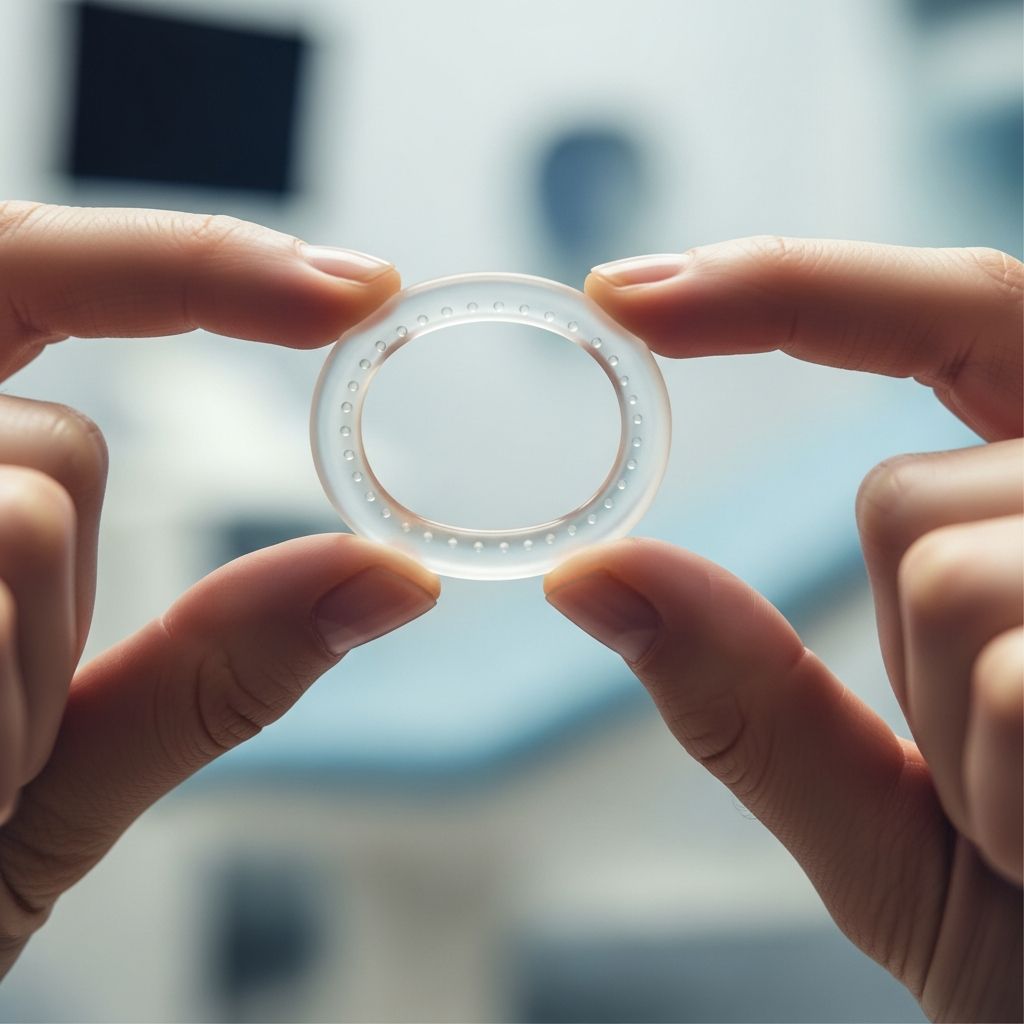
The vaginal birth control ring is a small, flexible device that you place inside your vagina to prevent pregnancy. It slowly releases hormones into your body and offers month-long protection when used correctly. This guide explains what the ring is, how it works, and what you should know before deciding if it is right for you.
What Is a Vaginal Birth Control Ring?
A vaginal birth control ring is a thin, flexible plastic ring that sits in the vagina and releases hormones similar to those in many birth control pills.
- Size: About 2 inches (5–6 cm) across, soft and bendable.
- Hormones: Contains an estrogen and a progestin, like combined birth control pills.
- Common brands: NuvaRing (and its generics) and Annovera.
- Prescription only: You need a healthcare provider to prescribe it.
The ring is not a barrier like a condom. You cannot feel it doing anything, but it is working in the background by releasing a steady, low dose of hormones into your bloodstream.
How Does the Ring Prevent Pregnancy?
The hormones in the ring prevent pregnancy in a few ways at the same time:
- Stops ovulation: The main effect is preventing your ovaries from releasing an egg.
- Thickens cervical mucus: The mucus at the opening of the uterus becomes thicker, making it harder for sperm to swim through.
- Thins the uterine lining: The lining of the uterus becomes thinner, so an egg is less likely to implant if fertilization did happen.
Because it uses more than one mechanism, the ring is considered a highly effective reversible method of birth control when used correctly.
Types of Vaginal Rings and How Long They Last
Two main types of hormonal rings are commonly used:
| Type | What it contains | How long you reuse it | Typical schedule |
|---|---|---|---|
| NuvaRing / generic ENG/EE ring | Etonogestrel + ethinyl estradiol | New ring every month | Ring in for 3 weeks, out for 1 week |
| Annovera (SA/EE ring) | Segesterone acetate + ethinyl estradiol | Same ring reused for 1 year (13 cycles) | Ring in for 3 weeks, out for 1 week |
Some people use the ring continuously (back-to-back) to skip periods, but you should only do this with guidance from a healthcare provider.
How Effective Is the Vaginal Ring?
Effectiveness depends on how consistently you use the ring as directed.
- Perfect use: Studies show the ring can prevent over 97–99% of pregnancies when used exactly as instructed.
- Typical use: In real life, with the occasional mistake, effectiveness is closer to about 91–93%.
Research using Pearl Index calculations (pregnancies per 100 women per year) has found low failure rates for rings when used properly, confirming that they are highly effective, user-controlled methods.
Remember: the ring does not protect against sexually transmitted infections (STIs). You still need condoms for STI protection.
How to Use the Ring Step by Step
Your exact start day might be different depending on where you are in your cycle and whether you recently used another form of birth control. Always follow the instructions from your healthcare provider and the product insert.
1. Getting Ready
- Wash and dry your hands.
- Check that the ring is in its sealed package and not damaged.
- Find a comfortable position: many people squat, lie down, or stand with one leg raised.
2. Inserting the Ring
- Gently pinch the ring between your thumb and finger to make it more narrow.
- With your other hand, gently separate the labia (folds of skin around the vaginal opening).
- Guide the folded ring into the vagina and push it upward as far as it will comfortably go.
- Once inside, it will usually sit above the pelvic floor muscles and stay in place.
There is no single “perfect” spot inside the vagina. As long as the ring is fully inside, it should work.
3. Wearing the Ring
- Keep the ring in place for 21 days in a row (unless your provider suggests a different schedule).
- You can leave it in during daily activities, including sports, bathing, and sleep.
- The ring can usually stay in during vaginal sex or tampon use; these do not reduce its effectiveness.
4. Removing the Ring
- Wash and dry your hands.
- Insert one finger into the vagina and hook it under the ring.
- Gently pull the ring out.
For monthly rings like NuvaRing, you usually remove it on the same day of the week that you inserted it, three weeks later. Then you take a 7-day ring-free break, when you may have withdrawal bleeding similar to a period.
5. Starting the Next Cycle
- Monthly rings: After 7 days without a ring, insert a new one, even if you are still spotting.
- Year-long ring (Annovera): Wash and dry the same ring as instructed, store it briefly, then reinsert after the 7-day break.
Delays longer than 7 days without a ring can lower your protection and may require backup contraception or emergency contraception, depending on timing.
What If the Ring Comes Out or You Make a Mistake?
Mistakes happen. Here are general principles, but you should always check the specific instructions and talk with a provider if you are unsure.
- Ring out for less than 3 hours: Rinse it in cool to lukewarm water and put it back in as soon as possible. You should still be protected.
- Ring out for more than 3 hours (or you forgot to replace it on time): Your protection may be lower. You may need to use condoms for 7 days and, depending on when this happened in your cycle and whether you had sex, consider emergency contraception.
- Forgot to insert a new ring after the 7-day break: Insert it as soon as you remember. Use backup contraception and ask a provider if you need emergency contraception.
Because incorrect use clearly raises the risk of pregnancy, clear counseling and reminders (like phone alarms) are important for teens.
Benefits of the Vaginal Ring
Many people choose the ring because it combines strong pregnancy protection with convenience and cycle control.
- No daily pill: You only need to think about it a few times a month instead of every day.
- Highly effective: When used correctly, effectiveness is similar to other combined hormonal methods.
- Predictable periods: Many users have more regular, lighter, and less painful bleeding.
- Non-contraceptive benefits: Like combined pills, the ring may help with acne, menstrual cramps, heavy bleeding, and symptoms of PMS for some users.
- Discreet: The ring is inside the body and usually cannot be seen. Many partners cannot feel it, or do not mind it.
- Reversible: Fertility generally returns quickly after stopping the ring.
Studies report high satisfaction among ring users, with most saying it is easy to insert and remove and that they would recommend it to others.
Possible Side Effects and Risks
Like any hormonal birth control, the ring can have side effects. Many are mild and improve after a few cycles.
Common Side Effects
- Nausea or upset stomach
- Breast tenderness
- Headache
- Spotting or irregular bleeding between periods
- Vaginal irritation or increased discharge
- Changes in mood or libido
If side effects are severe or do not improve, your provider may suggest switching to a different method.
Serious but Less Common Risks
Because the ring contains estrogen, it carries similar rare but serious risks as combined birth control pills:
- Increased risk of blood clots (venous thromboembolism)
- Stroke or heart attack in those with certain risk factors
- Very high blood pressure in some users
These events are uncommon in healthy young people, but the risk is higher if you:
- Smoke cigarettes, especially after age 35
- Have a history of blood clots, stroke, or certain heart conditions
- Have migraine with aura
- Have uncontrolled high blood pressure or certain clotting disorders
Your healthcare provider will review your medical history to make sure an estrogen-containing method is safe for you.
Who Might Consider Using the Ring?
The ring can be a good option for teens and young adults who:
- Want reliable pregnancy prevention
- Prefer not to remember a pill every day
- Are comfortable touching their genitals to insert and remove the ring
- Have no medical reasons to avoid estrogen-containing contraceptives
Some people may prefer a long-acting reversible contraceptive (LARC) like an IUD or implant, which does not require any action once placed. Others like the ring because they remain in control of inserting and removing it themselves.
Who Should Avoid the Ring?
The ring is usually not recommended for people who:
- Have had blood clots, stroke, or certain heart diseases
- Have migraine headaches with aura
- Have certain types of liver disease or liver tumors
- Have breast cancer or certain other hormone-sensitive cancers, or a strong family history
- Smoke heavily and are older (for teens, any smoking should still be discussed)
Your provider can help decide if the ring is safe for you or recommend a progestin-only or non-hormonal method instead.
Tips for Using the Ring Successfully
- Set reminders: Use phone alarms or a period-tracking app to remind you when to insert and remove the ring.
- Keep a backup method: Have condoms available in case the ring is out for too long or you start it late.
- Read the instructions: Each brand has slightly different guidance. Keep the package insert somewhere safe.
- Talk openly: Ask your provider every question you have, including about side effects or using the ring with periods, tampons, or sex.
- Use condoms for STIs: Even if the ring is working perfectly for pregnancy prevention, condoms are still important for STI protection.
Frequently Asked Questions (FAQs)
Does the ring hurt when it is inside?
Most people do not feel the ring once it is in place. You might be aware of it during the first few days as you get used to it, but it should not be painful. If you have pain, talk to a healthcare provider to make sure it is inserted correctly.
Can my partner feel the ring during sex?
Some partners may feel the ring with their penis or fingers, but many say they barely notice it or do not mind. If it is uncomfortable, you can talk with your provider about options; depending on the brand and instructions, some couples briefly remove it during sex, but you must follow timing rules to avoid reducing protection.
Can I use tampons or menstrual cups with the ring?
Studies show that using tampons does not reduce the hormone levels from the ring or its effectiveness. You can still use tampons or cups, but be gentle when removing them so you do not accidentally pull out the ring. If the ring does come out, rinse it and put it back in as soon as possible.
Will I gain weight from using the ring?
Research on combined hormonal contraception, including rings, has not consistently shown large weight changes for most users. Some people report mild bloating or changes in appetite. If you notice bothersome changes, discuss this with your provider.
How soon can I get pregnant after stopping the ring?
Fertility usually returns fairly quickly after you stop using the ring, often within a month or a few cycles. If you stop the ring because you want to avoid hormones but do not want to be pregnant, switch to another reliable method right away.
Is the ring safe for teens?
Major medical organizations consider most hormonal methods, including the ring, safe for adolescents who are medically eligible. The key is getting good counseling, understanding the instructions, and using condoms for STI protection. Your visit with a provider can be confidential depending on local laws, so you can ask questions openly.
References
- Vaginal Ring For Birth Control — Cleveland Clinic. 2023-04-06. https://my.clevelandclinic.org/health/articles/24157-vaginal-ring
- Vaginal Rings for Birth Control — Bedsider (Power to Decide). 2023-02-15. https://www.bedsider.org/birth-control/the_ring
- Advances in contraception: vaginal contraceptive rings — Le, S. and Merhi, Z. Therapeutic Advances in Reproductive Health. 2023-06-08. https://pubmed.ncbi.nlm.nih.gov/37305212/
- Vaginal Birth Control Rings: Efficacy and Side Effects — GoodRx Health. 2024-01-10. https://www.goodrx.com/conditions/birth-control/birth-control-ring-side-effects-cost-effectiveness
- Vaginal ring (NuvaRing) — Sexual Health Victoria. 2022-08-01. https://shvic.org.au/for-you/contraception/nuvaring-vaginal-ring
- Vaginal contraceptive ring — Faculty of Sexual & Reproductive Healthcare (FSRH). 2020-10-01. https://www.fsrh.org/standards-and-guidance/documents/cec-ceu-guidance-vaginal-contraceptive-ring-nuvaring-october-2020/