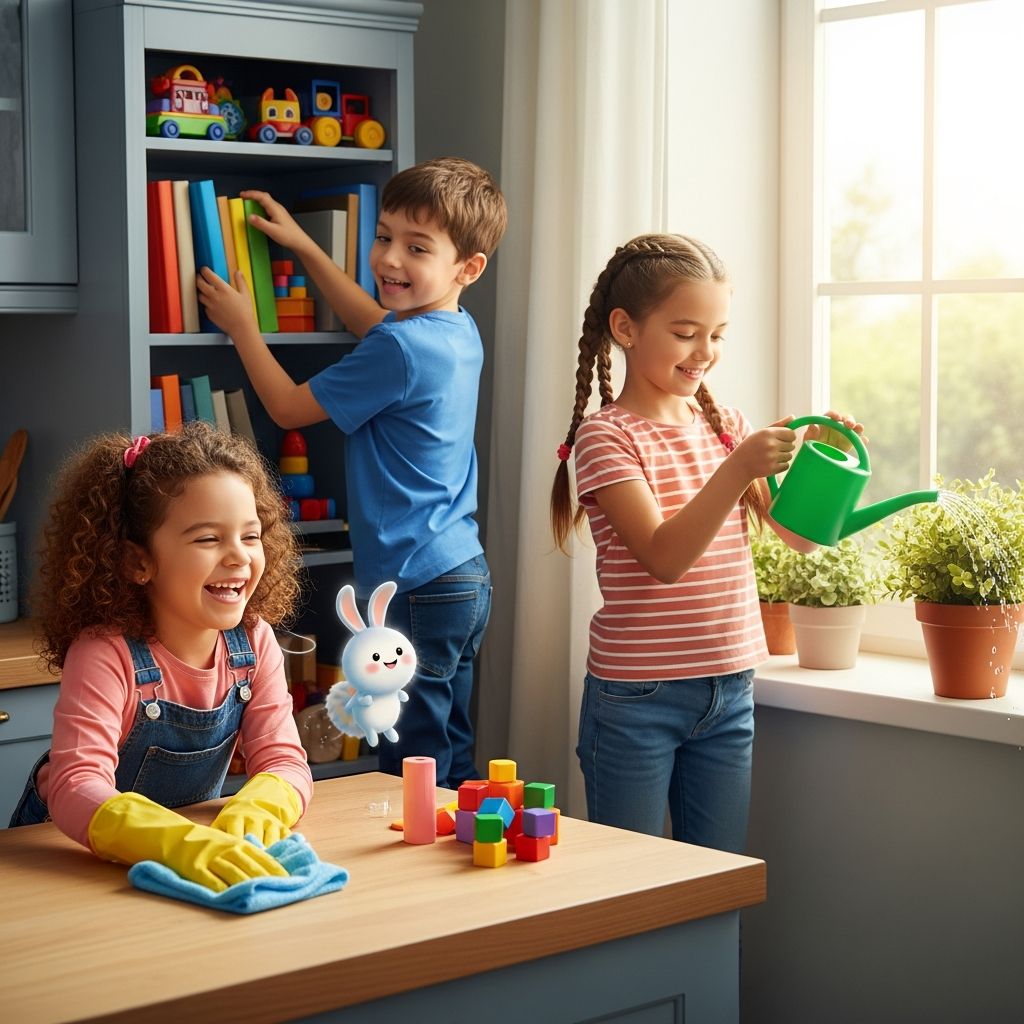
Household chores often evoke groans from children, but they offer profound opportunities for growth. By infusing playfulness into these tasks, parents can cultivate essential life skills while strengthening family ties. Studies confirm that regular chore participation enhances self-esteem, responsibility, and future success.
Why Involving Kids in Chores Matters
Chores extend beyond clean homes; they shape character. Research from the Center for Parenting Education reveals that children assigned chores exhibit higher self-esteem, better frustration tolerance, and improved academic performance. A landmark Harvard study spanning decades links early household involvement to adult independence and well-being.
These activities teach time management, prioritize family contributions, and prepare youth for autonomy. Kids feel valued as team members, fostering empathy and a strong work ethic. Mental health benefits include reduced helplessness and boosted purpose, as tangible results affirm their capabilities.
Age-Appropriate Chore Ideas to Spark Interest
Tailor tasks to developmental stages for maximum engagement and success. Start simple to build confidence, gradually increasing complexity.
Toddlers (Ages 2-3): Simple Sensory Fun
Youngsters thrive on hands-on, low-pressure duties. Focus on gross motor skills and immediate praise.
- Dusting low surfaces with a sock on their hand – turns into a silly dance party.
- Sorting colorful laundry by shape or color, like a matching game.
- Watering plants with a small spray bottle – pretend it’s a magic rain shower.
- Helping set the table by placing napkins or utensils in ‘treasure spots’.
These build fine motor skills and a sense of accomplishment without overwhelming tiny helpers.
Preschoolers (Ages 4-5): Imaginative Play Integration
At this stage, fantasy fuels motivation. Frame chores as heroic quests.
- ‘Superhero cleanup’: Race to pick up toys before the timer ‘villain’ wins.
- Folding washcloths into animal shapes for a zoo-building contest.
- Stirring ingredients while inventing silly recipes with safe tools.
- Feeding pets as ‘animal caretakers’ with pretend interviews.
Visual charts with stickers reinforce progress visually.
School-Age Kids (Ages 6-9): Team Challenges and Rewards
Children here enjoy competition and collaboration. Introduce routines with gamified elements.
- Vacuuming paths like ‘mowing a giant lawn maze’.
- Loading dishwasher as a puzzle-fitting game.
- Gardening: Plant ‘treasure seeds’ and track growth journals.
- Weeding contests – who finds the most ‘monsters’ fastest.
Family chore wheels rotate tasks fairly, preventing boredom.
Tweens and Teens (Ages 10+): Real-World Skill Building
Older kids handle complex duties, linking to future independence.
- Meal prep rotations with theme nights (e.g., taco Tuesdays).
- Laundry mastery: Sorting, washing, folding marathons with podcasts.
- Yard maintenance: Design outdoor ‘makeovers’.
- Basic budgeting for grocery lists.
Empower choices in methods to promote ownership.
Creative Strategies to Gamify Household Duties
Turn drudgery into delight with these proven tactics, drawing from expert recommendations.
Chore Charts and Spinners
Visual aids like spinner wheels or color-coded boards assign tasks randomly, adding surprise. Customizable apps or printable templates make tracking fun.
Music and Dance Parties
Blast upbeat tunes during cleaning sessions. Assign roles like DJ or dancer to switch up monotony. One child DJs while others scrub – instant family concert.
Reward Systems with a Twist
Shift from bribes to intrinsic motivators. Earn ‘family points’ for group rewards like movie nights. Gradually fade incentives as habits form.
Role Reversal Days
Parents do kids’ chores, kids handle adult ones. Sparks appreciation and laughter.
Storytelling and Themes
Narrate tasks: ‘Sweep away the dragon dust!’ Props like capes elevate engagement.
Pro Tip: Train thoroughly first. Demonstrate, then guide side-by-side, praising effort over perfection.
Overcoming Common Chore Roadblocks
Resistance is normal. Address it proactively.
| Challenge | Solution | Example |
|---|---|---|
| Procrastination | Timers and countdowns | 10-minute sprints with breaks |
| Boredom | Job swaps | Clean sibling’s space for variety |
| Arguments over fairness | Family meetings | Weekly brainstorm sessions |
| Lack of skills | Step-by-step training | Video tutorials for laundry |
Hold regular family huddles to tweak systems, ensuring buy-in. Consistency trumps perfection – short daily tasks outperform marathon cleanups.
Long-Term Gains: From Chores to Lifelong Habits
Early chore involvement predicts mid-20s success, per Rossmann’s research. Kids develop executive function, problem-solving, and resilience. A 75-year Harvard analysis confirms chores foster independence over pampering.
In shared homes, chores promote equity and empathy. Teens with routines transition smoother to college or jobs, handling laundry or budgeting effortlessly.
Frequently Asked Questions (FAQs)
What age should kids start chores?
From toddlerhood with simple tasks like sorting toys. Early habits stick lifelong.
Should I pay for chores?
Occasional incentives aid startups, but emphasize family duty for intrinsic motivation.
How to handle kids who refuse?
Start small, model enthusiasm, use choices. Natural consequences teach best.
Do chores really improve grades?
Yes, linked to better executive function and responsibility.
Chores for single-parent homes?
Absolutely – team up with age-suitable duties, celebrate small wins together.
Getting Started: Your Family Action Plan
1. Brainstorm tasks as a group.
2. Create visual schedules.
3. Launch with a fun kickoff event.
4. Review weekly, adjust.
5. Praise generously.
Embrace imperfections; the goal is growth. Fun chores transform homes into skill-building playgrounds, yielding confident, capable kids.
References
- The Benefits of Chores — The Center for Parenting Education. Accessed 2026. https://centerforparentingeducation.org/library-of-articles/responsibility-and-chores/part-i-benefits-of-chores/
- The benefits of chores for kids — Bright Horizons. Accessed 2026. https://www.brighthorizons.com/article/parenting/benefits-of-chores
- The benefits of chores for your child — MSU Extension. Accessed 2026. https://www.canr.msu.edu/news/the_benefits_of_chores_for_your_child
- Research shows kids who do chores are more successful — Connected Parenting. Accessed 2026. https://www.connectedparenting.com.au/blog/research-shows-kids-who-do-chores-are-more-successful-but-how-do-you-actually-get-your-child-to-do-them
- Harvard: Key to Happy, Successful Kids? Chores — UVWS. Accessed 2026. https://www.uvws.org/news/s94a63z7yun3fczjm80xh8fzivafkb