Active children are prone to sprains and strains from play, sports, or everyday mishaps. These common soft tissue injuries affect ligaments or muscles and tendons, requiring prompt recognition and care for optimal healing.
Understanding the Basics: What Sets Sprains Apart from Strains?
Sprains occur when ligaments—tough bands connecting bones at joints—stretch or tear due to sudden twists or impacts. Common in ankles, knees, and wrists, they destabilize joints. Strains, conversely, involve overstretching or tearing muscles or tendons, which link muscles to bones, often in the back, hamstrings, or neck.
Both arise from trauma like falls, sports collisions, or overuse, but target distinct tissues. Children’s growing bodies, with flexible joints and developing muscles, heighten vulnerability during rapid movements.
| Aspect | Sprain | Strain |
|---|---|---|
| Affected Tissue | Ligaments (bone-to-bone) | Muscles or Tendons (muscle-to-bone) |
| Common Sites | Ankles, knees, wrists | Back, hamstrings, calves |
| Typical Cause | Twisting or rolling joint | Overstretch or sudden pull |
Symptoms to Watch For in Your Child
Signs overlap, complicating self-diagnosis: sudden pain, swelling, bruising, tenderness, limited motion, weakness, or instability. Strains may trigger spasms; sprains often bruise more visibly. A ‘pop’ sound signals severity.
- Pain worsening with movement or touch
- Swelling or discoloration within hours
- Inability to bear weight or use the limb
- Joint looseness or muscle deformity
If bony tenderness suggests fracture, seek imaging promptly.
Grading the Injury: From Mild to Severe
Injuries grade by damage extent, guiding treatment.
- Grade 1 (Mild): Micro-tears or stretch; minor pain, swelling; full function possible with discomfort.
- Grade 2 (Moderate): Partial tear; notable swelling, bruising, weakness; ‘pop’ sensation common.
- Grade 3 (Severe): Complete rupture; intense pain, major swelling, instability, possible shape change; often needs specialist care.
Pediatric exams, history, and sometimes X-rays confirm grade and rule out fractures.
Immediate First Aid: The RICE Protocol
RICE—Rest, Ice, Compression, Elevation—forms the cornerstone of early management for grades 1-2.
- Rest: Halt activity; use crutches if leg-affected to avoid weight-bearing.
- Ice: Apply wrapped ice 15-20 minutes every 2-3 hours; prevent skin damage.
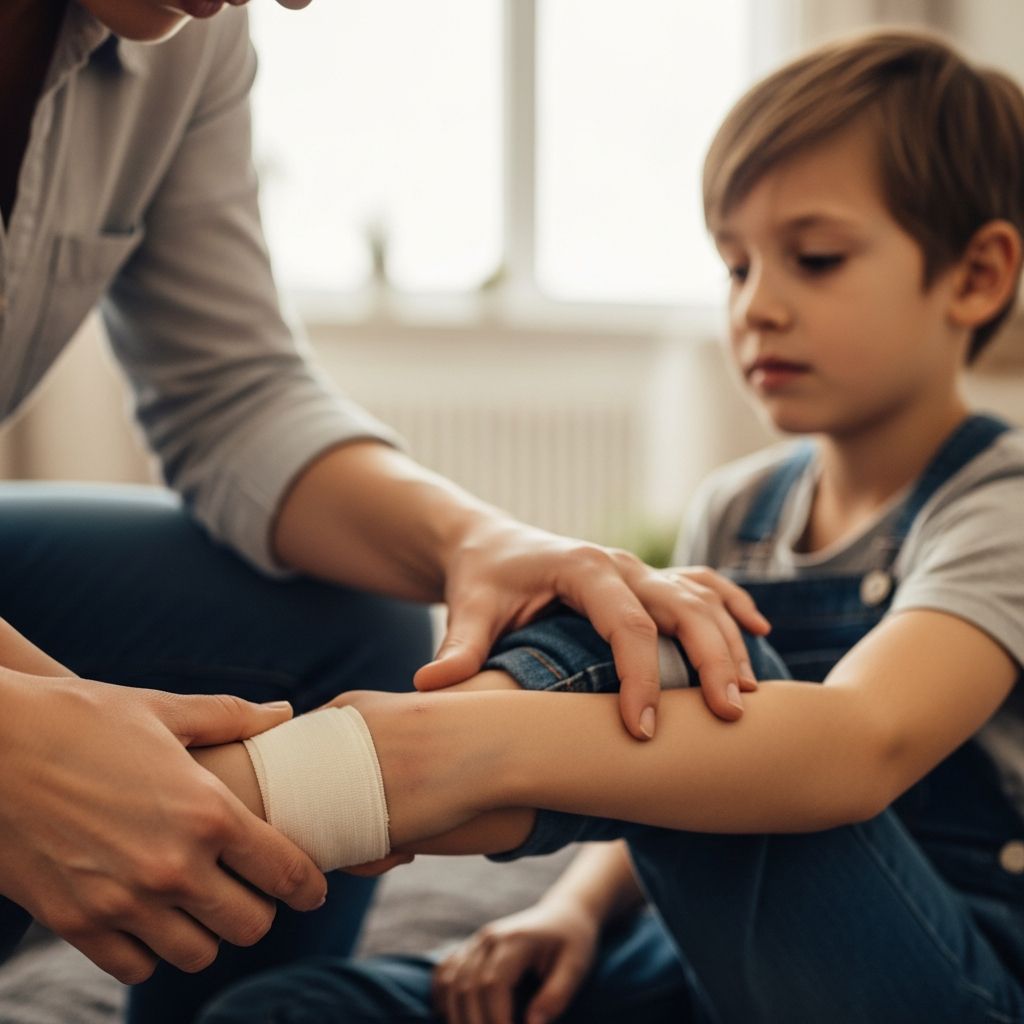
- Compression: Elastic bandage reduces swelling; not too tight to cut circulation.
- Elevation: Position above heart level when seated.
Pain relievers like acetaminophen or ibuprofen help (child-appropriate doses). Avoid heat, alcohol, running, or massage initially.
Recovery Timeline and Care Tips
Mild cases heal in days to weeks; moderate 4-6 weeks; severe months, possibly with rehab. Monitor for worsening: increased pain, numbness, fever indicate complications.
Transition to gentle motion post-48-72 hours to prevent stiffness. Physical therapy aids strength restoration, especially in kids.
- Week 1: Strict RICE, pain control
- Week 2+: Gradual stretching, strengthening
- Full return: Pain-free, full strength
Warning Signs: When to See a Doctor Immediately
Not all injuries self-resolve. Urgent care needed if:
- Deformity, severe swelling, or inability to move
- Pain unrelieved by RICE after 48 hours
- Numbness, tingling, or circulation loss
- High fever or signs of infection
- Recurrent instability post-injury
Children under 5, severe trauma, or multiple injuries warrant prompt evaluation. X-rays exclude breaks; severe cases may need braces, surgery, or PT referral.
Preventing Sprains and Strains in Young Athletes
Proactive steps minimize risks for playful kids:
- Warm-up: 5-10 minutes dynamic stretches before activity.
- Strength Training: Build core, leg, ankle stability 2-3x/week.
- Proper Gear: Supportive shoes, pads, helmets for sports.
- Technique: Coach proper form to avoid awkward twists.
- Rest Days: Avoid overuse; alternate activities.
- Surface Check: Even, hazard-free play areas.
Balanced nutrition supports tissue repair; calcium/vitamin D for bones.
Special Considerations for Growing Children
Kids’ open growth plates risk unique injuries like apophysitis from traction. Symptoms mimic strains but need specialist input to avoid long-term issues. Flexible ligaments increase sprain odds; monitor during growth spurts when coordination lags.
Frequently Asked Questions (FAQs)
Can children return to sports right after a mild sprain?
No. Wait until pain-free with full strength, typically 1-3 weeks, to prevent re-injury.
Is bruising always present in sprains but not strains?
Often, but not exclusively; both can bruise depending on severity.
How do I know if it’s a fracture instead?
Bony pain, deformity, or inability to move suggest fracture; get X-ray.
What’s better for pain: heat or ice?
Ice first 48-72 hours for swelling; heat later for stiffness.
Should I wake a child with a strain for ice?
No, if sleeping comfortably; resume RICE upon waking.
Long-Term Outlook and Building Resilience
Most kids recover fully without sequelae, regaining pre-injury performance. Recurrent injuries signal need for PT or biomechanics review. Educate on body awareness to foster safe habits lifelong.
By understanding these injuries, parents empower quick action, reducing downtime and complications. Encourage activity with safeguards for healthy development.
References
- Sprains vs. Strains: What’s the Difference? — Mass General Brigham. 2023. https://www.massgeneralbrigham.org/en/about/newsroom/articles/sprains-and-strains
- Is It a Sprain or a Strain? How to Tell the Difference — Yale Medicine. 2023. https://www.yalemedicine.org/news/difference-between-sprain-and-strain
- Sprains and Strains — Lehigh Valley Health Network. 2024. https://www.lvhn.org/conditions/sprains-and-strains
- Sprain Vs. Strain — Center for Orthopaedic Surgery & Sports Medicine. 2023. https://www.centerfororthosurgery.com/sprain-vs-strain/
- Muscle strains – Symptoms and causes — Mayo Clinic. 2025-06-13. https://www.mayoclinic.org/diseases-conditions/muscle-strains/symptoms-causes/syc-20450507
- Sprains and strains — NHS. 2023. https://www.nhs.uk/conditions/sprains-and-strains/