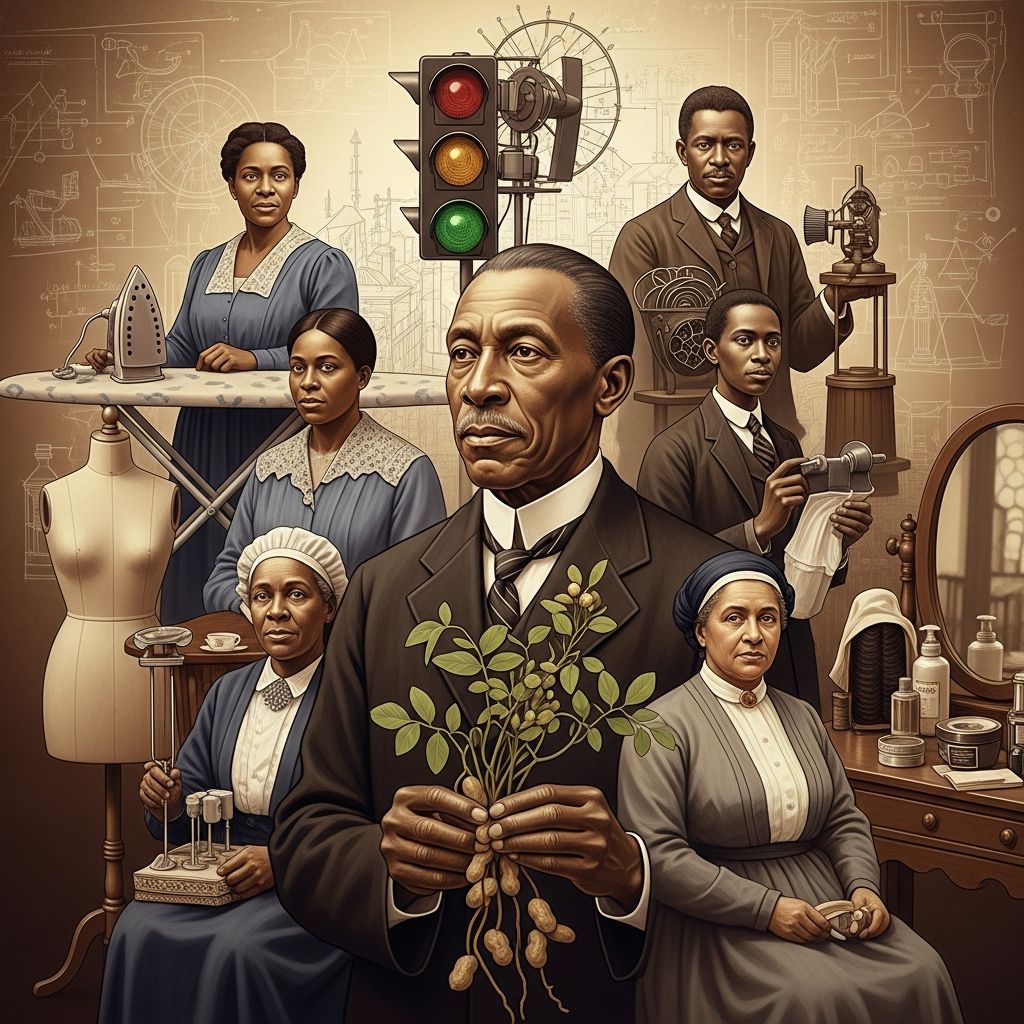
Throughout history, Black inventors have driven progress in countless fields despite facing immense barriers like discrimination and limited resources. Their ingenuity has led to everyday essentials we often take for granted, from safer travel to advanced medical tools. This article highlights key figures whose work continues to impact modern life, making it an essential read for young minds curious about science, technology, engineering, and math (STEM).
Pioneering the Path: Early Trailblazers in Invention
The journey of Black inventors in America began amid challenging circumstances, yet their determination yielded remarkable results. In the early 19th century, individuals broke new ground by securing patents and solving practical problems that improved quality of life for many.
Thomas L. Jennings stands out as a foundational figure. Born in 1791, he worked as a tailor in New York City and developed a dry-cleaning process called “dry-scouring” for delicate fabrics. Granted the first U.S. patent to a Black inventor in 1821, Jennings used his earnings to support abolitionist efforts and help free enslaved family members. His innovation laid groundwork for modern cleaning methods still used today.
Another early innovator, Sarah E. Goode, became the first Black woman to receive a U.S. patent in 1885 for a fold-out bed cabinet. This space-saving furniture transformed small living areas into multifunctional rooms, addressing urban housing constraints of the era. Goode’s practical design anticipated today’s Murphy beds and convertible furniture.
Safety Innovations That Saved Lives
Safety has been a recurring theme in Black inventors’ contributions, with devices that prevented accidents and protected workers in hazardous environments.
- Alexander Miles and Elevator Safety: In 1887, Miles patented automatic elevator doors to eliminate the risk of falls from forgotten manual closures. His mechanism synchronized inner and outer doors, a feature standard in elevators worldwide today.
- Garrett Morgan’s Life-Saving Gear: Morgan, born in 1877, invented a “safety hood” in 1914, a precursor to the gas mask used in World War I. This breathing device filtered smoke and toxic gases, proving vital during disasters like the 1916 Lake Erie explosion where it saved lives. He also enhanced traffic signals with a yellow warning light in 1923, reducing collisions at intersections.
These inventions demonstrate how addressing immediate dangers led to widespread adoption and regulatory changes.
Agricultural Revolutions and Resource Innovation
Agriculture saw transformative changes through Black inventors who maximized natural resources and promoted sustainability.
George Washington Carver, born into slavery around 1864, revolutionized farming at Tuskegee Institute. He developed over 300 uses for peanuts, including oils, inks, and cosmetics, and promoted crop rotation with peanuts and sweet potatoes to restore soil depleted by cotton. Though he patented few items, his work diversified Southern agriculture and reduced reliance on single crops. Carver’s legacy emphasizes innovation from everyday materials.
| Invention Use | Impact |
|---|---|
| Peanut butter and oils | Food and industrial products |
| Axle grease and dyes | Manufacturing alternatives |
| Soil restoration methods | Sustainable farming practices |
Refrigeration and Food Preservation Breakthroughs
Before reliable cooling, transporting perishables was nearly impossible without spoilage. Frederick McKinley Jones changed this in the 1940s with portable refrigeration units for trucks. His 60+ patents enabled long-haul delivery of fresh produce and medicine, including blood plasma during World War II. Today, his technology underpins the global food supply chain.
Electronics and Computing Giants
Black inventors played crucial roles in electronics, powering devices we rely on daily.
Otis Boykin patented over 20 electronic components, including resistors for pacemakers, computers, and guided missiles. His precise control devices improved reliability in IBM systems and life-saving medical implants.
Mark Dean, with over 20 patents, co-developed the IBM personal computer, the color PC monitor, and the gigahertz chip. These advancements made computing accessible and powerful, handling billions of calculations per second.
James West invented the foil electret microphone in 1962, used in 90% of microphones today for phones, cameras, and hearing aids. His work at Bell Labs advanced audio technology dramatically.
Medical Marvels and Health Advancements
Medicine benefited immensely from Black innovators focused on vision, blood, and beyond.
- Patricia Bath’s Laser Probe: In 1986, ophthalmologist Bath patented the Laserphaco Probe for cataract removal, restoring sight to millions globally. As the first Black female medical patent holder, she founded an institute for blindness prevention.
- Charles Richard Drew: Drew pioneered blood plasma separation and storage, establishing the first large-scale blood banks. His methods saved countless lives during World War II.
Dr. Gladys West’s mathematical modeling contributed to GPS technology, indirectly aiding medical navigation and emergency responses.
Everyday Conveniences and Fun Innovations
Not all inventions are high-tech; some enhance daily comfort and joy.
Elijah McCoy holds 57 patents, including the portable ironing board (1874) and automatic lawn sprinkler. His lubricator for train engines earned the phrase “the real McCoy” for quality.
Lonnie Johnson, a NASA engineer, created the Super Soaker water gun in 1989, which became a blockbuster toy while funding his other green energy projects.
Alice H. Parker patented a natural gas heating system in 1919, precursor to modern zoned home heating for efficient warmth.
Overcoming Barriers: The Legacy of Resilience
Many Black inventors faced patent denials, theft of ideas, or worked anonymously due to racism. Granville Woods, dubbed the “Black Edison,” patented over 50 electrical devices amid disputes with Edison himself. George Alcorn’s imaging X-ray spectrometer advanced NASA tech with his physics expertise.
Their perseverance not only produced inventions but inspired future generations, proving innovation transcends adversity.
Frequently Asked Questions
Who was the first Black inventor to receive a U.S. patent?
Thomas L. Jennings received it in 1821 for his dry-cleaning process.
What did Garrett Morgan invent?
The gas mask prototype and three-position traffic signal with a warning light.
How did George Washington Carver impact agriculture?
By developing 300+ peanut uses and promoting soil-friendly crop rotation.
What is Patricia Bath known for?
Inventing the Laserphaco Probe for laser cataract surgery.
Who invented components for pacemakers?
Otis Boykin, with patents on electrical resistors used in medical devices.
These stories highlight how Black inventors’ creativity and grit built the foundation of today’s world. Teaching kids about them fosters appreciation for diverse contributions to progress.
References
- 11 Famous Black Inventors Who Changed Your Life — Biography.com. 2023. https://www.biography.com/inventors/g46697619/famous-black-inventors
- Black Inventors through American History — Black-Inventor.com. Accessed 2026. https://www.black-inventor.com/black-inventors
- Famous African American Inventors — Harness IP. 2020-02-05. https://www.harnessip.com/blog/2020/02/05/recognizing-the-history-makers-in-black-history-month/
- Black Inventors In History | The Untold Stories Behind … — YouTube. Accessed 2026. https://www.youtube.com/watch?v=K_oCuhQINQ4
- 12 Black Inventors and Their Innovations That Shaped the World — HowStuffWorks. Accessed 2026. https://science.howstuffworks.com/innovation/inventions/10-inventions-by-african-americans.htm
- Famous Black Inventors — Robert F. Smith. Accessed 2026. https://robertsmith.com/blog/famous-black-inventors/