Why the Right Swimwear Matters for Babies and Toddlers
Planning a trip to the pool, beach, or splash pad with a baby or toddler? Beyond towels and sunscreen, one of the most important items in your bag is their swimwear. The right swimsuit does more than look cute—it plays a key role in comfort, safety, and skin protection. Babies and young children have delicate skin, limited temperature regulation, and are still learning how to move in water, so their swimwear needs to support those unique needs.
Choosing swimwear isn’t just about style or size. It’s about UV protection, fit, leak control, and how easy it is to put on and take off, especially during diaper changes. A well-chosen swimsuit can help your child stay warm, avoid sunburn, stay visible in the water, and enjoy water play without discomfort or irritation.
Understanding Sun Protection in Swimwear
Baby skin is thinner and more sensitive than adult skin, making it especially vulnerable to UV damage. While sunscreen is important, it’s not always enough on its own, especially for infants under six months, where most health authorities recommend avoiding sunscreen and relying instead on shade and protective clothing.
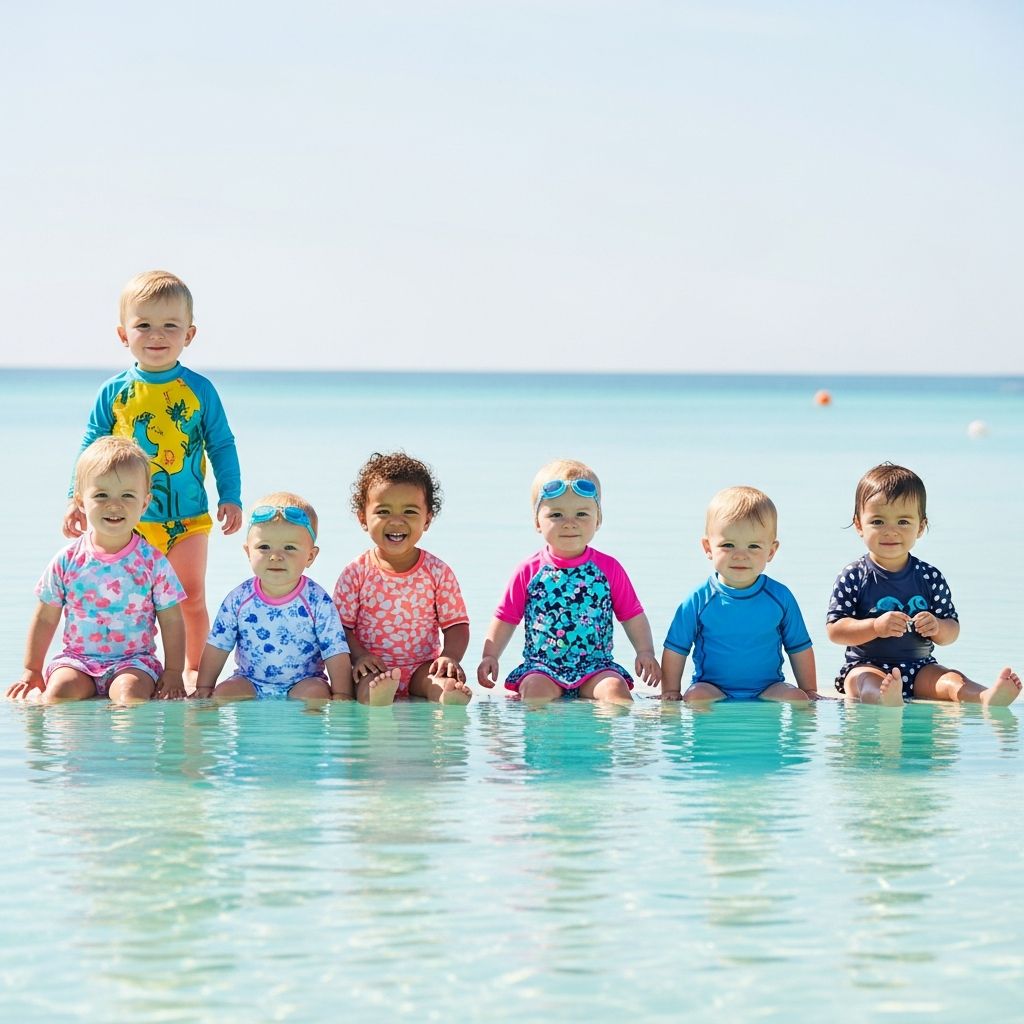
Swimwear with built-in sun protection is a smart solution. Look for garments labeled with UPF (Ultraviolet Protection Factor), ideally UPF 50+. This means the fabric blocks about 98% of UV rays, offering excellent protection for arms, legs, and torso. A long-sleeve one-piece or rash guard with UPF 50+ is often the best choice for babies and toddlers who will be outdoors.
When shopping, keep in mind that:
- UPF ratings are more reliable than color or fabric type alone.
- Tighter weaves and darker colors generally offer better UV protection than loose, sheer fabrics.
- Wet fabric can lose some of its protective ability, so UPF-rated swimwear is specifically designed to maintain protection when wet.
Fit: Balancing Comfort, Safety, and Coverage
Swimwear that fits well is safer and more comfortable. A suit that’s too tight can restrict movement, cause chafing, and make it harder for a baby to kick or move freely in the water. On the other hand, a suit that’s too loose can create gaps where UV rays reach the skin and may even pose a safety risk by catching water and weighing a child down.
Here’s what to aim for:
- Snug but not tight: You should be able to fit two fingers comfortably under straps or waistbands.
- Stays in place: The suit should stay put during active movement, without riding up or slipping off the shoulders.
- Full coverage: For sun protection, choose styles that cover the shoulders, arms, and legs as much as possible.
For growing toddlers, separates (like a rash guard top and swim shorts or bottoms) can be a practical option. They allow you to mix and match sizes and make diaper changes easier without having to remove the entire outfit.
Leak Protection: Swim Diapers and Built-In Solutions
Most public pools and swim classes require babies and toddlers to wear swim diapers. Regular diapers are not allowed because they absorb water, swell up, and can clog pool filters. Swim diapers are designed to contain solid waste while allowing water to pass through.
There are two main types:
- Disposable swim diapers: Convenient for occasional use, easy to change, and widely available.
- Reusable swim diapers: More eco-friendly and cost-effective over time, often made from neoprene or similar materials with snug leg and waist seals.
Some swimwear comes with a built-in swim diaper or a pocket for a reusable swim diaper. These can be especially helpful for younger babies who spend more time in the water during swim classes or family pool time. They reduce the number of layers and help keep everything in place.
Special Features That Make a Difference
Beyond basic coverage and fit, certain design features can make swimwear much more practical and comfortable for both baby and parent.
Easy-Access Closures
Putting a wet, squirming baby into a tight rash guard or one-piece can be a challenge. Swimwear with front zippers, snap shoulders, or side zippers can make dressing and undressing much easier, especially during diaper changes. Look for:
- Zipper garages that cover the metal end to prevent pinching.
- Soft, flat zippers that won’t irritate sensitive skin.
- Snaps or buttons that are easy to open and close, even with wet hands.
Tagless and Flat-Seam Construction
Babies have very sensitive skin that can be irritated by rough seams, tags, or tight elastic. Tagless designs print size and care information directly onto the fabric, eliminating a common source of neck irritation. Flat seams lie smooth against the skin instead of creating raised ridges, which helps prevent chafing in high-friction areas like the neck, underarms, and inner thighs.
Thermal and Wetsuit-Style Options
For babies who are new to swimming or spend time in cooler water, thermal swimwear or baby wetsuits can be a game-changer. These are typically made from neoprene or fleece-lined fabric and cover the arms and legs, helping to keep little bodies warm during longer sessions in the pool.
Benefits include:
- Better temperature regulation, reducing the risk of getting too cold.
- Extra protection for sensitive skin, especially if your baby uses barrier creams for conditions like eczema.
- Improved grip for parents, making it easier to hold a slippery baby securely.
Choosing Swimwear by Age and Activity
The best swimwear can vary depending on your child’s age, developmental stage, and where you’ll be using it.
Infants (0–6 Months)
For very young babies, comfort and warmth are top priorities. Consider:
- One-piece suits with long sleeves and legs for sun and warmth.
- Thermal or fleece-lined swimwear for indoor pools or cooler environments.
- Swimwear that allows easy access for diaper changes, such as snap shoulders or front zippers.
Limit water sessions to 10–15 minutes to avoid overexposure and monitor for signs of being too cold or too hot.
Babies (6–12 Months)
At this stage, babies are more active in the water and may start swim classes. Good options include:
- Long-sleeve one-piece swimsuits with UPF 50+ protection.
- Swimwear with built-in or compatible swim diapers for leak control.
- Rash guards paired with swim bottoms for flexibility and easy changes.
Continue to keep sessions short and always supervise closely, even in shallow water.
Toddlers (1–3 Years)
Toddlers are more mobile and may spend longer periods in the water. Their swimwear should support:
- Extended sun exposure: UPF 50+ rash guards, swim shirts, and full-coverage suits.
- Active play: Durable, quick-drying fabrics that can handle splashing, climbing, and running.
- Easy changes: Separates or swimwear with easy closures make frequent diaper or potty breaks simpler.
For beach days, consider a rash guard with a hood or a wide-brimmed sun hat to protect the face and neck.
Water Safety and Visibility
While swimwear won’t replace adult supervision, it can support water safety in a few important ways.
High-Visibility Colors
Bright, bold colors like neon yellow, orange, or red can make it easier to spot your child in the water, especially in crowded pools or busy beaches. While any color can be safe with proper supervision, high-visibility swimwear adds an extra layer of safety, particularly in open water or areas with poor lighting.
Floatation Aids and Swim Aids
Some swimwear includes built-in floatation panels or is designed to be worn with swim vests or float suits. These can help build a child’s confidence in the water and keep them in a more horizontal position. However, it’s important to remember that:
- Floatation devices are not a substitute for constant adult supervision.
- Children should learn to swim without relying on floatation, so pairing aided swim time with formal swim lessons is ideal.
- Adjustable buoyancy systems allow you to remove floats as your child becomes more confident.
Practical Tips for Buying and Caring for Baby Swimwear
Once you’ve chosen the right style and features, a few simple habits can help your child’s swimwear last longer and stay comfortable.
Shopping Checklist
- UPF 50+ rating for sun protection.
- Snug but comfortable fit with no gaps or tight bands.
- Easy closures (zippers, snaps) for quick changes.
- Tagless and flat-seam construction to prevent irritation.
- Compatibility with swim diapers or built-in leak protection.
- Bright, high-visibility colors for better spotting in water.
Care and Maintenance
- Rinse swimwear in cool, clean water after each use to remove chlorine, salt, and sand.
- Wash with a gentle, fragrance-free detergent; avoid bleach and harsh chemicals.
- Air dry away from direct sunlight and heat sources; never put baby swimwear in the dryer.
- Check for signs of wear, especially around seams and closures, and replace if the fit becomes too loose or damaged.
Common Questions About Baby and Toddler Swimwear
Can I use regular diapers in the pool?
No. Regular diapers are not designed for water and will swell, break apart, and can clog pool filters. Always use swim diapers, either disposable or reusable, when your child is in the pool.
When can I start using sunscreen on my baby?
Most health organizations recommend avoiding sunscreen on babies under six months. Instead, rely on shade, protective clothing, and hats. For older infants and toddlers, use a broad-spectrum, mineral-based sunscreen (zinc oxide or titanium dioxide) with SPF 30 or higher on exposed areas not covered by swimwear.
How long should my baby stay in the water?
For infants under 12 months, limit sessions to 10–15 minutes to prevent overexposure and temperature issues. Toddlers can usually handle 20–30 minutes if they’re comfortable and not showing signs of being too cold or tired.
Do babies need special swimwear for swim classes?
Yes. Swim classes typically require swim diapers and often recommend full-coverage swimwear for warmth and hygiene. Thermal suits, long-sleeve one-pieces, and rash guards are common choices. Always check the specific requirements of your swim program.
What’s the safest color for kids’ swimwear?
Bright, high-visibility colors like neon yellow, orange, or red are easiest to spot in water. While any color can be safe with proper supervision, choosing bold colors adds an extra layer of safety, especially in busy or open-water environments.
How do I know if swimwear fits properly?
A well-fitting swimsuit should be snug but not tight. You should be able to fit two fingers comfortably under straps or waistbands. The suit should stay in place during movement without riding up or slipping off, and there should be no large gaps where skin is exposed.
Final Thoughts: Safety, Comfort, and Confidence
Choosing swimwear for a baby or toddler is about more than just style. The right suit supports sun safety, comfort, leak control, and ease of use for parents. By focusing on UPF protection, proper fit, easy closures, and appropriate features for your child’s age and activity, you can help your little one enjoy water play safely and comfortably.
Remember, no piece of swimwear replaces active adult supervision. Always designate a dedicated “water watcher” during swim time, keep safety rules clear, and teach water safety skills early. With the right gear and habits, pool days, beach trips, and splash pad visits can be fun, safe, and memorable for the whole family.
References
- Swimwear and Sun Protection for Infants and Children — American Academy of Pediatrics. 2023. https://www.aap.org/en/patient-care/healthy-active-living-for-families/sun-safety/
- Water Safety and Drowning Prevention — Centers for Disease Control and Prevention (CDC). 2023. https://www.cdc.gov/healthywater/swimming/resources/drowning-prevention.html
- Guidelines for Infant and Toddler Swimwear and Swim Diapers — National Swimming Pool Foundation (NSPF) / Pool & Hot Tub Alliance. 2022. https://www.phta.org/