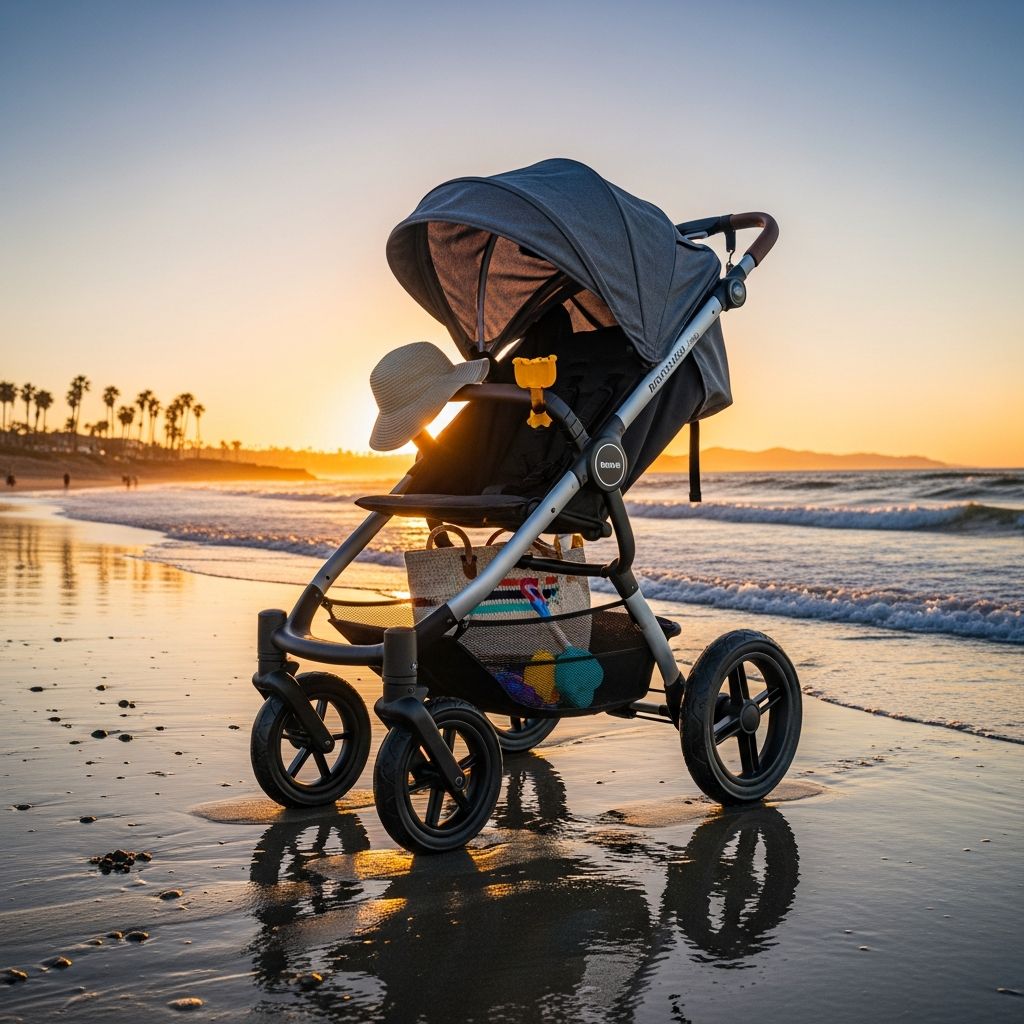
Heading to the beach with a baby or toddler can be magical, but it also means hauling a small mountain of gear across hot, shifting sand. A well-chosen beach-friendly stroller can turn that slog into a manageable walk, keeping your child comfortable while you move towels, snacks, and toys in one trip.
This guide explains what makes a stroller work on sand, which features truly matter in salty, windy environments, and how to decide between traditional strollers, all-terrain models, and stroller wagons for your next coastal adventure.
Why You Need a Different Strategy for Sand
Moving a stroller on pavement and pushing it on a soft beach are completely different experiences. Sand behaves more like a fluid than a solid, so narrow wheels tend to sink rather than roll. Wider tires distribute weight over a larger surface area, helping prevent the stroller from bogging down.
At the same time, coastal environments expose gear to salt, which can corrode metal, degrade fabrics, and affect moving parts over time. That is why a stroller that feels perfect in the city might struggle or wear out quickly by the ocean.
Common Beach-Day Challenges
- Soft, deep sand that grabs small wheels and makes them spin without moving forward.
- Salt spray and humidity that accelerate rust and weaken some materials.
- Strong sun and UV radiation that can overheat babies and damage fabrics.
- Wind-blown sand that gets into joints, brakes, and harness buckles.
- Limited parking or boardwalk access, which may require lifting or folding your stroller quickly.
Key Features That Make a Stroller Beach-Ready
When evaluating strollers for the beach, focus on the parts that directly affect safety, comfort, and drivability on sand and in sun.
1. Wheels and Suspension: Your Top Priority
Wheel design is the single biggest factor in how a stroller performs on sand.
- Wide wheels create more surface area, helping the stroller stay on top of soft sand rather than sinking.
- Larger diameter wheels roll more easily over ruts, dried seaweed, and uneven sections of the beach.
- All-terrain or air-filled tires (similar to bike tires) usually offer better shock absorption and grip.
- Good suspension reduces jolts for your child and improves control when you hit bumps or shells.
If you primarily cross packed, wet sand near the waterline, you can get by with slightly narrower wheels. For deep, dry sand, prioritize the widest wheels and the simplest, most robust suspension you can find.
2. Sun Protection and Ventilation
Babies and young children are more vulnerable to ultraviolet radiation and overheating than adults. On the beach, shade and airflow are non-negotiable.
- Extendable canopy with a high UPF rating to block direct sun.
- Peek-a-boo or mesh panels to keep air moving and let you check on your child without exposing them fully to the sun.
- Light-colored fabrics that reflect rather than absorb heat.
- Reclining seat so your child can nap in a partially shaded, semi-flat position.
3. Frame and Fabric Durability in Coastal Conditions
Salt can corrode metals and degrade certain coatings over time, especially if sand and moisture are allowed to sit on the frame.
- Corrosion-resistant frame (aluminum or treated steel) that tolerates occasional salt exposure.
- Tight, sturdy joints that are less likely to grind or seize when sand gets inside.
- Removable, washable fabrics for easy cleaning after sunscreen, snacks, and salt spray.
- Water-resistant or quick-drying materials that do not stay damp for long.
Plan on a quick rinse and dry when you return from the beach to extend your stroller’s life, even with salt-resistant materials.
4. Safety Essentials That Still Matter on the Beach
Basic stroller safety guidelines apply wherever you go, but they are especially important on uneven terrain like sand and dunes.
- Five-point harness to keep babies securely positioned in the seat.
- Reliable parking brake that is easy to engage and release with your foot, even in flip-flops.
- Stable wheelbase to reduce tipping risk when going over small slopes or soft patches.
- Clear weight limits for both the seat and any storage basket.
Beach paths can slope toward the water, so always set the brake when you stop and avoid hanging extremely heavy bags from the handle, which can unbalance the stroller.
5. Comfort for Both Parent and Child
- Adjustable handlebar to accommodate different adult heights and reduce back strain on long walks.
- Multiple recline positions for toddlers who alternate between play and naps.
- Generous storage to hold towels, diapers, snacks, toys, and spare clothing.
- One-handed or quick fold so you can pack the stroller into your car while holding a baby or beach bag.
Comparing Stroller Types for Beach Use
There is no single “perfect” stroller for every family. The best option depends on your child’s age, how often you visit the beach, and whether you want a stroller that also works for daily errands.
| Stroller Type | Beach Strengths | Beach Limitations | Best For |
|---|---|---|---|
| Traditional full-size stroller | Comfortable seats, good storage, familiar handling | Often small wheels; may struggle in deep sand | Occasional beach trips on firm paths or boardwalks |
| All-terrain/jogging stroller | Large wheels, better suspension, more stable on uneven surfaces | Bulkier; can be heavy to lift into a car | Families who regularly visit beaches or parks with trails |
| Lightweight travel stroller | Compact, easy to fold, good for travel and airports | Typically smaller wheels; not ideal for soft sand | Air travel to coastal cities with mostly paved walkways |
| Stroller wagon | High capacity, wide tires, room for multiple kids and gear | Can be large and heavy; storage at home may be a challenge | Families with more than one child or lots of beach gear |
When a Stroller Wagon Makes More Sense
For many families, a stroller wagon becomes the go-to choice for beach days. These hybrids combine the hauling power of a wagon with kid-focused features borrowed from strollers.
Advantages of Stroller Wagons on the Beach
- High carrying capacity for kids, coolers, umbrellas, and toys in one trip.
- Wide, all-terrain wheels that handle soft sand better than many traditional strollers.
- Built-in seating with seat belts or harnesses in kid-focused wagons, improving safety.
- Sun canopies or attachable shades to protect children from direct sun.
- Push or pull options on some models, reducing fatigue when walking longer distances.
If you frequently go to the beach with more than one child or plan to stay for several hours, the extra space and flexibility can easily justify the size.
Potential Drawbacks to Consider
- Storage space at home: many wagons take up more room than a foldable stroller.
- Vehicle fit: double-check trunk dimensions before committing to a large wagon.
- Weight: hauling a fully loaded wagon across extremely soft sand is still a workout.
Practical Tips for Using Any Stroller on the Beach
Even the best-designed stroller needs some strategy to handle sand, salt, and sun safely.
Before You Reach the Sand
- Check tire pressure if you have air-filled tires; properly inflated tires roll more smoothly.
- Load heavier items low and toward the center to improve stability.
- Secure any loose straps so they do not drag in the sand.
- Apply child-safe sunscreen and dress your child in a wide-brimmed hat and lightweight clothing for extra sun protection.
On the Beach
- Whenever possible, push or pull your stroller along firmer, damp sand near the waterline, which offers better support.
- If the front wheels are small and keep digging in, try pulling the stroller backward using the handle through the deepest sections.
- Engage the brake anytime you stop, especially on sloped sections of the beach or near the water.
- Keep snacks in sealed containers so crumbs do not attract wildlife or mix into the stroller fabric.
After Your Beach Trip
- Shake off sand from the wheels, canopy, and baskets before loading into your car.
- At home, rinse wheels and lower frame with fresh water to remove salt and sand, then let them dry completely to reduce corrosion.
- Wipe down harness buckles and joints where grit can accumulate.
- Remove and wash fabric covers as recommended in the manual if they are covered in sunscreen or salt.
How to Match a Beach Stroller to Your Lifestyle
Instead of looking for a universal “best,” match features to your real habits and travel patterns.
Ask Yourself These Questions
- How often will we visit the beach each year?
- Do we need the stroller to be our everyday city stroller as well?
- How many children will use it now and in the next 2–3 years?
- Do we travel by car, plane, or public transit most often?
- How much space do we have in our trunk, closet, or garage?
Sample Matchups
- City family, occasional beach trips: a quality full-size stroller with decent-sized wheels and a strong sun canopy may be enough, especially if you stick to boardwalks.
- Outdoor-focused family, weekly beach days: an all-terrain stroller or stroller wagon with wide tires is more likely to keep up and last longer under salty conditions.
- Frequent flyers visiting coastal destinations: a travel stroller that folds small, paired with a simple beach cart or wagon at your destination, can be more practical than hauling a huge stroller through airports.
Beach Stroller Safety and Comfort Checklist
Use this quick checklist before purchasing or packing your stroller for a trip to the shore.
- Wheels wide enough and large enough for at least packed sand.
- UPF-rated canopy that extends to or past your child’s knees when seated.
- Five-point harness with easy adjustment and a buckle your child cannot undo alone.
- Sturdy, easy-to-use parking brake tested on inclined surfaces.
- Frame and fabric materials that tolerate occasional salt exposure, plus a simple cleaning routine.
- Storage capacity for at least a small cooler, towels, and diaper essentials.
- A fold small enough to fit in your usual car trunk with other beach gear.
Frequently Asked Questions About Beach Strollers
Can I take a regular stroller onto the sand?
Yes, but performance will vary. A standard stroller with small wheels will usually struggle in deep, dry sand and may only work well on firm, wet sand or boardwalks. For more than very short distances on soft sand, look for wider wheels or an all-terrain model.
Are stroller wagons safe for toddlers at the beach?
Stroller wagons designed for children typically include safety features like seat belts or harnesses and a reliable brake, which are important for safe use on slopes or near the waterline. Always follow age and weight guidelines from the manufacturer and keep children buckled when the wagon is moving.
Do I need a special canopy for sun protection?
A large, UPF-rated canopy is strongly recommended for the beach, since infants and young children have more sensitive skin and can burn quickly. Many brands offer optional canopy extensions or clip-on shades that add extra coverage without overheating the interior, especially if they include mesh panels for airflow.
How do I prevent my stroller from rusting after beach trips?
Salt accelerates corrosion, so rinsing and drying are crucial. After each visit, rinse wheels and any metal parts that contacted sand or seawater with clean, fresh water, then let everything dry fully before storage. Regular cleaning of joints and brakes to remove trapped sand will also help prolong the life of the stroller.
Is a travel stroller ever a good choice for the beach?
Travel strollers prioritize compact size and light weight, which often means smaller wheels. They are not ideal for deep sand, but they can work for coastal trips if you mainly use paved promenades or boardwalks, or if you pair them with a simple wagon or cart for the actual sand crossing.
References
- Sun Protection for Children — American Academy of Pediatrics. 2022-05-01. https://www.healthychildren.org/English/safety-prevention/at-play/Pages/Sun-Safety.aspx
- The Best Beach Wagons — The Inertia. 2024-06-10. https://www.theinertia.com/gear/best-beach-wagons/
- The Best Travel Strollers of 2025 — Fathercraft. 2025-03-15. https://fathercraft.com/best-travel-strollers/
- Tips for Traveling with a Baby: Why the Right Stroller Makes All the Difference — Mompush. 2023-08-21. https://mompush.com/blogs/moms-corner/tips-for-traveling-with-a-baby-why-the-right-stroller-makes-all-the-difference
- Strollers for Coastal Areas: Salt & Sand Resistant Guide — Sianldcone. 2023-06-05. https://sianldconestroller.com/blogs/journal/strollers-for-coastal-areas