Feeding babies and toddlers often feels like refereeing a food fight, but the right bib or smock can turn chaos into something manageable. Instead of resigning yourself to stained clothes and sticky sleeves, you can use smart gear to catch the mess before it spreads.
This guide walks through the main types of bibs and smocks, what really matters when you buy them, and how to match each style to your child’s age and eating habits, all in clear, parent-tested language.
Why Bibs and Smocks Matter More Than You Think
At first glance, a bib seems like a small accessory, but over hundreds of meals, it can save hours of laundry and outfit changes. A well-designed bib or smock doesn’t just protect clothes; it can also make your child more comfortable and encourage you to let them explore food without constantly worrying about stains.
When mealtime mess feels under control, parents often feel calmer and more patient, which helps children enjoy trying new textures and flavors. In other words, a good bib supports both cleanliness and a healthier feeding relationship.
Key Features to Look For
Before comparing specific types of bibs, it helps to know which features actually make a difference in everyday use. Below are the main factors that matter for most families.
- Coverall coverage: How much of your child’s chest, lap, and sleeves are protected.
- Material: Whether it is absorbent, waterproof, or a hybrid of both.
- Closure style: Snaps, Velcro, ties, and pull-over designs each affect fit and ease of use.
- Ease of cleaning: Some bibs wipe clean in seconds, while others need a full wash cycle.
- Comfort and flexibility: Stiff materials can bother sensitive babies or limit movement.
- Safety and durability: Free from problematic chemicals, with sturdy stitching and closures.
Main Types of Baby and Toddler Bibs
Different bibs solve different problems. Understanding each type helps you build a small, efficient collection instead of a cluttered drawer of things you never reach for.
1. Soft Cloth Bibs for Drool and Light Spills
Cloth bibs are usually made from cotton, terry cloth, muslin, or similar fabrics, and they shine during the early months when drool and spit-up are a bigger issue than full meals. They sit gently on the neck, absorb moisture, and help keep the chest area dry.
These bibs are less about serious food protection and more about comfort and quick swapping. Many parents keep a stack of them handy and rotate throughout the day as they get damp.
- Best for pre-feeding babies, light snacks, or bottle feeds.
- Easy to wash in bulk and often sold in multipacks.
- Less helpful once solid foods get thicker and more colorful.
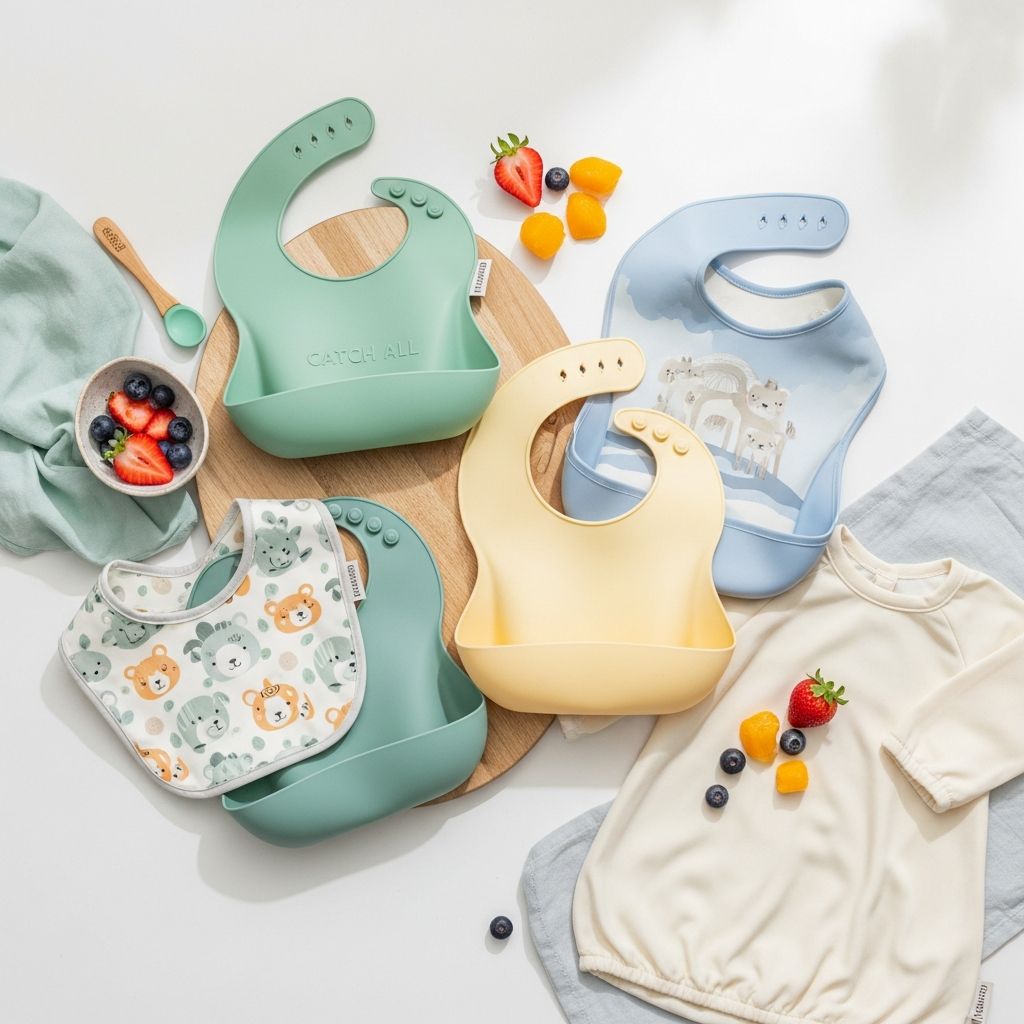
2. Waterproof Feeding Bibs With Catch-All Pockets
When babies start solids, gravity suddenly becomes a major player at the table. Waterproof bibs with a structured or soft pocket at the bottom are designed to catch falling food before it lands on the lap or high chair seat.
These bibs are commonly made from silicone or coated materials that wipe clean quickly. The front pocket acts like a small tray, reducing how much food hits the floor and making it easier to scoop up uneaten pieces for another attempt.
- Ideal for purees, finger foods, and baby-led weaning experiments.
- Often adjustable at the neck to grow with your child.
- Can feel bulky on very young or petite babies, so size carefully.
3. Long-Sleeve Smocks for Full Coverage
Smocks look more like tiny art aprons than traditional bibs, with sleeves and wider coverage across the chest and sometimes the thighs. They are especially helpful for babies and toddlers who treat every meal like a full-contact sport.
Many smocks use lightweight, waterproof fabric that keeps sauce and yogurt from soaking through to clothing. Because they protect sleeves and shoulders, they are also useful for messy play with paint, dough, or sensory bins.
- Excellent for pasta nights, soup, and any food that tends to splatter.
- Versatile enough to double as a play smock for art and crafts.
- Take a bit more time to put on and remove than a simple bib.
4. Bandana-Style Bibs for Style and Drool Control
Bandana bibs are triangle-shaped cloth bibs often layered with absorbent inner material. They sit higher on the chest and look more like a fashion accessory than a feeding tool. Parents frequently choose them for teething babies who soak through regular necklines.
While they can catch light spills and crumbs, they are not designed for serious feeding sessions. Their biggest strengths are comfort, softness, and the way they blend with outfits for photos or outings.
- Great for teething stages and photo-friendly outfits.
- Usually adjustable with multiple snap settings at the back.
- Not a substitute for full-coverage bibs at main meals.
5. Disposable Bibs for Travel and On-the-Go Meals
Disposable bibs are thin, lightweight options meant for one-time or limited use, often made with liners that resist moisture. They come in handy in airplanes, restaurants, or situations where carrying home a soaked bib is inconvenient.
They will not be the most durable, but they shine when convenience matters more than long-term value. Many fold flat into diaper bags and peel off easily when you are done.
- Useful backup for trips, vacations, or visits to relatives.
- No need to rinse or wash; just toss after use.
- Less eco-friendly than reusable bibs, so best for occasional use.
Age and Stage: Matching Bibs to Your Child
Different stages of feeding bring different kinds of mess. Instead of buying everything at once, you can plan a simple progression from babyhood through toddlerhood.
| Age / Stage | Typical Mess | Recommended Bib Types | Notes |
|---|---|---|---|
| 0–6 months | Drool, spit-up, milk dribbles | Soft cloth bibs, bandana bibs | Comfort and absorbency matter most; focus on gentle fabrics. |
| 6–12 months | Purees, early solids, small spills | Waterproof feeding bibs, cloth bibs with backing | Add a catch-all pocket once baby explores finger foods. |
| 9–18 months | Finger foods, self-feeding, splatters | Silicone pocket bibs, long-sleeve smocks | Coverage becomes more important as independence grows. |
| 18 months+ | Full meals, sauces, drinks | Smocks, larger pocket bibs | Consider easy-on styles toddlers can help put on themselves. |
| Any age (travel) | Random spills away from home | Disposable bibs, compact roll-up bibs | Keep one or two in the diaper bag as emergency backup. |
Materials and Safety: What to Check Before You Buy
Because bibs sit close to the mouth and skin, material choice matters. Many families prefer bibs labeled as free from PVC, BPA, phthalates, and other concerning chemicals, especially when used daily.
For cloth bibs, look for breathable fabrics and well-finished seams that do not scratch the neck. For silicone and coated bibs, check that the material feels flexible, not rigid or sharp at the edges.
- Choose high-absorbency fabrics for drool and milk spills.
- Choose waterproof or water-resistant materials for messy foods and sauces.
- Inspect closures and binding for anything that might irritate sensitive skin.
Closures and Fit: Small Details That Change Daily Use
How the bib fastens can determine whether you love it or avoid it. Snaps tend to be more secure and harder for toddlers to pull off, while hook-and-loop closures (like Velcro) are quick for adults but sometimes easier for determined little hands to undo.
Pull-over bibs and smocks remove the need for back-of-the-neck fastening, which some caregivers find more convenient, but they can be tricky if your child dislikes anything going over their head.
- Look for multiple size settings at the neck to extend the lifespan of the bib.
- A snug but comfortable neckline helps prevent food from sliding underneath.
- If your child has long hair, consider side or front closures to avoid tangles.
Cleaning and Care: Keeping Bibs Fresh
Bibs are among the hardest-working items in a baby’s wardrobe, so an easy cleaning routine saves time and frustration. Some materials can be wiped clean right after meals, while others need machine washing to stay fresh.
Having a small rotation of favorites allows you to rinse or wash promptly without scrambling at the next meal. Stain-prone foods like berries, tomato sauce, and curry benefit from quick attention.
- Rinse or wipe bibs immediately after messy meals to prevent staining.
- Check manufacturer instructions before putting bibs in hot water or the dryer.
- Hang smocks on a hook near the high chair to dry between uses.
Practical Strategies to Reduce Mealtime Mess
Even with the perfect bib, a few habits make a big difference in how chaotic meals feel. Small changes in setup can drastically reduce cleanup time and stress.
- Layer smartly: Use a smock on top of everyday clothes for extra protection at dinner or restaurants.
- Contain the fall zone: Place a washable mat or towel under the high chair to catch what the bib misses.
- Start with smaller portions: Offering a little food at a time means less on the floor or in the bib pocket.
- Involve your child: Older toddlers can help put on their bib and carry it to the laundry, building routine and cooperation.
How Many Bibs Do You Really Need?
The right number depends on how often you wash laundry and how enthusiastically your child eats. Some families are comfortable with a handful of bibs in rotation; others prefer a deeper stash to avoid emergency washing.
- For newborns and young babies: 6–10 soft cloth or bandana bibs can cover a day of drool and milk.
- For babies starting solids: 2–4 waterproof feeding bibs plus a couple of cloth backups work well.
- For toddlers: 2–3 smocks and 2–3 pocket bibs usually provide enough coverage for meals and crafts.
FAQs About Baby Bibs and Smocks
How early should a baby start wearing bibs?
Many parents start using soft cloth bibs within the first few weeks, especially if their baby spits up often or drools during feeds. These early bibs protect clothing and keep the neck and chest from staying damp for long periods.
Are silicone bibs safe for babies?
Silicone bibs can be a safe and practical choice when they are made from food-grade materials and used as directed. Parents who prefer them often appreciate that they are durable, easy to wipe clean, and have structured pockets that catch dropped food.
Do I really need a long-sleeve smock?
Not every family needs smocks, but they become extremely helpful if your child loves messy foods, prefers to self-feed, or spends time on art and sensory activities. A single well-made smock can often replace frequent outfit changes after particularly chaotic meals.
How do I prevent bibs from irritating my baby’s skin?
To reduce irritation, choose bibs with soft edges, avoid rough seams at the neckline, and wash new bibs before use to remove any manufacturing residues. If your child has sensitive skin, fragrance-free detergents and breathable fabrics can also make a noticeable difference.
When can my child stop using bibs?
There is no fixed age to stop using bibs; it depends on your child’s eating skills and your tolerance for laundry. Many toddlers gradually transition away from bibs during preschool years as they gain better control with utensils and open cups.
Choosing the Right Mix for Your Family
The best bib or smock is the one that fits your child’s stage, feels comfortable, and actually gets used day after day. A small, thoughtful collection that covers drool, early solids, and full-contact toddler meals will serve most families better than a drawer overflowing with random impulse buys.
By paying attention to coverage, materials, closures, and cleaning routines, you can create calmer, more enjoyable mealtimes where exploration is encouraged—and stains are largely contained.