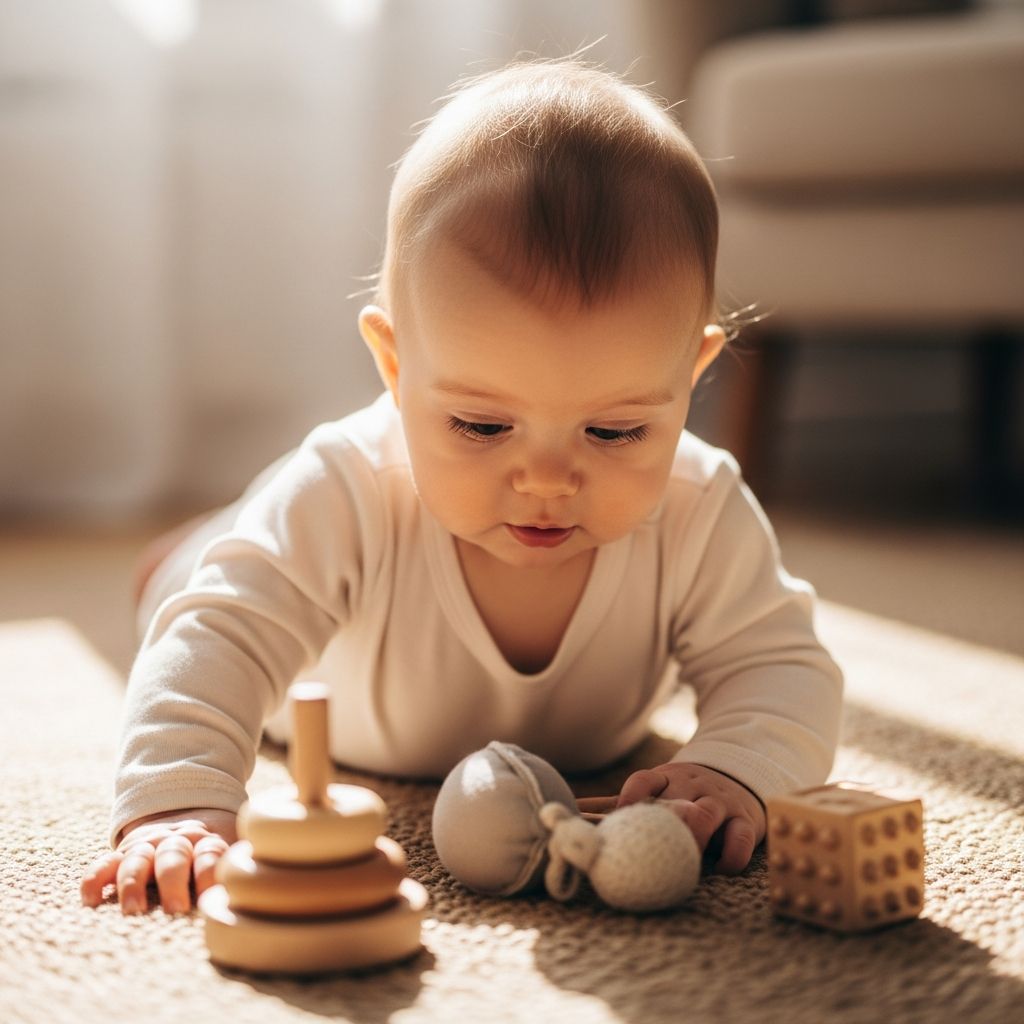
Spending time with your baby on the floor may look simple, but it is one of the most powerful ways to support healthy development, confidence, and connection. Floor play gives babies the freedom to move, experiment, and interact with you in a way that seats, swings, and screens never can. [web:1][web:5]
Why the Floor Is a Baby’s First Playground
When a baby lies or moves on a firm, safe surface, the whole body gets involved—muscles work against gravity, senses wake up, and the brain starts wiring key pathways for future skills. Floor play allows babies to practice rolling, reaching, pushing, and exploring, all of which lay the groundwork for milestones like crawling, sitting, and walking. [web:3][web:5]
Researchers and pediatric therapists consistently highlight unstructured floor time as a foundation for strong motor skills, better balance, and even early problem-solving abilities. Babies who have regular opportunities to move freely often show smoother transitions between milestones and greater confidence in their bodies. [web:1][web:6]
Core Benefits of Floor Play
Floor play does far more than pass the time; it touches nearly every area of development. From physical strength to emotional security, this one habit supports your baby on several levels at once. [web:1][web:5]
- Physical strength and posture: Time on the floor builds neck, back, shoulder, and core muscles that support rolling, crawling, standing, and walking. [web:3][web:4][web:5]
- Coordination and balance: As babies shift their weight, reach for toys, and adjust their position, they learn how to coordinate both sides of their body and keep themselves steady. [web:1][web:7]
- Sensory and cognitive growth: Floor time brings new sights, sounds, and textures within reach, encouraging curiosity, problem-solving, and early spatial awareness. [web:1][web:5][web:7]
- Emotional security and bonding: When you join your baby on the floor, your eye contact, voice, and presence build trust and connection. [web:1][web:8]
- Early independence: Safe, supervised floor play gives babies chances to explore on their own, building confidence and perseverance. [web:5][web:6][web:7]
Development Areas Supported by Floor Play
| Development Area | How Floor Play Helps |
|---|---|
| Gross motor skills | Strengthens core, neck, back, and limbs for rolling, sitting, crawling, and walking. [web:3][web:5][web:7] |
| Fine motor skills | Encourages grasping, transferring toys, and hand-eye coordination as baby reaches for objects. [web:1][web:6] |
| Sensory processing | Offers varied textures, sounds, and visual input to help the brain organize sensory information. [web:1][web:5] |
| Cognitive skills | Supports early problem-solving when toys are slightly out of reach and baby works out how to move closer. [web:6][web:7] |
| Social-emotional growth | Builds connection, turn-taking, and emotional regulation through shared play with caregivers. [web:1][web:8] |
Age-by-Age Floor Play Ideas
Floor play should evolve as your baby grows. The goal is always the same—safe, open-ended movement and connection—but the activities can shift to match new abilities and interests. [web:5][web:7]
0–3 Months: Gentle Beginnings
In the early weeks, floor time is short and simple. Focus on comfort, safety, and calm connection while your baby experiences the world from a new angle. [web:5]
- Start with just a few minutes of supervised tummy time several times a day, gradually increasing as your baby tolerates it. [web:3][web:5]
- Place your baby on a firm mat or blanket, and lie next to them so they can see your face and hear your voice.
- Offer high-contrast toys or pictures near their hands and face to encourage visual tracking and small head turns. [web:5]
- If tummy time is challenging, try laying baby on your chest while you recline, so they work against gravity in a comforting position. [web:3]
3–6 Months: Rolling and Reaching
As your baby gains strength, floor play becomes more active. This stage is often filled with first rolls, big smiles, and lots of reaching. [web:3][web:5][web:7]
- Place toys just beyond easy reach, so your baby has to stretch, pivot, or roll slightly to get them. [web:6][web:7]
- Use a soft mirror on the floor so your baby can look at their reflection and practice lifting the head and chest.
- Alternate short sessions on the tummy, back, and side to encourage different muscle groups and movements. [web:3][web:5]
- Sing simple songs or narrate what is happening (“You rolled to the ball!”) to add language to the movement. [web:1]
6–9 Months: Exploring and Pivoting
By this point, many babies can roll both ways, sit with support or independently, and pivot on their bellies. The floor becomes a true exploration zone. [web:3][web:5][web:7]
- Create a safe mini “obstacle course” with cushions and soft toys to crawl over or around once your baby starts moving forward. [web:7]
- Offer different textured toys (soft, crinkly, smooth) to stimulate touch and grasping skills. [web:1][web:5]
- Place a favorite toy across a short, safe distance to encourage scooting, army crawling, or rocking on hands and knees. [web:6][web:7]
- Play back-and-forth games: roll a ball gently, pass a soft block, or take turns shaking a rattle to support social interaction. [web:1][web:8]
9–18 Months: Crawling, Cruising, and Beyond
As babies become mobile toddlers, floor time remains essential for coordination, balance, and safe risk-taking. This is when movement becomes play in every direction. [web:3][web:7][web:9]
- Set up simple tunnels (like a cardboard box or play tunnel) for crawling and peekaboo games that boost spatial awareness. [web:7]
- Arrange sturdy furniture or push toys so your child can practice pulling up, cruising, and walking with support. [web:3][web:5]
- Introduce stacking cups, simple puzzles, or shape sorters on the floor to combine fine motor practice with problem-solving. [web:6]
- Use soft floor spaces for dance-like play—clapping, swaying, or bouncing to music—to build rhythm and body awareness. [web:1]
Making Floor Time a Habit (Even When You Are Busy)
Floor play does not require special toys or long blocks of free time. Small, consistent moments add up, especially when they happen throughout the day. [web:5][web:6]
- Pair floor sessions with existing routines, such as after diaper changes, before naps, or following meals.
- Use short intervals—5 to 10 minutes of focused floor play repeated several times a day is more realistic than one long session. [web:5]
- Keep a small basket of safe toys near a favorite play spot so setup is quick and effortless.
- On hectic days, let your baby enjoy supervised independent floor time nearby while you fold laundry or prep a meal. [web:6]
Sample Daily Floor Play Flow
| Time of Day | Simple Floor Activity |
|---|---|
| Morning | 5–10 minutes of tummy time with songs and a mirror after diaper change. [web:3][web:5] |
| Midday | Reaching for toys while on back or side, or rolling toward a soft ball. |
| Afternoon | Independent floor play with favorite toys in a safe area while you stay nearby. [web:5][web:6] |
| Evening | Quiet floor play—gentle stretches, cuddles, or a short story on the mat—to wind down before bedtime. |
Safety and Comfort on the Floor
Safe, comfortable floor time helps you relax and enjoy play, knowing your baby is well-protected as they move and explore. A few basic guidelines can make a big difference. [web:5][web:7]
- Choose a firm, flat surface with a clean mat or blanket; avoid soft couches or beds that can limit movement or increase fall risks. [web:5][web:7]
- Keep small objects, cords, and sharp items well out of reach, and check frequently as your baby’s movement range grows.
- Supervise at all times, especially when your baby is rolling or crawling, even during “independent” play. [web:5]
- Dress your baby in comfortable clothing that allows free movement without slippery socks on hard floors.
Responding to Common Challenges
Many parents find that real-life floor time is messier than the ideal picture—babies fuss during tummy time, older siblings get in the way, or adults feel physically uncomfortable getting down on the floor. These challenges are normal and solvable. [web:1][web:3][web:5]
- If your baby dislikes tummy time: Try shorter, more frequent sessions, add gentle motion (rocking your body while baby lies on your chest), or use interesting toys and your face for motivation. [web:3][web:5]
- If you have physical limitations: Use supportive cushions, side-lying positions, or a low stool to stay close to your baby without straining yourself.
- If screen time tends to replace floor time: Keep a designated screen-free floor zone, and treat it as a daily “appointment” for play.
- If older siblings need attention too: Invite them into the floor play—ask them to show baby a toy, sing a song, or build a soft block “city” around the play mat.
Frequently Asked Questions About Floor Play
How early should I start floor play with my baby?
Short, gentle sessions can begin within the first weeks, as long as your baby is healthy and supervised. Tummy time and brief periods on a firm surface help babies adjust to life outside of being held while building essential strength. [web:3][web:5]
How much floor time does my baby need each day?
There is no single “perfect” number, but many experts suggest several short sessions spread across the day, gradually increasing as your baby grows stronger and more comfortable. Following your baby’s cues—ending a session when they are tired or upset—keeps floor time positive and effective. [web:5][web:7]
Is independent floor play safe for young babies?
Independent floor play can be very beneficial as long as it is supervised, in a baby-proofed area, and on an appropriate surface. This kind of play builds problem-solving skills and confidence while still relying on your presence for safety and reassurance. [web:5][web:6]
Do I need special toys or equipment?
Most babies are delighted by simple items like soft balls, rattles, mirrors, and textured cloths. The real “equipment” is a safe floor space, your attention, and a willingness to follow your baby’s interests. [web:1][web:5]
What if my home has only hard floors?
A firm but slightly cushioned mat or rug is usually enough to create a comfortable play area, as long as it does not sink deeply under your baby’s weight. Check that the mat will not slip and that there are no raised edges that could cause tripping as your child becomes more mobile. [web:7][web:9]
Building a Lifelong Love of Movement
Regular floor play in the first years lays a foundation not only for physical milestones, but also for curiosity, resilience, and joyful connection with you. The simple act of getting down on your baby’s level tells them their world matters and that you are there to explore it together. [web:1][web:3][web:5]
Over time, those early wiggles and stretches grow into confident steps, playful dances, adventurous climbs, and a child who trusts their body and their relationship with you. Floor play is free, flexible, and available to every family—and that is exactly what makes it so powerful. [web:1][web:7][web:9]