Baby powder has long been a go-to product for keeping infants’ skin dry and comfortable, but mounting evidence questions its safety, particularly talc-based versions. While manufacturers claim rigorous testing, health authorities highlight potential links to cancer and respiratory issues, prompting many parents to seek alternatives.
Understanding Talc: The Core Ingredient in Question
Talc, a mineral rich in magnesium silicate, excels at absorbing moisture and reducing friction, making it ideal for powders used on sensitive skin. Historically, it formed the basis of most baby powders, applied to prevent diaper rash or soothe adult skin. However, talc’s microscopic particles can migrate or become airborne, raising concerns about internal exposure.
Naturally occurring talc deposits sometimes contain asbestos, a known carcinogen. Although cosmetic-grade talc must be asbestos-free per FDA regulations, past contaminations have fueled distrust. The FDA monitors talc in cosmetics but has not banned it outright, emphasizing the need for verified purity.
Health Risks Linked to Talc-Based Baby Powder
Potential Ovarian Cancer Connection
Research spanning decades suggests a weak but notable association between prolonged genital use of talc powder and ovarian cancer in women. Particles may travel from the perineal area through the reproductive tract to the ovaries, potentially causing inflammation. A 2018 review of multiple studies found this risk increases with frequency and duration of use, though causation remains unproven due to confounding factors like genetics and age.
The International Agency for Research on Cancer (IARC), under the World Health Organization, classifies genital talc application as “possibly carcinogenic to humans” (Group 2B), distinct from asbestos-contaminated talc, deemed carcinogenic (Group 1). Studies show mixed results; some report a 20-30% elevated risk, but recall bias—where participants self-report past habits—weakens reliability.
Respiratory Dangers for Infants
Babies’ underdeveloped lungs make them vulnerable to powder inhalation. Fine talc or cornstarch particles can enter airways, leading to respiratory distress, coughing, or severe conditions like talcosis—a rare lung inflammation. The American Academy of Pediatrics advises against all powders on infants due to this risk.
Even brief exposure during diaper changes can disperse clouds of powder, irritating nasal passages and potentially causing long-term harm. Healthline reports cases of infant hospitalization from aspiration.
Asbestos Contamination and Legal Fallout
High-profile lawsuits against Johnson & Johnson, exceeding 6,600 by recent counts, allege asbestos in talc products caused mesothelioma and ovarian cancer. A 2018 court ruling awarded $37 million to a plaintiff after evidence of contamination surfaced. In response, Johnson & Johnson phased out talc-based baby powder in the U.S. by 2020, switching to cornstarch amid global scrutiny.
While companies assert modern testing ensures purity, independent tests have occasionally detected trace asbestos, eroding consumer confidence.
Current Regulatory Landscape and Manufacturer Responses
The FDA requires cosmetic talc to be free of detectable asbestos but lacks routine testing mandates, relying on manufacturers. Globally, the EU permits talc in cosmetics with strict purity standards, while some regions restrict it.
Johnson & Johnson maintains talc safety, citing decades of data and international approvals, but voluntarily discontinued talc products in key markets. The American Cancer Society notes mixed personal use studies but urges caution for genital application.
| Region | Status | Key Notes |
|---|---|---|
| United States (FDA) | Allowed | Asbestos-free required; no ban on genital use. |
| European Union | Allowed | Strict purity; banned in some loose powders. |
| Canada | Allowed | Similar to U.S.; health warnings advised. |
| World Health Organization (IARC) | Possibly Carcinogenic | Genital use Group 2B classification. |
Safe Usage Guidelines If You Choose Baby Powder
Health experts agree no medical necessity exists for baby powder. If using, minimize risks:
- Apply indirectly: Shake into your hand or cloth first, away from the child’s face.
- Avoid genital areas entirely, especially for women and girls.
- Store out of children’s reach to prevent spills or play-induced inhalation.
- Use sparingly on intact skin only; never on broken or rashy areas.
- Opt for cornstarch versions if talc concerns persist, though inhalation risks remain.
Top Alternatives to Traditional Baby Powder
Modern parents have safer, effective options for moisture control and rash prevention. Here’s a comparison:
| Option | Key Benefits | Potential Drawbacks | Best For |
|---|---|---|---|
| Cornstarch Powder | Natural moisture absorber; widely available; talc-free. | Inhalation risk if baby inhales; can clump in humid conditions. | Folds and dry areas. |
| Arrowroot Powder | Gentle, plant-based; hypoallergenic; silky feel. | May settle less effectively; pricier. | Sensitive skin. |
| Zinc Oxide Creams | Barrier protection; treats/prevents rash; no powder particles. | Thicker texture; not absorbent. | Diaper area rashes. |
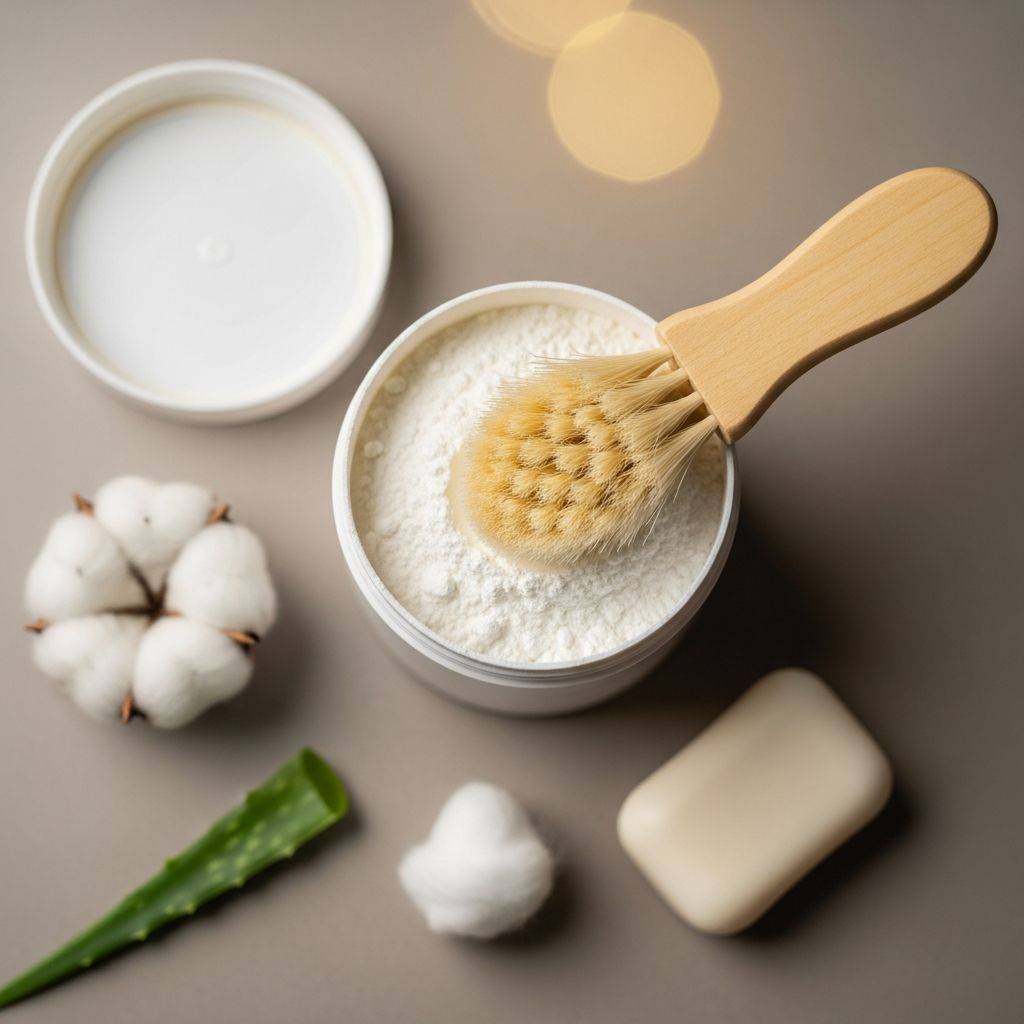
| Oat Flour or Baking Soda | DIY natural soothers; anti-inflammatory. | Messy to prepare; short shelf life. | Occasional use. |
| Tapioca Starch | Lightweight; non-irritating; blends well. | Less common; potential allergen. | All-over body. |
Pediatricians recommend creams over powders for diaper rash, as they create a protective barrier without airborne particles. Brands now offer talc-free, fragrance-free formulas tailored for infants.
Expert Insights and Parental Experiences
Dr. Daniel Cramer, a key researcher since the 1980s, advocated warning labels on talc products after finding particles in ovarian tumors. Recent shifts by manufacturers reflect public pressure, with cornstarch dominating U.S. shelves.
Parents report smoother transitions to alternatives: cornstarch for quick absorption, zinc creams for overnight healing. Forums echo warnings about powder clouds during changes, favoring pat-on methods or powder-free routines.
Frequently Asked Questions About Baby Powder
Is all baby powder talc-based?
No, many brands switched to cornstarch post-2020. Always check labels for “talc-free.”
Can baby powder cause cancer in babies?
No direct evidence links infant use to cancer, but inhalation poses immediate respiratory risks. Avoid altogether.
Are talc-free powders completely safe?
Safer regarding cancer/asbestos, but powders inherently risk inhalation. Creams are preferable.
What if I’ve used talc powder for years?
Monitor health, especially ovarian symptoms in women. Consult a doctor; no proven reversal, but risk is low overall.
Is baby powder banned anywhere?
Not fully; J&J discontinued talc versions voluntarily. Some countries restrict genital use.
Steps to Transition to Safer Skin Care
- Assess current products: Discard talc-based powders.
- Consult pediatrician for rash-prone babies.
- Stock alternatives: Start with zinc cream and arrowroot.
- Adopt routines: Frequent changes, breathable diapers, air-outs.
- Stay informed: Follow FDA and AAP updates.
By prioritizing evidence-based choices, parents safeguard infant health amid evolving science. Prevention trumps cure in baby care.
References
- Is Baby Powder Safe? The Link Between Talcum Powder and Cancer — Healthline. 2023-05-15. https://www.healthline.com/health/is-baby-powder-safe
- Does Talcum or Baby Powder Cause Cancer — City of Hope Cancer Center. 2024-02-10. https://www.cancercenter.com/risk-factors/talcum-powder
- Talcum Powder and Cancer — American Cancer Society. 2025-01-08. https://www.cancer.org/cancer/risk-prevention/chemicals/talcum-powder-and-cancer.html
- Talc — U.S. Food and Drug Administration (FDA). 2024-11-20. https://www.fda.gov/cosmetics/cosmetic-ingredients/talc
- The Facts About Talc Safety — Johnson & Johnson. 2023-12-01. https://www.jnj.com/our-products/the-facts-about-talc-safety