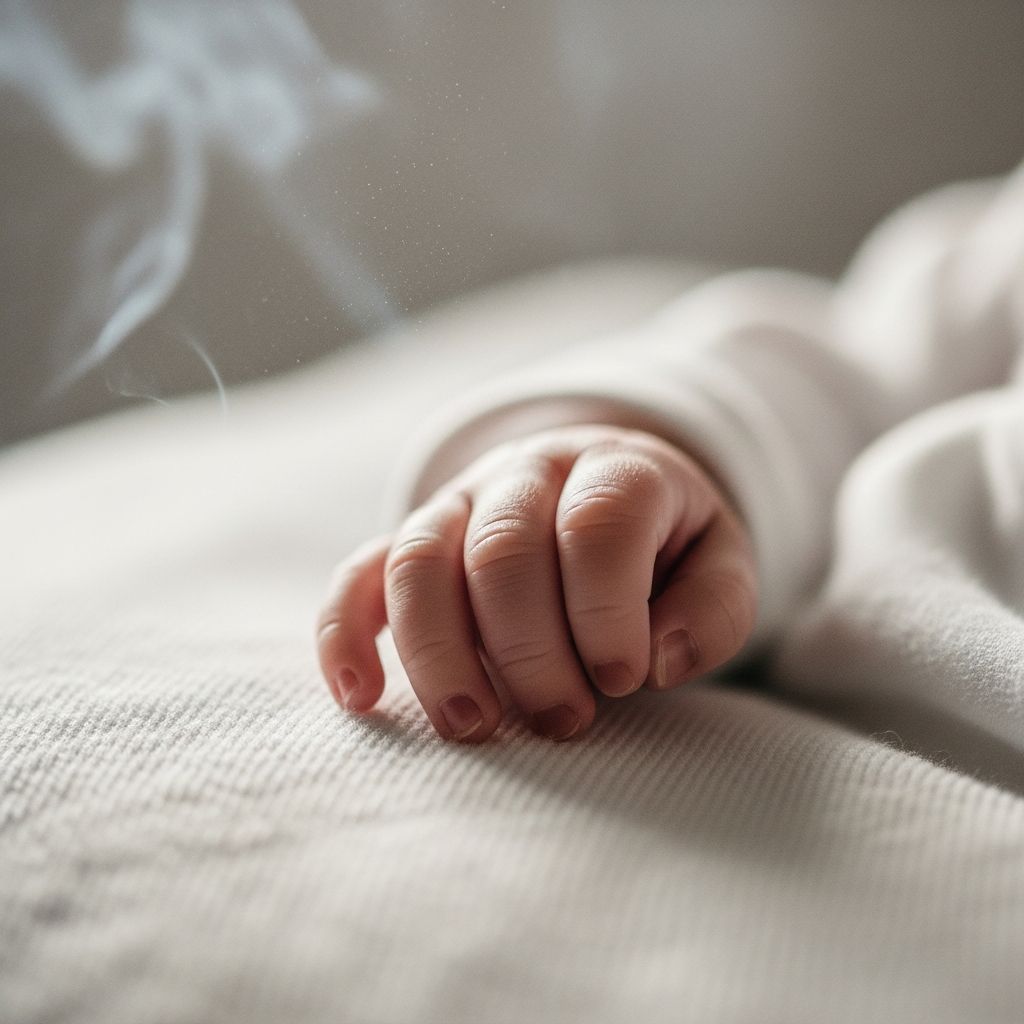
Many new parents assume that as long as no one lights a cigarette near the baby, their child is safe from tobacco smoke. In reality, invisible residues left behind on clothing, hair, furniture, and car interiors can still cling to your baby’s skin and enter their lungs. This lingering contamination, often called thirdhand smoke, creates a quieter but very real risk for newborns who already have tiny, sensitive airways.
Secondhand vs. Thirdhand: What’s Really Reaching Your Baby?
When people talk about cigarette exposure, they often focus on the cloud in the air. That cloud is only part of the story. Understanding the different ways smoke lingers helps you make smarter choices about your baby’s environment.
- Secondhand smoke is the mixture of smoke exhaled by the smoker and smoke that comes from the lit end of a cigarette, cigar, or other tobacco product while it is burning.
- Thirdhand smoke is the residue that remains after the visible smoke has cleared. These particles and gases settle into fabrics, hair, skin, carpets, walls, car seats, and even dust.
A person who smokes outdoors may still return inside with this residue clinging to their clothes and hair. When they pick up or cuddle a newborn, the baby can inhale, absorb through the skin, or accidentally ingest some of those chemicals.
Why Newborns Are Especially Vulnerable
Newborns are not simply small adults. Their bodies process environmental exposures very differently, which is why residues that might seem trivial to an adult can matter far more to a baby.
- Smaller, developing lungs: Newborn lungs are still forming, with delicate airways that can be easily irritated by smoke particles and gases.
- Faster breathing rate: Babies breathe more times per minute than adults, which means they can take in more pollutants from the same air.
- Immature defenses: The systems that detoxify chemicals and fight infection are still maturing, so toxins can stay in their bodies longer and do more damage.
- Constant contact with surfaces: Infants spend much of their time lying on bedding, being held, or later, mouthing hands and objects that may have residue on them.
Even if you never see a cloud of smoke, these factors make any residual contamination in a baby’s environment more important to address.
How Smoke Residue Gets from Clothing to Your Baby
It is tempting to believe that a quick hand wash or a few minutes outside is enough to protect the baby. Unfortunately, smoke chemicals are stubborn. They bind to fabrics, cling to fibers, and can re-emit into the air over time. When a caregiver who smokes picks up an infant, several pathways open up.
- Skin contact: Residue on sleeves, collars, and hands can transfer to the baby’s cheeks, hands, and clothing during normal cuddling.
- Inhalation at close range: A baby held close to a smoker’s shirt or jacket breathes in compounds that slowly escape from the fabric.
- Hand-to-mouth behavior: As babies grow, they rub their faces, suck their fingers, and mouth blankets or toys, giving smoke particles another route into the body.
Because newborns rely on constant physical contact for comfort and care, it is worth creating habits that limit how much residue ends up on the clothing and skin that touch them.
Health Concerns Linked to Ongoing Exposure
No single cuddle is likely to cause a dramatic health crisis, but repeated exposure to smoke residue and secondhand smoke can add up. Over months and years, it can contribute to a higher risk of several health problems in babies and young children.
- Breathing difficulties: Irritated airways can lead to more coughing, wheezing, and trouble breathing, especially during colds.
- More lung infections: Babies exposed to smoke are more likely to develop bronchitis, pneumonia, and other lower respiratory infections.
- Ear infections: The tubes that drain the middle ear are easily influenced by inflammation, and smoke exposure has been associated with more frequent ear problems and related hearing issues.
- Increased risk of sudden unexplained infant death: Babies exposed to tobacco smoke before and after birth have a higher risk of sudden, unexplained death during sleep, underscoring why a smoke-free sleeping environment is essential.
- Potential effects on development: Early exposure to nicotine and other chemicals has been linked in research to changes in lung growth and possible impacts on learning and behavior later in childhood.
Not every exposed baby will develop these issues, but reducing exposure improves the odds of healthier breathing and fewer illnesses.
Common Myths About Smoking Around Newborns
Well-meaning family members often rely on shortcuts or habits that feel protective but are not as effective as they seem. Challenging these myths can help you advocate for your baby’s health.
| Myth | Why It Falls Short | Better Approach |
|---|---|---|
| “If I smoke by an open window, the baby is safe.” | Smoke drifts and spreads, and fine particles remain in the room and on surfaces even when the visible cloud is gone. | Keep all indoor spaces completely smoke-free and avoid smoking near external doors or windows that lead into the home. |
| “Stepping outside for a cigarette is enough.” | Going outdoors reduces secondhand smoke indoors but does not prevent thirdhand residue from sticking to clothes, hair, and skin. | Combine outdoor-only smoking with a change of outer clothing and handwashing before holding the baby. |
| “Air freshener or candles will clear the smoke.” | Fragrance products mask odors; they do not remove hazardous chemicals already deposited on surfaces. | Eliminate indoor smoking and increase true ventilation; consider deep cleaning soft furnishings exposed to past smoke. |
| “If the baby doesn’t cough, there’s no problem.” | Some effects, including changes in lung growth or infection risk, occur silently long before obvious symptoms appear. | Act proactively to reduce exposure instead of waiting for signs of distress. |
Creating a Cleaner Air Space for Your Newborn
Completely eliminating tobacco products from your home and car gives your baby the best protection. However, families often face complex realities: one partner may still smoke, relatives may resist change, or quitting may take time. Even if a total smoke-free life is still a work in progress, there are meaningful steps you can take right now.
- Make your home a strict no-smoking zone: Do not allow smoking in any room, at any time, even when the baby is not present.
- Extend the rule to visitors: Let friends and family know that if they smoke, they will need to do so away from the house and yard, not on porches or near open doors.
- Keep all vehicles smoke-free: Never smoke in the car, regardless of whether the baby is riding in it at that moment. Smoke residue can soak into upholstery and child safety seats.
- Wash hands and face after smoking: Caregivers who smoke should wash their hands thoroughly and, when possible, rinse their face before handling the baby.
- Use a “smoking jacket” system: Keep a dedicated outer layer (like a zip-up hoodie or coat) for smoking that is removed and stored away from the baby’s room immediately afterward.
Taking these steps sends a clear message to everyone in the household that protecting your baby’s air is a central priority.
Practical Clothing and Laundry Strategies
Clothing is one of the main carriers of thirdhand smoke. Tackling it directly can dramatically cut down on the residue that reaches your baby. You do not need a perfect system; even changes that feel modest can lower exposure over time.
- Change shirts after smoking: Encourage anyone who smokes to put on a clean top before holding the baby, especially for long cuddles or feeding sessions.
- Store “smoke clothes” separately: Keep clothes worn while smoking in a closed hamper or bag, away from baby items like swaddles and onesies.
- Wash baby laundry separately: Use a separate load for your baby’s clothing, bedding, and cloth toys rather than washing them with adults’ smoke-exposed clothes.
- Increase wash frequency for exposed items: Jackets, throws, and pillowcases frequently used by smokers around the house should be washed more often to reduce buildup.
These small adjustments build into a home routine that quietly limits how much residue ever gets close to your newborn.
Preparing the Nursery and Shared Spaces
Even if no one has smoked inside the nursery since your baby was conceived, past habits in your home or car can leave traces behind. Before your baby arrives—or as soon as possible afterward—consider a focused cleanup of the spaces where your child spends the most time.
- Deep clean soft surfaces: Wash curtains, removable cushion covers, crib bedding, and rugs that may have absorbed old smoke.
- Wipe hard surfaces thoroughly: Clean walls, baseboards, window sills, and furniture with appropriate cleaners to remove residue that settled over time.
- Evaluate used items: If you receive secondhand furniture, rugs, or a rocking chair from a smoking home, plan for deep cleaning or reconsider whether it belongs in your baby’s room.
- Use ventilation wisely: Regularly open windows when outdoor air quality is good, and use bathroom or kitchen fans to improve airflow, but remember that ventilation is only helpful after smoking has already been eliminated indoors.
Car seats and strollers deserve special attention as well, since they bring your baby into close contact with upholstery that may have been exposed to smoke in a previous vehicle or home.
Talking with a Smoking Partner or Relative
One of the hardest parts of protecting your newborn from smoke residue is navigating relationships. You might feel torn between gratitude for someone’s help with the baby and anxiety about their smoking habits. Framing the conversation around the baby’s needs, rather than blame or judgment, can make these talks more constructive.
- Lead with appreciation: Acknowledge the person’s role in your child’s life before bringing up concerns about smoke.
- Use specific, baby-focused language: Explain that babies’ lungs are still forming and that even residue on clothes can reach them.
- Offer clear, reasonable requests: For example, ask them to smoke only off the property, to wear a dedicated smoking jacket, and to wash their hands before holding the baby.
- Provide alternatives: Suggest smoke-free ways to bond with the baby—reading, walking together outdoors in fresh air, or helping with bath time.
Remember that you are the baby’s voice. Setting boundaries about smoke is an act of care, not confrontation.
Quitting and Cutting Down: Every Step Helps
Quitting tobacco entirely is one of the most powerful ways a parent or caregiver can protect a newborn. It also models a healthier future for the child. At the same time, quitting is a major change, and guilt alone rarely creates lasting success. Instead, focus on realistic progress and support.
- Encourage professional support: Suggest that a smoking partner or relative talk to a healthcare provider about medications, counseling, or programs that can double their chances of quitting successfully.
- Celebrate reductions in use: Even smoking fewer cigarettes per day and avoiding smoking right before coming home can reduce how much residue ends up on clothing.
- Plan smoke-free routines: For example, setting a rule that no cigarettes are smoked after a certain evening time, especially before nighttime feedings or cuddles.
Over time, these small steps often build confidence and momentum toward full cessation, while your baby benefits from cleaner air along the way.
Frequently Asked Questions About Smoke Residue and Newborns
Is it really dangerous if my partner smokes only outdoors?
Smoking outdoors is a meaningful improvement over smoking indoors, but it is not the full solution. Residue can still cling to clothing and hair, allowing traces of smoke-related chemicals to reach your baby through close contact. Combining outdoor-only smoking with clothing changes, handwashing, and a smoke-free car and home offers far better protection.
Can I safely accept secondhand baby items from a smoker’s home?
Some items are easier to clean than others. Hard toys, solid wood furniture, and washable fabrics can often be thoroughly cleaned before use. Upholstered furniture, large rugs, and mattresses, on the other hand, may hold onto smoke residues more stubbornly and can be harder to fully decontaminate. If an item smells strongly of smoke even after cleaning, it may be better not to use it in your baby’s main living or sleeping area.
Do air purifiers remove thirdhand smoke from the home?
Quality air purifiers with appropriate filters can reduce some airborne particles, especially those from recent smoke. However, thirdhand smoke is mainly a surface problem, not just an air problem. Purifiers cannot fully remove residues embedded in carpets, fabrics, or wall materials, so they should be seen as a small add-on, not a replacement for stopping indoor smoking and deep cleaning key areas.
What if a relative refuses to change their smoking habits but wants to babysit?
Care arrangements should align with your baby’s health needs. If someone refuses to follow basic protections—like not smoking in the home or car, washing hands, and changing clothes before handling the baby—it may be safer to limit unsupervised caregiving. You can still involve that person in your baby’s life through short, supervised visits in smoke-free settings while protecting your child from unnecessary risks.
Will my baby “outgrow” sensitivity to smoke residue?
Children’s lungs continue to develop for several years, and protecting them during these early stages can influence health far into the future. While older children may seem more resilient than newborns, ongoing exposure to smoke and residue is still associated with more infections, breathing problems, and potential long-term issues. Minimizing exposure from the very beginning gives your child a stronger base for lifelong lung health.
Putting It All Together for Your Baby’s First Year
Protecting your newborn from cigarette smoke is about much more than banning smoking in the same room. It means paying attention to what lingers on clothing, furniture, cars, and hands, and shaping daily routines to keep these residues away from vulnerable lungs. You do not have to be perfect to make a real difference. Each decision—choosing a smoke-free car ride, asking a relative to change shirts, washing baby bedding more often—adds up to cleaner air and a safer start for your child.
Approach these changes as part of the broader transition into parenthood: a series of thoughtful adjustments, made out of love and a desire to offer your baby the healthiest environment possible. With time, they become second nature, and your home becomes a place where your child can breathe, grow, and thrive with fewer invisible risks.