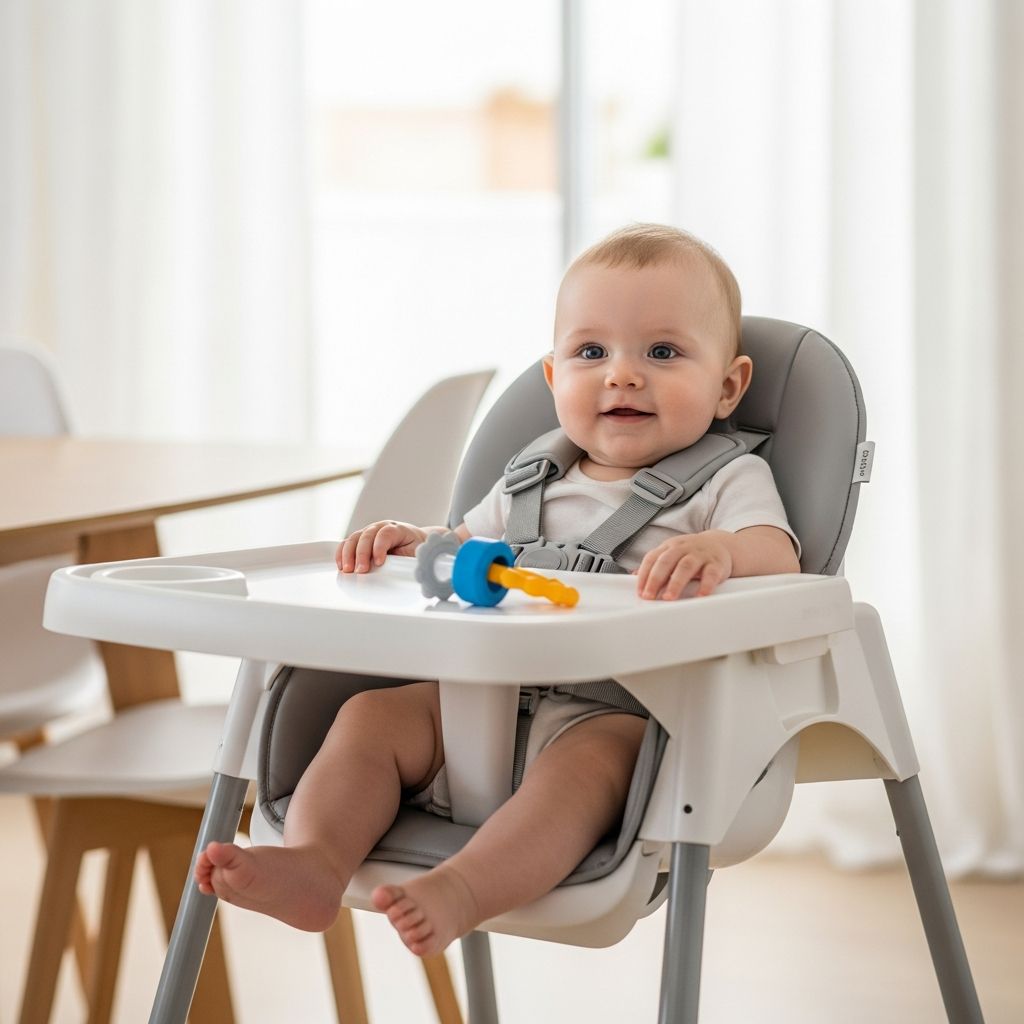
Buying a high chair used to mean picking whatever looked cute and fit in the kitchen. Today, you also need to think about safety regulations, durability, how easy it is to clean, and whether it will work for months or even years of family meals. This guide walks you through what truly matters so you can choose a high chair that is both safe and practical for your baby and your home.
Why the Right High Chair Matters
A high chair is more than a place to feed your baby. It becomes a daily spot for trying new foods, building fine motor skills, and joining family meals. A good chair:
- Keeps your child secure using a reliable harness and stable base.
- Supports healthy posture with good back support and a place for feet.
- Makes cleanup manageable so you are not constantly scrubbing tiny crevices.
- Fits your space and lifestyle whether you live in a small apartment or host big family dinners.
Safety is the foundation; convenience and comfort make the chair something you are happy to use multiple times a day.
Understanding High Chair Safety Standards
In many countries, high chairs are regulated by specific safety standards. These rules define how high chairs must be designed and tested to reduce the risk of injuries from falls, tipping, or broken parts.
Key U.S. Regulations
In the United States, high chairs must comply with a federal safety standard set by the U.S. Consumer Product Safety Commission (CPSC). This standard incorporates the ASTM F404 specification for high chairs. The most recent version, ASTM F404-21, sets performance and test requirements designed to minimize injuries from typical use and reasonably foreseeable misuse.
Under these rules, high chairs must meet requirements for:
- Stability so the chair is less likely to tip if a child pushes back or wiggles.
- Restraint systems such as crotch restraints and multi-point harnesses to prevent a child from sliding or standing up.
- Warning labels that clearly describe fall hazards and remind caregivers to stay nearby and use the straps.
- Small parts, sharp edges, and toxic materials limits, so components do not pose choking or poisoning risks.
High chairs manufactured or imported after June 19, 2019 in the U.S. must meet these updated safety requirements.
Safety Standards in Other Regions
Other regions also regulate high chairs, with similar goals of preventing falls, tipping, and entrapment:
- European Union: High chairs are covered by EN 14988:2017+A1:2020, which includes requirements for stability, effective restraints, absence of dangerous gaps and small parts, and adequate support like a backrest and footrest.
- Canada: Many requirements align with ASTM F404; labels must show the product name, model, production date, and clear age/weight guidelines, and high chairs must pass stability tests and include lap and crotch restraints.
- Australia: AS 4684:2009 sets rules for tip-resistance, tray strength, safe gaps, harness design, and avoiding small detachable parts that could become choking hazards.
When shopping internationally or online, looking for reference to these standards—or certification marks such as JPMA (in the U.S.) or compliance with EN 14988—can help you identify safer products.
Essential Safety Features to Look For
Beyond compliance labels, examining the chair itself is crucial. The following features matter most for everyday safety.
1. Stable, Tip-Resistant Base
Many high chair injuries are caused by falls, often when a child pushes back with their feet or tries to climb in or out. A stable design reduces the chance of tipping.
- Look for a wide base and legs that angle outward rather than straight down.
- If the chair has wheels, make sure they lock securely and that the chair feels steady when locked.
- Avoid placing high chairs near counters or tables where a child could push against a surface to tip the chair.
2. Reliable Harness and Crotch Restraint
Using the straps every time is one of the most effective ways to prevent falls. Modern standards require a crotch restraint as well as a lap belt, and many chairs now offer three- or five-point harnesses.
- Choose a chair with at least a three-point harness (around the waist and through the legs).
- Prefer a five-point harness for younger or more active babies, adding shoulder straps for better upper body security.
- Ensure the crotch strap is fixed to the seat itself, not only attached to the tray, so your child cannot slide out when the tray is removed.
3. Safe Construction and Materials
High chair standards address not only structure but also surface coatings and toxic substances such as lead and certain plasticizers. When shopping, check that:
- There are no sharp edges or exposed screws where your baby can touch.
- Openings are designed so they cannot trap fingers, arms, or a child’s head.
- Any wood or painted surfaces are advertised as compliant with modern safety rules for heavy metals and other chemicals.
4. Clear Labels and Instructions
Regulations require that manufacturers provide age, weight, and usage guidance plus durable warning labels. These help you use the product as intended and avoid unsafe improvisations.
- Check for visible warning labels reminding you to stay near your child and always use the harness.
- Read the manual for installation steps, folding instructions, and the maximum recommended weight or age.
- Look for a manufacture date label. In the U.S., choosing a chair manufactured after mid-2019 ensures it was built to the updated safety standard.
Comfort and Ergonomics for Growing Babies
A safe chair that your child hates sitting in will not get much use. Comfort and proper support also contribute to safe eating, especially as your baby learns to chew and swallow solid foods.
Posture and Support
Good posture can help reduce choking risk by positioning the head and neck well during meals. While medical guidance on feeding posture comes mainly from pediatric and feeding therapy literature, several ergonomic principles are widely recommended:
- Upright sitting: Your baby should sit relatively upright, not slumped or leaning far back.
- Back support: A supportive backrest keeps the spine neutral and reduces sliding.
- Foot support: A footrest lets children brace and maintain stable posture, rather than dangling their legs and tipping their body weight.
Seat Size and Adjustability
Babies and toddlers vary in size, and a chair that is too big or too small can be uncomfortable or unsafe.
- Choose a seat that allows a snug harness fit without overly tight straps.
- Height-adjustable chairs can bring your baby level with your table, encouraging shared meals.
- Reclining seats may be convenient for bottle-feeding but should not be used for unsupervised sleeping.
Cleaning, Storage, and Everyday Practicality
High chairs see a lot of spills, crumbs, and sticky fingerprints. How easily you can clean and store the chair often determines whether you like using it daily.
Cleaning Considerations
- Minimal crevices: Fewer seams and cracks mean less time digging out dried food.
- Dishwasher-safe tray: A removable top tray that fits in your dishwasher can save time.
- Washable covers: If the seat has cushions, check whether they are machine-washable or easy to wipe.
Size, Storage, and Portability
- Footprint: Measure your space and consider how far the legs extend from the seat.
- Folding mechanisms: Helpful if you need to store the chair between meals—just make sure the lock is secure in both open and folded positions.
- Weight: A lighter chair is easier to move, but should still feel solid and not flimsy.
Types of High Chairs and How They Compare
Different styles of high chairs balance safety, convenience, and longevity in different ways. Use the comparison below as a starting point.
| Type | Main Advantages | Main Drawbacks | Best For |
|---|---|---|---|
| Traditional freestanding high chair | Often well-padded, stable, and adjustable; usually has a large tray. | Can take up more floor space; some models have many crevices to clean. | Families with a dedicated dining area and space to keep the chair out. |
| Compact or folding high chair | Smaller footprint and folds for storage; good for small kitchens. | May have fewer features or less padding; still must be checked for stability. | Apartments, grandparents’ homes, or multipurpose rooms. |
| Convertible multi-stage chair | Can change from baby high chair to youth chair or booster; long-term use. | Higher initial cost; more parts to assemble and clean. | Families wanting one seat that grows with the child. |
| Booster that straps onto a dining chair | Very compact; uses an existing chair; good for travel. | Depends on the stability of the adult chair; must be attached correctly. | Small spaces, travel, or as a secondary chair at relatives’ houses. |
| Clamp-on or hook-on seat | Attaches directly to a table; great for tight spaces or travel. | Not covered by some standards, such as the main U.S. high chair rule; only safe on certain table types. | Occasional use, travel, or homes with sturdy, overhang-style tables. |
Using a High Chair Safely Every Day
Even the safest high chair requires consistent safe use. The CPSC and other safety organizations provide practical advice for parents and caregivers.
- Always use the harness, including the crotch strap, even for quick snacks.
- Do not rely on the tray to keep your child in place; it is not a substitute for the harness.
- Stay within arm’s reach when your child is in the high chair; falls can happen quickly if they stand or lean.
- Teach your child that the high chair is for sitting, not climbing or standing.
- Keep the chair away from counters and walls that a child could push against with their feet.
- Check regularly for loose screws, worn straps, or damaged parts, and contact the manufacturer about replacement pieces if needed.
Checking for Recalls and Certifications
Product recalls and independent certifications give extra layers of safety assurance.
- Recalls: In the U.S., you can search for high chair recalls on official recall databases, which list products that have been pulled from the market due to safety concerns.
- Certifications: In North America, the JPMA Certified seal indicates that a product has been tested to relevant ASTM standards by an independent facility.
- Manufacturer information: Use the tracking labels required by regulations to identify model numbers and production dates in case you need to check a recall list or contact customer service.
Budget, Longevity, and When to Upgrade
Prices range from very basic plastic chairs to designer wooden models. Spending more does not automatically guarantee better safety, but it can add features or materials you value.
- Decide whether you prefer a lower-cost, short-term chair mainly for the baby and toddler years, or a convertible model that becomes a youth or adult chair.
- Evaluate the cost over time: a higher upfront price may be worthwhile if the chair will be used for several children or for many years.
- Plan for hand-me-downs: if you buy or receive a used high chair, verify that it meets current standards, is not subject to a recall, and still has all original restraints and hardware.
Frequently Asked Questions (FAQs)
Q: At what age can my baby start using a high chair?
Most babies are ready for a high chair when they can sit with good head and trunk control, often around 6 months. Always follow the manufacturer’s age and weight recommendations and talk with your pediatrician if you are unsure.
Q: How do I know if a high chair meets current safety standards?
Check for compliance statements in the manual or on labels referencing standards such as ASTM F404 (U.S.) or EN 14988 (EU). In the U.S., look for a manufacture date of June 2019 or later, which indicates the chair was built under the updated federal standard.
Q: Is it safe to use an older or secondhand high chair?
A used chair can be safe if it has no structural damage, includes all original restraints, and is not part of a recall. Always check official recall databases using the brand, model, and manufacture date before using a secondhand chair.
Q: Do I really need to use the harness for short meals?
Yes. Safety agencies emphasize always using the straps, even briefly, because many injuries occur when a child stands or slides out unexpectedly. The harness is essential, while the tray alone is not enough to restrain a child safely.
Q: Are booster seats and clamp-on chairs covered by the same rules as high chairs?
In the U.S., the federal high chair standard does not cover booster seats or hook-on chairs, although some may be subject to separate standards or guidelines. Always follow the specific instructions and weight limits for those products and use them only on suitable chairs or tables.
References
- New Federal Standard to Improve Safety of High Chairs Takes Effect — U.S. Consumer Product Safety Commission. 2019-06-19. https://www.cpsc.gov/Newsroom/News-Releases/2019/New-Federal-Standard-to-Improve-Safety-of-High-Chairs-Takes-Effect
- Understanding High Chair Safety Standards: The Ultimate Guide — Craft Child. 2023-02-15. https://www.craft-child.com/blog/high-chair-safety-standards-guide/
- New High Chair Regulations & What It Means for Restaurants — Society Insurance. 2019-07-30. https://societyinsurance.com/blog/new-high-chair-regulations-and-what-it-means-for-restaurants/
- F404-21 Standard Consumer Safety Specification for High Chairs — ASTM International. 2021-02-01. https://www.astm.org/f0404-21.html
- 16 CFR Part 1231 – Safety Standard for High Chairs — Electronic Code of Federal Regulations (eCFR). 2021-04-02. https://www.ecfr.gov/current/title-16/chapter-II/subchapter-B/part-1231
- Can Your High Chair Be Dangerous? — Safe Kids Worldwide. 2017-03-14. https://www.safekids.org/blog/can-your-high-chair-be-dangerous
- High Chairs Business Guidance — U.S. Consumer Product Safety Commission. 2021-04-02. https://www.cpsc.gov/Business–Manufacturing/Business-Education/Business-Guidance/High-Chairs