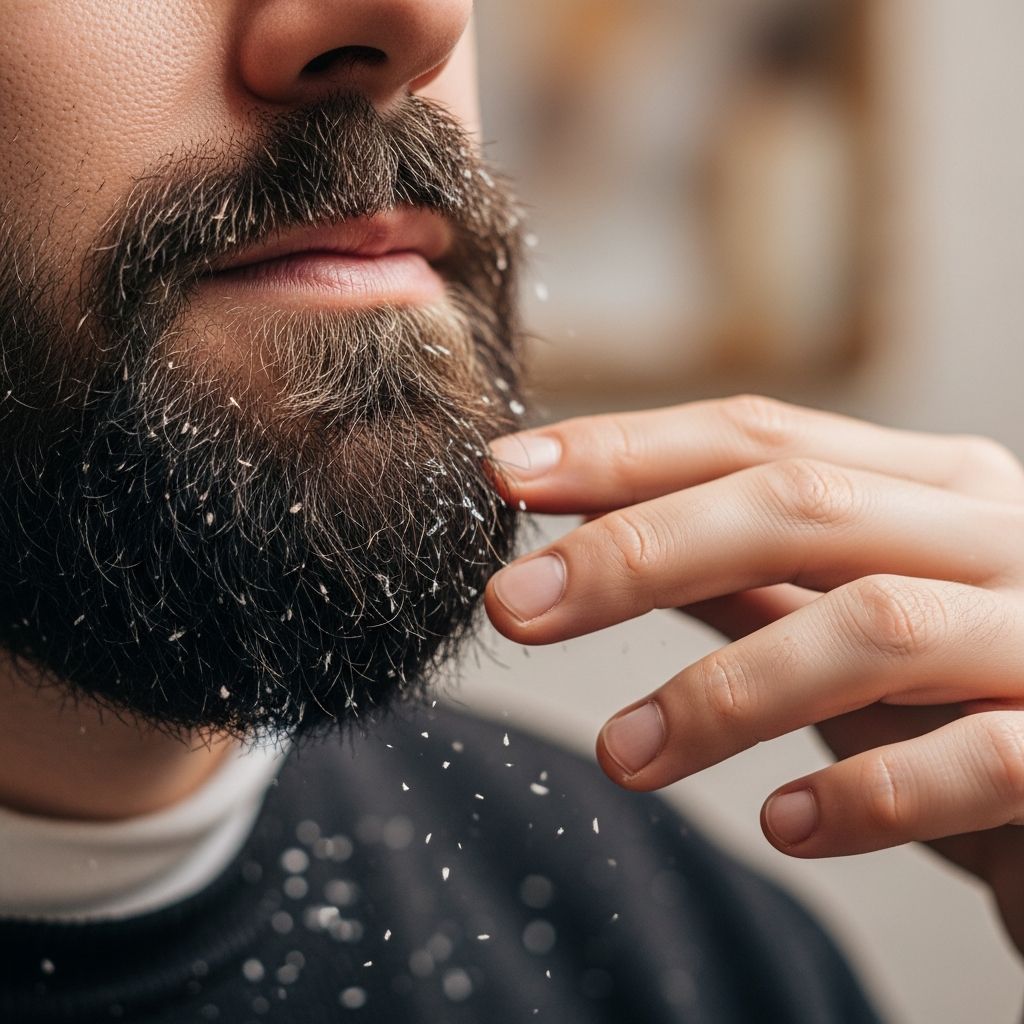
Beard dandruff can turn an otherwise sharp look into a messy, itchy distraction. The good news: most cases are simple to treat with the right grooming habits, and understanding what is happening under your facial hair makes it much easier to fix.
This guide explains what causes flakes in your beard, how to tell normal dryness from underlying skin conditions, and the exact steps to build a daily routine that keeps your beard and the skin beneath it healthy.
What Exactly Is Beard Dandruff?
Beard dandruff is the appearance of white or yellowish flakes coming from the skin beneath your facial hair. Medically, it is often a form of dandruff or seborrheic dermatitis that happens on the beard area instead of (or in addition to) the scalp.
The process is usually the same as scalp dandruff: a combination of skin oil (sebum), a yeast called Malassezia, and inflammation leads to red, itchy, flaky skin.
| Feature | Typical Beard Dandruff | Simple Dry Skin |
|---|---|---|
| Flake appearance | Greasy or yellowish, may cling to hairs | Small, dry, white flakes |
| Skin underneath | Often red, sometimes slightly swollen | Usually pale, may look dull |
| Itch level | Moderate to intense itch or burning | Mild itch or tightness |
| Pattern | Common around mustache, chin, jawline, eyebrows | Can appear anywhere, especially in cold weather |
Why Your Beard Is Flaking: Main Causes
More than one factor can trigger beard dandruff. Understanding what applies to you helps you choose the right fix.
1. Yeast Overgrowth and Seborrheic Dermatitis
The most common cause of beard dandruff is seborrheic dermatitis, an inflammatory skin condition linked to an overgrowth of Malassezia yeast on oily areas of the body like the scalp, face, and beard.
- Malassezia lives naturally on most people’s skin and feeds on sebum, the oil your glands produce.
- As the yeast breaks down these oils, it forms by-products that can irritate the skin, triggering redness, scaling, and flakes.
- Seborrheic dermatitis under a beard may show as red, greasy patches with white or yellow scales and itch.
2. Dryness and Harsh Cleansers
Dry skin alone can also create beard flakes. Over-cleansing with strong soaps or hot water strips away protective oils and damages the skin barrier.
- Using body soap or strong facial cleansers on your beard can leave the skin tight, rough, and flaky.
- Cold, dry weather and low humidity pull moisture from exposed skin, including the lower face.
- Skipping moisturizer after washing lets micro-cracks in the skin form, making irritation more likely.
3. Oil Buildup and Poor Rinsing
Oddly, skin can be both oily and flaky at the same time. Excess sebum mixed with sweat, dirt, and dead cells can clog pores and feed more yeast, worsening dandruff.
- Infrequent washing lets oil and dead skin accumulate beneath the beard.
- Not rinsing cleansers or shampoos thoroughly leaves residue that irritates the skin.
- Heavy, occlusive products (including some waxes and petroleum-based balms) can trap moisture and oil, aggravating seborrheic dermatitis.
4. Underlying Skin Conditions
Other skin problems, including psoriasis and eczema, can occur in the beard region and look similar to dandruff.
- Psoriasis usually forms thicker, silvery scales and may also affect elbows, knees, or the scalp.
- Atopic or contact dermatitis can show as very itchy, dry, red patches, sometimes triggered by fragrances or metals in grooming tools.
- If flakes are severe, painful, or spreading, a dermatologist can distinguish between these conditions and standard dandruff.
Daily Beard Routine to Eliminate Flakes
A consistent, gentle grooming routine is usually enough to get beard dandruff under control. The key steps are exfoliating, cleansing, treating, and moisturizing.
Step 1: Exfoliate the Skin Under the Beard
Exfoliation removes dead skin cells that would otherwise build up as flakes and helps any treatment reach the skin surface more effectively.
- Use a soft beard brush or a gentle exfoliating tool to lift scales from the skin.
- Brush in small, downward and outward strokes so you reach the skin, not just the hair.
- Limit mechanical exfoliation to a few times per week if your skin is sensitive; overdoing it can worsen irritation.
Step 2: Wash with the Right Cleanser
Washing removes excess oil, yeast, and loose flakes. The product you choose matters.
For Mild Beard Dandruff
- Use a gentle beard wash or mild facial cleanser that is fragrance-free or low in fragrance.
- Wash once a day or every other day, depending on how oily your skin is.
- Rinse with lukewarm, not hot, water to avoid stripping the skin barrier.
For Noticeable or Persistent Flaking
Consider using a medicated dandruff shampoo on the beard area a few times per week.
- Look for active ingredients such as:
- 1% ketoconazole – an antifungal that reduces yeast overgrowth.
- Pyrithione zinc or selenium sulfide – common scalp-dandruff ingredients with antifungal effects.
- Coal tar or salicylic acid – help lift and slow down scaling in some cases.
- Apply the shampoo to wet beard, massage down to the skin, and leave for several minutes before rinsing, as directed on the label.
- Use medicated shampoo only as often as needed; in between, switch back to a gentle beard wash.
Step 3: Moisturize the Skin and Hair
After cleansing, you must replace some of the oils that washing removes. This keeps the skin barrier intact and reduces dryness-related flaking.
- Apply a lightweight, non-comedogenic moisturizer or beard lotion to damp skin.
- Use a few drops of beard oil to soften the hair and help lock moisture in.
- Non-fragrant plant oils such as jojoba or sunflower seed oil are often better tolerated by sensitive skin than heavily scented blends.
- Avoid very heavy, occlusive products like pure petroleum jelly directly on seborrheic dandruff, as they can trap yeast and worsen symptoms in some people.
Step 4: Groom and Detangle
Brushing and combing distribute natural oils, prevent tangles, and help you notice early changes in your skin.
- Use a clean beard comb or brush daily once your beard is dry.
- Start from the neck and work upward, then shape downward so the hair lies neatly.
- Disinfect combs and brushes periodically to reduce buildup of oil and product.
Lifestyle Tweaks That Support a Healthy Beard
Grooming is the foundation, but several everyday habits influence how your skin behaves under a beard.
Hydration and Diet
Skin cells need adequate hydration and nutrients to function normally.
- Drink enough water throughout the day so your skin does not have to cope with dehydration on top of cold weather or indoor heating.
- Include sources of omega-3 fats (like fatty fish, walnuts, or flaxseed) and a variety of fruits and vegetables to support skin health.
- Significant dietary deficiency is not the main cause of beard dandruff, but good overall nutrition helps your barrier repair itself efficiently.
Stress Management
Stress is known to worsen seborrheic dermatitis and other inflammatory skin conditions in some people.
- Chronic stress can influence hormones and immune responses that affect the skin’s inflammatory pathways.
- Short, regular practices like walking, stretching, or breathing exercises can help keep stress-related flares in check.
Weather and Environment
Environmental changes often trigger beard flaking.
- Cold, dry winter air and heated indoor environments dry out skin more quickly, increasing flake formation.
- Hot showers and saunas strip oils from the face; switching to shorter, lukewarm showers helps preserve the barrier.
- If you live in a dry climate, using a humidifier at home may reduce overall dryness.
When to See a Dermatologist
Many cases of beard dandruff respond to over-the-counter care, but medical help is important in some situations.
- Flakes are accompanied by intense redness, swelling, or crusting.
- The skin cracks or bleeds, or you see signs of infection (pus, warmth, spreading redness).
- Medicated shampoos and gentle care used consistently for several weeks do not improve symptoms.
- You suspect psoriasis, eczema, or another chronic skin disease.
A dermatologist can confirm the diagnosis, rule out other conditions, and prescribe stronger treatments such as topical antifungals, corticosteroids, or calcineurin inhibitors when appropriate.
Sample Simple Routine for a Flake-Free Beard
Use this example as a template and adjust based on how your skin responds.
- Morning
- Rinse beard with lukewarm water.
- Apply gentle beard wash and massage to skin; rinse thoroughly.
- Pat dry with a towel (do not rub aggressively).
- Apply a light moisturizer to the skin under the beard.
- Finish with a few drops of beard oil; comb through.
- Evening (2–3 times per week)
- Use medicated anti-dandruff shampoo on the beard as directed.
- Leave on for the recommended contact time, then rinse.
- Apply moisturizer after gently drying.
- Weekly
- Exfoliate the beard area with a soft brush or mild exfoliating product.
- Check the skin for any changes in redness, scaling, or tenderness.
Frequently Asked Questions (FAQs)
Can I use my regular scalp dandruff shampoo on my beard?
In many cases, yes. Dandruff shampoos with ketoconazole, pyrithione zinc, or selenium sulfide can be used on facial hair, but you should avoid getting them in your eyes and follow label directions closely. If irritation develops, stop and speak with a dermatologist.
How long does it take to see improvement once I start treatment?
Mild beard dandruff often improves noticeably within 2–4 weeks of regular cleansing, medicated shampoo use, and moisturizing, though chronic conditions like seborrheic dermatitis may need ongoing maintenance rather than a one-time cure.
Will shaving my beard make dandruff go away?
Shaving can temporarily remove visible flakes and make treatment products easier to apply, but it does not cure underlying seborrheic dermatitis or yeast overgrowth. The same skin issue can recur when the beard grows back if you do not address the causes.
Is beard dandruff contagious?
No. The yeast involved in dandruff is normally present on many people’s skin, and the condition relates more to individual susceptibility, oil production, and inflammation than to infection spread from person to person.
Can certain beard oils or balms make flakes worse?
Yes. Heavy, occlusive products and those with strong fragrance or potential irritants can aggravate seborrheic dermatitis or trigger contact dermatitis in sensitive people. If flakes worsen after starting a new product, discontinue it and choose a simpler, non-fragrant option.
References
- Beard Dandruff: What Causes It and How Do You Treat It? — WebMD. 2022-09-08. https://www.webmd.com/skin-problems-and-treatments/how-to-treat-beard-dandruff
- Seborrheic Dermatitis Under Beards — National Eczema Association. 2021-03-15. https://nationaleczema.org/blog/seborrheic-dermatitis-under-beard/
- What is Beard Dandruff and How to Treat It — Head & Shoulders (P&G). 2021-06-01. https://headandshoulders.com/en-us/healthy-hair-and-scalp/dandruff/beard-dandruff-explained
- Beard Dandruff: What Causes It, and How Can You Get Rid of It? — Healthline. 2020-11-24. https://www.healthline.com/health/beard-dandruff
- Beard Dandruff: Causes, Treatments, and Prevention Tips — Hims. 2023-02-10. https://www.hims.com/blog/beard-dandruff