Starting a new school year is easier when your backpack, locker, and study space are set up to work for you. The right mix of supplies can reduce stress, save time, and help you stay focused on what matters most: learning, friends, and your own goals.
Why School Supplies Actually Matter
School supplies are more than pens and paper. They are tools that help you remember information, turn in assignments on time, and feel in control of your day. When you plan your gear on purpose, you create a system that supports your habits instead of fighting them.
Being prepared also shows teachers that you take class seriously and can make teamwork easier when you always have what you need. Instead of scrambling for a pencil or charger, you can focus your energy on asking good questions and doing your best work.
Core Classroom Tools You Shouldn’t Skip
Every student needs a basic set of supplies that work across most subjects. Think of these items as your everyday toolkit that follows you from math to history to science.
Writing and Note-Taking Basics
- Pencils: Mechanical or wooden, plus extra lead or a small sharpener.
- Pens: At least one dark ink pen for writing and a few colored pens for headings or diagrams.
- Highlighters: Two or three colors to mark key terms, formulas, and due dates.
- Erasers and correction tools: A clean eraser and white-out or correction tape for neat notes.
Paper, Notebooks, and Binders
- Notebooks: One per subject or one large notebook with clearly labeled sections.
- Loose-leaf paper: College-ruled or wide-ruled for handouts, practice problems, and turned-in assignments.
- Folders or binders: A sturdy folder or binder for each class to store handouts and returned work.
- Index cards: Helpful for vocabulary, formulas, or test review.
Simple Study Tools That Help
- Ruler: Useful for math, science labs, and neat underlining.
- Basic calculator: Often enough for everyday calculations if a graphing calculator is not required.
- Sticky notes: Great for quick reminders, marking book pages, and planning projects.
- Small pencil case: Keeps your writing tools from disappearing into the bottom of your bag.
Tech Essentials for Modern Students
Even if your school still uses a lot of paper, most teens now juggle online assignments, digital textbooks, and school email. Choosing tech supplies wisely can protect your devices and keep you connected without constant frustration.
Devices and Daily Protection
- Laptop or tablet: Check school rules and class expectations before buying. Look for a device that can handle word processing, research, and video calls.
- Protective case and sleeve: A padded sleeve and a sturdy case reduce your chances of cracked screens and broken keyboards.
- Headphones or earbuds: Helpful for language classes, online videos, or studying in noisy spaces. Follow school guidelines about when you can use them.
Power and Connectivity
- Chargers: Keep your charger in a consistent spot in your backpack or locker so you don’t leave it at home.
- Portable power bank: Useful for long school days, field trips, or days with after-school activities.
- USB drive or cloud storage: Back up important papers, projects, and presentations in more than one place.
Digital Organization Tools
- Calendar app: Use it to track due dates, test days, practices, and appointments.
- Note-taking app: Keep digital notes, screenshots, and files together for each class.
- Password manager: Stores login info for school portals, email, and online textbooks.
Organizing Your Backpack, Locker, and Study Space
Buying supplies is only half the job. The way you organize your gear can decide whether your bag is a calm toolkit or a black hole of crumpled papers and broken pens.
Backpack Setup That Actually Works
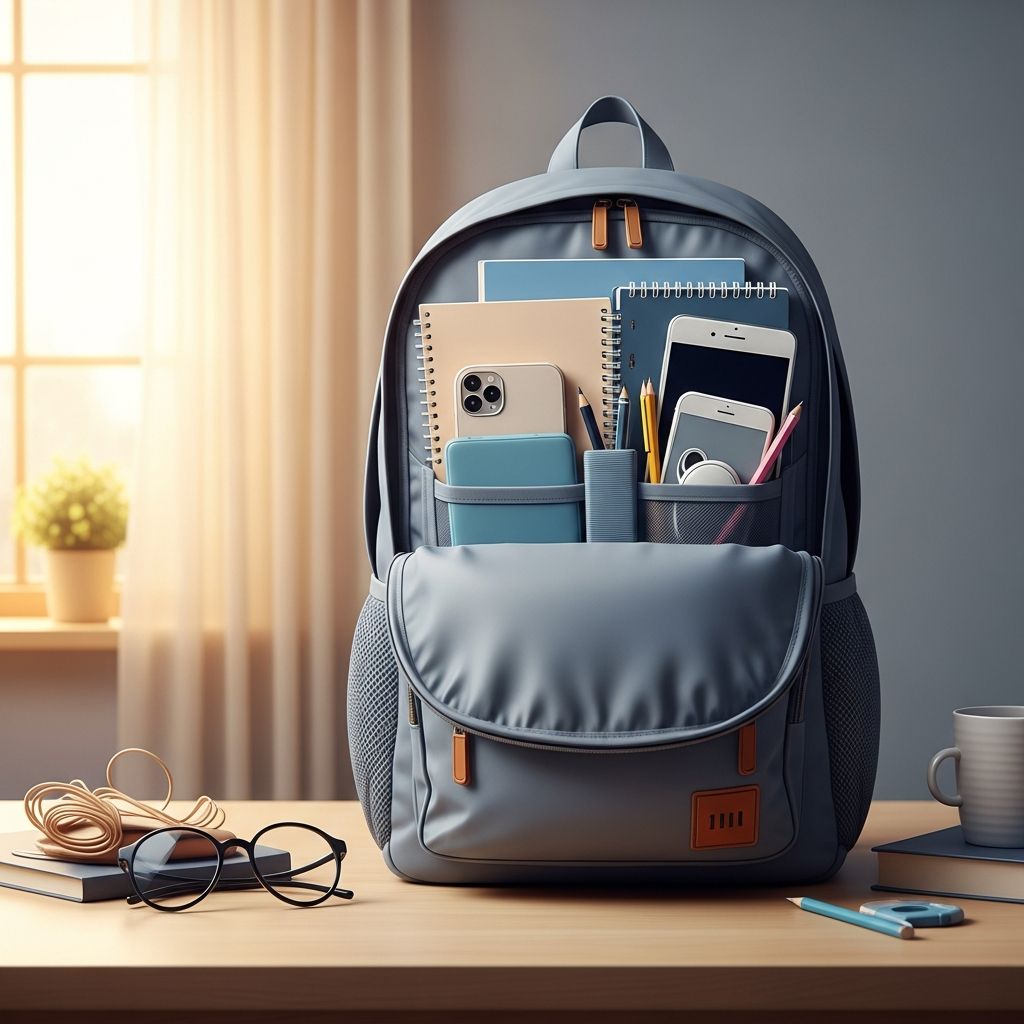
- Choose structure: Pick a backpack with multiple compartments and padded straps.
- Assign zones: Keep books and notebooks in the main compartment, a smaller pocket for pens and chargers, and a safe pocket for your phone and keys.
- Use a weekly clean-out: Once a week, remove trash, old handouts, and unnecessary items.
Locker and At-Home Organization
- Locker shelves or bins: Add a shelf to separate books from smaller items like snacks and supplies.
- At-home homework station: Keep extra pens, paper, a charger, and a quiet workspace ready.
- Color coding: Use colors by subject for notebooks, folders, and digital folders to quickly spot what you need.
Sample Daily Setup Table
| Area | Main Items | Goal |
|---|---|---|
| Backpack | Notebooks, folders, pencil case, planner, water bottle | Carry only what you need for that day |
| Locker | Textbooks, extra supplies, gym clothes, backup snacks | Store extras and swap items between classes |
| Home desk | Laptop, charger, paper, pens, reference books | Provide a calm space for homework and study |
Subject-Specific Gear for Different Classes
Some classes require special tools beyond the basic supplies. Planning for these ahead of time can prevent last-minute stress and rushed shopping trips the night before a big project or lab.
Math and Science Classes
- Scientific or graphing calculator: Ask which model your teacher recommends before purchasing.
- Graph paper: Helpful for charts, geometry, and functions.
- Lab notebook (if needed): Keeps experiments, data tables, and lab questions in one place.
- Safety supplies: Your school will usually provide goggles and lab coats, but make sure you know the rules.
Language Arts and Social Studies
- Highlighter set: For marking themes, evidence, and main ideas in readings.
- Sticky flags: To tag important pages in novels or textbooks without marking them permanently.
- Small dictionary or reliable app: Useful for vocabulary and writing assignments.
Art, Music, and Electives
- Art classes: Sketchbook, pencils, erasers, and any specific materials requested by your teacher.
- Music: Sheet music binder, pencil for notes, and any required accessories like reeds, picks, or valve oil.
- Technology or engineering: Flash drive, safety glasses if requested, and a notebook just for project ideas and diagrams.
Health, Comfort, and Personal Care Items
Staying prepared is not just about grades. Having a few personal care items on hand can help you stay comfortable, focused, and ready to handle long days, sudden weather changes, or minor emergencies.
Everyday Comfort Items
- Reusable water bottle: Hydration helps with energy and focus.
- Healthy snacks (if allowed): Granola bars, nuts, or fruit for energy between classes.
- Light sweater or hoodie: Classrooms can be colder or warmer than you expect.
Hygiene and Health Basics
- Hand sanitizer and tissues: Useful during cold and flu season.
- Personal hygiene items: Deodorant, comb or brush, and any menstrual products you may need.
- Medication: Follow school rules on where prescription or over-the-counter medicine must be stored.
Budget-Friendly and Eco-Smart Supply Tips
School supplies can get expensive, but there are ways to cut costs and reduce waste at the same time. Being thoughtful about what you buy also helps you avoid clutter and unused items.
Saving Money Without Sacrificing Quality
- Shop your house first: Look for unused notebooks, pens, and folders from previous years.
- Buy basics in bulk: Share costs with siblings or friends for pencils, paper, and highlighters.
- Wait on non-essentials: Get the core items first, then buy extras after teachers share final lists.
More Sustainable Choices
- Choose reusable items: Refillable pens, sturdy binders, and a long-lasting water bottle reduce waste.
- Use both sides of paper: Turn old worksheets into scratch paper for practice problems.
- Recycle and donate: Pass along gently used supplies you no longer need to siblings, classmates, or community drives.
Sample Weekly Supply Check Routine
It is easier to stay organized with small, regular habits than with giant clean-ups once a semester. A quick weekly routine can keep your gear ready and your stress level lower.
- Empty your backpack: Remove trash, old wrappers, and random papers.
- Sort papers: File graded work and handouts into the correct folders or binders.
- Restock essentials: Check pens, pencils, highlighters, and paper.
- Review your planner: Add new due dates and cross off completed tasks.
- Check tech: Fully charge your laptop or tablet and clear old downloads you no longer need.
FAQs: Teen School Supplies
Do I really need a separate notebook for every class?
Not necessarily. Some students like one notebook with sections labeled for each subject, while others focus better with one notebook per class. Choose the method that makes it easiest for you to find notes quickly during class and while studying.
How can I avoid losing pens and pencils all the time?
Use a pencil case and commit to putting writing tools back in it every time you finish using them. You can also keep one spare pen or pencil in your locker or at your home study space so you always have a backup.
What should I do if my family is on a tight budget?
Start with the most important basics and ask teachers which items are truly required. Many schools, community centers, and local organizations offer supply drives or donated items, so it can help to ask a counselor or school nurse privately about options.
How much tech do I actually need for school?
In many schools, a simple laptop or tablet, reliable internet access, and a way to back up files are enough. Focus on keeping your device protected with a case and on using digital tools like calendars and folders to stay organized, instead of buying extra gadgets you rarely use.
Is it better to take notes on paper or digitally?
Both methods can work well, and some students even combine them. Paper can help with focus and memory, while digital notes are easy to search and organize. You can experiment during the first few weeks of school and choose the style that helps you understand and remember the material best.
Putting It All Together
Thoughtful planning, smart organization, and a few consistent habits can turn your school supplies into a powerful support system. You do not need the most expensive gear to succeed; you just need tools that match your classes, your budget, and your learning style.
When your backpack, locker, and study space are set up on purpose, you spend less time searching for missing items and more time building skills, friendships, and confidence for the future.