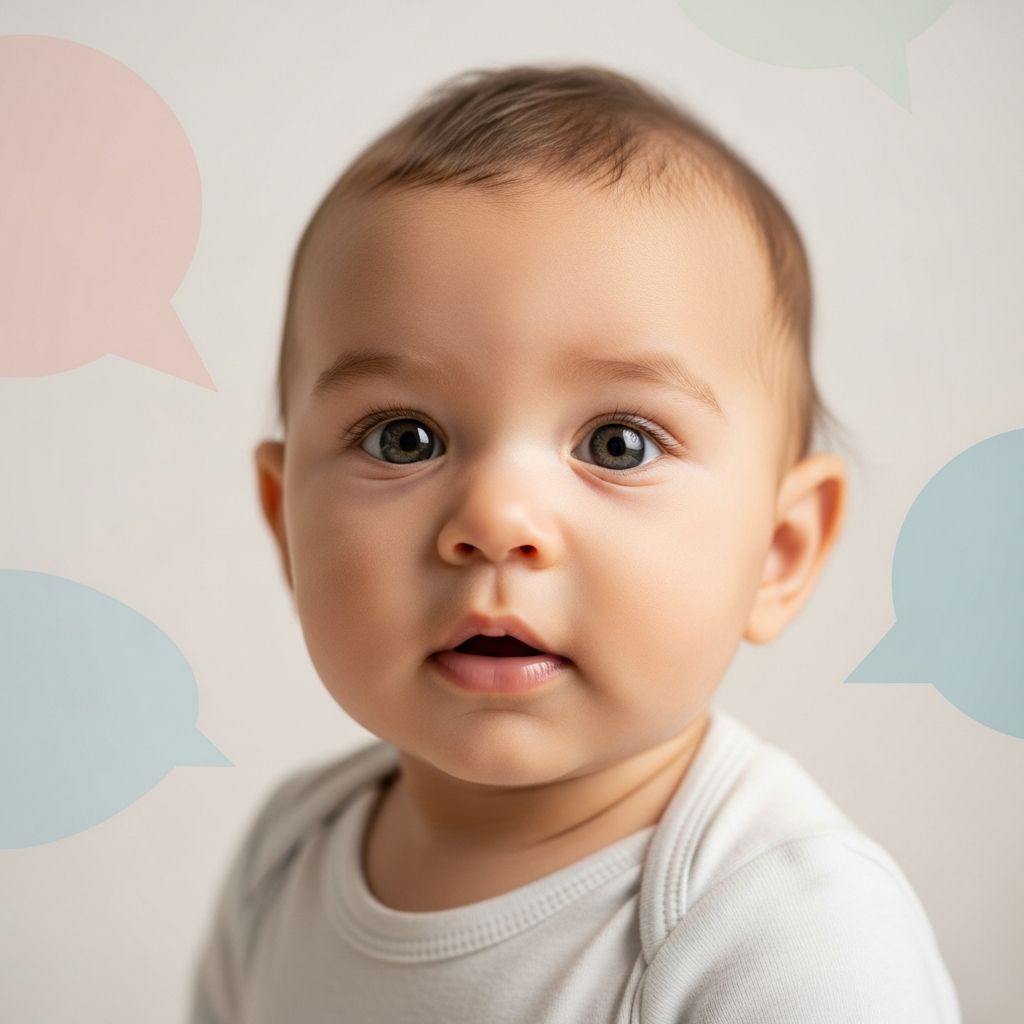
Infants begin linking spoken words to real-world objects much earlier than experts once believed. Research demonstrates that by six months, babies recognize meanings for common terms like foods and body parts, reshaping our understanding of language acquisition.
The Dawn of Word Comprehension in Infancy
Language development starts in the cradle. Long before babies utter their first words, their brains process and associate sounds with meanings. Pioneering studies using eye-tracking technology reveal that 6- to 9-month-olds shift their gaze toward named objects, proving comprehension without verbal output.
This milestone challenges traditional timelines, where word understanding was pegged near the first birthday. Instead, everyday exposure builds an ‘inner vocabulary’ from mere months old. Parents’ casual naming of apple slices or toes lays the foundation.
Eye-Tracking: Peering into Baby Minds
Researchers employ ‘looking-while-listening’ to measure infant smarts. Babies view paired images—say, an apple and a shoe—while hearing ‘Look at the apple.’ Preferential looking to the target indicates recognition.
In one landmark experiment, 33 infants aged 6-9 months identified 20 items, outperforming expectations. Performance held steady until 14 months, when it surged, hinting at subtle gains masked by growing distractibility.
| Age Group | Word Categories Tested | Recognition Rate |
|---|---|---|
| 6-9 months | Foods, body parts | High for distinct items |
| 10-20 months | Same | Steady, jumps at 14 months |
This table summarizes key findings: younger babies excel with clear contrasts but falter on similars like milk vs. juice.
Home Environment Fuels Word Learning
What babies hear at home predicts lab success. Recordings from vests and headcams show noun-rich talk correlates with better recognition. Caregivers describing visible objects—’Here’s your bottle’—accelerate mapping.
- Noun frequency in daily speech boosts distinct word grasp.
- Babies in verb-light homes still link objects early.
- Conversational style, not quantity, matters most.
Swingley advises treating infants as partners: narrate their world to optimize conditions.
Brain Mechanisms Behind Early Links
Neural pathways form rapidly. Phonetic sensitivity at 6 months forecasts later vocabulary. Infants segment speech streams, recognizing ‘cup’ amid babble, via familiarization tests.
Bergelson notes: babies aren’t pointing or walking, yet internally connect labels to items. This silent processing underscores language as a perceptual skill from birth.
Implications for Parents and Caregivers
Armed with this, adults can supercharge growth. Speak descriptively during routines: mealtimes for foods, bath time for body words.
- Label objects in view.
- Use full sentences.
- Respond to baby’s cues.
- Repeat for reinforcement.
Early talkers benefit lifelong: predictive phonetic tests link to toddler fluency.
Challenges in Similar Word Pairs
Not all words come equally. Distinct pairs (juice-car) elicit strong looks; related ones (nose-mouth) confuse. This mirrors adult struggles, showing nuanced early semantics.
Development plateaus mid-year, possibly from attention shifts, resuming post-14 months.
Broader Developmental Context
Word knowledge intertwines with motor skills, though independent. Pre-walking infants grasp dozens of terms via exposure alone.
Daily life trumps lab training: real categories like ‘milk’ stick sans prompts.
Future Research Directions
Ongoing work probes verbs, adjectives. Cross-linguistic studies test universality. Home data expands to diverse families.
Potential screens for delays: early looking predicts outcomes, aiding interventions.
Frequently Asked Questions
Do all 6-month-olds understand words?
Many do for familiar nouns, varying by exposure. Lab tests confirm population trends.
How can I tell if my baby gets words?
Watch gaze shifts to named toys or body parts during play.
Is baby talk helpful or should I use adult speech?
Clear, descriptive adult speech works best; engage as conversational equals.
What if my baby seems behind?
Individual paces vary; consult pediatricians if concerned post-12 months.
Does screen time help word learning?
Live interaction outperforms; prioritize face-to-face talk.
Practical Tips to Boost Early Vocabulary
Integrate language everywhere:
- Mealtimes: ‘Yummy banana!’
- Diaper changes: ‘Tickly toes!’
- Play: Name toys, actions.
- Reading: Point and label pictures.
Consistency builds confidence. Celebrate tiny recognitions.
Expand to actions: ‘Baby kicks!’ fostering grammar seeds.
Long-Term Benefits of Early Exposure
Robust foundations predict school readiness. Noun-rich homes yield larger lexicons by preschool.
Social-emotional gains too: understood babies engage more, strengthening bonds.
Policy-wise, this supports parental leave, early education emphasizing talk.
References
- Six-month-old Word Learners — U.S. National Science Foundation. 2012-10-15. https://www.nsf.gov/news/six-month-old-word-learners
- Penn Psychologists Find 6- to 9-Month-Olds Understand the Meaning of Many Spoken Words — Penn Today, University of Pennsylvania. 2012-10-15. https://penntoday.upenn.edu/news/penn-psychologists-find-6-9-month-olds-understand-meaning-many-spoken-words
- Babies recognize common words by 6 months of age — Science News. 2015-07-20. https://www.sciencenews.org/blog/growth-curve/babies-recognize-common-words-6-months
- Baby’s first heard words — American Psychological Association. 2006-09-01. https://www.apa.org/monitor/sep06/words