Many parents spend endless energy making sure children eat well, study hard, and stay safe, yet one of the most powerful predictors of lifelong success is often overlooked: emotional intelligence. Emotional intelligence is the set of skills that helps children understand their feelings, manage them, and respond to others with empathy and respect. When parents intentionally nurture these abilities, home life becomes calmer, relationships deepen, and children grow into resilient, compassionate adults.
What Emotional Intelligence Really Means for Children
Emotional intelligence is not about being happy all the time or keeping children from ever feeling upset. Instead, it is about helping them recognize what they feel, understand why they feel it, and choose what to do next in a healthy way. A child with strong emotional skills can be angry without becoming destructive, disappointed without giving up, and excited without losing control.
In simple terms, an emotionally intelligent child can:
- Notice and name feelings in themselves and others.
- Pause before acting on strong impulses.
- Use words, not aggression, to express needs and frustrations.
- Show care, kindness, and understanding in relationships.
Why Emotional Intelligence Matters More Than Ever
Children today grow up in a fast, complex world where academic pressure, digital distractions, and social comparison are common. Emotional intelligence acts like internal armor and a compass at the same time: it helps kids cope with stress, recover from setbacks, and make thoughtful choices instead of reacting on autopilot. These skills support mental health, protect against anxiety and depression, and help children navigate peer dynamics and school challenges more successfully.
Over time, emotionally savvy children tend to build stronger friendships, cooperate more easily with adults, and adapt better to change. They learn to see mistakes as problems to solve rather than personal failures, which builds confidence and persistence.
Key Skills of an Emotionally Intelligent Child
Emotional intelligence is made up of several core abilities that grow gradually as children mature and receive guidance. Parents do not need to “teach feelings” like a school subject; instead, these skills are woven into daily interactions, conversations, and routines.
| Skill | What It Looks Like in Daily Life |
|---|---|
| Self-awareness | Child can say, “I’m nervous about the test,” instead of just acting out or shutting down. |
| Emotion regulation | Child takes a break, breathes, or asks for help rather than hitting or screaming when upset. |
| Empathy | Child notices when a friend is sad and offers comfort, a toy, or a kind word. |
| Problem-solving | Child looks for solutions when there is a disagreement instead of insisting on winning. |
| Social skills | Child can take turns, apologize sincerely, and repair conflicts after arguments. |
The Parent’s Role: From Fixer to Emotional Guide
Many loving parents rush to fix problems, distract from tears, or talk children out of big feelings because watching them suffer is uncomfortable. Yet emotional intelligence grows best when parents act as guides instead of rescuers or judges. The goal is not to remove every obstacle but to walk beside the child as they move through it.
Think of yourself as your child’s “emotion coach.” Rather than telling them how to feel or insisting they calm down instantly, you help them understand what is happening inside, offer words for it, and model healthy ways to respond. Over time, the support you offer from the outside becomes a skill they carry on the inside.
Five Everyday Practices That Build Emotional Intelligence
Emotional intelligence is not built in one big conversation. It grows through small interactions repeated many times. The following practices can be woven into ordinary moments like mealtimes, play, and bedtime, without adding more stress to an already busy day.
1. Name Feelings Without Judgment
Children cannot manage what they do not understand. By calmly describing what you observe, you give language to their inner world and show that emotions—even very big ones—are acceptable. When parents describe emotions in neutral terms, children feel seen instead of criticized, which makes them more open to guidance.
- Use simple, clear statements such as, “It seems like you’re really disappointed,” or “You look worried about tomorrow.”
- Avoid labels like “dramatic” or “overreacting.” These make kids feel misunderstood and often intensify the behavior.
- Expand beyond the basic words happy, sad, and mad; include frustrated, nervous, excited, jealous, or proud.
2. Welcome All Emotions, Set Limits on Behavior
One of the most powerful messages children can receive is that every feeling is acceptable, but not every action is. When parents treat some feelings as “bad” or “too much,” kids learn to bury or deny them. This can lead to explosive outbursts later or quiet withdrawal. Instead, separate the emotion from the behavior.
- Validate the feeling: “It makes sense that you are furious your tower fell.”
- Hold a boundary: “You may not throw the blocks. You can stomp your feet or ask for help.”
- Offer safe outlets: drawing, squeezing a pillow, jumping in place, or using words to complain.
3. Listen More Than You Lecture
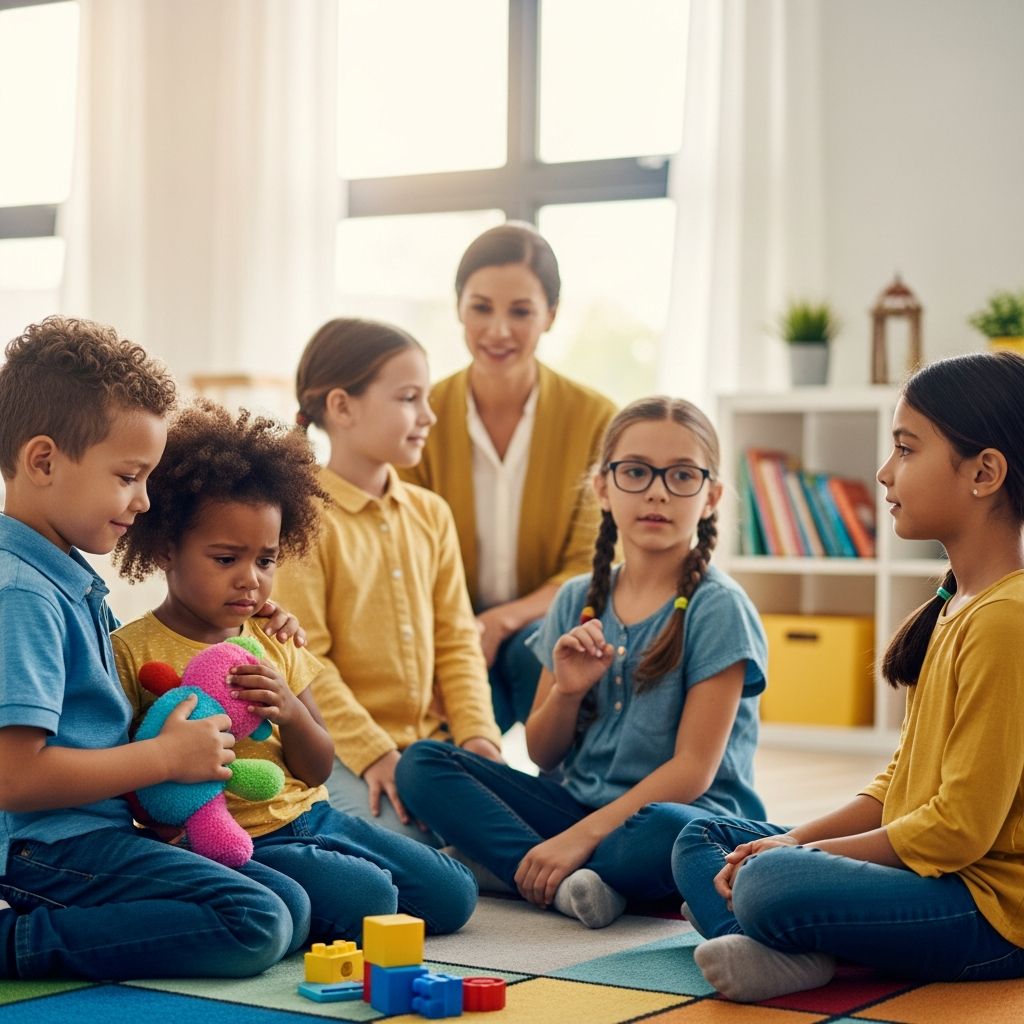
Children learn emotional skills not only from what parents say but from how parents listen. When adults jump immediately into advice, correction, or dismissal, children feel alone with their emotions. Slow, curious listening communicates, “Your inner world matters here,” which encourages honest sharing.
- Give your full attention when your child is upset: kneel to their level, make gentle eye contact, and put away devices.
- Use open-ended questions: “What was the hardest part?” or “What were you hoping would happen?”
- Reflect back what you hear: “So you felt left out when they didn’t pick you for the team.”
4. Teach Calm-Down Tools in Peaceful Moments
Children cannot learn new skills when they are in full meltdown mode. The best time to introduce calming strategies is when everyone is already relatively calm. Treat these tools like games or experiments so they feel inviting rather than like punishment or control.
- Practice slow belly breaths together and give them a fun name, such as “balloon breaths.”
- Create a cozy corner with soft items, books, and sensory toys for cool-down time.
- Teach simple phrases like “I need a break,” so children can ask for space before they lose control.
5. Turn Conflicts Into Learning Moments
Arguments between siblings, power struggles over screens, and tears at bedtime are not parenting failures; they are natural laboratories for emotional learning. When the storm has passed, gently revisit what happened and guide your child through reflecting on their choices and feelings.
- Rewind the story: “Let’s talk about what happened when it was time to leave the park.”
- Ask collaborative questions: “What could we try next time you feel that angry?”
- Help repair: role-play apologies, practice asking for another turn, or brainstorm fair solutions.
Balancing Connection and Boundaries
Emotional intelligence does not mean permissive parenting. Children still need clear rules, age-appropriate expectations, and consistent follow-through. The difference is that emotionally wise parents enforce limits with empathy instead of shame or intimidation. The child’s feelings are welcomed, even while the parent stands firm.
For example, a parent might say, “You are very angry that it’s bedtime and you wish you could stay up. It is still bedtime.” In this way, the boundary stays intact, but the relationship does not break. Over time, children internalize both the limit and the sense of being understood.
Common Obstacles and How to Handle Them
No parent responds perfectly, and no child stays calm all the time. Emotional intelligence develops in an imperfect, real-world environment where parents are tired, children are unpredictable, and life is messy. Expect setbacks; they are part of the learning process for everyone involved.
- Parental overwhelm: When you feel your own anger rising, pause, step back, and regulate yourself before trying to guide your child.
- Public meltdowns: Focus on safety and calm connection first, explanations later. Prioritize your child’s sense of security over others’ opinions.
- Repeated behavior: View repetition as a sign that the child still needs practice and support, not proof that they are defiant or hopeless.
Modeling: Your Emotions Are the Lesson
Children study how adults handle emotions much more closely than many parents realize. Every time a parent apologizes after snapping, takes a breath instead of shouting, or openly admits feeling nervous before a big presentation, the child receives a living demonstration of emotional skills in action. Perfect control is not necessary; what matters most is honesty, repair, and growth.
You can strengthen your modeling by:
- Talking about your feelings in age-appropriate ways: “I’m frustrated with this traffic, so I’m going to take deep breaths.”
- Showing how you calm down: stretching, stepping outside briefly, or asking for a moment to think.
- Making amends: “I didn’t like how I raised my voice earlier. You didn’t deserve that. Next time I’ll try pausing first.”
Creating an Emotion-Friendly Home Environment
The emotional climate of a home matters as much as individual conversations. A child who lives in an environment where feelings are acknowledged, mistakes are treated as opportunities, and respect runs both ways is naturally more likely to develop emotional intelligence. Small rituals and routines can make a big difference.
- Include a quick “feelings check-in” at dinner or bedtime, inviting everyone to share one emotion from the day.
- Keep books, games, and stories that highlight characters dealing with big feelings and choices.
- Celebrate emotional growth, such as “You stayed calm when your brother grabbed your toy—that took real effort.”
Sample Daily Micro-Moments That Build EQ
Parents often underestimate how many chances they have each day to support emotional growth. The following examples show how ordinary moments can be turned into powerful teaching opportunities with just a few extra sentences or gestures.
| Situation | Emotion-Coaching Response |
|---|---|
| Child loses a game and starts to cry. | “Losing really stings, doesn’t it? Want a hug while you cool down, then we can talk about a rematch?” |
| Child refuses to turn off a screen. | “You’re frustrated because you want to finish this level. It’s time to stop now. Do you want to turn it off yourself or should I?” |
| Child is nervous about a school presentation. | “Feeling nervous before speaking in front of people is really common. Let’s practice together and think of one thing you’re proud to say.” |
| Sibling snatches a toy. | “It looks like you both want the same toy. Let’s hear each person’s idea and figure out how to share or take turns.” |
Long-Term Benefits of Raising Emotionally Wise Kids
The immediate payoff of emotion-focused parenting often shows up as fewer explosive meltdowns, smoother transitions, and warmer family interactions. Over the long term, the benefits extend far beyond childhood. Emotionally intelligent kids tend to become adults who handle stress more effectively, maintain meaningful relationships, and make thoughtful decisions under pressure.
These children are also better equipped to navigate modern challenges such as online conflicts, academic demands, and workplace pressures. They can recognize when they need support, ask for help without shame, and offer empathy to others who are struggling.
Frequently Asked Questions
Is emotional intelligence more important than academic success?
Academic skills matter, but emotional skills often determine how well children use their knowledge. A child who can handle frustration, seek help, and collaborate with others is more likely to persevere in school and life. Emotional intelligence and academic learning are not rivals; they strengthen each other.
Won’t validating feelings encourage more whining or drama?
Validation does not mean agreeing with every demand or giving in to every request. It simply acknowledges the reality of what the child feels inside. When children feel understood, they are less likely to escalate and more willing to cooperate, which reduces rather than increases drama over time.
What if I grew up in a home where emotions were ignored or punished?
Many parents are learning these skills for the first time as adults. This background can make emotional conversations feel awkward at first, but it also offers a powerful opportunity to break old patterns. By practicing self-awareness, seeking support, and making small changes, you can create a different emotional legacy for your children.
How early can I start teaching emotional intelligence?
It is never too early or too late. With babies and toddlers, emotional intelligence looks like soothing, naming feelings in simple words, and responding consistently. With older kids and teens, it involves more detailed conversations, collaborative problem-solving, and mutual respect. Every age brings new opportunities to grow these skills together.
What if my child has very intense emotions or a sensitive temperament?
Sensitivity is not a flaw; it simply means emotions are felt more strongly. These children may need more time to calm down and more repetition of tools, but they can develop exceptional empathy and insight. Steady, compassionate guidance, combined with clear boundaries, helps channel their intensity into strength rather than struggle.
Planting Seeds for a Lifetime
Raising an emotionally intelligent child is not about mastering a script or following a rigid method. It is about choosing, again and again, to meet feelings with curiosity rather than fear, and to value connection as much as correction. Each time you pause to listen, name an emotion, or repair after a rough moment, you are planting seeds that can grow into resilience, kindness, and wisdom in your child’s life.
Those seeds may not show their full strength right away, but over the years they form a deep root system that supports your child through friendship struggles, academic stress, first heartbreaks, and adult responsibilities. Emotional intelligence is a lifelong gift, and as you cultivate it in your child, you are likely to discover it blossoming within yourself as well.