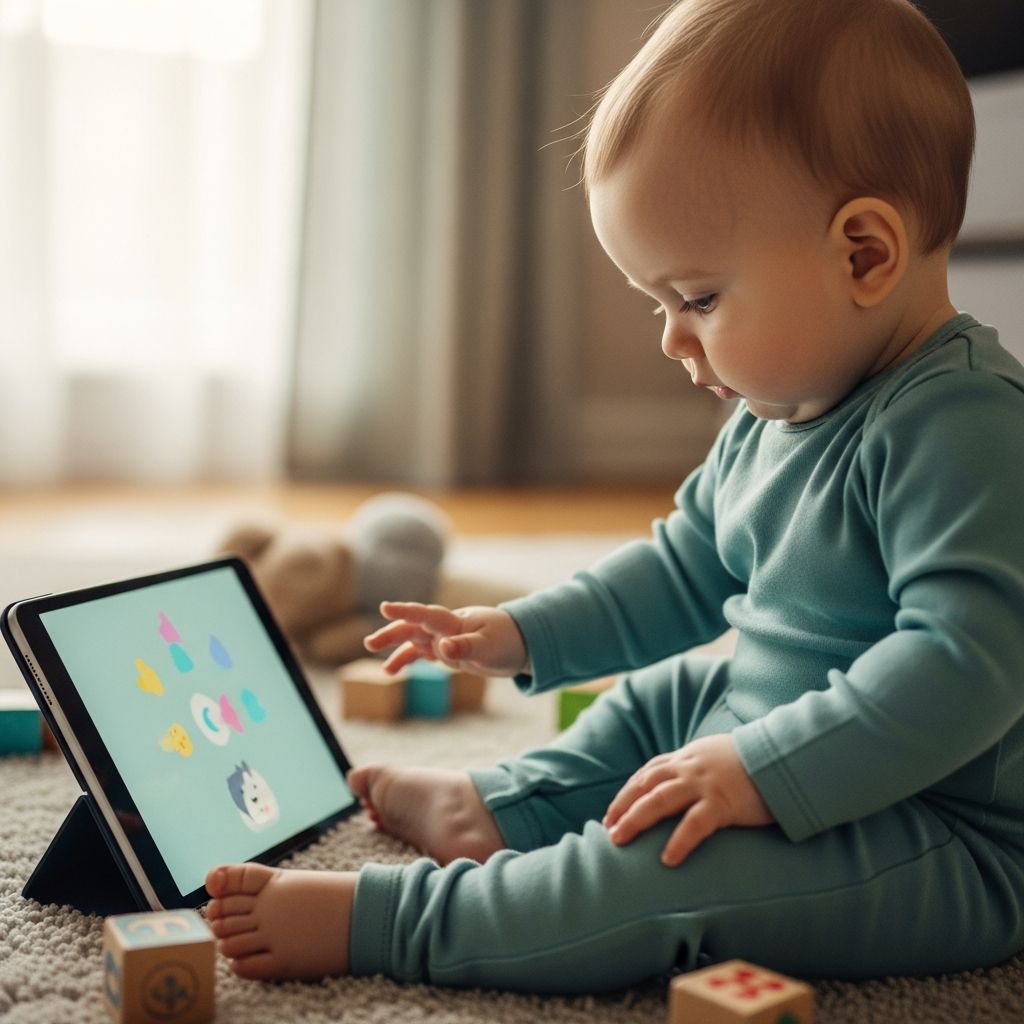
Smartphones are now part of everyday parenting, and that raises a big question: what place, if any, should mobile apps have in a baby’s life during the first two years?
This guide explores what is known about baby development, screen exposure and mobile apps, and offers practical ways to protect your baby’s growth while still making use of helpful digital tools when needed.
Why the First Two Years Are Different
The first two years are a unique window of brain development, language growth and emotional bonding. During this time, babies learn best from real people, real objects and real experiences.
- Early development depends heavily on touch, eye contact, voice tone and responsive back-and-forth interactions.
- Babies explore with their senses and whole bodies: mouthing objects, crawling, banging, dropping, listening and watching.
- Caregivers act as “translators” of the world, narrating daily life and responding to baby’s sounds and signals.
Because of this, any time spent on screens needs to be weighed against time spent in rich, face-to-face interaction and physical play.
Understanding Screen Time for Babies
Health organizations around the world generally recommend avoiding routine screen time for children under 18–24 months, with the main exception of video chatting with loved ones. The concern is not that screens are inherently dangerous, but that they can easily displace more valuable experiences.
Research has linked early and frequent screen exposure in infants to potential issues later on, including weaker language skills, attention challenges and sleep disruption. These findings do not mean a baby is harmed by seeing a screen occasionally; they highlight that consistent, high-volume exposure may interfere with optimal development.
What Counts as a “Baby App”?
When people talk about apps for babies, they usually mean one of three broad categories:
- Entertainment apps – colorful videos, animations, songs, or interactive tap-to-make-it-move games marketed for very young children.
- “Educational” apps – apps that claim to teach letters, numbers, colors or words to babies and toddlers.
- Parent-facing apps – tools that help adults track feeding, sleep, diapers, milestones or health-related information, with babies only indirectly involved.
Each type raises different questions. Entertainment and so-called educational apps directly engage the baby through the screen, while parent-facing tools primarily support the caregiver’s organization and confidence.
Baby Apps: Potential Benefits and Real Limits
Mobile apps are often marketed with big promises for infant learning, but it is important to keep expectations realistic. Babies do not learn in the same way as older children who can understand symbols and abstract concepts.
- Infants under around 18–24 months struggle to transfer knowledge from a flat screen to the real world. A baby might tap a digital ball but not connect that experience with a physical ball.
- Early learning is heavily context-dependent: the feel of an object, the smell of the room, the sound of a caregiver’s voice and the baby’s own movements all work together.
- Many “educational” claims made by baby apps are not backed by independent research. Labels like “brain-boosting” or “neuroscientist designed” are more marketing than evidence.
Where digital tools can genuinely help is in supporting parents: tracking health information, organizing routines, receiving reminders about safe sleep or vaccination schedules, or accessing trustworthy parenting education.
Common Risks of Early App Use
When considering baby-directed apps, it helps to understand the main areas of potential risk, most of which are indirect and related to what screens replace rather than what they show.
- Reduced caregiver interaction: If a baby is frequently occupied with a screen, there is less opportunity for back-and-forth conversation, shared play, and subtle emotional cues.
- Overstimulation: Fast-paced visuals, loud sounds and constant novelty can make it harder for some babies to settle, especially before naps or bedtime.
- Sleep disruption: Blue light and stimulating content close to bedtime can interfere with settling and sleep quality for infants and toddlers.
- Attention patterns: When most stimulation comes from flashing, self-moving images, babies may become less interested in slower, real-world exploration that builds sustained attention.
These risks are not about one short video during a cranky moment. They emerge when screens become a routine way to soothe, entertain or distract babies for extended periods.
Parent Apps: Helpful Tools When Used Wisely
Not all baby-related apps are aimed at the baby. Many are designed for parents and can strengthen care when used thoughtfully. These tools can save time, reduce anxiety and help caregivers feel more organized and informed.
Common helpful parent-facing app features include:
- Feeding and diaper trackers that make it easy to share information with health professionals.
- Sleep logs that show approximate patterns over days or weeks.
- Developmental milestone checklists that remind parents what skills often emerge when, without turning growth into a competition.
- Evidence-based guidance on breastfeeding, safe sleep, illness warning signs and when to seek care.
These apps work best when they support a parent’s judgment rather than replace it and when any medical advice is clearly grounded in recognized professional guidelines.
How Mobile Apps Can Support Gentle, Connected Parenting
Parents who aim for a calm, relationship-focused approach can still use technology as an ally. The key is to let connection, not convenience, lead decisions.
- Use apps to remind you of routines, but assess your baby’s cues first; a timer is helpful, but a baby’s signals are more important.
- Access short, credible parenting tips during night feeds, then put the phone down and focus on your baby’s face and body language.
- Save questions for your next pediatric visit in a notes app so stressful moments do not rely solely on memory.
When digital tools reduce stress and increase your emotional availability, they indirectly benefit your baby more than any baby-directed app ever could.
Decision Guide: App Types and Baby Age
The table below offers a high-level, non-medical framework for thinking about different app categories in the first two years. It does not replace individual professional advice for specific health or developmental concerns.
| Age range | Baby-directed entertainment apps | Baby-directed “educational” apps | Parent-facing tracking / info apps |
|---|---|---|---|
| 0–12 months | Best avoided as a routine; brief use in unavoidable situations only, with sound low and content calm. | Little realistic learning value; real-world play and talk are far more effective. | Often helpful for organizing feeds, sleep and health info when used flexibly. |
| 12–24 months | Can be used sparingly with a parent present; prioritize co-viewing and short, predictable content. | Potential for some learning when a caregiver actively joins in and links on-screen images to real objects. | Continues to be useful; avoid obsessing over numbers or comparing with other children. |
| Any age under 2 | Should never replace core needs: comfort, play, touch, sleep, and responsive care. | Marketing claims should be treated cautiously unless supported by independent, peer-reviewed evidence. | Not a substitute for medical advice; use them to prepare questions for qualified professionals. |
Setting Practical Family Guidelines
Abstract recommendations become more useful when turned into simple, concrete family rules. These can evolve as your baby grows and your circumstances change.
- No background screens: Keep televisions and large screens off in rooms where the baby is awake, unless you are intentionally watching and can turn them off again.
- Screen-free sleep zones: Avoid screens for at least 30–60 minutes before your baby’s bedtime or nap time and keep devices out of the crib area.
- Co-view when possible: If you use a video or app with your baby, sit together, talk about what you see and relate it to real-life experiences.
- Default to real play: Reach first for simple toys, songs, peek-a-boo and outdoor time; use screens as a last resort rather than a first choice.
Guidelines work best when they are applied to adults too. Babies are highly attuned to caregiver attention, so stepping away from phones during play, feeds and care routines matters at least as much as limiting the baby’s direct screen use.
How to Evaluate an App Before Using It Around Your Baby
App stores are full of products claiming to be safe, educational and expert-approved. A simple checklist can help you sort through the noise and make grounded choices.
Content and Pace
- Is the imagery calm, simple and not overly flashy?
- Is the pace slow enough that you could easily describe what is happening in real time?
- Does the app encourage your child to pause, think or interact with you, or does it push continuous taps and swipes?
Claims and Evidence
- Does the app make realistic, modest claims (for example, “supports parents in tracking sleep”) instead of promising to make your baby a genius?
- Are any expert endorsements specific and verifiable, or are they vague (“designed by experts”)?
- Is there transparent information about who made the app, why they made it and how they protect your data?
Privacy and Safety
- Does the app collect personal information about you or your baby, and is that clearly explained in plain language?
- Are there in-app purchases or advertisements that a child could accidentally tap later on?
- Are there parental controls to prevent unintended access or changes?
If an app fails several items on this checklist, or if its marketing feels manipulative or fear-based, it is usually safer to skip it and look for an alternative.
Using Apps During Tough Moments
Even the most screen-cautious parents face difficult situations: long waits, travel delays, urgent work calls or caring for another child. In such cases, a brief, calm video or app may feel like the least-bad option.
When that happens, it helps to frame screen use as a tool, not a habit:
- Choose content in advance so you are not searching in a moment of stress.
- Keep the volume low and the brightness comfortable for tiny eyes.
- Stay as emotionally present as the situation allows; if you cannot sit right next to your baby, check in frequently.
After the moment has passed, return to hands-on play and connection as soon as possible, without guilt. What matters most is the overall pattern over weeks and months, not a few minutes on a challenging day.
Supporting Your Own Well-Being with Technology
Parental well-being is a crucial but often overlooked part of the screen-time discussion. Exhausted, overwhelmed caregivers are more likely to rely on any tool available, including screens, simply to get through the day.
- Use meditation, breathing or support-community apps for yourself during baby naps to recharge emotionally.
- Stay connected with trusted friends or family through messaging or video calls, especially if you feel isolated.
- Access evidence-based parenting information through reputable organizations rather than social-media rumor mills.
When technology helps you feel calmer, more confident and less alone, your baby benefits from a more present and regulated caregiver.
Frequently Asked Questions About Babies and Apps
1. Is it ever okay for my under-two-year-old to see a screen?
Most experts agree that occasional, brief exposure is not likely to cause harm, especially when it is used thoughtfully and surrounded by plenty of real-world interaction. The concern is about frequent, unsupervised or background screen use that chips away at talk, touch and play.
2. Do any apps truly “teach” babies language or reading?
Language grows fastest through real conversation: adults responding to babbles, naming what the baby sees, singing, reading physical books and following the child’s lead. Apps may introduce sounds or images, but without rich back-and-forth with a human, they are unlikely to build strong language foundations.
3. What about video chatting with relatives?
Video chat is a special case, because it involves live, responsive human interaction. Babies can see familiar faces, hear voices and, with adult support, engage in simple games like waving, blowing kisses or showing toys. This type of screen use is generally considered more like a real-world conversation than passive viewing.
4. Could baby monitoring or “smart” socks prevent health emergencies?
Consumer monitoring devices can sometimes give useful information but are not certified medical equipment. They may produce false alarms or a false sense of security. They should never replace safe-sleep practices or professional medical advice, and any concerning readings must be discussed with a qualified health provider.
5. How much is “too much” screen exposure for a baby?
Instead of focusing on exact minutes, it is more practical to ask different questions: Is my baby getting plenty of face-to-face time, physical play, sleep and outdoor exposure? Are screens creeping into most quiet moments? If so, gently step back and re-balance toward offline experiences.
Key Takeaways for Calm, Confident Choices
- Babies learn best through touch, movement, real objects and responsive relationships, not through apps.
- Mobile tools can be valuable for parents when they support organization, education and emotional well-being without replacing common sense.
- Baby-directed entertainment and “educational” apps should play at most a very small, intentional role under age two, with co-viewing and clear limits.
- Simple family guidelines around screens protect bonding, sleep and development while still leaving room for flexibility in tough moments.
Used thoughtfully, technology can sit in the background as quiet support, while the real work of early parenting—connection, comfort, play and presence—takes center stage.