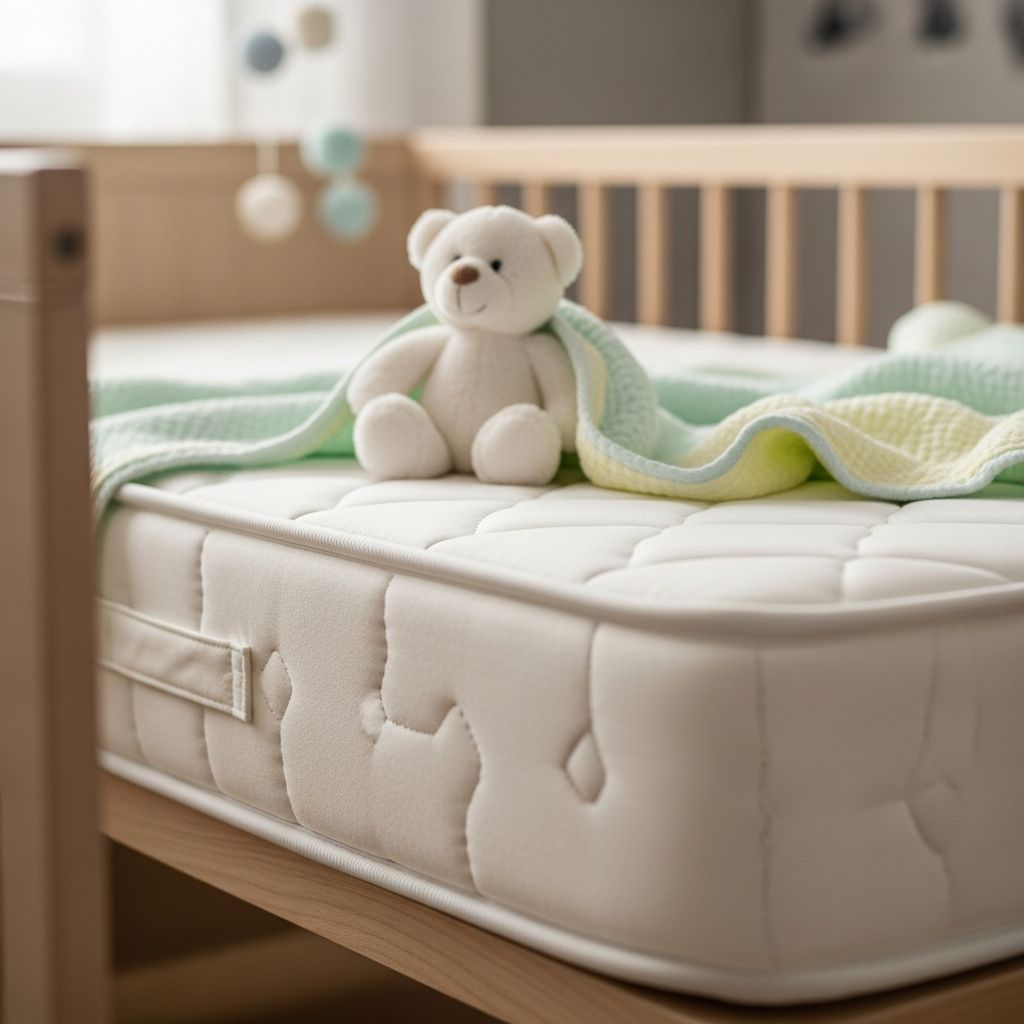
Picking a crib mattress is one of the most important nursery decisions because it directly affects your baby’s safety and sleep quality. A good crib mattress supports your baby’s growing body, reduces safety risks, and can often last into the toddler years.
This guide walks through key features, mattress types, safety checks, and practical shopping tips so you can choose confidently—even if it’s your first time setting up a nursery.
Why the Crib Mattress Matters So Much
Unlike many other baby products, the crib mattress is used every day for naps and nighttime sleep, often for several years. Your baby’s bones, muscles, and spine are developing quickly, and they need a surface that is firm, flat, and supportive while also being comfortable enough for restful sleep.
On top of comfort, the right mattress reduces suffocation hazards, helps maintain a safer sleep environment, and can limit exposure to unnecessary chemicals, depending on the materials you choose.
Key Features to Look For
Before getting into brands or materials, it helps to understand the core features that define a high-quality crib mattress. Use the checklist below as a quick reference while you shop.
- Firmness: The mattress should feel quite firm, not plush. When you press in the center and near the edges, it should spring back quickly rather than leaving a deep indentation.
- Snug fit: The mattress must fit tightly inside the crib frame, with no more than about two adult fingers able to fit between the mattress and crib side.
- Water resistance: Accidents and spills are inevitable. A waterproof or water-resistant surface—or a high-quality waterproof cover—makes cleanup easier and helps prevent mold and odors.
- Breathability: Materials and construction that allow airflow can help with temperature regulation and may make sleep more comfortable, especially for warm sleepers.
- Low chemical emissions: Mattresses that avoid unnecessary flame retardants and harsh chemicals or that carry reputable safety and emissions certifications can reduce indoor air pollutants in the nursery.
- Durability: A well-made crib mattress will maintain its shape and support through infant and toddler years without sagging or developing soft spots.
Understanding Crib Mattress Types
Most crib mattresses fall into four broad categories: foam, innerspring, hybrid, and organic/natural. Each type has pros and cons, and the best choice depends on your budget and priorities.
Foam Crib Mattresses
Foam mattresses are popular with parents who prioritize light weight and affordability. They usually use a high-density foam core to provide firmness and support in a relatively thin and easy-to-move package.
Look for foam that is dense and resilient rather than squishy. Press on the surface: it should not sink deeply under your hand, and it should return to shape quickly when you let go.
- Often lighter, making sheet changes easier on your back.
- Typically more budget-friendly than innerspring and high-end organic options.
- Quality can vary widely, so it is worth checking density, reviews, and any safety certifications.
Innerspring Crib Mattresses
Innerspring mattresses use steel coils at the core, surrounded by layers of padding and fabric. They tend to feel more like a traditional adult mattress and often have a longer useful life because of their sturdy construction.
They are usually heavier and may cost more, but many parents like the solid feel and durability, especially if they plan to use the mattress through the toddler years or for multiple children.
- Good long-term support and resistance to sagging.
- Heavier weight can make lifting the mattress for sheet changes more challenging.
- Coil count and gauge influence firmness and durability; very low-cost innersprings may feel uneven or less sturdy.
Hybrid Crib Mattresses
Hybrid crib mattresses combine elements of foam and innerspring. Typically, they include a coil system for structure and foam or other cushioning materials on top to balance firmness and comfort.
Some hybrid models also offer a dual-firmness design, with a firmer infant side and a slightly softer toddler side that you can flip as your child grows.
- Blend of strong support with a more cushioned feel.
- Often positioned at mid-to-high price points.
- Great for parents wanting one mattress that can easily transition from infant to toddler use.
Organic and Natural Crib Mattresses
Organic or natural crib mattresses focus on materials like organic cotton, wool, natural latex, or plant-based fibers and avoid many conventional chemicals used in standard mattresses. Some use wool for natural temperature regulation and as part of their fire-resistance strategy.
These mattresses tend to sit at higher price points, but they appeal to families who prioritize reduced chemical exposure and more sustainable production practices.
- Made from materials chosen to minimize synthetic chemicals and off-gassing.
- Often feature breathable, natural-fiber covers that feel soft yet sturdy.
- Typically more expensive, so they are an investment purchase rather than an entry-level option.
Crib Mattress Safety Essentials
Beyond comfort and durability, safety should guide every crib mattress decision. A safe sleep surface works together with safe sleep practices—such as placing your baby on their back and keeping soft objects out of the crib—to reduce risks.
Use the pointers below as non-negotiable safety rules when comparing any crib mattress.
- Firm, flat surface: Avoid anything overly soft or pillow-like that could conform closely to your baby’s face.
- No noticeable gaps: A mattress that is too small leaves space where a baby’s head or limbs could become trapped.
- Follow weight and age guidance: Some mattresses are clearly labeled for infant use only or specify when to flip or transition to a toddler side.
- Avoid soft toppers: Resist adding mattress toppers, thick pads, or extra cushioning for young infants, even if they seem more comfortable.
- Use only a fitted crib sheet: Loose blankets, pillows, and bumpers are not recommended in the crib during infancy.
Fitting the Mattress to the Crib
Even a high-quality mattress is unsafe if it does not fit the crib properly. Standard full-size cribs are built around a common mattress size, but small variations exist, and mini cribs require different dimensions altogether.
Before buying a mattress, confirm whether your crib is a standard or mini model and check the manufacturer’s recommended mattress size. After purchase, always perform a simple fit test when you place the mattress in the crib.
Simple Fit Test
- Place the mattress fully inside the crib, pushing it into each corner.
- Run your hand around the edges to feel for gaps; you should not easily fit more than about two adult fingers between the mattress and the crib side.
- Ensure the mattress lies flat with no raised corners or bowed edges.
Breathability, Temperature, and Comfort
Babies cannot regulate body temperature as efficiently as adults, so a mattress that sleeps extremely hot can lead to sweaty, restless nights. Materials and design influence breathability and temperature control.
Mattresses with ventilated cores, breathable covers, or moisture-wicking fabrics can help air circulate and keep your baby more comfortable, especially in warmer rooms or climates.
Ways to Improve Sleep Comfort
- Choose a breathable mattress cover or protector instead of plastic-like materials that trap heat.
- Dress your baby in lightweight, appropriate sleepwear so they do not overheat.
- Keep the room at a moderate temperature; if you feel comfortable in light clothing, the room is usually in a good range for your baby.
Waterproofing and Ease of Cleaning
Leaks, spit-up, and diaper blowouts are a reality of baby life. A mattress that is easy to wipe clean or fully washable will save time and keep odors and stains under control.
Many crib mattresses either have a built-in waterproof surface, a removable waterproof cover, or require a separate waterproof protector. Each approach has trade-offs in noise, feel, and convenience.
Common Waterproofing Options
- Built-in waterproof cover: Makes cleanup simple; just wipe and dry. Some covers can feel slightly plastic-like, so pairing with a soft fitted sheet is helpful.
- Removable waterproof cover: Zips off for machine washing and can be replaced if damaged over time.
- Separate protector: Adds a layer of defense and can be swapped quickly without removing the main mattress cover.
Crib Mattress Comparison Table
The table below summarizes the main differences between popular crib mattress types. It is a general guide to help you weigh your priorities—actual products will vary.
| Type | Typical Price Range | Weight | Main Advantages | Possible Drawbacks | Best For |
|---|---|---|---|---|---|
| Foam | Lower to mid-range | Light | Easy to lift; often budget-friendly; many firm options available | Cheaper models may sag or soften sooner | Parents who want an affordable, lightweight option |
| Innerspring | Mid to high | Medium to heavy | Durable support; familiar feel; often good long-term performance | Heavier to handle; higher-quality models can cost more | Families planning to use one mattress for several years or multiple kids |
| Hybrid | Mid to high | Medium | Balance of support and cushioning; often includes dual-firmness designs | Price may be higher than basic foam; features vary widely | Parents who want a grow-with-me mattress with a mix of features |
| Organic / Natural | Mid to premium | Varies | Uses natural fibers and materials; often emphasizes low chemical emissions | Higher upfront cost; may require special care instructions | Families prioritizing natural materials and sustainable production |
Budgeting: How Much Should You Spend?
Crib mattresses come in a wide range of prices, from budget-friendly foam options to premium organic and specialty models. The most expensive choice is not automatically the safest or best for your baby, but very low-cost mattresses may cut corners on durability or materials.
Think of the mattress as a long-term investment. A solid mid-range model that stays firm, resists sagging, and is easy to clean often offers the best balance of value and performance.
New vs. Used Crib Mattresses
It can be tempting to use a hand-me-down crib mattress, but not every used mattress is a good candidate. Over time, mattresses can develop soft spots, stains, and internal damage that you cannot always see from the outside.
If you do consider a used mattress, inspect it carefully and be honest about its history. In many cases, buying a new mattress and keeping it in good condition is the straightforward way to ensure a safe, supportive sleep surface.
What to Check on a Used Mattress
- No deep indentations, dips, or sagging areas, especially where a baby’s head would rest.
- Clean, intact cover without tears, peeling, or exposed foam or coils.
- No lingering odors, mold spots, or significant stains.
Practical Shopping Tips for Parents
When you are standing in the store aisle or scrolling through product listings, the number of choices can feel overwhelming. A simple, step-by-step approach can make the decision manageable.
Use the tips below to narrow options quickly and focus on models that match your priorities and budget.
- Start by confirming your crib size, then filter for mattresses that match those dimensions.
- Decide on a realistic budget, leaving room for a waterproof protector or extra cover.
- Choose a mattress type (foam, innerspring, hybrid, organic) that aligns with your comfort and material preferences.
- Read recent user reviews, paying particular attention to comments about firmness, durability, and ease of cleaning.
- If possible, press on the mattress yourself or review close-up photos that show the surface and edges.
Frequently Asked Questions
How firm should a crib mattress be?
A crib mattress should feel noticeably firmer than an adult mattress. When you press your hand into the surface, it should resist deep impressions and spring back to its original shape quickly. A firm surface provides safer support for young babies and helps keep their airway clear.
When can a baby use the softer side of a dual-firmness mattress?
Many dual-firmness crib mattresses are designed with a very firm infant side and a slightly softer toddler side. Typically, the softer side is meant for use once your child reaches toddlerhood and meets the weight and age guidelines specified by the mattress manufacturer. Always refer to the specific instructions that come with your mattress for timing.
Do I need a waterproof cover if the mattress is already waterproof?
Even if your mattress has a built-in waterproof surface, a removable waterproof protector or cover is still helpful. It catches most messes before they reach the mattress, making laundry simpler and protecting seams and stitching over time.
Can I use a memory foam mattress or topper in the crib?
Sleep surfaces that allow a baby to sink in deeply, such as typical memory foam toppers, are generally not recommended for infant cribs. They can create body impressions that may interfere with safe breathing and movement. A crib mattress should stay firm and supportive rather than contouring closely around your baby.
How long does a crib mattress usually last?
Many well-made crib mattresses last through the infant and toddler years for a single child, and some can be used for multiple children if they remain firm and structurally sound. Check the mattress periodically for signs of wear, such as sagging, lumps, or a cover that no longer stays intact.
Is an organic mattress always better?
An organic mattress is not automatically safer or more supportive, but it can reduce exposure to certain chemicals and may align better with your family’s environmental values. The most important features remain firmness, proper fit, and overall build quality, whether the mattress is organic or not.
Final Thoughts for Confident Mattress Shopping
Choosing a crib mattress does not have to be complicated when you focus on a few essentials: firm support, a snug fit in the crib, safe materials, and easy cleaning. Once those boxes are checked, you can decide whether features like dual-firmness, organic materials, or special breathable designs are worth the added cost for your family.
With the right crib mattress in place, you create a safer, more comfortable sleep space that can support your baby’s rest from those earliest newborn days well into the busy toddler years.