Auditory Neuropathy Spectrum Disorder (ANSD) is a unique hearing condition where sounds enter the inner ear normally, but the transmission of those signals along the auditory nerve to the brain is disrupted. This leads to challenges in processing and understanding speech, even if basic sound detection occurs. Primarily affecting infants and young children, ANSD requires early identification and intervention to support language growth and overall development.
Defining ANSD: How Hearing Breaks Down
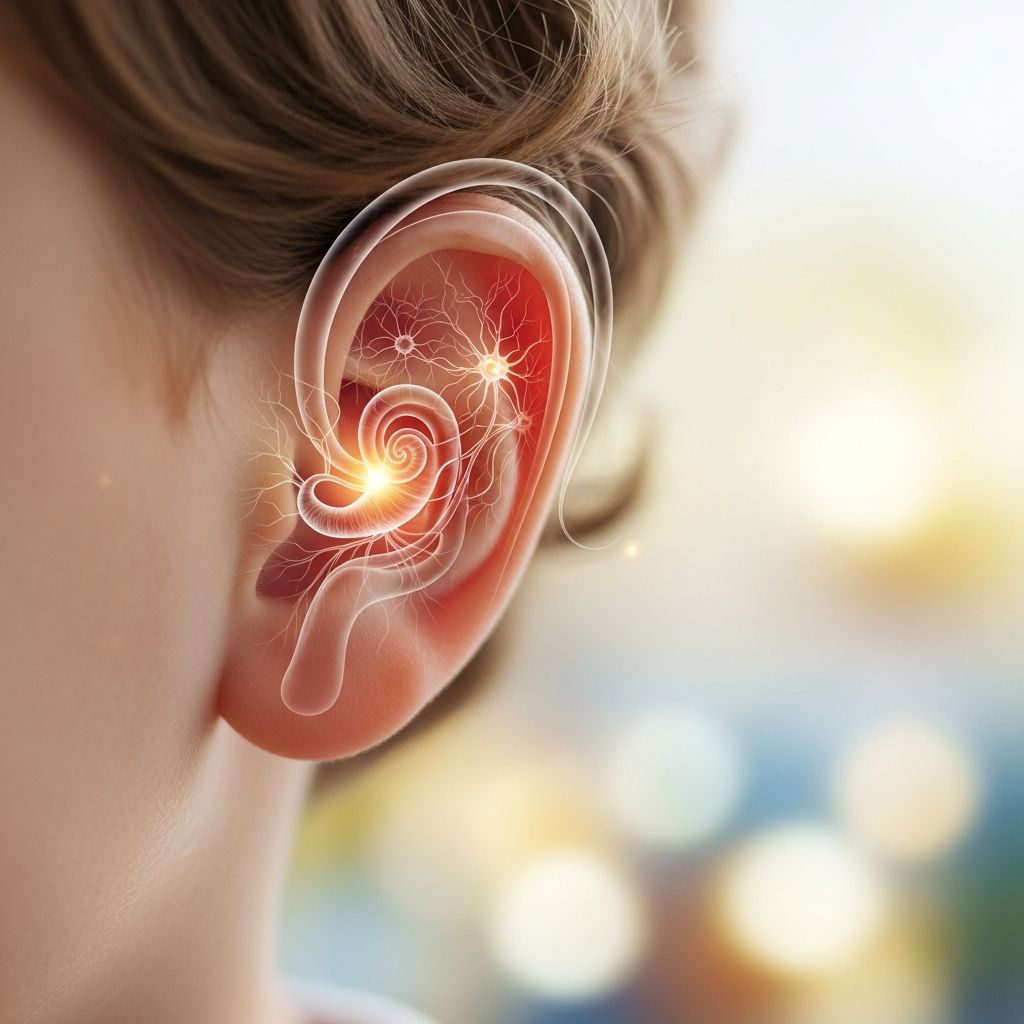
In typical hearing, sound waves vibrate the eardrum, travel through the middle ear bones, and stimulate hair cells in the cochlea of the inner ear. These cells convert vibrations into electrical signals sent via the auditory nerve to the brain for interpretation. With ANSD, the cochlea functions adequately—often shown by present otoacoustic emissions (OAEs)—but the nerve or its connections fail to relay clear, synchronized signals.
This desynchronization causes sounds to arrive at the brain out of order or weakly, making speech sound garbled, especially in noisy environments. Hearing sensitivity can range from mild to profound, and it may fluctuate daily, complicating daily interactions and learning.
Primary Causes and Risk Factors
ANSD arises from damage or dysfunction in the auditory pathway, often linked to events around birth or genetic factors. Common triggers include:
- Perinatal complications: Prematurity (especially under 28 weeks), low birth weight, hypoxia (low oxygen levels), or severe jaundice from elevated bilirubin.
- Ototoxic medications: Drugs like certain antibiotics or chemotherapy agents that harm inner ear structures or nerves.
- Genetic mutations: Over 15 genes implicated, with OTOF mutations being the most frequent non-syndromic cause, inherited recessively. Syndromic links include Charcot-Marie-Tooth disease, Friedreich’s ataxia, and mitochondrial disorders.
- Other factors: Family history, head trauma, intracranial hemorrhage, or congenital brain issues.
While most cases are congenital, acquired ANSD can occur later from trauma or illness. Researchers note that multiple factors often combine, explaining varied presentations.
Recognizing Early Warning Signs
Symptoms typically emerge in infancy but can appear at any age. Newborns might pass initial screenings yet show delays later. Key indicators by age include:
| Age Milestone | Expected Response | ANSD Red Flags |
|---|---|---|
| Newborn | Startle to loud noises | No reaction or inconsistent |
| 3 months | Recognize parent’s voice | Ignores familiar voices |
| 6 months | Turn toward sounds, babble | No head turn, limited vocalization |
| 12 months | Say words like ‘mama’, respond to name | Minimal speech, no imitation |
In toddlers and older children, watch for:
- Trouble distinguishing similar sounds (e.g., ‘bat’ vs. ‘pat’)
- Clear speech understanding issues, worsening in noise
- Fluctuating hearing—good one day, poor the next
- Frustration in conversations, high TV volume preference
- Delayed language, learning difficulties, or poor attention
These signs mimic other hearing losses, underscoring the need for specialized evaluation.
Comprehensive Diagnostic Process
Diagnosis involves a battery of non-invasive tests by audiologists, distinguishing ANSD from standard sensorineural loss. Core assessments:
- Otoacoustic Emissions (OAE): Probe in ear canal measures hair cell echo responses. Normal OAEs in ANSD confirm cochlear function.
- Auditory Brainstem Response (ABR): Electrodes on scalp detect nerve/brain reactions to clicks. Absent or abnormal waveforms with normal OAEs signal ANSD.
- Middle Ear Muscle Reflex (MEMR): Checks ear muscle contraction to loud sounds; often absent or elevated threshold in ANSD.
- Behavioral Audiometry: Observes responses to tones/speech in soundproof booth for older children.
- Additional tests: Electrocochleography (ECochG) or MRI to rule out structural issues.
Even if newborn screens pass, retesting is vital if milestones lag.
Treatment and Management Strategies
No cure exists, but early amplification and therapy yield strong outcomes. Options include:
- Hearing aids: Amplify sounds for those with residual hearing; effective in 20-50% of cases.
- Cochlear implants: Bypass damaged nerve portions, providing direct brain stimulation. Many children gain speech clarity post-implant.
- Assistive devices: FM systems or remote mics reduce noise interference in classrooms.
- Speech-language therapy: Builds comprehension and articulation skills.
- Auditory-verbal therapy: Leverages residual hearing for spoken language development.
Regular monitoring adjusts interventions as hearing may evolve.
Supporting Your Child’s Journey
Parents play a pivotal role. Create a communication-friendly home:
- Gain child’s attention before speaking.
- Use visual cues, gestures, and clear, slow speech.
- Minimize background noise during talks.
- Read daily, describing pictures to link words and meanings.
- Collaborate with educators for school accommodations like preferential seating.
Emotional support is key; frustration from miscommunication is common. Join support groups for shared experiences.
Long-Term Outlook and Research Advances
With intervention, many children with ANSD thrive academically and socially. Speech outcomes vary by ANSD severity, intervention timing, and family involvement. Ongoing research explores gene therapies and nerve regeneration.
Prognosis improves with diagnosis before 6 months, preventing language delays’ lifelong impact.
Frequently Asked Questions (FAQs)
Can children with ANSD hear normally some days?
Yes, hearing fluctuates in ANSD, appearing better or worse day-to-day due to nerve transmission inconsistencies.
Does ANSD always cause profound deafness?
No, loss ranges from mild to profound; some hear sounds but struggle with speech clarity.
Is cochlear implantation suitable for all ANSD cases?
Not always; success depends on individual nerve function. Audiologists assess candidacy.
How does ANSD differ from typical hearing loss?
ANSD features normal cochlear responses (OAEs) but poor nerve signaling (abnormal ABR), unlike standard losses.
Can ANSD be prevented?
Not fully, but managing prematurity risks, jaundice, and avoiding ototoxic drugs helps reduce chances.
References
- What To Know About Auditory Neuropathy Spectrum Disorder — Valley Audiology. Accessed 2026. https://valleyaudiology.com/what-to-know-about-auditory-neuropathy-spectrum-disorder/
- Auditory Neuropathy Spectrum Disorder (ANSD) — KidsHealth. Accessed 2026. https://kidshealth.org/en/parents/ansd.html
- Auditory Neuropathy Spectrum Disorder — National Organization for Rare Disorders (NORD). Accessed 2026. https://rarediseases.org/rare-diseases/auditory-neuropathy-spectrum-disorder/
- Auditory Neuropathy Spectrum Disorder (ANSD) SNIPPET — Kentucky Cabinet for Health and Family Services (CHFS). Accessed 2026. https://www.chfs.ky.gov/agencies/ocshcn/Documents/Audiory%20Neuropathy%20Spectrum%20Disorder%20(ANSD)%20SNIPPET.pdf
- Auditory Neuropathy — Hearing Loss Association of America. Accessed 2026. https://www.hearingloss.org/understanding-hearing-loss/types-causes-and-treatments/auditory-neuropathy/
- What Is Auditory Neuropathy? — National Institute on Deafness and Other Communication Disorders (NIDCD). Accessed 2026. https://www.nidcd.nih.gov/health/auditory-neuropathy