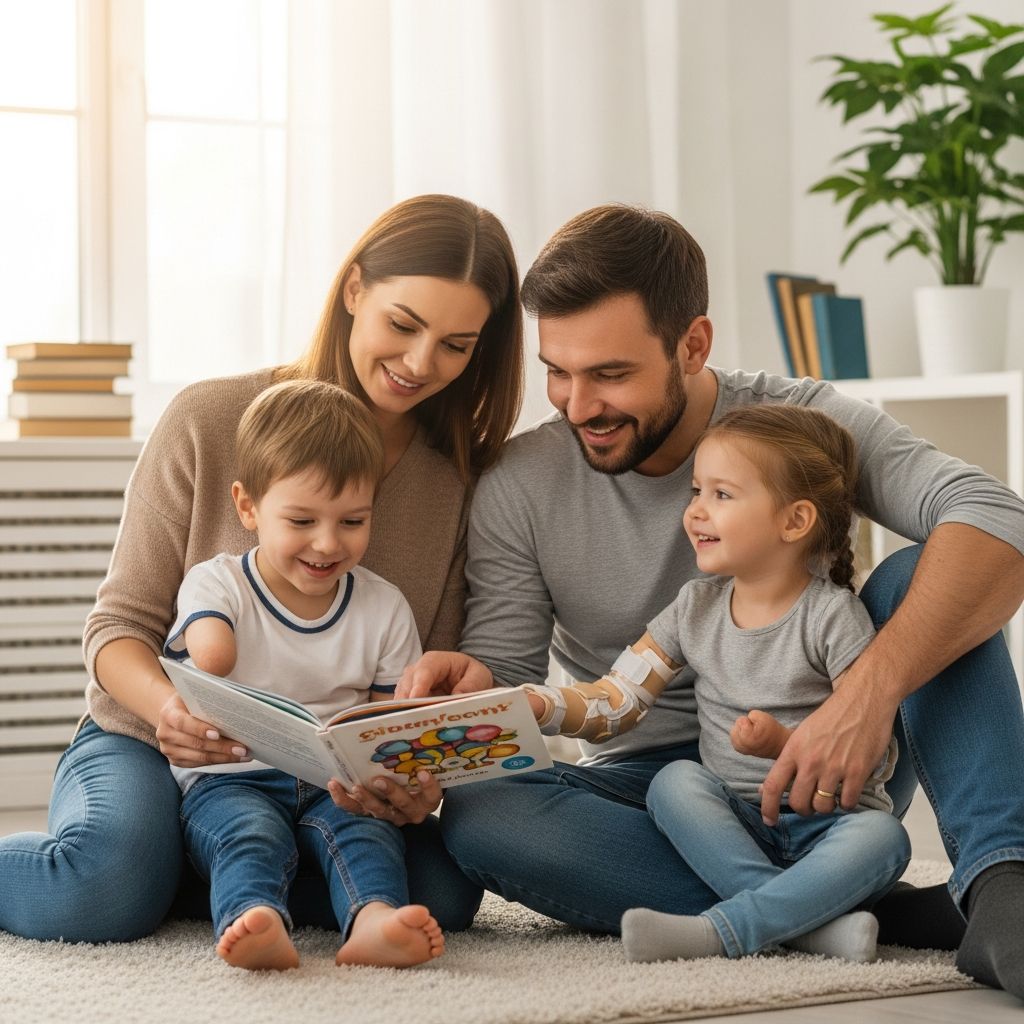
Bringing up a child born without arms or legs presents unique hurdles, yet countless families have transformed these circumstances into stories of extraordinary resilience and joy. Parents often shift from initial shock to becoming fierce advocates for their child’s potential, encouraging self-reliance and celebrating every milestone.
Understanding the Initial Diagnosis and Emotional Journey
When a baby arrives without limbs, the diagnosis—often tetra-amelia syndrome, affecting fewer than one in a million births—shatters expectations. This rare condition impacts fetal development, sometimes alongside issues like short-term memory challenges or hearing variances. Parents like Boris Vujicic, father to motivational speaker Nick Vujicic, recall the dark prognoses from doctors predicting limited capabilities. Yet, as they observed their infant’s innate ingenuity, hope replaced despair.
The emotional rollercoaster begins in delivery rooms. For the Vujicic family, watching Nick as a newborn master scooting by arching his back against the floor or furniture was a revelation. This self-taught mobility highlighted an important truth: children with such conditions possess remarkable problem-solving instincts that exceed adult imaginations. Similarly, families like the Adams, who raised Gabe Adams, faced decisions on whether to overprotect or push for autonomy, choosing the latter despite tears and resistance from their child.
- Common initial reactions: Shock, grief, and protective instincts dominate early days.
- Turning point: Observing the child’s natural adaptations sparks pride and a focus on abilities over limitations.
- Long-term mindset: Betting on the child’s potential rather than imposing restrictions proves transformative.
Promoting Early Mobility and Physical Independence
One of the first battles is mobility. Parents discover that conventional aids like wheelchairs may not suit infants eager to explore. Nick Vujicic, for instance, developed a hopping gait using his single small foot, progressing from slow scooting to a galloping run around the house. His parents were astounded, having never anticipated such upright movement.
In Gabe Adams’ case, his adoptive parents in Utah insisted on independence from toddlerhood. Despite Gabe’s pleas for help—’I have no arms or legs, just do it for me’—they responded, ‘You can figure it out.’ This persistence, though met with frustration, built lifelong self-sufficiency. Gideon DiMeglio, another Utah resident born without arms and short legs, mirrored this by pushing physical boundaries throughout life.
| Child | Adaptive Mobility Technique | Parental Strategy |
|---|---|---|
| Nick Vujicic | Hip rotation with foot brace for hopping/galloping | Observe and cheer, avoid over-intervention |
| Gabe Adams | Wheelchair transition to self-propelled tasks | Encourage trial-and-error despite resistance |
| Gideon DiMeglio | Custom adaptations for daily navigation | Leverage community and faith for support |
These techniques underscore a key principle: let the child lead in discovering their body’s capabilities. Safety concerns arise—falls without arms to break them—but resilience shines through, with minimal serious injuries reported in these accounts.
Navigating Play, Risks, and Social Integration
Playtime tests parental balance between caution and freedom. Nick loved skateboard races, towed by friends’ bikes or perched on handlebars—activities his father learned about years later with retrospective chills. ‘It’s not like I’m going to break an arm or leg!’ Nick quipped, embodying fearless play.
Socially, inclusion matters. Roughhousing with peers taught vulnerability without fragility. Parents intervene judiciously, fostering environments where the child is treated as an equal. For Gabe, family support prevented babying, building grit. In Gideon’s world, community ‘villages’—now ‘metropolises’—aid integration.
- Risk management: Supervise without stifling; teach peers gentle play.
- Social benefits: Builds confidence, counters pity with normalcy.
- Parental role: Cheerleader over helicopter—celebrate toughness.
Fostering Emotional Strength and Defying Expectations
Beyond physicality, emotional fortitude defines success. Parents avoid low expectations, as Nick’s milestones—marriage, fatherhood—shattered them. A 2015 video of him running drew 1.5 million views, symbolizing limitless potential.
Gabe credits parents for not coddling, turning ‘You can’t’ into proofs of ability. Heart-Hand Syndrome families, like one mother-son duo, adapt daily tasks creatively despite feeding tubes and health scares early on. Faith often anchors these journeys, providing purpose amid trials.
Modern Adaptations and Resources for Families
Today’s parents access advanced tools: custom prosthetics, therapy programs, and online communities. Organizations like the World Health Organization emphasize early intervention for congenital anomalies, promoting inclusive development. U.S. data from the CDC notes rare limb deficiencies occur in about 1 in 2,000 births, with support via early intervention services.
Key strategies include:
- Physical therapy focused on core strength and balance.
- Occupational training for self-feeding, dressing using mouth or feet.
- Psychological support to build positive self-image.
Table of Resources:
| Resource Type | Description | Focus |
|---|---|---|
| CDC Birth Defects | Tracking and prevention data | Statistics and risk factors |
| WHO Guidelines | Global standards for congenital care | Early intervention protocols |
| Local Therapies | Custom PT/OT programs | Mobility and daily skills |
From Childhood to Adulthood: Lifelong Independence
Transitioning to adulthood amplifies parenting impacts. Nick’s global influence stems from childhood lessons in perseverance. Gabe thrives independently, grateful for tough love. Gideon, now a father, overcame fatherhood doubts with family backing, welcoming daughter CaraLee despite his own C-section challenges for her.
These men marry, parent, and inspire, proving early independence yields profound results. Parents reflect: the ‘perfectly imperfect’ child becomes the greatest teacher.
Frequently Asked Questions (FAQs)
How do parents encourage mobility in limb-less children?
Allow self-discovery through observation, resisting the urge to assist immediately. Techniques like scooting or hopping emerge naturally with encouragement.
What risks come with active play for these kids?
Falls pose head injury risks without protective arms, but supervised rough play builds resilience with few long-term issues.
Can children born without limbs become parents?
Yes—Nick Vujicic has children; Gideon DiMeglio welcomed his first, supported by adaptive parenting and community.
What syndrome causes no arms or legs?
Tetra-amelia or similar; rarer than Holt-Oram (Heart-Hand Syndrome), affecting one in a million, per reports.
How to build emotional strength?
Avoid limits, celebrate abilities, and instill faith or purpose—turning ‘can’t’ into ‘watch me’.
References
- Nick Vujicic’s Father on Raising a Boy With No Arms or Legs — Fatherly. 2015. https://www.fatherly.com/health/nick-vujicics-father-on-raising-a-boy-with-no-arms-or-legs
- Man Born Without Arms And Legs Lives Life Without Limits — YouTube (Gabe Adams story). Accessed 2026. https://www.youtube.com/watch?v=Ur8_IUldv-I
- Mother & Son Born Without Arms | Our Life — YouTube. Accessed 2026. https://www.youtube.com/watch?v=SI6VVQizDtM
- Man born without limbs became a Utah legend at birth. Now, he’s welcoming his own child — KSL.com. 2023-10-01. https://www.ksl.com/article/51331147/man-born-without-limbs-became-a-utah-legend-at-birth-now-hes-welcoming-his-own-child
- Congenital Anomalies Fact Sheet — World Health Organization. 2024-05-01. https://www.who.int/news-room/fact-sheets/detail/birth-defects
- Birth Defects Data and Statistics — Centers for Disease Control and Prevention. 2025-01-15. https://www.cdc.gov/ncbddd/birthdefects/data.html