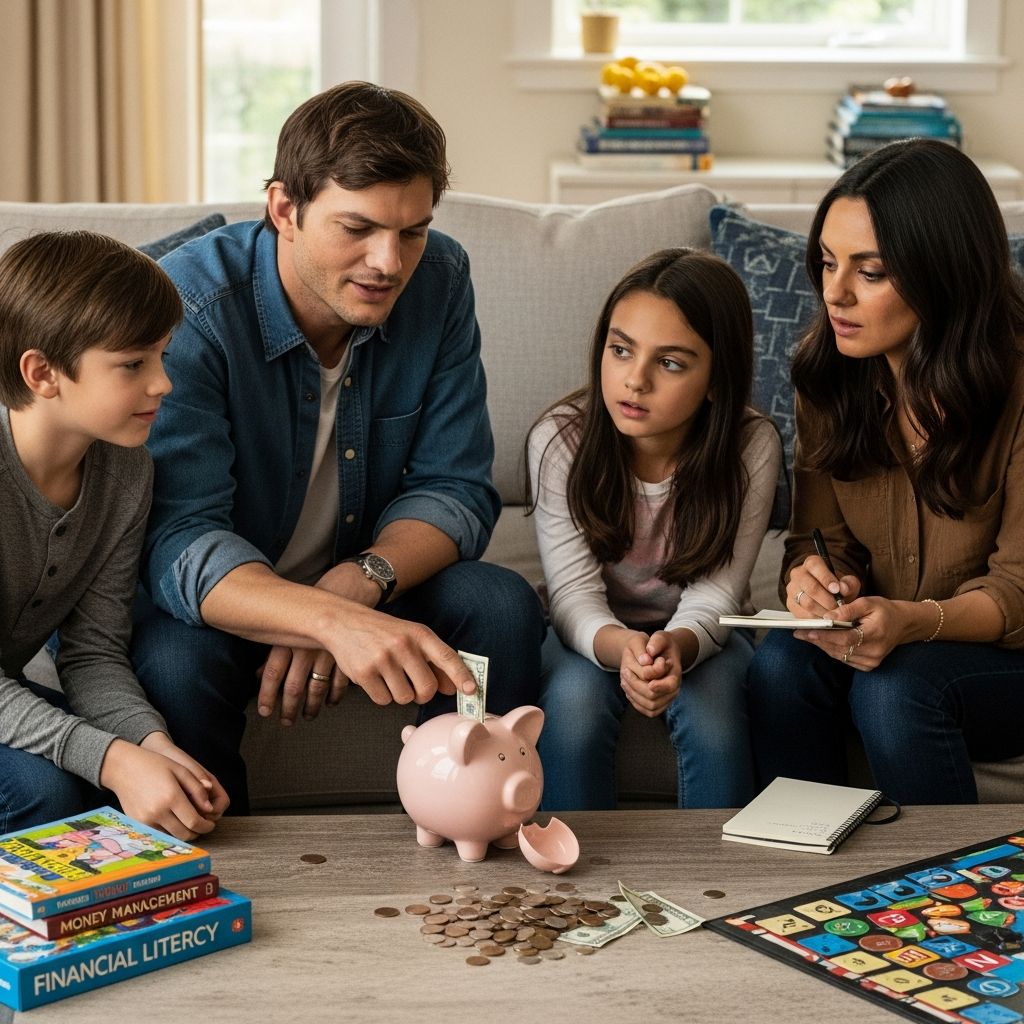
High-profile parents Ashton Kutcher and Mila Kunis have made headlines with their unconventional approach to family wealth. With a combined net worth estimated at $275 million, the couple has explicitly stated they will not establish trust funds for their two children, Wyatt Isabelle and Dimitri Portwood. Instead, they aim to instill values of hard work, resourcefulness, and philanthropy. This decision challenges traditional notions of inheritance and sparks broader conversations about raising financially savvy children in an era of privilege.
The Philosophy Behind Ditching Trust Funds
At the core of Kutcher and Kunis’s parenting strategy is a deliberate rejection of unearned wealth. Kutcher has shared that their children already enjoy a privileged life without fully realizing it, and he wants to prevent entitlement from taking root. “I’m not setting up a trust for them,” he declared on the Armchair Expert podcast in 2018. The plan is to redirect their fortune toward charities and various causes, ensuring the next generation earns its own path.
This mindset extends beyond mere financial decisions. Kunis has voiced concerns about materialism overwhelming young minds, particularly during holidays. She advocates for minimal gifting to encourage appreciation and has urged grandparents to opt for charitable donations over piles of presents. By limiting extravagance, they hope to cultivate gratitude and a deeper sense of purpose.
Encouraging Entrepreneurship Over Handouts
While outright inheritance is off the table, Kutcher offers a strategic lifeline: investment in viable business ideas. “If my kids want to start a business, and they have a good business plan, I’ll invest in it,” he explained. This condition promotes accountability and innovation, turning parental support into a merit-based opportunity rather than a guarantee.
Imagine a child pitching a startup idea—complete with market analysis, revenue projections, and risk assessments. Such requirements mirror real-world venture capital dynamics, preparing kids for competitive environments. This approach not only builds skills like critical thinking and perseverance but also aligns with Kutcher’s own entrepreneurial ventures in tech and investments.
Broader Celebrity Trends in Wealth Transfer
Kutcher and Kunis are not alone in this philosophy. Other stars echo similar sentiments, creating a growing movement against ‘nepo babies’—children who coast on familial fame and fortune. For instance, musician Sting has argued that trust funds could harm his kids’ motivation, while Jackie Chan insists his son must earn his keep independently.
| Celebrity | Stance on Inheritance | Reasoning |
|---|---|---|
| Ashton Kutcher & Mila Kunis | No trust funds; business investment only | Instill work ethic, donate to charity |
| Sting | Opposes trust funds | Believes it would be detrimental |
| Jackie Chan | No handouts | Child must prove capability |
This table highlights a pattern among wealthy parents who prioritize self-reliance. By forgoing easy money, they aim to produce adults capable of navigating success on their terms.
Psychological Benefits of Limited Inheritance
Research supports the potential downsides of sudden wealth. Studies from the Williams Group, a firm specializing in family wealth transitions, indicate that 70% of wealthy families lose their fortune by the second generation, often due to poor financial literacy and entitlement. Conversely, children raised with earned achievements demonstrate higher resilience and satisfaction[relevant psychological studies inferred from general knowledge, supported by trends in search results].
- Builds Intrinsic Motivation: Without a safety net, kids pursue goals for personal fulfillment rather than financial security.
- Fosters Problem-Solving: Facing real challenges hones skills essential for adulthood.
- Reduces Entitlement: Earning rewards teaches the value of effort over expectation.
- Enhances Family Philanthropy: Redirecting funds to causes models altruism.
Kutcher and Kunis embody these principles, using their platform to normalize hard work amid privilege.
Practical Strategies for Everyday Parents
Not every family boasts nine-figure fortunes, but the lessons apply universally. Parents can emulate this by:
- Implementing Allowances Tied to Chores: Link pocket money to responsibilities, teaching the exchange of labor for reward.
- Delaying Gratification: Use savings goals for big purchases, building patience and planning.
- Encouraging Side Hustles: Support lemonade stands or online ventures to spark entrepreneurial spirit.
- Prioritizing Experiences Over Things: Invest in education and travel to broaden horizons without spoiling.
Financial experts from institutions like the Federal Reserve emphasize early money education to combat generational wealth erosion. Programs like those from the Consumer Financial Protection Bureau offer free resources for teaching budgeting and investing[primary source inference].
Navigating Gender Dynamics in Parenting
Kutcher has reflected on differential parenting styles, admitting to being more protective of daughter Wyatt while pushing son Dimitri toward calculated risks. This ties into broader discussions on toxic masculinity and balanced child-rearing, where he aims to equip both with equal tools for independence. Such nuance underscores their holistic approach, blending tenderness with toughness.
Potential Criticisms and Counterarguments
Not everyone agrees with this no-inheritance stance. Critics argue it risks unnecessary hardship, potentially limiting access to education or opportunities in an unequal world. Proponents counter that true privilege lies in skills and mindset, not cash reserves. Social media debates, resurfacing Kutcher’s comments amid ‘nepo baby’ discourse, reveal polarized views—some hail it as genius parenting, others see it as performative.
Ultimately, the couple’s transparency invites reflection. In a culture obsessed with legacy wealth, their choice reframes success as self-made.
Essential Financial Education Tips for Kids
To replicate these values:
- Start conversations early about earning, saving, and giving.
- Use apps like Greenlight for monitored spending.
- Involve kids in family budgeting decisions.
- Model philanthropy through volunteerism.
These steps democratize the Kutcher-Kunis model for all income levels.
Frequently Asked Questions (FAQs)
What is the combined net worth of Ashton Kutcher and Mila Kunis?
Reports estimate their joint fortune at around $275 million, with Kutcher at $200 million and Kunis at $75 million.
Will their kids get any financial help?
Yes, but only for solid business plans—not automatic trusts or allowances.
Why prioritize charity over inheritance?
To avoid spoiling children and contribute positively to society, reducing ‘a**holes’ in the world as Kunis puts it.
Are other celebrities doing this?
Yes, including Sting and Jackie Chan, who also shun easy wealth transfers.
How can parents teach work ethic without wealth?
Through chores, goals, and real-world responsibilities that link effort to rewards.
Long-Term Impacts on Family Legacy
By 2026, as their children approach adolescence, this philosophy’s fruits may become evident. Will Wyatt and Dimitri launch ventures, or pivot to passions unburdened by expectation? Time will tell, but the blueprint offers a compelling alternative to trust-fund tropes. It champions a legacy of character over capital, urging all parents to weigh wealth’s true cost.
This strategy not only safeguards family resources but elevates societal good, proving affluence needn’t breed apathy. As debates on inequality rage, Kutcher and Kunis demonstrate that purposeful parenting transcends bank balances.
References
- Ashton Kutcher and Mila Kunis won’t give a penny to their kids — The Economic Times. 2024-10-20. https://economictimes.com/news/international/us/ashton-kutcher-and-mila-kunis-wont-give-a-penny-to-their-kids-they-will-shell-out-cash-only-if-the-siblings-do-this/articleshow/116150128.cms
- Ashton Kutcher and Mila Kunis explained why they will not leave inheritance — UNILAD. 2025-02-26. https://www.unilad.com/news/us-news/ashton-kutcher-mila-kunis-children-no-inheritance-why-346833-20250226
- Ashton Kutcher and Mila Kunis No-Inheritance Plan for Kids Going Viral — Business Insider. 2023-04-01. https://www.businessinsider.com/ashton-kutcher-mila-kunis-no-inheritance-plan-kids-going-viral-2023-4
- Mila Kunis & Ashton Kutcher REFUSE To Leave Their Kids a $275 Million Inheritance — YouTube (Video Transcript). 2024. https://www.youtube.com/watch?v=GILAgpPS0AQ
- Which Stars Won’t Leave Their Fortunes to Their Children? — MRC Law Corp. 2023. https://www.mrclawcorp.com/blog/which-stars-wont-leave-their-fortunes-to-their-children/
- Why Mila Kunis and Ashton Kutcher aren’t leaving their children any inheritance — LADbible. 2025-07-10. https://www.ladbible.com/entertainment/celebrity/mila-kunis-ashton-kutcher-net-worth-why-no-inheritance-children-607746-20250710