Inside your body is an amazing transportation system that never stops working. Every second of every day, your heart pumps blood through special tubes called arteries and veins. These blood vessels are like a giant highway network that delivers oxygen and nutrients and carries away waste so you can run, think, play, and sleep.
Meet Your Blood Vessels
Your body has three main kinds of blood vessels:
- Arteries – carry blood away from the heart.
- Veins – carry blood back toward the heart.
- Capillaries – tiny vessels that connect arteries and veins and swap gases and nutrients with your body’s cells.
Together, they form your circulatory system, the body system that moves blood all around.
Arteries: The High-Pressure Delivery Roads
Arteries are the strong, thick roads that carry blood away from your heart. When your heart squeezes, it pushes blood into your arteries under high pressure.
What Arteries Do
- Carry mostly oxygen-rich blood from the heart to the rest of the body.
- Branch into smaller and smaller tubes called arterioles and then into capillaries.
- Help keep blood moving forward by gently stretching and springing back as blood pulses through.
Most arteries take bright red blood that is full of oxygen and nutrients to your organs and muscles. One big exception is the pulmonary artery, which carries blood low in oxygen from the heart to the lungs to pick up more oxygen.
What Arteries Look and Feel Like
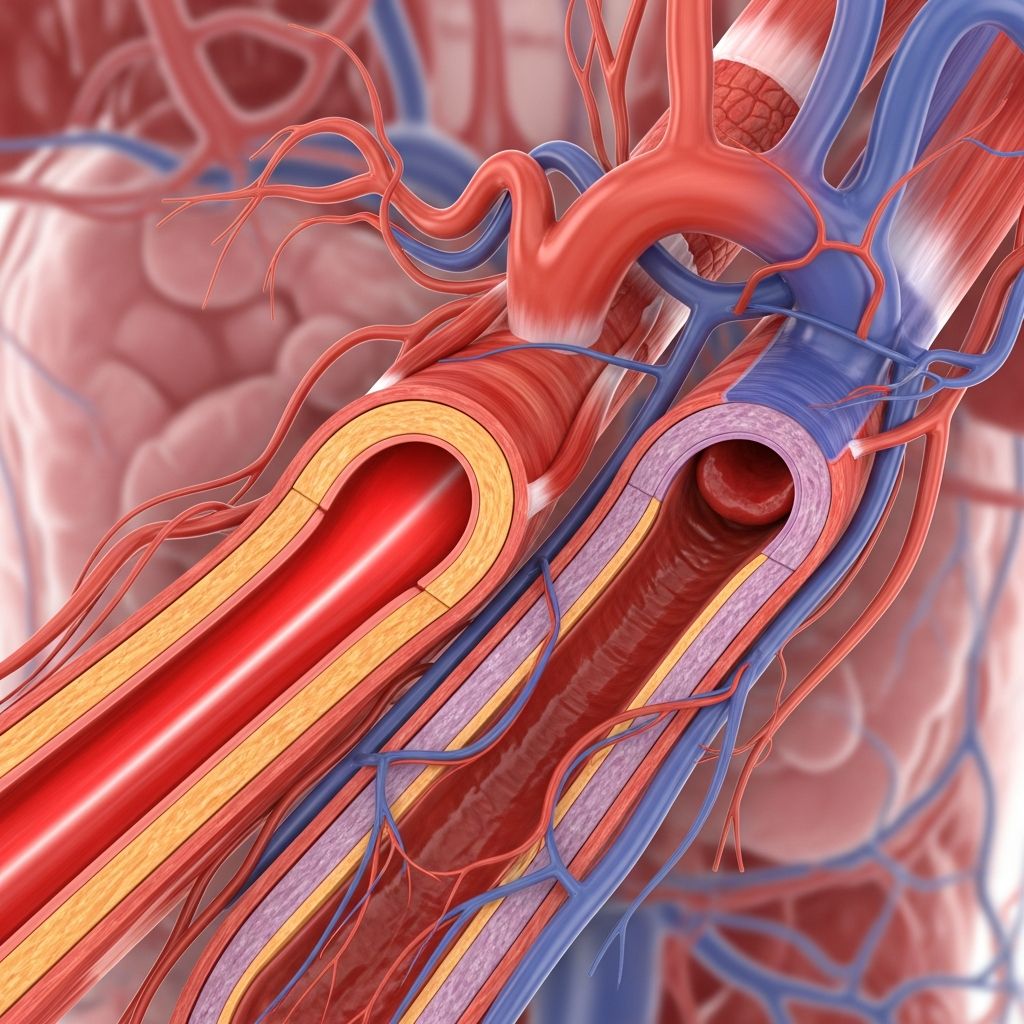
- They have thick, muscular walls so they can handle strong pressure from every heartbeat.
- They feel springy and you can often feel a pulse in them, like in your wrist or neck.
- They have a narrower inner space (lumen) compared with veins, which helps keep pressure high.
- Most arteries do not have valves because the pressure from the heart keeps blood moving the right way.
Veins: The Return Route Back to the Heart
After your cells use the oxygen and nutrients from the blood, the blood has to go back to the heart to get refreshed. This is the job of your veins.
What Veins Do
- Carry mostly oxygen-poor blood from body tissues back to the heart.
- Pick up carbon dioxide and other waste products from cells so your body can get rid of them.
- Receive blood from small vessels called venules, which collect blood from capillaries.
Most veins carry dark red, oxygen-poor blood. The pulmonary veins are special: they bring oxygen-rich blood from the lungs back to the heart.
What Veins Look and Feel Like
- They have thinner, less muscular walls than arteries because the blood inside them is under lower pressure.
- They have a wider inner space (lumen), which helps carry blood at low pressure.
- Many veins contain one-way valves that stop blood from flowing backward, especially in your arms and legs.
- Some veins lie close to the skin, so they can look blue or purple through the surface.
Quick Comparison: Arteries vs. Veins
| Feature | Arteries | Veins |
|---|---|---|
| Direction of blood flow | Away from the heart | Toward the heart |
| Typical oxygen level | Usually high in oxygen (except pulmonary artery) | Usually low in oxygen (except pulmonary veins) |
| Wall thickness | Thicker, more muscular walls | Thinner, less muscular walls |
| Inner space (lumen) | Narrower opening | Wider opening |
| Valves | Usually none | Present in many veins to stop backflow |
| Blood pressure | Higher pressure from heart pumping | Lower pressure |
How Blood Travels the Full Loop
Blood doesn’t just move randomly. It follows a repeating loop called circulation.
The Two Main Circulation Paths
- Pulmonary circulation
- Right side of the heart pumps blood low in oxygen into the pulmonary arteries.
- These arteries carry blood to the lungs, where it picks up oxygen and drops off carbon dioxide.
- Pulmonary veins then bring the oxygen-rich blood back to the left side of the heart.
- Systemic circulation
- Left side of the heart pumps oxygen-rich blood into the big body arteries.
- Arteries branch into arterioles and then into capillaries that reach tissues all over the body.
- In capillaries, blood delivers oxygen and nutrients and picks up waste.
- Blood then moves into venules, then into larger veins, and finally back to the right side of the heart.
Capillaries: Tiny Delivery Stops
Capillaries are the smallest blood vessels, so narrow that blood cells often have to travel in single file. Their walls are only one cell thick, which makes it easy for oxygen, carbon dioxide, nutrients, and waste to pass between blood and body cells.
- Oxygen and nutrients move from blood in capillaries into nearby cells.
- Carbon dioxide and other waste products move from cells into the blood.
- Capillaries then join into venules, which carry blood into veins.
Why Blood Vessel Health Matters
Even kids need healthy arteries and veins. Doctors know that keeping blood vessels healthy early in life helps protect the heart and body later on.
Habits That Support Healthy Arteries and Veins
- Stay active: Running, biking, dancing, and sports help the heart pump strongly and keep vessels flexible.
- Eat a balanced diet: Fruits, vegetables, whole grains, and lean proteins help keep blood vessels clear and healthy.
- Drink enough water: Fluids help blood move smoothly.
- Avoid smoking and vaping: Tobacco and nicotine products can damage blood vessels and the heart, even in young people.
- Know your family history: Some blood vessel problems run in families, so doctors may watch more closely if relatives have heart or vessel diseases.
Fun and Strange Facts About Arteries and Veins
- If you lined up all your blood vessels end to end, they would stretch for many thousands of kilometers in an adult body.
- Every time your heart beats, it sends a wave of pressure through your arteries that you can feel as your pulse.
- Veins look blue under your skin, but the blood inside them is actually dark red; the blue color comes from how light passes through your skin.
- Valves in leg veins are especially important because they work with your muscles to push blood up against gravity back toward your heart.
Frequently Asked Questions (FAQs)
Do arteries always carry oxygen-rich blood?A: No. Most arteries carry blood rich in oxygen, but the pulmonary artery is different. It carries oxygen-poor blood from the heart to the lungs so it can pick up fresh oxygen.
Q: Why do veins have valves but arteries usually don’t?
Blood in veins moves under lower pressure and often has to travel upward, especially from your legs. Valves inside many veins act like tiny doors that only open one way, stopping blood from sliding backward. Arteries don’t usually need valves because the strong push from the heart keeps blood moving forward.
Why can I see some veins through my skin?A: Veins that lie close to the surface of the skin are called superficial veins. Light passing through your skin makes them look blue or purple, even though the blood inside is dark red.
Q: What happens if an artery is cut compared with a vein?
Arteries carry blood under higher pressure, so a cut artery can send blood out in strong spurts and may be more serious. Veins are under lower pressure, so blood usually flows out more slowly, giving it more time to clot.
How can I keep my arteries and veins strong as I grow up?
You can protect your blood vessels by staying active, eating lots of fruits and vegetables, limiting sugary drinks, not smoking or vaping, and going to regular checkups so a health professional can check your heart and circulation.
References
- Cardiovascular system — Britannica Kids. 2024-01-01. https://kids.britannica.com/kids/article/cardiovascular-system/403974
- Veins: Anatomy and Function — Cleveland Clinic. 2022-09-22. https://my.clevelandclinic.org/health/body/23360-veins
- Difference Between Arteries and Veins — BYJU’S. 2023-06-01. https://byjus.com/biology/arteries-and-veins-difference/
- Arteries vs. veins: What’s the difference? — Khan Academy Health and Medicine. 2015-03-01. https://www.khanacademy.org/science/health-and-medicine/circulatory-system/blood-vessels/v/arteries-vs-veins-what-s-the-difference
- Circulatory System for Kids (video transcript) — Operation Ouch / YouTube educational content. 2018-05-01. https://www.youtube.com/watch?v=Dw0WO2XZ5fM