Thumb injuries can be scary, especially when they happen suddenly during sports, play, or a fall. This guide explains what a thumb dislocation is, how to recognize it in your child, what doctors do to treat it, and how you can support recovery and prevent future injuries.
What Is a Thumb Dislocation?
A thumb dislocation happens when the bones that form a thumb joint are forced out of their normal position. Instead of sitting smoothly together and allowing easy motion, the joint surfaces become misaligned and the thumb cannot move properly.
The thumb has several small bones and two main joints that can be dislocated:
- Metacarpophalangeal (MCP) joint – the large knuckle where the thumb meets the hand.
- Interphalangeal (IP) joint – the smaller joint closer to the thumb tip.
In a dislocation, the ligaments, which are the strong bands that hold the bones together, are stretched or torn. This is why the joint becomes unstable and painful.
Why Children Are Vulnerable to Thumb Dislocations
Children use their hands constantly to run, climb, catch, and break falls, which naturally puts their thumbs at risk. Active play and sports often involve sudden forces that the small joints in the thumb are not prepared to handle.
A child’s ligaments and growth plates can be more sensitive to injury than those of adults. Because of this, an impact that only bruises an adult thumb might cause a sprain, dislocation, or even a small fracture in a child.
Common Causes and Risk Situations
Thumb dislocations typically occur when a strong force bends the thumb too far in one direction. This can happen quickly and unexpectedly, and sometimes the exact moment of injury is hard to see.
Frequent situations that can lead to a dislocated thumb include:
- Sports injuries – such as catching a ball awkwardly, jamming the thumb on a ball, or being struck by sports equipment.
- Falls – landing on an outstretched hand with the thumb bent backward or sideways.
- Playground accidents – gripping bars, swings, or ropes and suddenly slipping.
- Household mishaps – catching the thumb in a door or twisting it during rough play with siblings.
Although any child can dislocate a thumb, those who play contact sports, ball sports, or do activities involving frequent falls (such as skating or gymnastics) have a higher risk.
Recognizing a Dislocated Thumb: Key Signs
Parents often notice that something is very wrong with the thumb right away. The joint may not look normal, and the child usually complains of intense pain.
Common signs and symptoms include:
- Sudden, sharp pain at the thumb joint at the moment of injury.
- Visible deformity – the thumb may appear crooked, bent at an odd angle, or out of place.
- Rapid swelling and sometimes bruising around the joint.
- Difficulty or inability to move the thumb normally.
- Sensation of the thumb feeling “stuck” or locked in the wrong position.
- Occasional numbness or tingling if nearby nerves are irritated.
Because fractures can occur at the same time, it is not safe to assume the injury is “just a sprain” based only on how it looks or feels.
When to Seek Emergency Care
A suspected thumb dislocation should always be evaluated quickly by a medical professional. Early treatment helps protect the joint, lower pain, and reduce the risk of long-term stiffness or instability.
Seek urgent or emergency care right away if:
- The thumb looks obviously out of place or crooked.
- Your child cannot move the thumb or cries in severe pain when trying to use it.
- There is significant swelling, color change, or the skin appears pale or bluish.
- There is an open wound, bleeding, or a bone seems close to the skin surface.
- Your child reports numbness, tingling, or loss of feeling in the thumb.
Avoid waiting to “see if it gets better on its own,” because continued movement of a dislocated joint may damage ligaments, tendons, or nearby nerves and blood vessels.
What Not to Do at Home
It can be tempting to try to fix the problem yourself, especially if you have seen someone “pop a finger back in place.” For children, this is unsafe and can make the injury worse.
Do not do the following:
- Do not try to pull, twist, or push the thumb back into place.
- Do not force the thumb to move if your child resists or is in severe pain.
- Do not apply tight homemade splints or wraps that might cut off circulation.
- Do not ignore the injury if the thumb’s shape or function seems clearly abnormal.
Instead, keep the hand as still as possible, support the thumb gently, and seek professional care promptly.
Initial First Aid Before Seeing a Doctor
While you are arranging medical care or on the way to a clinic or emergency department, simple first-aid steps can help reduce discomfort and protect the joint.
Helpful measures include:
- Immobilize gently – have your child rest the hand, perhaps cradling it with the other hand or resting it on a soft towel.
- Apply a cold pack wrapped in a cloth for short periods to limit swelling and ease pain.
- Keep the hand elevated above heart level when possible to reduce throbbing.
- Use an age-appropriate pain reliever recommended by your child’s doctor, if advised.
These actions do not replace medical care, but they make the wait more comfortable and may help prevent further injury.
How Doctors Diagnose a Dislocated Thumb
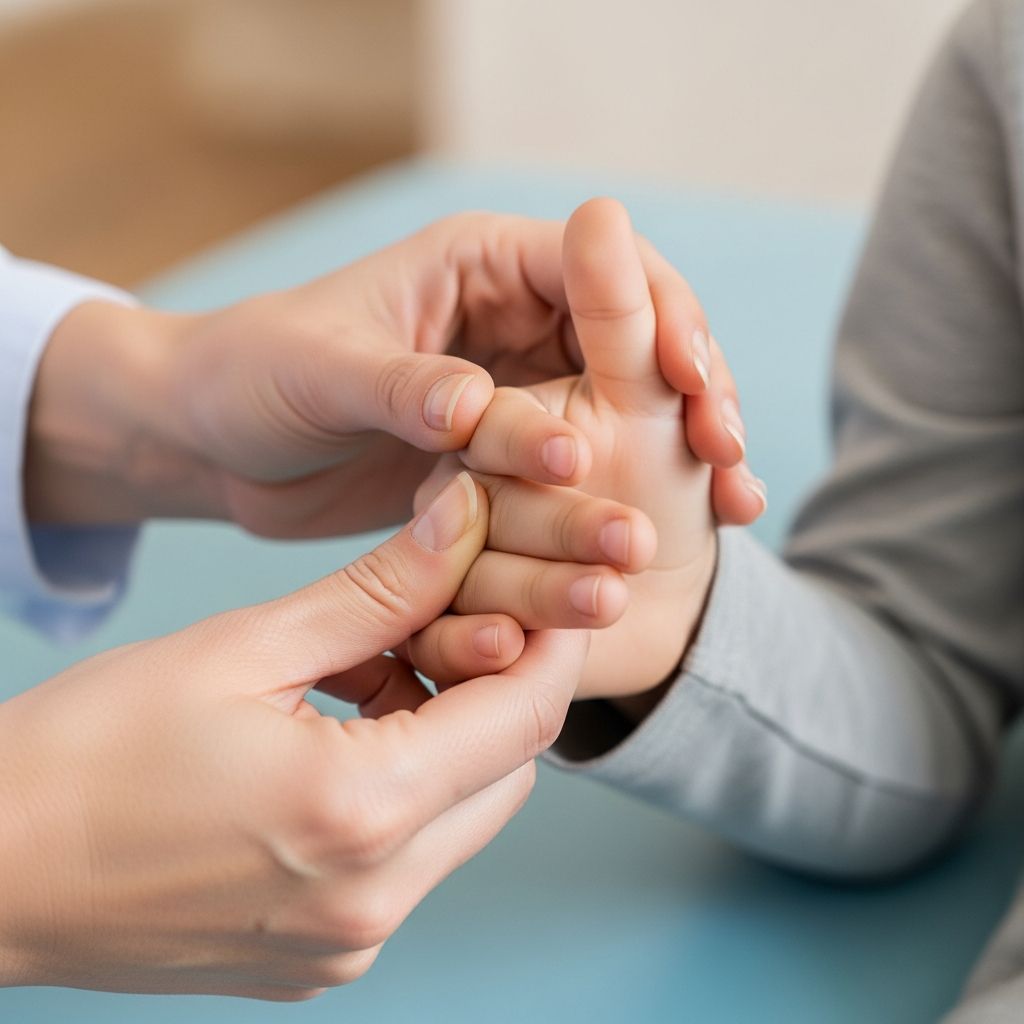
At the clinic or hospital, the doctor will start by asking about how the injury happened and what your child felt at the time of the accident. This information, combined with a physical exam, guides the evaluation.
Typical steps in diagnosis include:
- Visual inspection – checking for deformity, swelling, bruising, and skin changes.
- Gentle movement testing – assessing how much the thumb can move without causing additional harm.
- Imaging tests – usually X-rays to confirm the dislocation, look for fractures, and assess joint alignment.
In complex cases or when ligament damage is suspected, the care team may recommend additional imaging to better view the soft tissues and decide on the best treatment plan.
Medical Treatment: Putting the Joint Back in Place
The main goal of treatment is to gently guide the bones of the thumb back into the correct position. This process is called a reduction. It must be done by a trained professional who understands the anatomy of the thumb and the potential complications.
Key aspects of this stage include:
- Pain control and comfort – local anesthesia or other medications may be used so your child does not feel the manipulation.
- Closed reduction – the doctor carefully moves the bones without making an incision, trying to restore normal alignment.
- Repeat imaging – X-rays afterward confirm that the joint surfaces match up and check for associated fractures.
If the joint is blocked by soft tissue or a piece of bone, or if it remains unstable after reduction, surgery may be recommended to repair or stabilize the damaged structures.
Immobilization: Splints, Casts, and Braces
After the joint is realigned, it needs time to heal. Immobilization keeps the thumb still so ligaments and other tissues can recover safely. The specific device used depends on the location and severity of the injury.
Common options include:
- Thumb splint – a removable device that holds the thumb in a stable position.
- Cast – used for more serious injuries or when a fracture also exists.
- Thumb spica brace – supports the thumb and wrist while still allowing some finger movement.
Your child’s doctor will explain how long the thumb should be immobilized. Parents play a crucial role by making sure the device stays clean, dry, and properly fitted.
Home Care During the Healing Phase
The healing process continues at home after the initial treatment. Good home care supports recovery and reduces the chance of complications such as stiffness or recurrent dislocation.
Helpful home care tips:
- Follow all instructions about wearing the splint or cast, including whether it can be removed for bathing.
- Keep the hand elevated when possible during the first few days to control swelling.
- Apply cold packs as recommended by the care team, always protecting the skin with a cloth.
- Watch for changes in skin color, swelling that worsens, or increased pain, and report concerns promptly.
- Make follow-up appointments and attend them on schedule.
Maintaining normal movement in the fingers that are not immobilized is also important, unless the doctor advises otherwise, to prevent stiffness in the rest of the hand.
Recovery Timeline and Expectations
Healing time varies with the child’s age, the extent of ligament damage, and whether there were associated fractures. Many children with simple dislocations begin to feel significantly more comfortable within a couple of weeks, although full recovery may take longer.
Parents can expect:
- Early pain relief once the joint is reduced and supported.
- Gradual decrease in swelling and bruising over days to weeks.
- A period of stiffness after immobilization, which usually improves with gentle movement and exercises.
- Temporary limits on sports or rough play until cleared by the clinician.
The goal of treatment is to restore a stable, pain-free thumb that moves well enough for everyday tasks, school work, and recreational activities.
Physical Therapy and Exercises
Once the joint is stable and the doctor says it is safe, gentle exercises help the thumb regain motion, strength, and coordination. This phase is important because immobilization, while necessary, can leave the joint stiff and weak.
Rehabilitation may include:
- Range-of-motion exercises – slowly bending and straightening the thumb as instructed.
- Strength exercises – squeezing a soft ball or using putty when appropriate.
- Functional activities – practicing safe gripping and pinching motions used in everyday tasks.
Some children work with a physical or occupational therapist, while others may receive a home exercise program under parental supervision. Consistency is more important than intensity; gentle, regular practice supports healthy recovery.
Possible Complications and Warning Signs
Most children recover well with proper treatment, but complications can occur, particularly if the injury is severe or treatment is delayed. Knowing what to watch for helps parents respond early if problems arise.
Potential concerns include:
- Persistent or worsening pain after the initial healing period.
- Significant stiffness that limits everyday activities, such as holding a pencil.
- A feeling that the thumb is unstable, loose, or easily “gives way.”
- Changes in nail growth, color, or skin temperature that seem unusual.
Any of these signs should be discussed with the child’s healthcare provider, who can reassess the joint and, if needed, adjust the treatment plan.
Helping Your Child Emotionally After an Injury
Beyond the physical aspects, a thumb dislocation can be emotionally upsetting for a child. Pain, sudden loss of function, and temporary limits on favorite activities may lead to frustration or anxiety.
Parents can support their child by:
- Explaining, in age-appropriate language, what happened and how the thumb will heal.
- Encouraging questions and acknowledging fears about pain or returning to sports.
- Offering alternative activities during the recovery period that do not stress the injured hand.
- Celebrating small milestones, such as being able to move the thumb a little more or tolerating a new exercise.
A calm, reassuring approach helps children feel more secure and involved in their own healing process.
Prevention Tips: Protecting Little Thumbs
No prevention strategy can completely eliminate injuries, but practical steps can lower the risk of thumb dislocations and other hand problems. Many of these measures also build general safety habits.
Useful prevention strategies:
- Teach children to fall with hands slightly relaxed instead of rigidly extended when appropriate.
- Encourage warm-up and stretching before organized sports.
- Use well-fitting protective gear such as wrist guards or sports gloves when recommended.
- Ensure playground equipment is in good condition and has safe surfaces underneath.
- Model safe behavior at home, including careful door closing and avoiding rough pulling on fingers or thumbs.
Children who have already had a thumb dislocation may benefit from sport-specific guidance about taping, bracing, or activity modifications to protect the joint during play.
Quick Reference Table: Thumb Dislocation in Children
| Aspect | Key Points for Parents |
|---|---|
| What it is | Joint of the thumb forced out of normal alignment; ligaments often stretched or torn. |
| Typical causes | Sports impacts, falls on the hand, playground or household accidents. |
| Main symptoms | Sudden pain, swelling, visible deformity, limited movement, possible numbness. |
| Urgent signs | Obvious deformity, severe pain, color change, loss of feeling, open wounds. |
| Treatment | Professional reduction of the joint, immobilization, possible surgery, followed by rehabilitation. |
| Recovery focus | Pain control, protection of the joint, gradual return of motion and strength. |
| Prevention | Safety habits, proper sports techniques, and protective gear when appropriate. |
Frequently Asked Questions
Can a child still have a broken bone if the thumb is dislocated?
Yes. Dislocations and fractures can occur together, especially when the force of injury is high. This is why imaging is so important: it helps the care team see whether any bone pieces also need treatment.
How long before my child can return to sports?
Return-to-sport timing depends on the severity of the injury and how well the joint has healed. Many children with uncomplicated dislocations may resume full activity within several weeks after clearance from their clinician, while more complex injuries may require a longer recovery and a gradual return plan.
Will my child’s thumb be normal again?
Most children recover good function, especially when the dislocation is treated promptly and rehabilitation instructions are followed. Some may notice mild stiffness or sensitivity for a time, but this usually improves as the joint adapts and activity increases.
Is surgery always necessary for a thumb dislocation?
No. Many dislocations can be treated with closed reduction and immobilization without surgery. Surgical procedures are generally reserved for injuries with severe ligament damage, trapped soft tissue, or fractures that cannot be managed with conservative care.
How can I tell the difference between a sprain and a dislocation?
Sprains involve stretched or partially torn ligaments without the bones leaving their normal alignment, while dislocations include a shift of the joint surfaces. From the outside, both can be painful and swollen, so medical evaluation and imaging are the safest way to distinguish between them and choose the right treatment.
Thumb dislocation in children is a significant but treatable injury. Prompt medical care, careful follow-up, and supportive home management give the thumb the best chance to heal well so your child can return confidently to play, school, and sports.