Many parents discover the same frustrating pattern: a baby or toddler suddenly grows taller overnight, yet every pair of pants that finally reaches the ankles slides right off the waist. Adjustable waist pants exist almost like a hidden secret in the kids’ clothing world, and once parents find them, they rarely go back to standard elastic or fixed-waist bottoms.
This guide explains what adjustable waist pants are, why they make such a difference for slim or hard-to-fit children, how to choose and use them, and what alternatives exist when you cannot find the perfect pair in stores.
Why Fit Is So Tricky for Little Bodies
Babies and toddlers grow in unpredictable spurts, often gaining height without adding much weight or suddenly filling out after months of steady slimness. Clothing sizes based purely on age rarely match a real child’s shape, which can leave pants that are the right length but far too loose at the waist.
On top of that, diapers, pull-ups, and early underwear all change the way pants sit on the body, shifting the waistband higher or lower and making a single size feel different from one month to the next. Parents end up rolling waistbands, pinning fabric, or constantly tugging pants back up during playtime.
What Adjustable Waist Pants Actually Are
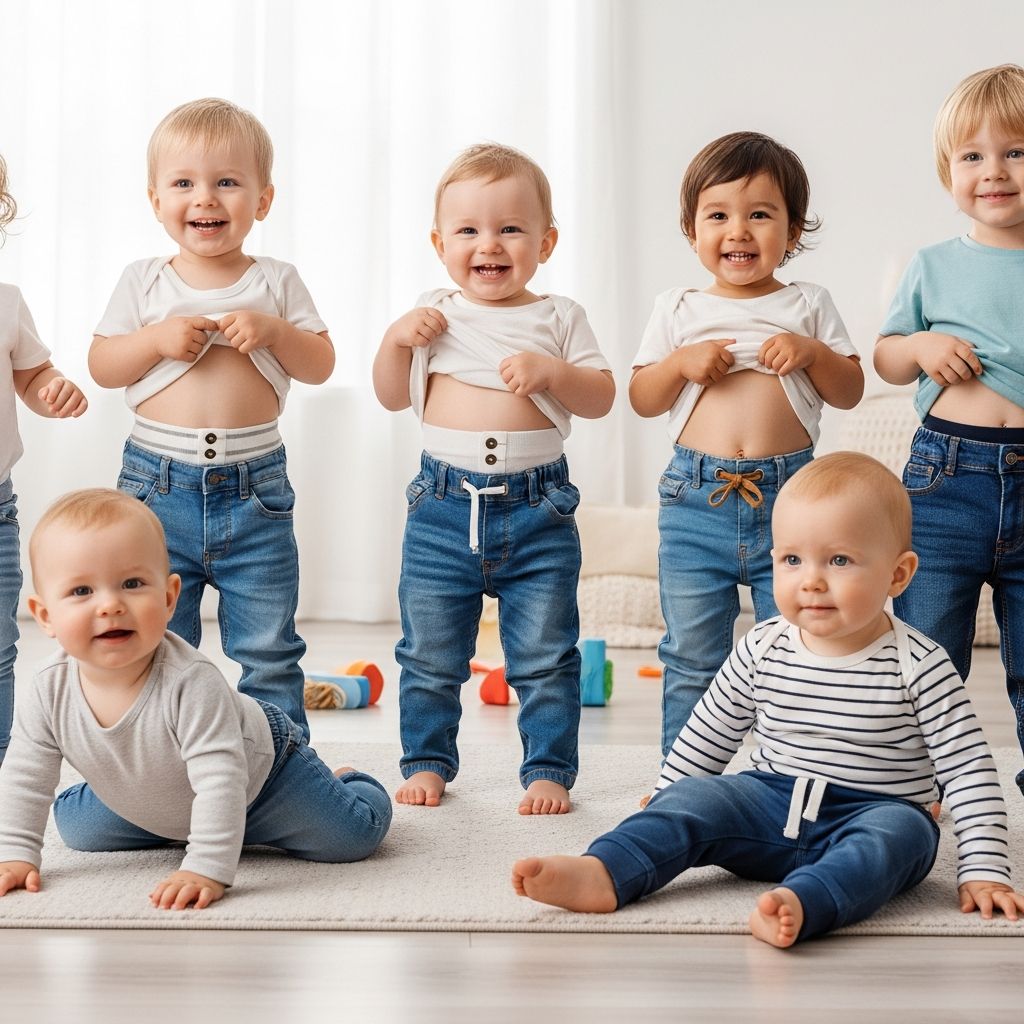
Adjustable waist pants use a built-in system to tighten or loosen the waistband without needing a belt or external accessory. The most common version hides a soft piece of elastic inside the waistband, with several buttonholes along its length and one or more small buttons sewn into the inner fabric.
By choosing a different buttonhole on each side, parents can customize the fit around the waist while keeping the outside of the pants smooth and neat. The adjustment is usually invisible from the outside, so the pants look like regular jeans, chinos, or leggings while functioning more like a tailored garment.
Benefits for Babies and Toddlers
Adjustable waists are especially helpful for children who sit low on the growth chart for weight but are medium or high for height. These kids often swim in anything that is long enough, and traditional elastic waists cannot tighten enough without digging into the skin.
- Better comfort: The elastic can be loosened for sitting, naps, or big meals, then snugged up again for active play.
- Longer wear time: A single size can last through several growth spurts because you can gradually let the waist out as your child grows.
- Fewer clothing battles: When pants stay put, kids are less likely to fuss with them, complain, or trip over droopy hems.
- Neater look: Pants sit at the right spot on the waist, which keeps shirts from bunching and prevents that sagging-back look in photos.
How Adjustable Systems Differ
Not all adjustable waistbands are built the same way. Understanding the main variations can help you recognize them quickly in stores and decide which style works best for your child’s body and your daily routine.
| System Type | How It Works | Pros | Cons |
|---|---|---|---|
| Buttonhole elastic | Elastic with multiple holes sewn inside waistband, tightened on hidden buttons. | Discrete, finely adjustable, found in many jeans and chinos. | Small buttons can be tricky for caregivers with limited dexterity. |
| Drawstring plus elastic | Soft elastic with an outer drawstring at the front. | Quick to adjust, easy to understand, comfortable for lounging. | Drawstring may show on dressier outfits; strings can tangle in laundry. |
| Side snaps or tabs | Tabs on the sides with snaps or buttons to bring in the waistband. | Fast adjustment, often used on “grow with me” pants. | Less common in everyday brands; may look more casual. |
| Full elastic casing | Traditional all-around elastic with extra stretch and gentle tension. | Simple and soft, good for quick changes. | Not truly customizable; can be too loose for very slim kids. |
Signs Your Child Needs Adjustable Waist Pants
Sometimes the need for an adjustable waist is obvious, like pants that literally fall to the ankles whenever a toddler runs. Other times, subtle signs point to a poor fit that makes your child uncomfortable even if the pants technically stay on.
- Pants that fit in length but require rolling the waistband over more than once to keep them up.
- Constant tugging or pulling at the waistband, especially after meals or when sitting.
- Red marks or indentations on the belly from tight elastic, even though the pants still slide down when the child moves.
- Needing one size for the waist and another for the legs, especially in skinny or long-limbed children.
Age Ranges and Availability
Many brands do not offer adjustable waistbands in the very smallest infant sizes, focusing instead on soft, pull-on styles designed to sit comfortably over diapers. The more structured adjustable systems tend to appear more frequently around sizes that correspond roughly to 12 months and up.
Once you reach toddler sizes, and especially as you approach sizes labeled with a “T” or the preschool range, adjustable waists become more common in jeans, chinos, and dress pants. However, availability still varies by store, style line, and even color, so checking the inside of the waistband is often necessary rather than trusting the size tag alone.
How to Check for an Adjustable Waist in Stores
Because brands rarely advertise this feature in big print, finding adjustable waist pants sometimes turns into a little treasure hunt in the clothing aisle. Taking a moment to check carefully can save countless returns and dressing-room battles later.
- Flip the waistband inside out at one side seam and look for a slit or small opening in the inside fabric.
- Gently pull on any elastic you see; if it has small, evenly spaced holes, it is likely adjustable.
- Search for a flat button or two sewn to the inside of the waistband near the opening.
- Repeat on the other side of the pants to confirm there are matching pieces of elastic for symmetrical adjustment.
Getting the Fit Right at Home
Setting up a new pair of adjustable waist pants takes a bit of tinkering the first time but becomes easier once you know where your child’s ideal setting tends to fall. It is best to adjust while your child is standing, since that position most closely matches how the pants will sit during active play.
- Start with the elastic on both sides at the loosest buttonhole, allowing maximum length.
- Put the pants on your child over whatever diaper, training pant, or underwear is currently used.
- Pinch the waistband at one side to estimate how much extra fabric you need to remove for a snug fit.
- Remove the pants, pull the elastic to the estimated buttonhole, fasten it, and repeat on the other side.
- Try the pants on again and check that you can slip two fingers comfortably between the waistband and your child’s skin.
Balancing Comfort, Style, and Budget
Some of the most durable and consistently adjustable kids’ pants may cost more than basic options at big-box stores, which can feel discouraging when children outgrow clothes quickly. Parents often solve this by mixing a few higher-quality, well-fitting pants with more affordable basics reserved for play or messy activities.
- Invest a bit more in neutral jeans or chinos with a good adjustable waist that can be worn often and paired with many tops.
- Buy occasional or dress-up pants carefully, prioritizing fit over fashion details that will only be seen a few times.
- Watch for end-of-season sales to stock up on the next size up in brands that have already proven to fit your child well.
Alternatives When You Cannot Find Adjustable Waist Pants
In some regions or smaller stores, adjustable waist pants might be rare in the younger sizes or in certain styles like khakis or school uniforms. When this happens, there are still ways to make standard pants work better, at least temporarily, without sacrificing your child’s comfort.
- Soft, child-friendly belts: Narrow, stretchy belts with simple buckles can help once a child is old enough to manage bathroom trips with a little assistance.
- Clip-on waistband cinchers: These small gadgets clip to the back of the waistband and draw in extra fabric, useful for occasional wear.
- DIY internal elastic: Parents who sew can add buttonhole elastic inside a regular waistband with a few strategic openings and stitches.
- Layering with onesies or bodysuits: For babies, snapping a bodysuit over a diaper helps hold lightweight pants in place even when the waist is a bit loose.
Adjustable Waists and Diapers, Potty Training, and Underwear
As your child transitions from bulky diapers to thinner training pants and then to regular underwear, the circumference of their waist effectively shrinks, even if their actual body measurements stay similar. Adjustable waist pants are particularly helpful through this stage, since you can gradually tighten the waistband without needing a new size every few months.
For potty-training toddlers, it is wise to choose pants that adjust easily yet still pull down and up without fiddling with multiple closures. Many parents prefer soft, elastic-backed styles with a small amount of adjustable structure in the front or sides so kids can manage them independently in the bathroom.
Special Considerations for Very Slim or Sensory-Sensitive Kids
Some children have especially small waists relative to their height, or dislike the feeling of tight or scratchy clothing around their middle. For these kids, choosing the right adjustable system can make the difference between a favorite pair of pants and a daily clothing battle.
- Look for waistbands lined with soft knit fabric, which keeps elastic and internal buttons from rubbing against the skin.
- Avoid thick external belts or stiff button flies if your child is sensitive to pressure on the abdomen.
- In very slim kids, consider pants marketed as “slim” or “skinny” and still prioritize an internal adjustable waist so you can fine-tune the fit.
Care and Longevity Tips
Because adjustable waist pants often cost a bit more and are meant to last through more growth, taking good care of them can really pay off. Simple laundry and storage habits help the elastic and internal components stay functional longer.
- Fasten buttons and snaps before washing to reduce strain on the elastic and prevent twisting inside the casing.
- Use moderate water temperatures and avoid excessive heat in the dryer, which can weaken elastic over time.
- Check periodically that internal buttons are still firmly attached, and reinforce any that feel loose with a few extra stitches.
Sample Mini-Wardrobe for a Slim, Tall Toddler
Building a small but versatile set of pants can make getting dressed far less stressful. Instead of buying many pairs that almost fit, focus on a handful of high-performing items that all adjust well at the waist and cover different daily needs.
| Item | Use Case | Key Features |
|---|---|---|
| Dark-wash jeans with internal buttonhole elastic | Everyday wear, playground, casual outings | Durable denim, adjustable waist, neutral color |
| Soft knit joggers with drawstring and elastic | Home, naps, long car rides | Stretch waistband, easy on and off, cozy fabric |
| Chinos with hidden adjustable waistband | Family events, holidays, photos | Polished look, adjustable interior, cuffable hem |
| Lightweight pull-on pants | Warm weather, daycare, messy play | Quick-dry fabric, partial elastic waist, stain-friendly color |
Frequently Asked Questions
Are adjustable waist pants safe for babies?
Yes, when used as designed and checked regularly for loose parts, adjustable waist pants are considered safe. The key is to make sure internal buttons are secure, the elastic is not overly tight, and there are no sharp edges or exposed hardware touching your baby’s skin.
How tight should the waistband be?
The waistband should be snug enough that pants stay in place during crawling, walking, or climbing, but loose enough that an adult can comfortably slide two fingers underneath all the way around. If your child has visible marks or complains of discomfort, loosen the elastic by one buttonhole on each side.
Can adjustable waist pants interfere with potty training?
They do not have to. Many parents successfully use adjustable waist pants throughout potty training by choosing styles that still pull down easily, such as those with a soft elastic back and a simple fly front. Avoid over-tightening or complicated closures that a toddler cannot manage alone.
What if my child has a rounder belly instead of a slim waist?
Adjustable waists help here as well, because they can be loosened slightly for comfort while still keeping the pants anchored at the hips. For rounder tummies, look for wide, soft waistbands and prioritize comfort over very slim cuts, especially for long periods of sitting or car travel.
Is it worth paying more for pants with adjustable waists?
For many families, the answer is yes, because one well-fitting pair that lasts through several growth phases can replace multiple cheaper pairs that never fit quite right. Spending a bit more on a few key bottoms often saves time, frustration, and last-minute outfit changes caused by slipping or sagging pants.
Making Peace with the Pants Aisle
Instead of treating every shopping trip as a guessing game, knowing how adjustable waist pants work gives parents a clear strategy. By checking the inside of the waistband, focusing on a few reliable styles, and being willing to tweak settings as your child grows, you can turn the daily struggle of getting dressed into a simple, predictable routine.
Ultimately, the goal is not just to keep pants from falling down, but to help your child feel comfortable, confident, and free to move. A thoughtfully chosen adjustable waistband is a small design detail that can make a surprisingly big difference in family life.