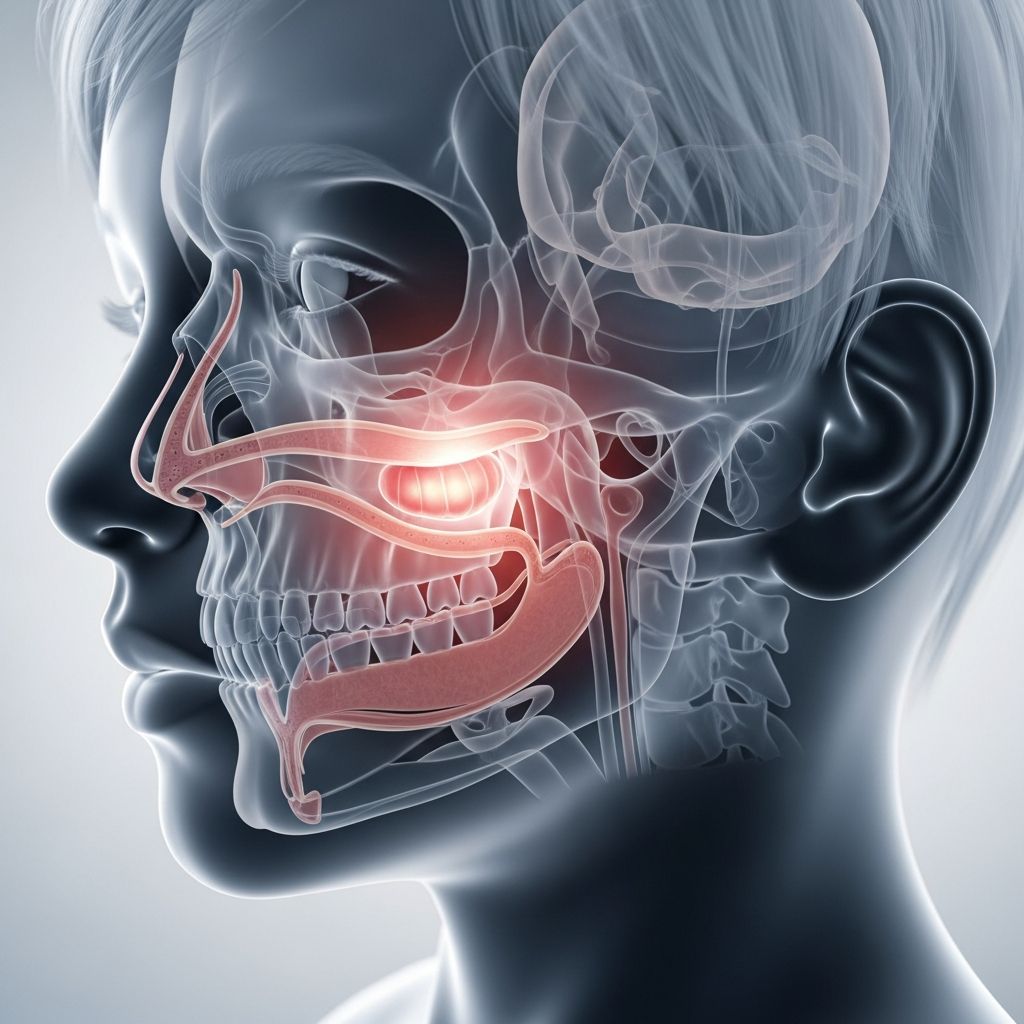
Adenoids are small areas of immune tissue that sit high behind your child’s nose and play a role in fighting germs during the early years of life. When these tissues become swollen or repeatedly infected, they can affect breathing, sleep, and ear health, which can be worrying for parents. This guide walks you through what adenoids are, how to recognize problems, and what treatment choices you and your child’s doctor might consider.
What Exactly Are Adenoids?
Adenoids are patches of soft tissue located at the very back of the nasal passages, where the nose meets the upper throat. They are part of the body’s immune system and help trap viruses and bacteria that enter through the nose and mouth. Adenoids are present in both children and adults, but they are most active and relatively larger in early childhood.
- Adenoids sit above the soft palate, so they cannot be seen just by opening the mouth.
- They work together with the tonsils and other lymph tissue to form a protective ring against germs.
- As children grow older, adenoids usually shrink and become less important for immune defense.
Why Do Children Have Adenoids?
In young children, the immune system is still learning to recognize and respond to new germs. Adenoids help with this learning process by filtering air and trapping particles that could cause infection. When germs get caught in the adenoids, immune cells can react quickly and help the body build defenses.
Over time, as a child is exposed to more infections and vaccinations, other parts of the immune system can take over much of this work. This is one reason adenoid tissue normally becomes smaller in later childhood and often causes fewer problems as children move into their teen years.
When Do Adenoids Become a Problem?
Adenoids can become troublesome when they are enlarged, infected, or both. Swelling may happen suddenly during an infection or more slowly over time if a child has repeated colds, allergies, or chronic nasal inflammation. Not every child with large adenoids will have symptoms, but in many children, the extra tissue narrow the space where air passes through the nose.
Because adenoids sit close to the openings of the Eustachian tubes (the small passages that connect the middle ear to the back of the nose), enlargement in this area can also affect how well the ears drain. This may set the stage for ear infections or fluid buildup behind the eardrum.
Common Signs of Enlarged Adenoids
Parents often first notice adenoid problems through changes in the way their child breathes, sleeps, or speaks. Symptoms can show up gradually, so it helps to pay attention to patterns over weeks or months, not just what happens on a single night.
- Frequent mouth breathing, especially during the day when the child is awake.
- Persistent stuffy or blocked nose without much visible mucus.
- Loud snoring, gasping, or noisy breathing during sleep.
- Pauses in breathing at night (possible sleep apnea).
- Restless sleep, frequent waking, or unusual sleeping positions (such as neck extended back).
- Chronic runny nose or postnasal drip.
- “Nasal” sounding voice or difficulty pronouncing certain words clearly.
- Recurring ear infections or fluid in the middle ear.
- Daytime tiredness, irritability, or trouble focusing that may be linked to poor sleep.
If you see several of these signs over a longer period, it is a good idea to discuss them with your child’s healthcare provider or a pediatric ear, nose, and throat (ENT) specialist.
How Adenoids Affect Breathing and Sleep
Breathing through the nose warms, filters, and moistens air before it reaches the lungs. When adenoids block the nasal passages, children compensate by breathing mainly through the mouth. Mouth breathing can cause a dry mouth, bad breath, and sometimes a sore throat on waking. It can also change the way the chest and facial muscles work during breathing.
During sleep, muscle tone naturally decreases, and the airway becomes more relaxed. If the space is already narrowed by enlarged adenoids, this relaxation can further reduce airflow, leading to snoring or brief pauses in breathing. These pauses, called apneas, can interrupt deep sleep, even if they last only a few seconds each time. Over many hours at night, frequent interruptions may affect behavior, growth, and concentration.
Ear and Sinus Problems Linked to Adenoids
The position of the adenoids makes them important not only for breathing but also for the health of the ears and sinuses. When this tissue is enlarged or chronically inflamed, it can interfere with normal drainage and ventilation in these areas.
- Middle ear fluid and infections: Blocked Eustachian tubes may trap fluid behind the eardrum, increasing the risk of recurrent middle ear infections and temporary hearing loss.
- Sinus congestion: Swelling around the back of the nose can discourage normal sinus drainage, contributing to long-lasting nasal congestion and sinus discomfort.
Children with ongoing ear infections, hearing problems, or chronic sinus congestion may be evaluated for adenoid issues as part of their workup.
Who Is Most Likely to Have Adenoid Problems?
Any child can develop trouble with adenoids, but there are patterns that occur more often in practice. Adenoid issues are usually seen in preschool and early school-age children, when this tissue is relatively large compared to the airway. Problems tend to be less common in teenagers and adults as adenoids naturally shrink.
| Feature | Common Pattern |
|---|---|
| Age range | Most often between 2 and 8 years old |
| Main complaints | Snoring, mouth breathing, frequent colds, ear problems |
| Associated conditions | Allergies, recurrent ear infections, chronic nasal congestion |
| Sleep concerns | Restless sleep, pauses in breathing, daytime tiredness |
Many children with enlarged adenoids also have enlarged tonsils, which can further narrow the airway and worsen nighttime breathing. In some cases, a child may need evaluation for both structures at the same time.
How Doctors Evaluate Adenoid Problems
Adenoids cannot be seen by looking in the mouth with a simple flashlight, so a careful medical evaluation is important. Your child’s healthcare provider will start by reviewing symptoms, listening to your concerns, and performing a physical exam of the ears, nose, throat, and neck. This helps rule out other causes of congestion or snoring, such as allergies or structural differences inside the nose.
Depending on what is found, the doctor may suggest one or more of the following:
- Imaging or endoscopy: A small camera passed through the nose or a specialized X-ray may show the size of the adenoids and how much they narrow the airway.
- Hearing tests: These check for fluid or hearing loss linked to middle ear problems.
- Sleep study (polysomnogram): For children with suspected sleep apnea, overnight monitoring can measure breathing patterns, oxygen levels, and sleep quality.
Non-Surgical Treatment Options
Not every child with enlarged adenoids needs surgery. When symptoms are mild or thought to be triggered mainly by allergies or infections, doctors often start with medical treatments and observation. The goal is to reduce inflammation, improve breathing, and manage associated conditions such as sinus or ear infections.
- Allergy care: Antihistamines, nasal saline rinses, and nasal steroid sprays may help children whose adenoids swell during allergy flares.
- Infection management: Antibiotics may be prescribed for bacterial infections affecting the adenoids, ears, or sinuses.
- Watchful waiting: In some children, symptoms improve as they grow, especially if episodes are infrequent and sleep is not severely disturbed.
Your child’s provider will weigh the benefits and risks of each approach, taking into account the frequency of infections, sleep quality, school performance, and overall wellbeing.
When Is Adenoid Surgery Considered?
Surgical removal of the adenoids, called an adenoidectomy, may be recommended when non-surgical treatments do not adequately control symptoms or when problems are particularly severe. The specific reasons for suggesting surgery vary from child to child, but there are common situations in which surgery is more strongly considered.
- Repeated ear infections or fluid buildup that affects hearing and does not respond well to other treatments.
- Significant sleep-disordered breathing or diagnosed obstructive sleep apnea linked to enlarged adenoids.
- Chronic nasal obstruction causing ongoing mouth breathing and affecting daily activities.
- Persistent infection of the adenoids that keeps returning or never fully clears.
In many cases, adenoidectomy is done at the same time as tonsil removal, especially when both sets of tissues are contributing to airway obstruction.
What Happens During an Adenoidectomy?
An adenoidectomy is generally a short procedure done in an operating room under general anesthesia, meaning your child is fully asleep and does not feel pain during surgery. The surgeon reaches the adenoids through the mouth, so there are no cuts on the outside of the face or neck. Different surgical tools or techniques may be used to remove or shrink the tissue and control any bleeding.
Most children go home the same day once they are fully awake, can drink fluids, and have stable vital signs. Pain after surgery is usually milder than after tonsil removal alone, but some children may still have a sore throat, bad breath, or mild discomfort in the first few days. Your healthcare team will provide specific instructions about pain relief, diet, and activity.
Recovery and Aftercare
Recovery after adenoidectomy is typically quick, often lasting about a week or less. Many children feel tired at first but steadily regain energy over several days. It is common to recommend rest at home for a short period, followed by a gradual return to school and normal activities.
- Soft, cool foods and plenty of fluids help keep the throat comfortable and prevent dehydration.
- Over-the-counter or prescribed pain relievers may be used as directed by your child’s doctor.
- Parents should watch for any signs of persistent bleeding from the nose or mouth, severe pain, or high fever, and contact the surgeon if these occur.
Many families notice that snoring and mouth breathing improve within days to weeks after surgery, especially once early swelling from the procedure has settled.
Possible Risks and Complications
Like any surgery, an adenoidectomy carries some risks, although serious complications are uncommon when the procedure is done by an experienced surgeon in an appropriate setting. Understanding these risks helps parents make informed decisions and know what to monitor after surgery.
- Bleeding: Small amounts may occur from the nose or mouth; significant bleeding is rare but requires urgent medical attention.
- Anesthesia reactions: Modern anesthesia is very safe, but the anesthesiologist will review your child’s health history to reduce risks.
- Infection: As with any surgical site, mild infection is possible, though uncommon with proper care.
- Voice changes: Some children sound slightly different for a short period while the throat heals; long-term significant changes are unusual.
Frequently Asked Questions (FAQs)
Do adenoids grow back after removal?
In most children, once adenoids are removed, they do not grow back in a way that causes major symptoms. In rare cases, a small amount of tissue can remain and enlarge again, but this is not common and usually does not require additional surgery unless symptoms reappear.
Will removing adenoids weaken my child’s immune system?
Adenoids are part of the immune system, but they are only one of many tissues that help defend the body. By the time surgery is considered, children usually have other well-developed immune defenses. Research and clinical experience show that most children do not have more colds or infections after adenoidectomy than they did before.
How long should I wait before deciding on surgery?
The timing depends on how serious your child’s symptoms are. If there are frequent ear infections, clearly disturbed sleep, or concerns about growth, learning, or daytime behavior, earlier treatment may be recommended. For milder problems, a period of watchful waiting with medical treatment may be reasonable.
Can my child outgrow enlarged adenoids without surgery?
Yes, some children outgrow their symptoms as the airway grows and the adenoids naturally become smaller. However, if problems are disrupting sleep or causing repeated infections, waiting too long may affect quality of life. The decision is best made in partnership with a trusted healthcare provider who understands your child’s full medical picture.
What questions should I ask the ENT specialist?
Before deciding on surgery or continuing non-surgical care, you may want to ask:
- What is the main reason you are recommending this treatment?
- Are both the adenoids and tonsils enlarged, and do both need attention?
- What results can we realistically expect, and how soon?
- What are the risks and how often do you see complications?
- How should we prepare for the procedure and the recovery period?
Practical Tips for Parents
Managing adenoid-related issues can feel less overwhelming when you have simple strategies to use at home. Healthy routines and early observation often support whatever plan your doctor recommends and help your child feel more comfortable.
- Track symptoms such as snoring, mouth breathing, and night waking in a simple diary to share with your doctor.
- Encourage nose blowing and gentle saline nasal sprays (when age-appropriate) to support nasal hygiene.
- Maintain a smoke-free home and car, as smoke can irritate the airways and worsen congestion.
- Follow treatment plans for allergies or asthma, if present, because good control often reduces adenoid swelling.
With careful monitoring and guidance from healthcare professionals, most children with adenoid problems do very well, whether they need only medical management or also benefit from surgery. As a parent, understanding the basics of adenoid function, symptoms, and treatment options can help you feel more confident in making decisions that support your child’s breathing, sleep, and overall health.