Drowning represents a critical threat to young children, standing as the top cause of unintentional injury death for ages 1-4, yet prompt CPR intervention can dramatically improve survival odds. This guide equips parents with life-saving skills, from immediate response protocols to robust prevention layers, drawing on authoritative health guidelines.
Grasping the Silent Danger of Drowning
Unlike media portrayals, drowning unfolds quietly without splashing or cries for help, often in seconds within mere inches of water. Infants under 1 year face high bathtub risks, while ages 1-4 predominantly suffer in home pools, underscoring the need for vigilance indoors and out.
Key indicators include a child struggling to keep their head above water, bobbing vertically with mouth at water level, or appearing panicked yet silent. Instinctive holding-breath responses exacerbate oxygen deprivation rapidly. Understanding these subtle cues enables swift action before unconsciousness sets in.
Immediate Response: Before CPR Begins
Upon spotting distress, shout for assistance and retrieve the child from water using a pole, towel, or flotation aid—never entering yourself unless trained and necessary, to avoid dual victims. Position them on a firm, flat surface and assess responsiveness by tapping shoulders while calling their name loudly.
- Check for breathing: Look for chest rise, listen near mouth, feel for air (no more than 10 seconds).
- If no response, yell for an AED (Automated External Defibrillator) and phone emergency services simultaneously.
- Clear airway gently: Tilt head back slightly, lift chin; for infants, use two fingers under jaw without excessive pressure.
These initial steps, per pediatric protocols, buy critical time for resuscitation.
Mastering CPR Techniques by Age Group
CPR restores circulation and oxygenation; its correct application sustains vital organs until professional help arrives. Tailor methods to child size: full sequence for children over 1 year, gentler for infants.
CPR for Children (Ages 1 to Puberty)
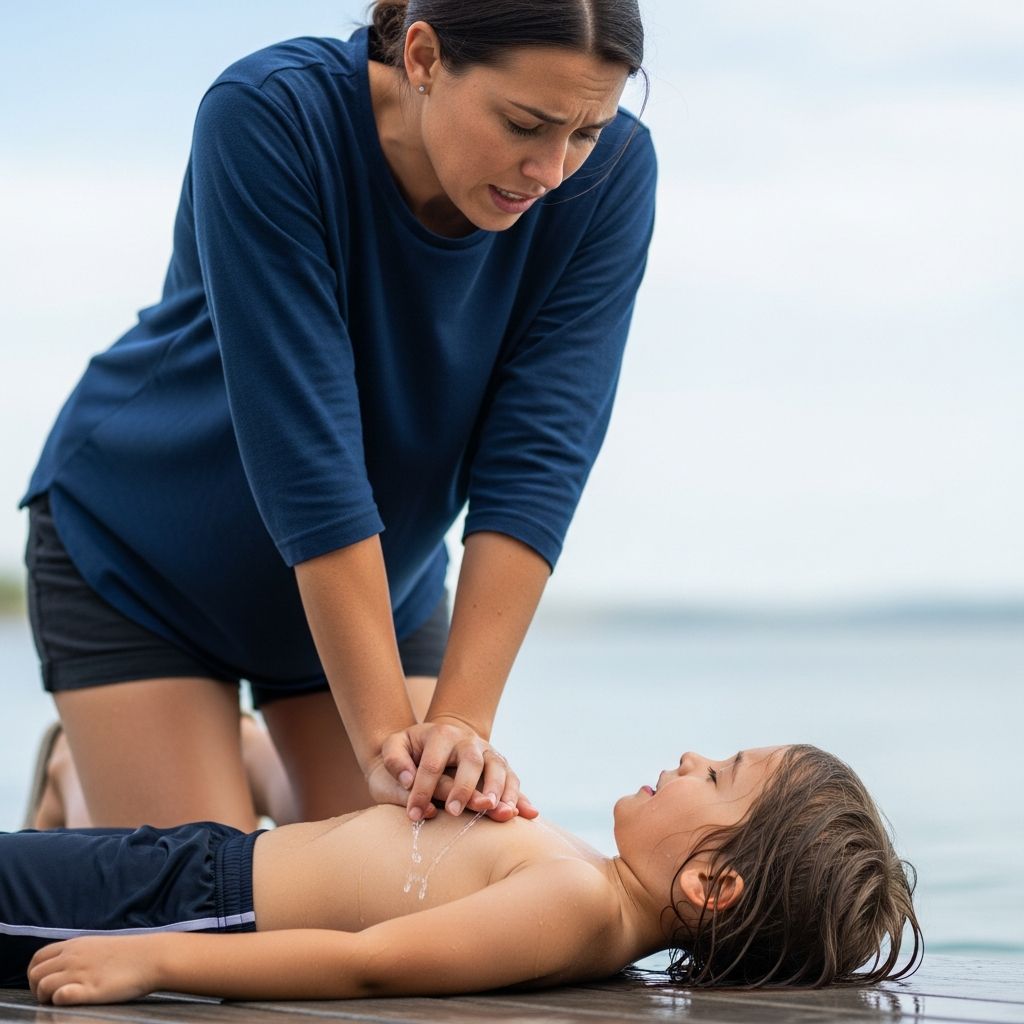
Use one or two hands for compressions at the breastbone’s lower half, aiming for 2 inches (5 cm) depth at 100-120 beats per minute—a rhythm matching “Stayin’ Alive.” Follow 30 compressions to 2 breaths ratio.
| Step | Action | Details |
|---|---|---|
| 1. Compressions | Place heel of one hand, add second if needed | 100-120/min, 2 inches deep, full recoil |
| 2. Airway | Head-tilt/chin-lift | Pinch nose, two slow breaths (1 sec each) |
| 3. Cycle | 30:2 ratio | Continue until help arrives or child revives |
CPR for Infants (Under 1 Year)
Employ two fingers for compressions between nipples, 1.5 inches (4 cm) deep. Encircle chest with fingers covering mouth/nose for breaths.
- Rate: Same as children, but shallower depth.
- Breaths: Puff gently to see chest rise, avoiding overinflation.
- Single rescuer maintains 30:2; two rescuers switch to 15:2.
Practice via certified courses ensures muscle memory; apps with metronomes aid solo efforts.
Navigating Water-Specific Challenges in Resuscitation
Post-immersion, prioritize drainage: Hold child head-down briefly if water is visible in mouth, but transition immediately to CPR as vomiting risks aspiration. Recent guidelines de-emphasize prolonged expulsion, favoring rapid compressions.
For non-breathing but pulsing victims, provide rescue breaths only. Hypothermia from cold water demands warming post-stabilization without delaying CPR. AED use post-two minutes if available: pediatric pads for under 8 years, adult otherwise.
Layered Prevention: Building Unbreachable Defenses
Prevention trumps reaction; the “5 Layers of Protection” model integrates barriers, supervision, education, and gear.
Physical Barriers as First Line
Four-sided fencing—at least 4 feet high with self-closing, latching gates (latches 54+ inches)—halves pool drownings. Isolate pools from homes; slats ≤4 inches apart thwart climbing.
- Door/window alarms chime unauthorized access.
- Pool/hot tub covers lock securely.
- Empty tubs, buckets, kiddie pools post-use.
Constant Vigilance and Supervision
“Touch supervision”—arm’s reach—for toddlers; designate rotating “water watchers” at gatherings, using cards for handoffs. Ban distractions: phones, alcohol, reading.
Never leave children unattended near water, even briefly; post-swim, lock all access points.
Life Jackets and Swim Readiness
U.S. Coast Guard-approved life jackets (not floaties) for boating, open water, weak swimmers. Formal lessons from age 1 reduce risks, building swim survival skills; assess readiness with pediatricians.
Buddy system mandates paired swimming; choose lifeguarded venues.
Home-Wide Water Hazard Audit
Bathrooms pose stealth risks: toilet locks, tub drain removal, scald-preventing mixers. Secure buckets post-mopping; supervise fills. Outdoors, fence spas alongside pools.
Annual checks ensure barriers function; teach kids water rules early without instilling fear.
Certification and Family Preparedness
All caregivers require CPR certification; Red Cross/American Heart Association courses cover pediatric nuances. Home AEDs enhance outcomes; family drills foster calm responses.
Statistics affirm: Barriers + supervision + skills slash incidents by over 50%.
Frequently Asked Questions
What if my child vomits during CPR?
Roll them to side briefly to clear, then resume compressions promptly—do not interrupt rhythm long.
Can swim lessons eliminate drowning risk?
No, but they significantly lower it; always pair with supervision.
Are inflatable pools exempt from fencing?
No—all pools demand barriers per AAP/CDC standards.
How often should fences be inspected?
Daily visually, monthly fully; test latches/gates routinely.
Does alcohol affect supervision only if swimming?
Yes, it impairs judgment even poolside—avoid entirely.
Empowering Families for Lifelong Safety
Integrating CPR mastery with proactive barriers transforms water from peril to joy. Commit to training, audits, and rules—lives hinge on it. Share knowledge; community vigilance amplifies protection.
References
- Prevent Drowning Water Safety Tips for All Ages — Stony Brook Children’s. Accessed 2026. https://www.stonybrookchildrens.org/lp/water-safety-and-drowning-prevention
- Preventing Drowning — Centers for Disease Control and Prevention (CDC). Accessed 2026. https://www.cdc.gov/drowning/prevention/index.html
- Water Safety and Young Children — American Academy of Pediatrics (AAP) HealthyChildren.org. Accessed 2026. https://www.healthychildren.org/English/safety-prevention/at-play/Pages/Water-Safety-And-Young-Children.aspx
- Drowning Prevention and Water Safety — American Academy of Pediatrics (AAP). Accessed 2026. https://www.aap.org/en/patient-care/drowning-prevention-and-water-safety/
- Drowning Prevention — Nemours KidsHealth. Accessed 2026. https://kidshealth.org/en/parents/prevent-drowning.html
- National Drowning Prevention Alliance — NDPA. Accessed 2026. https://ndpa.org
- Drowning Prevention — Children’s Safety Network. Accessed 2026. https://www.childrenssafetynetwork.org/child-safety-topics/drowning-prevention