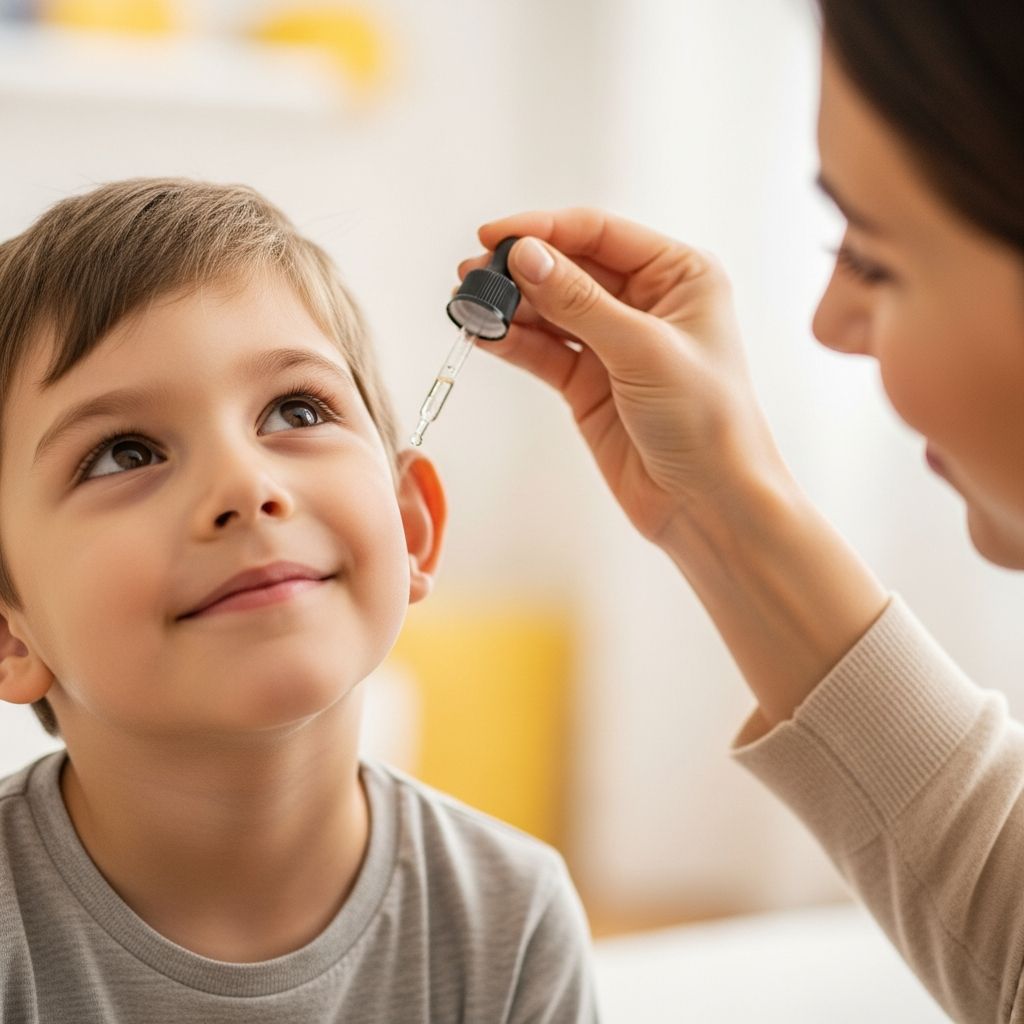
Ear drops are a common treatment for children with ear infections, excess earwax, or itchy, irritated ear canals. Used correctly, they can bring quick relief and help medicines reach the area that needs treatment most efficiently. This guide explains, in simple language, how ear drops work, when they are used, and how to put them in safely for your child.
Why Ear Drops Are Used in Children
Ear drops deliver medication directly into the ear canal, which means they can act faster and usually with fewer whole-body side effects than many oral medicines. Different formulations are designed for different problems, so it is important to know why the drops were recommended for your child.
- Outer ear infections (swimmer’s ear): Drops can contain antibiotics, antiseptics, or other ingredients that reduce germs and swelling in the ear canal.
- Middle ear problems with tubes: Some children with ear tubes receive drops when fluid drains out or an infection is suspected.
- Excess earwax: Softening drops can help loosen hardened wax so it can drain naturally or be removed more easily by a clinician.
- Itching and irritation: Certain drops reduce inflammation and calm allergic or eczema-like irritation in the canal.
Common Types of Ear Drops
Not all ear drops are the same. Always check the label or prescription so you understand what kind of product you are using and what problem it is meant to treat.
| Type of ear drop | Typical purpose | Key points for parents |
|---|---|---|
| Antibiotic drops | Treat bacterial infections of the ear canal or ear with tubes. | Must be used for the full prescribed course, even if symptoms improve. |
| Steroid or anti-inflammatory drops | Reduce swelling, redness, and itching in the ear canal. | Often combined with antibiotics; typically for short-term use only. |
| Wax-softening drops | Loosen and soften hardened earwax. | Should not be used if your child has ear tubes, a hole in the eardrum, or drainage unless a clinician approves. |
| Pain-relief (analgesic) drops | Temporarily relieve ear pain and pressure. | Address discomfort but do not cure infections by themselves. |
| Drying or acidifying drops | Help evaporate trapped water and create a less friendly environment for germs. | Often used for swimmer’s ear or to prevent problems after frequent swimming. |
Preparing to Use Ear Drops Safely
A few simple steps before you start can make the process easier and more comfortable for your child. Good preparation also lowers the risk of contamination or incorrect dosing.
- Read the full instruction leaflet and any directions from your child’s healthcare professional before the first use.
- Check the name, dose, and expiration date on the bottle to ensure you are using the correct product.
- Wash your hands thoroughly with soap and water, and dry them well.
- Gently clean only the outer ear with a soft cloth; do not insert cotton swabs or other objects into the canal.
- If recommended, roll the bottle between your hands for a minute to bring the liquid closer to body temperature and reduce the chance of dizziness from cold drops.
Step-by-Step: How to Put Ear Drops in a Child’s Ear
The exact technique can depend on your child’s age and size, but the general approach is similar. Staying calm and explaining each step can help your child cooperate more willingly.
- Position your child. Have your child lie on their side with the affected ear facing up. Very young children can lie on your lap, with their head supported by your arm.
- Hold the bottle correctly. Shake the bottle if the instructions say to do so. Hold it in the hand you write with and remove the cap without allowing the tip to touch your fingers or any surface.
- Straighten the ear canal.
- For children under 3 years: Gently pull the outer ear downward and back.
- For older children: Gently pull the outer ear upward and back.
- Place the prescribed number of drops. Hold the dropper just above the ear canal opening and squeeze slowly, counting each drop. Avoid touching the ear with the tip to keep the medicine clean.
- Let the drops spread. Ask your child to stay lying down for several minutes so the liquid can coat the canal. You can gently press on the small flap of skin in front of the ear opening a few times to help move the drops inward.
- Wipe excess fluid. Use a clean tissue or cotton ball to blot any drops that run out of the ear, but do not push anything into the canal.
- Repeat on the other ear if directed. If both ears need treatment, turn your child to the opposite side and repeat the steps.
Helping a Nervous or Wiggly Child
Many children feel uneasy about ear drops, especially if their ears already hurt. Patience and reassurance often go a long way toward making the experience smoother for everyone.
- Explain what you are doing in age-appropriate language so your child knows what to expect.
- Practice with pretend ear drops on a favorite toy or doll before the first real use.
- Offer a comfort item such as a stuffed animal, blanket, or favorite song during the process.
- Use brief, specific praise like “You held so still while the drops went in,” to reinforce cooperation.
Important Safety Tips and Precautions
Ear drops are generally safe when used as recommended, but they must still be handled carefully. Incorrect use can delay healing or, in rare cases, lead to complications.
- Only use ear drops that have been prescribed or specifically approved for your child’s situation.
- Do not use a product in the ear if it is labeled for the eyes or another body area.
- Never share ear drops between family members, even if symptoms seem similar.
- Avoid using wax-removal drops or over-the-counter remedies if your child has ear tubes, a known eardrum perforation, or fluid draining from the ear unless a clinician instructs you to use them.
- Stop the drops and seek medical advice right away if your child develops severe pain, rash, swelling around the ear, or any signs of an allergic reaction.
Dosing, Schedules, and Missed Doses
Following the recommended dose and schedule is crucial for ear drops to work well. Giving too little or stopping early can allow an infection to return or become harder to treat.
- Use exactly the number of drops and frequency specified by your healthcare professional or on the package label.
- Try to give doses at evenly spaced times during the day for prescription products.
- If you forget a dose and it is close to the next scheduled time, skip the missed dose instead of doubling up, unless your clinician gives different instructions.
- Record each dose on a simple chart or in a phone note, especially if more than one caregiver is involved.
Recognizing Side Effects and When to Call the Doctor
A mild, brief stinging or warming feeling after drops are placed can be normal, especially with certain types of medications. However, there are situations where professional advice is needed promptly.
- Common minor reactions can include temporary stinging, a sense of fullness, or mild dizziness right after application.
- Stop using the drops and seek urgent medical assessment if your child has intense pain, new drainage with blood or pus, severe itching or hives, or sudden changes in hearing.
- Contact your child’s clinician if symptoms do not improve within the expected time frame explained at the visit or if they seem to worsen.
Ear Drop Storage and Hygiene
Proper storage helps keep ear drops effective and safe to use. The bottle should remain clean so that germs are not introduced into the ear canal.
- Store ear drops according to label directions, which may mean room temperature or refrigeration.
- Always replace the cap tightly right after use and avoid touching the dropper tip.
- Do not use drops that are cloudy, discolored, or past their expiration date.
- Discard leftover prescription drops after the treatment period instead of saving them for future ear problems.
Preventing Future Ear Problems
Good ear care habits can reduce the risk of infections and wax buildup. While not every earache can be prevented, consistent routines often make issues less frequent and less severe.
- Avoid inserting cotton swabs, hairpins, or other objects into your child’s ears, as these can push wax deeper and injure delicate structures.
- Dry your child’s outer ears gently after bathing or swimming by patting with a towel.
- Ask a healthcare professional about preventive drops or other strategies if your child gets frequent swimmer’s ear.
- Ensure childhood vaccinations are current, as some vaccines can reduce certain ear infections associated with respiratory illnesses.
Frequently Asked Questions About Ear Drops for Kids
Can I use leftover ear drops from a previous infection?
Leftover prescription ear drops should not be reused for new ear problems without medical guidance. The medication may be expired, contaminated, or not appropriate for your child’s current symptoms. Using the wrong treatment can delay accurate diagnosis and proper care.
What if my child shakes their head and the drops seem to come out?
Some liquid may run out of the ear canal even when the correct amount was delivered inside. If your child stayed lying on their side for a few minutes after the drops were placed, much of the medicine has likely coated the canal. Unless your clinician advises otherwise, do not repeat the dose right away just because some fluid appears on the outer ear.
Are over-the-counter earwax drops safe for my child?
Many wax-softening products are marketed for general use, but they are not suitable for every child. Children with ear tubes, previous eardrum problems, chronic infections, or pain and drainage should be evaluated before any wax-removal product is used. When in doubt, ask a pediatrician or ear specialist to examine the ears and suggest the safest approach.
Can I put ear drops in a sleeping child?
It is usually better for your child to be awake so you can explain what is happening and help them remain still. However, if your child is a very sound sleeper and does not startle easily, some caregivers successfully apply drops while the child sleeps on their side. If your child wakes up upset or moves abruptly, wait until they are calm and cooperative to try again.
When should my child see an ear specialist?
Referral to an ear, nose, and throat specialist may be recommended if ear infections are frequent, fluid seems to persist behind the eardrum, hearing or speech delays are suspected, or ear problems fail to improve with routine treatment. An ear specialist can perform a more detailed exam and discuss options such as ear tubes or additional testing if necessary.
Key Takeaways for Parents
Ear drops are a valuable tool in treating children’s ear conditions when they are used with care and according to professional guidance. By recognizing the type of drops you have, following proper application steps, and watching for any concerning reactions, you can help your child get relief while protecting their hearing and ear health.