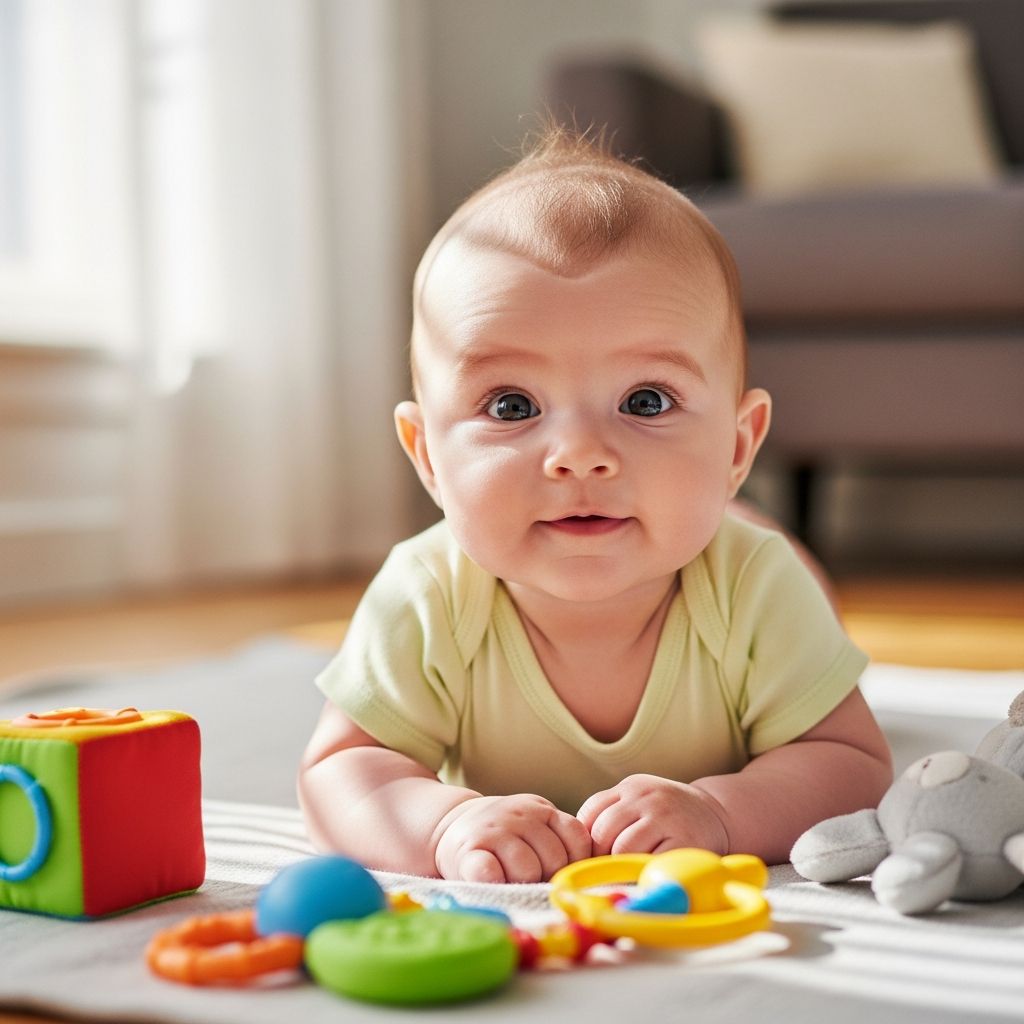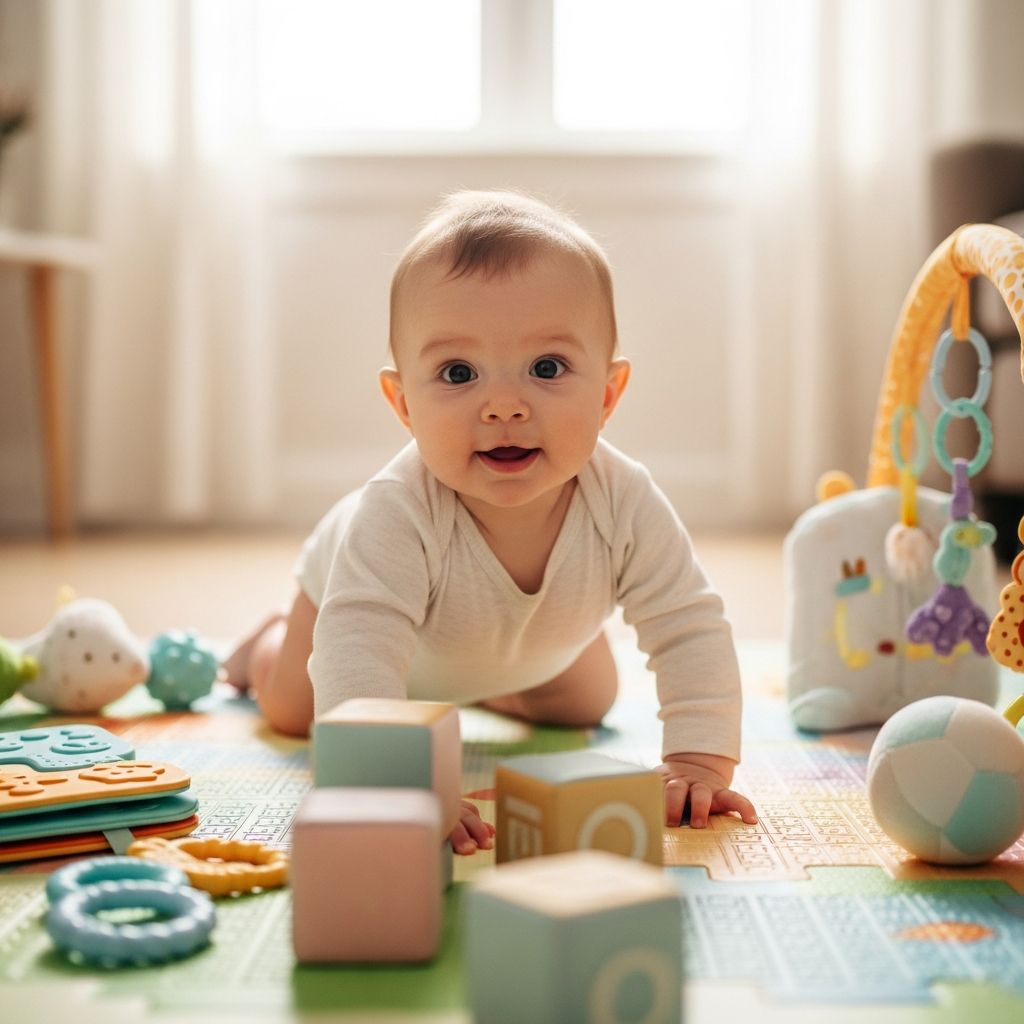
At seven months, your baby is transforming from a newborn into an active explorer, mastering new skills that lay the foundation for future independence. This stage brings rapid advances in movement, cognition, communication, and emotional bonds, making it a thrilling time for parents. Understanding these changes helps you support your little one’s journey while ensuring their safety as they become more mobile.
Physical Growth and Motor Achievements
Seven-month-olds experience a surge in physical capabilities, enabling them to interact with their environment in dynamic ways. Most babies at this age can roll over effortlessly in both directions, transitioning from tummy to back and vice versa without hesitation. They also sit steadily, often leaning forward on their hands before balancing unsupported, which strengthens core muscles essential for upcoming crawling and standing.
Babies begin supporting their full body weight on their legs when held upright, bouncing with excitement as they build leg strength. Many start getting into position on hands and knees, rocking back and forth in preparation for crawling—some even creep or scoot backward first before mastering forward motion. Hand-eye coordination sharpens dramatically; infants reach with one hand, transfer toys between hands, and rake small objects using their fingers.
- Rolling mastery: Front-to-back and back-to-front, often during play or sleep.
- Sitting prowess: Independent sitting for short periods, reaching for toys without toppling.
- Pre-crawling moves: Rocking on all fours, scooting, or pulling up to knees.
- Grasping skills: Precise pincer grasp emerging by late month, holding two objects simultaneously.
Teething often ramps up, with lower central incisors appearing first, followed by upper ones, prompting increased mouthing of objects. Naps consolidate to two or three daily sessions lasting 1-2 hours each, though night wakings may increase due to separation anxiety or teething discomfort.
Cognitive Exploration and Problem-Solving
Cognitively, seven-month-olds become little scientists, experimenting with cause and effect. They find partially hidden objects, understanding that things out of sight still exist—a key step in object permanence. Babies explore relentlessly with hands and mouth, banging toys together, shaking noisemakers, and dropping items repeatedly to observe outcomes.
Eye-hand coordination peaks, allowing them to track moving objects across distances, spot toys from afar, and retrieve them purposefully. Vision matures to full color perception with improved distance focus, enabling detailed scrutiny of books or distant faces.
| Milestone | Description | Support Tips |
|---|---|---|
| Object permanence | Seeks hidden toys under cloth | Play peek-a-boo variations |
| Exploration | Bangs, shakes, drops toys | Provide safe stacking blocks |
| Visual tracking | Follows fast-moving items | Use colorful mobiles |
These activities foster neural connections that explode during the first five years, critical for lifelong learning and health.
Language and Communication Progress
Communication blossoms as babies respond to their name, turn toward sounds, and differentiate emotions via tone of voice. They babble chains like ‘ba-ba-ma-ma,’ using voice to convey joy, frustration, or attention-seeking coughs. Understanding emerges for simple words like ‘no’ or ‘eat,’ and they may follow one-step directions with gestures.
Social play thrives; infants enjoy mirror play, imitating expressions, and responding to others’ emotions with their own joy or concern. They prefer primary caregivers, showing stranger anxiety, and engage in turn-taking vocal exchanges.
- Babbling: Reduplicated syllables, imitating sounds.
- Response to name: Turns head, smiles.
- Emotional cues: Mirrors parental feelings.
Social-Emotional Bonds and Interactions
Emotionally, seven-month-olds form strong attachments, appearing joyful during social play and showing affection selectively. They play peek-a-boo, pat-a-cake, and wave, delighting in interactive games. However, stranger wariness intensifies, and they may refuse cuddles from unfamiliar people.
Touch is vital; safe tactile exploration builds confidence as babies scoot to desired textures. Daily routines like reading picture books, singing, and naming objects enhance bonds and vocabulary.
Feeding, Sleep, and Daily Routines
Solids advance to mashed, minced, or finger foods as chewing develops; self-feeding attempts with spoons or bottles are common. Babies show food preferences and put everything in their mouth, necessitating vigilant choking prevention.
Sleep patterns stabilize but may fragment; establish bedtime rituals with baths and stories to soothe.
Safety Essentials for Mobile Babies
Mobility demands home-proofing: secure furniture, gate stairs, and remove hazards like cords or small objects. Never leave babies unattended on elevated surfaces; supervise crawling explorations closely. Choose age-appropriate toys without loose parts.
Activities to Boost Development
Encourage growth through play:
- Motor: Place toys out of reach to prompt crawling; tummy time with mirrors.
- Cognitive: Stack/nest toys, hide-and-seek games.
- Language: Read daily, expand babbles (e.g., ‘ma’ to ‘mama’), sing nursery rhymes.
- Social: Mirror play, clapping games.
Responsive interaction—pausing for baby responses—mimics adult conversation, accelerating skills.
Recognizing Developmental Red Flags
Most babies hit milestones variably, but consult a pediatrician if:
- No rolling by 5-6 months.
- Cannot sit with support by 6 months.
- No babbling or response to name/sounds by 7-8 months.
- No weight-bearing on legs or reaching by 7 months.
- Persistent eye misalignment, no smile by 5 months, or skill regression.
Early intervention via CDC tools can address delays promptly.
Frequently Asked Questions (FAQs)
Is it normal if my 7-month-old isn’t crawling yet?
Yes, crawling varies; some skip it entirely, progressing to pulling up or scooting. Focus on encouragement if they’re rocking or sitting steadily.
How can I help my baby learn to sit independently?
Practice supported sitting during playtime, using pillows for safety, and strengthen core with supervised tummy time.
What foods are safe at 7 months?
Introduce soft purees, mashed veggies, fruits, and finger foods like soft banana pieces. Avoid honey, whole nuts, or hard items to prevent choking.
Why is my baby suddenly fussy around strangers?
Stranger anxiety peaks now as attachment strengthens; comfort them while gradually exposing to new faces in safe settings.
How much sleep does a 7-month-old need?
Total 12-16 hours daily, including 2-3 naps of 1-2 hours and 10-12 hours at night, though teething may disrupt.
Long-Term Impact of Early Milestones
These seven-month achievements build foundational skills for walking, talking, and social success. Stimulating environments now optimize brain development, reducing later risks for delays. Track progress with apps or charts, celebrating small victories while staying attuned to individual paces.
Parenting a 7-month-old blends joy and vigilance—embrace the mobility milestone with safe spaces and interactive love. Your consistent support turns everyday moments into lifelong strengths.
References
- Important Milestones By The End Of 7 Months — UC Berkeley Health Initiative for Asian Americans. 2015. https://hia.berkeley.edu/wp-content/uploads/2015/05/7-months-milestone.pdf
- Baby development at 7-8 months — Raising Children Network (Australian Government-funded). Accessed 2026. https://raisingchildren.net.au/babies/development/development-tracker-3-12-months/7-8-months
- 7-9 Month Old Baby Development & Milestones — Children’s Hospital of Orange County (CHOC). Accessed 2026. https://choc.org/ages-stages/7-to-9-months/
- Developmental Milestones: 7 Months — American Academy of Pediatrics (HealthyChildren.org). Accessed 2026. https://www.healthychildren.org/English/ages-stages/baby/Pages/Developmental-Milestones-7-Months.aspx
- Infant development: Milestones from 7 to 9 months — Mayo Clinic. Accessed 2026. https://www.mayoclinic.org/healthy-lifestyle/infant-and-toddler-health/in-depth/infant-development/art-20047086
- CDC’s Developmental Milestones — Centers for Disease Control and Prevention (CDC). Accessed 2026. https://www.cdc.gov/act-early/milestones/index.html