Understanding Your 5-Month-Old’s Growth and Development
By the time your baby reaches 5 months, they’ve already made remarkable progress from the newborn stage. This period is a bridge between early infancy and the more active, interactive phase that follows. Babies at this age are not only growing in size but also gaining strength, coordination, and social awareness. Understanding what’s typical at this stage helps parents feel more confident and responsive to their baby’s needs.
Physical Growth: Weight, Length, and Head Circumference
At 5 months, most babies have roughly doubled their birth weight, a major milestone that reflects healthy early nutrition and metabolism. On average, babies gain about 1¼ pounds (around 560 grams) during this month and grow about 0.8 inches (2 centimeters) in length. Head circumference also increases steadily, supporting rapid brain development.
These are averages, and healthy babies can fall above or below these numbers. What matters most is consistent, steady growth over time. Pediatricians track these measurements at well-child visits to ensure the baby is following a healthy growth curve. If growth is significantly faster or slower than expected, the doctor may explore feeding patterns, underlying health, or other factors.
Typical Growth Patterns at 5 Months
| Measurement | Average Change (This Month) | General Range |
|---|---|---|
| Weight | ~1.25 lb (560 g) | Varies by birth weight and individual pattern |
| Length | ~0.8 in (2 cm) | Varies by genetics and early growth |
| Head Circumference | ~0.5–0.8 in (1.3–2 cm) | Follows a consistent percentile curve |
Parents should avoid comparing their baby too closely to others. Genetics, birth weight, and feeding method (breastfeeding, formula, or a combination) all influence growth. As long as the baby is alert, feeding well, and meeting developmental milestones, small variations in size are usually not a concern.
Motor Skills: What Your 5-Month-Old Can Do
At 5 months, babies are becoming much more physically capable. They’re building strength in their neck, back, arms, and legs, which supports new movements and greater independence.
Gross Motor Development
- Rolling over: Many babies begin rolling from back to tummy and sometimes from tummy to back around this age. Rolling is often the first form of independent movement and marks a big leap in motor control.
- Sitting with support: Babies at 5 months can usually sit with help, such as being propped with pillows or held in a seated position. They may lean forward or to the side but are learning to balance their head and trunk.
- Kicking and pushing: When lying on their back or on their tummy, babies kick their legs and push with their arms. These movements build strength for crawling and standing later on.
- “Swimming” motions: On the tummy, babies may move their arms and legs in a crawling-like pattern, even if they’re not yet moving forward.
Fine Motor Development
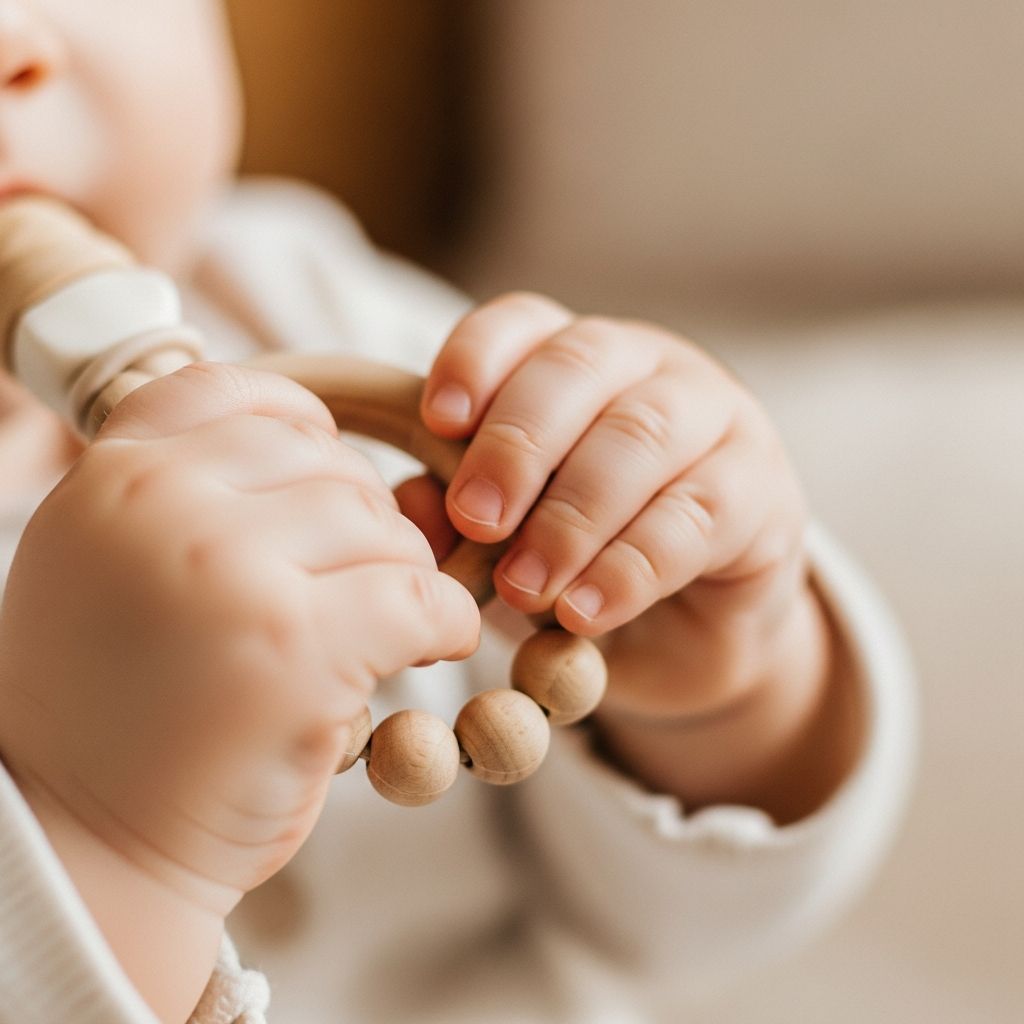
- Reaching and grasping: Babies can now reach for objects with one or both hands and bring them to their mouth. This is an important way they explore the world.
- Transferring objects: Many 5-month-olds can pass a toy from one hand to the other, showing improved hand-eye coordination and bilateral coordination.
- Grasping feet: When lying on their back, babies may grab their feet or toes, which helps them understand their body and develop coordination.
Sensory and Cognitive Development
At 5 months, babies are becoming more aware of their surroundings. Their vision, hearing, and understanding of cause and effect are all advancing.
Visual Development
- Babies can now see clearly at longer distances and distinguish colors well.
- They follow moving objects with their eyes, such as a toy being moved side to side or a person walking across the room.
- They show clear recognition of familiar faces, often smiling or cooing when they see parents or regular caregivers.
Hearing and Sound Awareness
- Babies respond to sounds by turning their head toward the source.
- Many begin to respond to their name by turning or pausing, though this may still be inconsistent.
- They enjoy listening to voices, music, and everyday sounds, and may quiet down or become alert when they hear something interesting.
Early Cognitive Skills
- Babies start to understand simple cause-and-effect relationships, such as shaking a rattle to make noise.
- They may bang or shake toys to see what happens, showing curiosity and problem-solving.
- They begin to anticipate routines, such as getting excited when they see a bottle or feeding chair.
Social and Emotional Development
At 5 months, babies become more socially engaged. They express emotions more clearly and enjoy interacting with people.
Emotional Expression
- Babies smile more frequently, especially in response to familiar faces and playful interactions.
- They may laugh, squeal, or make excited sounds during games like peek-a-boo or pat-a-cake.
- They can show displeasure through fussing, crying, or turning away when overstimulated or uncomfortable.
Social Interactions
- Babies enjoy face-to-face play and may maintain eye contact during conversations.
- They begin to use sounds, facial expressions, and body movements to get attention or express needs.
- Some babies start to show wariness of unfamiliar people, a normal sign of healthy attachment and awareness of their environment.
Language and Communication Milestones
Language development at 5 months is mostly about sounds and social exchanges, not words. Babies are learning how communication works through back-and-forth interactions.
What to Expect in Speech and Language
- Babbling: Babies produce a wide range of sounds, including “ba-ba,” “da-da,” “ga-ga,” and “ma-ma.” These are not yet meaningful words but are important practice for speech.
- Vocal play: Babies experiment with volume, pitch, and rhythm, making squeals, growls, and coos.
- Responsive babbling: Many babies “talk back” when spoken to, pausing and then making sounds in response, which is the foundation of conversation.
How to Support Language Development
- Talk to your baby throughout the day, describing what you’re doing and what they’re seeing.
- Respond to their sounds with smiles, words, and facial expressions to show that communication is a two-way process.
- Read books with simple pictures and rhythmic language, pointing to objects and naming them.
- Sing songs and nursery rhymes, which help babies learn patterns and sounds in language.
Feeding and Nutrition at 5 Months
At 5 months, most babies are still fully or mostly fed with breast milk or formula. Solid foods are not yet necessary for most babies, but parents often wonder when to start.
Typical Feeding Patterns
- Babies usually take 4–6 feedings per day, depending on whether they are breastfed or formula-fed.
- They may start to go longer between feedings, especially at night, as their stomach capacity increases.
- They remain the primary source of nutrition; solids are not yet a major part of the diet.
When to Consider Starting Solids
- Most health organizations recommend starting solids around 6 months, when babies show signs of readiness.
- Signs of readiness include good head and neck control, ability to sit with support, interest in food, and loss of the tongue-thrust reflex.
- At 5 months, it’s usually best to wait unless a pediatrician advises otherwise due to specific needs.
Practical Feeding Tips
- Continue to feed on demand, watching for hunger cues like rooting, sucking on hands, or fussing.
- Ensure proper burping after feeds to reduce gas and discomfort.
- Keep bottles and feeding equipment clean to prevent illness.
- Discuss any concerns about feeding (refusal, spitting up, or slow weight gain) with your pediatrician.
Sleep Patterns and Routines
By 5 months, many babies are starting to sleep longer stretches at night, though patterns vary widely. Establishing a consistent routine can help support healthy sleep habits.
Typical Sleep at 5 Months
- Total sleep: Around 12–16 hours per day, including naps.
- Night sleep: Many babies sleep 6–8 hours at night, though some may still wake for feeds.
- Naps: Usually 2–3 naps per day, each lasting 1–3 hours, depending on the baby.
Supporting Healthy Sleep
- Establish a calming bedtime routine, such as a bath, feeding, and quiet time with a book or lullaby.
- Put the baby down drowsy but awake to encourage self-soothing skills.
- Keep the sleep environment safe: firm mattress, no loose bedding, and on the back for every sleep.
- Be patient with night wakings; some are normal due to growth spurts, teething, or developmental changes.
Daily Care and Safety Considerations
As babies become more mobile and curious, daily care and safety become increasingly important.
Everyday Care Tips
- Continue regular diaper changes and gentle skin care to prevent rashes.
- Keep up with well-child visits and vaccinations as scheduled.
- Offer plenty of tummy time to build strength and prevent flat spots on the head.
- Provide safe toys and objects for exploration, avoiding small parts that could be choking hazards.
Safety at 5 Months
- Never leave a baby unattended on a changing table or elevated surface; rolling babies can fall quickly.
- Use a secure, age-appropriate car seat for all travel.
- Keep small objects, cords, and hazardous substances out of reach.
- Ensure cribs and play areas meet current safety standards.
How to Support Your Baby’s Development
Parents play a crucial role in supporting their baby’s growth through everyday interactions and routines.
Play and Interaction Ideas
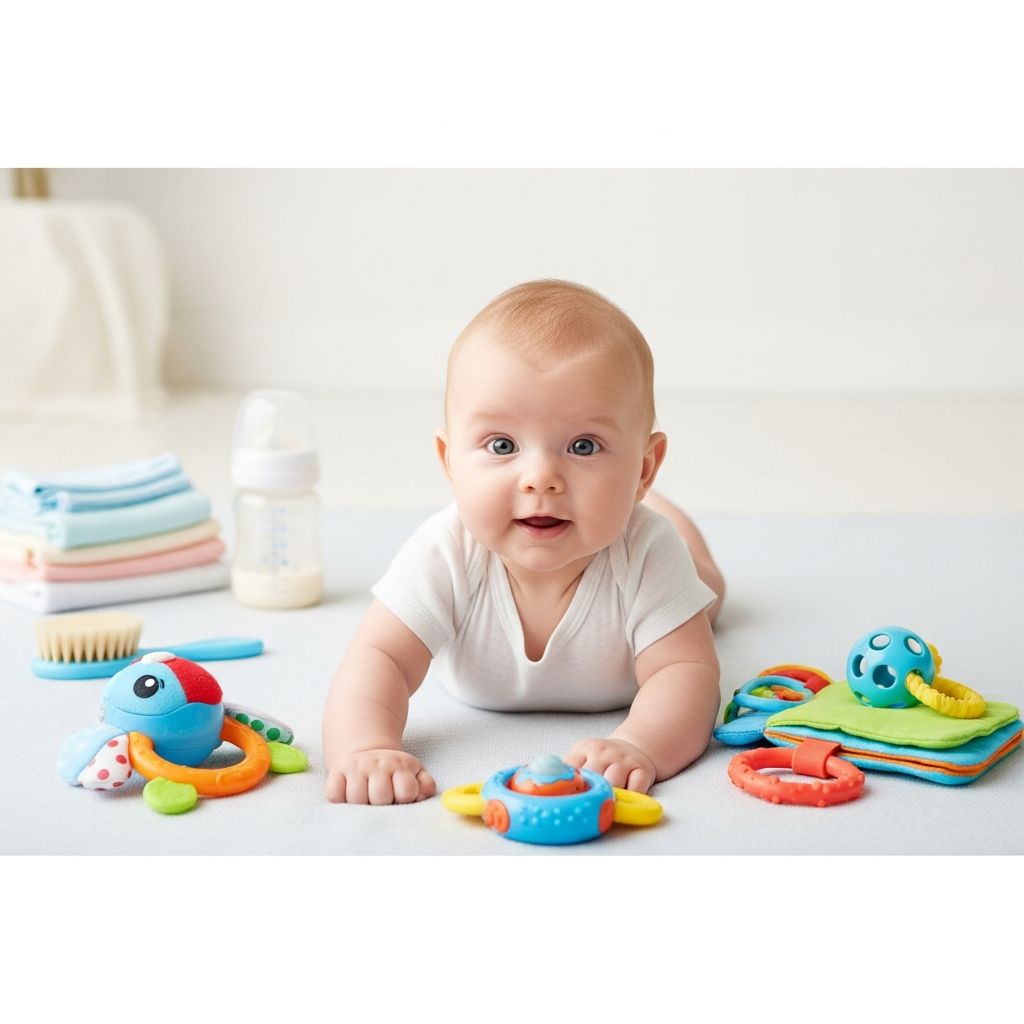
- Place your baby on the floor with safe toys to encourage reaching, rolling, and exploring.
- Play simple games like peek-a-boo, pat-a-cake, and “so big” to build social and cognitive skills.
- Offer toys with different textures, sounds, and colors to stimulate the senses.
- Get outside for short walks or time in a stroller to expose your baby to new sights, sounds, and movements.
Creating a Supportive Environment
- Respond promptly to your baby’s cries and cues to build trust and security.
- Provide a balance of stimulation and quiet time to prevent overstimulation.
- Encourage independence by allowing safe exploration within a supervised space.
- Be patient and flexible; every baby develops at their own pace.
When to Talk to Your Pediatrician
While there is a wide range of normal development, certain signs may warrant a discussion with your baby’s doctor.
Reasons to Seek Guidance
- No attempts to roll over or push up on arms by 5–6 months.
- Not showing interest in people or toys, or not making sounds.
- Not responding to sounds or not tracking objects with the eyes.
- Feeding difficulties, such as refusing feeds, frequent vomiting, or poor weight gain.
- Concerns about sleep, behavior, or overall development.
Early identification of any delays or concerns allows for timely support and intervention. Regular well-child visits are the best opportunity to discuss your baby’s progress and ask questions.
Frequently Asked Questions
Q: How much should a 5-month-old weigh?
A: On average, babies gain about 1¼ pounds this month and have roughly doubled their birth weight by 5 months. Exact weight varies by birth weight, genetics, and feeding method. Your pediatrician will track growth over time to ensure it’s on a healthy curve.
Q: Should my 5-month-old be rolling over?
A: Many babies begin rolling over around 5 months, but some start earlier or later. Rolling from back to tummy often comes before rolling from tummy to back. If your baby isn’t rolling by 6 months or shows no interest in movement, discuss it with your pediatrician.
Q: Can I start solids at 5 months?
A: Most babies are ready for solids around 6 months. At 5 months, it’s usually best to wait unless your pediatrician recommends starting earlier due to specific needs. Signs of readiness include good head control, sitting with support, and interest in food.
Q: How can I help my baby sleep better at night?
A: Establish a consistent bedtime routine, put your baby down drowsy but awake, and ensure a safe sleep environment. Be patient with night wakings, as they can be related to growth, teething, or developmental changes. If sleep is a major concern, talk to your pediatrician.
Q: Is it normal for my baby to drool a lot at 5 months?
A: Yes, increased drooling is common at this age and is not always a sign of teething. It’s related to developing saliva production and oral motor skills. Keep the chin and neck dry to prevent rashes, and offer safe teething toys if needed.
References
- Growth Charts: United States — Centers for Disease Control and Prevention (CDC). 2000. https://www.cdc.gov/growthcharts/clinical_charts.htm
- Developmental Milestones: 4–6 Months — American Academy of Pediatrics (AAP). 2023. https://www.healthychildren.org/English/ages-stages/baby/Pages/Developmental-Milestones-4-to-6-Months.aspx
- Infant Feeding and Nutrition — World Health Organization (WHO). 2023. https://www.who.int/news-room/fact-sheets/detail/infant-and-young-child-feeding