Gastroschisis is a birth defect of the abdominal wall where a baby is born with part of the intestines, and sometimes other organs, outside the body through a small opening beside the belly button. Babies with this condition need prompt, specialized care and surgery soon after birth. This guide explains gastroschisis in simple language and focuses on a common treatment called silo repair, so families know what to expect before, during, and after surgery.
What Is Gastroschisis?
During early pregnancy, a baby’s abdominal wall forms and closes, keeping the organs inside the belly. In gastroschisis, the wall does not close completely, leaving a hole (usually 2–5 cm) just to the right of the umbilical cord. Through this opening, the intestines and sometimes the stomach or other organs slip outside the body and float in the amniotic fluid.
- Location: Opening typically next to, not through, the belly button.
- Organs involved: Most often small and large intestine; sometimes stomach, rarely liver.
- No protective sac: Unlike another condition called omphalocele, the exposed bowel is not covered by a membrane.
Because the bowel is directly exposed to amniotic fluid, it can become swollen, thickened, and less able to work normally right after birth.
How Common Is Gastroschisis?
Gastroschisis is considered a rare defect, but it has become more frequently recognized in recent decades in many countries. It usually affects babies of mothers who were otherwise healthy, and most cases are not linked to known genetic syndromes.
How Gastroschisis Is Diagnosed
Most parents learn about gastroschisis during pregnancy. Modern prenatal care allows doctors to detect the condition before the baby is born and to plan delivery at a hospital with neonatal surgery and intensive care.
Prenatal Screening and Tests
- Blood test findings: A maternal blood test may show higher-than-expected alpha-fetoprotein (AFP) levels, which can suggest an abdominal wall defect.
- Ultrasound: A second-trimester ultrasound (around 18–20 weeks) often clearly shows free-floating bowel loops outside the baby’s abdomen.
After diagnosis, parents are typically referred to a high-risk obstetrician and a pediatric surgery team. Additional ultrasounds may monitor:
- Baby’s growth and weight
- Amount of bowel outside the belly
- Signs of bowel swelling, narrowing, or reduced blood flow
Planning the Delivery
Most babies with gastroschisis are delivered vaginally unless there are obstetric reasons for a cesarean section. Delivery is usually planned at a hospital with:
- A neonatal intensive care unit (NICU)
- Pediatric surgeons experienced in abdominal wall defects
- Specialized neonatal anesthesia and nursing care
Why Surgery Is Needed
Because the intestines are outside the body and unprotected, they are at risk for infection, dehydration, heat loss, and damage from swelling. Surgery is needed to:
- Gently place the bowel back inside the abdomen
- Close the opening in the abdominal wall
- Protect the exposed organs and reduce the risk of complications
There are two main approaches to repair:
- Primary closure: All bowel is placed back into the abdomen and the opening is closed in one surgery soon after birth.
- Staged closure (silo repair): The bowel is gradually returned to the abdomen over several days using a special bag called a silo, followed by final closure.
What Is a Silo and When Is It Used?
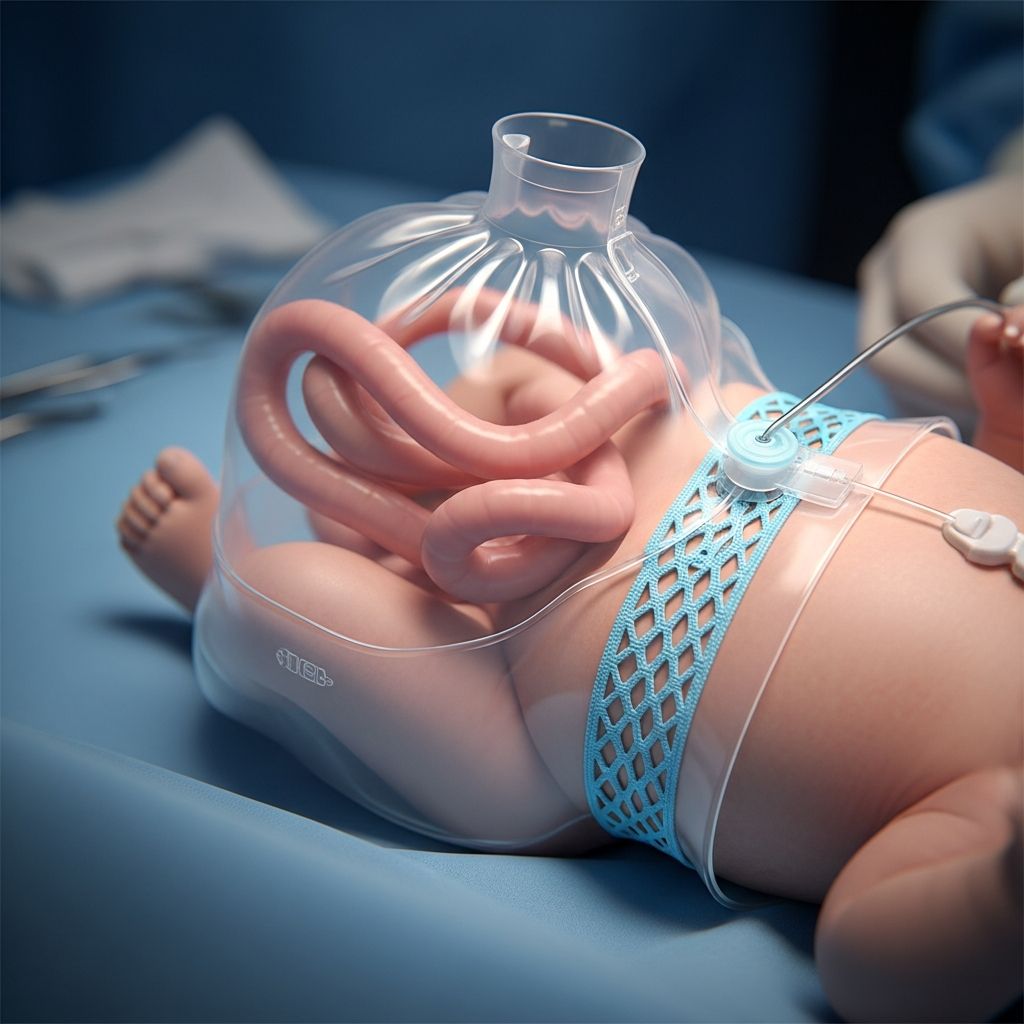
A silo is a sterile, clear, soft bag that is attached to the baby’s abdominal opening and hangs above the baby like a small, vertical pouch. The intestines are gently placed into this bag, which protects them while they are gradually guided back into the belly.
Why Doctors Choose Silo Repair
Doctors may recommend a silo instead of immediate (primary) closure when:
- The bowel is very swollen and thickened from exposure to amniotic fluid.
- There is a large amount of intestine outside the belly, making it unsafe to push everything back at once.
- The baby is small, premature, or medically unstable right after birth.
Using a silo allows the baby’s abdomen to slowly stretch and adapt to hold the bowel, helping maintain blood flow to the organs and lowering the risk of breathing and circulation problems.
Step-by-Step: Silo Repair and Hospital Course
Every baby is different, but the general sequence of care around silo repair follows a predictable pattern.
Immediately After Birth
- Stabilization: The baby is dried, kept warm, and placed in a sterile plastic wrap or bag to protect the exposed bowel and prevent fluid and heat loss.
- Breathing support: Some babies breathe on their own; others need help with oxygen or a breathing tube and ventilator.
- IV lines: Fluids and medications are given through a vein to maintain hydration, blood sugar, and blood pressure.
- No feeding by mouth: The stomach is often drained with a tube in the nose or mouth to prevent vomiting and reduce pressure on the intestines.
Placing the Silo
Silo placement is usually done in the operating room or sometimes at the bedside in the NICU, depending on the baby’s condition and hospital practice.
- The intestines are inspected and gently lifted into the clear silo bag.
- The top of the bag is secured to the edges of the abdominal wall opening.
- The silo is suspended above the baby, allowing gravity to help the bowel slide downward over time.
The baby receives pain relief and sedation as needed. The care team watches closely for color changes, swelling, and signs of good blood flow to the bowel.
Gradual Reduction of the Bowel
Over the next several days, the medical team slowly tightens or gently squeezes the silo at regular intervals. The goal is to encourage the intestines to slide back into the abdominal cavity without causing breathing or circulation problems.
The pace of reduction depends on:
- How much bowel is outside the body
- How swollen and thick the bowel is
- The baby’s breathing, heart rate, and blood pressure
Final Closure Surgery
Once most or all of the bowel has moved back into the abdomen, surgeons schedule a final operation to close the opening. This surgery usually involves:
- Removing the silo
- Checking the intestines for areas of damage, narrowing, or blockage
- Closing the muscles and skin of the belly, sometimes in layers
In some babies, a small patch or special material may be used if the abdominal wall cannot be closed completely with native tissues without too much pressure.
Life in the NICU: What Parents Can Expect
The NICU stay can be emotionally and physically demanding for families. Understanding the typical course can help parents feel more prepared.
Monitoring and Support
| Area of Care | What the Team Monitors |
|---|---|
| Breathing | Oxygen level, need for ventilator or oxygen support, chest movement |
| Circulation | Heart rate, blood pressure, urine output, blood tests |
| Infection risk | Temperature, lab markers of infection, incision or silo site |
| Nutrition | Weight, fluid balance, lab values, tolerance of feeds |
Pain Management and Comfort
Pain control is a priority. Babies may receive IV pain medications or continuous infusions. Nurses use gentle handling, swaddling, and positioning to provide comfort. Parents are encouraged to participate in care as soon as it is safe, including:
- Touching or holding their baby’s hand
- Talking or singing softly
- Skin-to-skin holding (kangaroo care), when the care team feels it is appropriate
Feeding, Nutrition, and Bowel Function
The intestines often take time to start working well after gastroschisis repair, especially when the bowel has been swollen or damaged. Many babies cannot eat by mouth for days or weeks.
Intravenous (IV) Nutrition
- Total parenteral nutrition (TPN): A special liquid containing protein, sugars, fats, vitamins, and minerals is given through a central IV line.
- Fluids and electrolytes: Extra fluids and salts are adjusted based on blood tests to keep the baby in balance.
Starting Feeds
Feeding usually begins slowly through a tube that goes into the stomach or small intestine. Doctors and nurses look for signs that the bowel is starting to work:
- Decreased stomach drainage
- Soft, non-swollen belly
- Passing gas or stool
Breast milk is strongly encouraged whenever possible because it supports immunity and may lower the risk of serious bowel infections like necrotizing enterocolitis. If direct breastfeeding is not yet possible, mothers can pump milk for tube feedings.
Possible Intestinal Complications
Some babies have additional bowel problems, sometimes called complex gastroschisis, such as:
- Intestinal atresia: A section of intestine that is not connected or is blocked, which may require another operation to repair.
- Short bowel (short gut) syndrome: Loss of a large portion of intestine, leading to long-term trouble absorbing nutrients and need for prolonged IV nutrition.
- Bowel obstruction: Scar tissue or twisting that blocks the intestine and may cause vomiting, swelling, and pain.
Preparing to Go Home
The length of NICU stay varies widely. Babies with simple gastroschisis often stay several weeks, while those with complex problems may need months of hospital care. Before discharge, most babies must:
- Breathe on their own without a ventilator
- Maintain body temperature in an open crib
- Tolerate enough milk or formula by mouth or tube to grow
- Show stable weight gain
Parents receive teaching on:
- Feeding methods and schedules
- Care of any remaining tubes or lines (if present)
- How to care for the healing incision and belly button area
- Signs of infection or bowel trouble that require urgent attention
Long-Term Outlook and Follow-Up
Many children with gastroschisis grow up to live active, healthy lives. Long-term results depend on how much intestine was healthy at birth, whether there were complications, and how the baby responded to treatment.
Common Long-Term Considerations
- Growth and nutrition: Some children are smaller in the first years of life but catch up over time with good nutrition and medical follow-up.
- Feeding challenges: A few children may have feeding aversions, reflux, or constipation requiring support from feeding specialists or dietitians.
- Scarring: A visible scar on the abdomen is common, but many families find it fades with time.
- Development: Most children reach normal developmental milestones, especially when medical issues are well managed.
Children with short bowel syndrome or major intestinal surgery may need long-term care from a multidisciplinary team, including gastroenterologists, nutritionists, and surgeons.
Emotional Support for Families
Having a baby with gastroschisis can be overwhelming. Parents often experience fear, guilt, sadness, and stress, especially during the NICU stay. Sources of support can include:
- Social workers and psychologists in the hospital
- Parent support groups for families of NICU or surgical babies
- Peer mentors who have had a child with gastroschisis
- Reliable educational materials from hospitals, government health agencies, and reputable organizations
Frequently Asked Questions (FAQs)
Q: Did I do something to cause my baby’s gastroschisis?
A: In most cases, no specific cause is identified. Research suggests that gastroschisis results from abnormal development of the abdominal wall early in pregnancy. Certain factors like young maternal age and some environmental exposures are associated with higher risk, but most parents did nothing to cause it and could not have prevented it.
Q: How long will my baby need to stay in the hospital?
A: The hospital stay depends on how quickly the intestines start to work and whether there are complications. Many babies remain in the NICU for several weeks; babies with complex gastroschisis or short bowel may need months of care.
Q: Will my baby be able to eat normally in the future?
A: Many children with simple gastroschisis eventually eat normally and grow well. If a large portion of intestine was removed or damaged, a child may have long-term feeding or absorption issues and will be followed closely by specialists.
Q: Can I breastfeed my baby?
A: Yes, breast milk is strongly encouraged. Even if your baby cannot feed by mouth right away, you can pump and store milk for tube or later feeds. Breast milk supports the immune system and may lower the risk of serious bowel infections.
Q: Will my child need more surgeries later on?
A: Some children never need another operation. Others may require additional surgery for issues like scar-related bowel obstruction, hernia repair, or treatment of intestinal atresia. Your child’s surgeon will discuss the specific risks and follow-up plan for your baby.
References
- Gastroschisis — National Organization for Rare Disorders (NORD). 2023-01-01. https://rarediseases.org/rare-diseases/gastroschisis/
- Gastroschisis — StatPearls / NCBI Bookshelf. 2023-07-24. https://www.ncbi.nlm.nih.gov/books/NBK557894/
- Gastroschisis — Minnesota Department of Health. 2022-05-10. https://www.health.state.mn.us/diseases/cy/gastroschisis.html
- Gastroschisis (abdominal wall defect or hole) Overview — American Pediatric Surgical Association / Pediatric Surgery Library. 2021-01-01. https://www.pedsurglibrary.com/apsa/repview?type=682-134&name=88_1884007_PDF
- Gastroschisis — MedlinePlus Medical Encyclopedia, U.S. National Library of Medicine. 2023-09-12. https://medlineplus.gov/ency/article/000992.htm
- Gastroschisis — Children’s Hospital of Philadelphia. 2023-02-15. https://www.chop.edu/conditions-diseases/gastroschisis
- Gastroschisis: Causes, Symptoms, Treatments — Cleveland Clinic. 2022-11-01. https://my.clevelandclinic.org/health/diseases/22290-gastroschisis