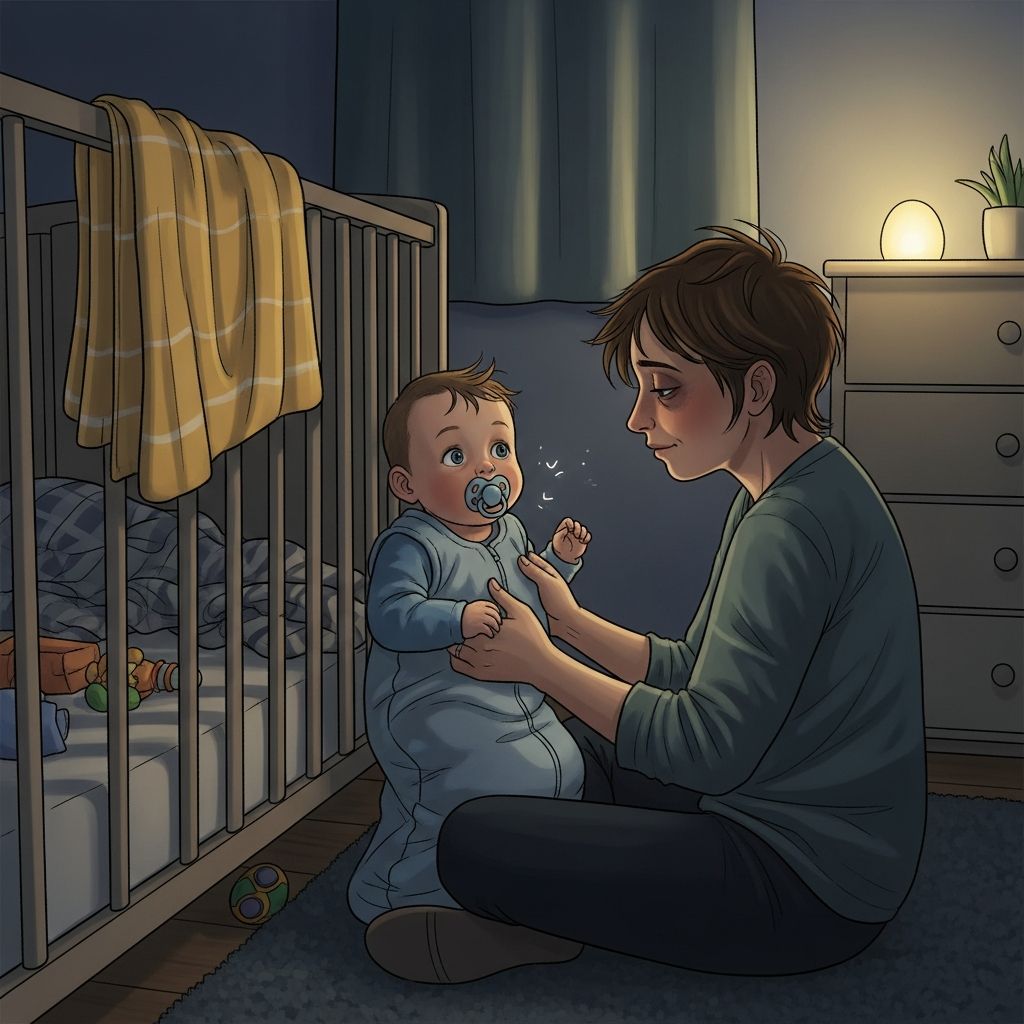
At around 18 months, many toddlers who were sleeping reasonably well suddenly start protesting naps, waking more at night and turning bedtime into a battle. This phase is commonly called the 18-month sleep regression, and it often includes a frustrating nap strike. It is normal, temporary and closely linked to your child’s rapid development.
What Is the 18-Month Sleep Regression?
The 18-month sleep regression is a period when a toddler who previously slept predictably begins to have disrupted sleep: more night wakings, shorter or skipped naps and resistance to going to bed. Pediatric sleep experts describe regressions as temporary setbacks tied to developmental and emotional growth rather than permanent sleep problems.
Key characteristics include:
- Sudden change after a period of relatively stable sleep
- A strong behavioral component (limit testing, saying “no,” stalling)
- Sleep challenges that usually last a few weeks, not months, in otherwise healthy children
Why 18 Months Is So Disruptive for Sleep
Toddlers around 18 months are undergoing huge leaps in physical, cognitive and emotional development that directly affect sleep.
| Developmental Change | How It Affects Sleep |
|---|---|
| Growing independence | Testing limits, saying “no” to bedtime, wanting control over routines. |
| Separation anxiety | Increased distress at being apart from caregivers, especially at night or naps. |
| Language and motor leaps | Busy brains; toddlers want to practice new words and skills instead of winding down. |
| Nap transition | Most are moving solidly to one nap; timing mistakes can cause overtiredness or nap refusal. |
| Teething (first molars) | Discomfort may increase night waking and desire for extra comfort. |
Typical Signs of an 18-Month Sleep Regression
While every toddler is different, parents often notice a cluster of similar symptoms during this phase.
- More frequent night wakings after a period of sleeping longer stretches
- New or intense bedtime battles such as crying, screaming, running away or demanding one more book
- Early morning awakenings around 4–6 a.m. with difficulty going back to sleep
- Nap resistance: taking a very long time to fall asleep or skipping naps completely
- Increased clinginess and distress when separated from caregivers
- Stalling tactics: requests for more water, another hug, one more song, etc.
The 18-Month Nap Strike: What Is Happening?
A “nap strike” is when a toddler suddenly stops napping or fights their usual nap, even though they still physiologically need daytime sleep. Around 18 months, many children are solidifying a one-nap schedule, and transitions in nap timing can temporarily make naps very hard.
During a nap strike, you may see:
- Refusal to lie down or stay in the crib at nap time
- Playing, singing or calling out instead of sleeping
- Short catnaps that replace previously longer naps
- Late-day crankiness, meltdowns and clinginess from overtiredness
Sleep experts emphasize that most toddlers still need about 2–3 hours of daytime sleep around this age, usually in one consolidated nap, even if they temporarily act like they are “done” with naps.
Core Causes Behind Sleep Problems at 18 Months
1. Independence and Limit Testing
A major driver of this regression is your toddler’s new awareness that they are a separate person who can make choices and say no. Research on toddler behavior shows that asserting autonomy and testing boundaries is a normal part of development, but it directly clashes with parental expectations at bedtime.
This can look like:
- Refusing pajamas, diaper changes or brushing teeth
- Running away when you announce bedtime
- Demanding specific caregivers or routines and melting down if they change
2. Separation Anxiety and Fear of Missing Out
Health organizations note that separation anxiety can persist well into toddlerhood, often peaking again around 18 months to 2 years. At night, this may lead to:
- Inconsolable crying when you leave the room
- Need for a parent to stay until they fall asleep
- More night wakings to check for your presence
Toddlers at this age also become more aware of family activities and may resist sleep out of a fear of missing out (FOMO), wanting to stay where the “action” is.
3. Overtiredness from Schedule Shifts
As children move to one nap and can stay awake longer between sleep periods, they are at higher risk of becoming overtired. Pediatric resources explain that overtired toddlers often show a second wind—they appear more energetic and wired, but then struggle to fall and stay asleep.
Common overtiredness traps include:
- Nap scheduled too early (toddler is not sleepy enough, fights nap, then becomes overtired later)
- Nap scheduled too late (nap runs long and pushes bedtime too late)
- Short or skipped nap combined with a late bedtime
4. Teething and Physical Discomfort
Many toddlers begin cutting their first molars around 18 months, which can cause gum pain and general fussiness. Discomfort is often worse at night when there are fewer distractions, so a child may wake more often seeking comfort or may find it harder to settle initially.
How Long Does the 18-Month Sleep Regression Last?
Pediatric sleep experts generally estimate that sleep regressions last anywhere from two to six weeks for most children, depending on temperament, environment and how parents respond. If your toddler is healthy, growing well and the sleep disruption is gradually improving within this timeframe, it is likely part of a normal regression.
You should consult your pediatrician if:
- Regression lasts significantly longer than six weeks with no improvement
- There are signs of illness, breathing problems, snoring or pain
- Snoring is loud or persistent, which may indicate sleep-disordered breathing
Practical Strategies to Handle the 18-Month Sleep Regression
While you cannot “stop” a developmental phase, you can make it smoother with consistent, calm and predictable responses. Evidence-based guidance from pediatric and sleep experts highlights several key approaches.
1. Keep a Predictable Daily Rhythm
A stable routine helps your toddler’s internal clock, or circadian rhythm, stay on track. Consistent sleep schedules are linked to better sleep duration and quality in young children.
- Wake your toddler within the same 30-minute window each morning.
- Anchor meals, outdoor time and nap roughly at the same times daily.
- Aim for age-appropriate total sleep: many toddlers around 18 months need about 11–14 hours of total sleep in 24 hours, including nap(s), according to major pediatric organizations.
2. Adjust the Nap Without Dropping It Prematurely
Most 18-month-olds still benefit from one daily nap. Rather than assuming your toddler is done with naps, first experiment with timing and length.
Consider:
- Nap start time: Many toddlers nap best with a start time 4.5–5.5 hours after morning wake-up.
- Nap length cap: Capping the nap at 2–3 hours can prevent bedtime from drifting too late.
- Quiet time on no-nap days: If they skip the nap, offer quiet rest in a dim room with books and cuddles so their body still gets downtime.
3. Strengthen the Bedtime Routine
A calm, predictable bedtime routine signals the brain that sleep is coming and has been shown to improve sleep onset and quality in young children. Effective routines are:
- Short (20–30 minutes), not drawn out for an hour or more
- Consistent in order and content (for example: bath → pajamas → brush teeth → two books → lights out)
- Soothing, with lights dimmed and screens off at least an hour before bed
Offer limited, predictable choices to honor independence while keeping structure, such as:
- “Do you want the blue pajamas or the green pajamas?”
- “Should we read the truck book or the animal book?”
4. Respond Calmly to Protest but Hold Boundaries
Health resources highlight the importance of combining reassurance with consistent limits. At this age, toddlers need to know that adults are in charge of the schedule, even when they protest.
Helpful approaches:
- Stay calm and use a neutral, confident tone: “It’s time to sleep. I’ll come back to check on you.”
- Avoid introducing new habits you don’t want to continue long-term (for example, rocking to sleep for an hour if that was not part of your usual routine).
- If you choose a gradual settling method (like briefly checking in every few minutes), keep the check-ins brief, boring and consistent.
5. Support Separation Anxiety with Connection
To ease separation anxiety, experts recommend strengthening connection during the day and around bedtime so that nights feel safer.
- Spend short, focused one-on-one playtimes without distractions.
- Use a simple goodbye ritual, such as a special phrase or song you repeat each night.
- Offer a comforting object (lovey or soft toy) if safe, as approved by your pediatrician.
6. Protect Sleep Environment and Hygiene
Good sleep hygiene makes it easier for an overtired or overstimulated toddler to settle.
- Keep the room dark with blackout curtains if early morning light is an issue.
- Use white noise if household sounds tend to wake your toddler.
- Keep the room at a comfortable, cool temperature and dress your child in breathable sleepwear.
Common Mistakes That Can Prolong the Regression
During a stressful regression, it is easy to fall into patterns that unintentionally extend sleep problems. Awareness can help you course-correct.
- Drastically changing the schedule every few days, which prevents your toddler’s body clock from settling.
- Dropping the nap entirely at the first sign of protest, leading to chronic overtiredness.
- Adding lots of new sleep crutches (driving around, feeding to sleep, watching videos) that are hard to maintain.
- Lots of attention during night wakings (extended play, bright lights, long conversations) that can reinforce waking as a time for interaction.
When to Ask for Professional Help
Most 18-month sleep regressions resolve gradually with consistent routines and time. However, medical and developmental red flags should prompt a conversation with your pediatrician or a pediatric sleep specialist.
Contact a professional if you notice:
- Regression persisting longer than six weeks without improvement
- Loud, persistent snoring, gasping, or pauses in breathing during sleep
- Significant changes in appetite, growth or daytime behavior
- Recurrent ear infections, chronic congestion or suspected reflux
Sample 18-Month Sleep-Friendly Day (Illustrative Only)
Every child is different, but seeing one possible rhythm can make it easier to visualize how wake windows, nap and bedtime can fit together.
| Time | Example Activity |
|---|---|
| 7:00 | Wake, breakfast, light play |
| 9:30–11:00 | Active play, outdoor time, snack |
| 12:00–2:00 | Nap (start around 12:00–12:30, lasting 1.5–2 hours) |
| 2:00–5:30 | Afternoon snack, play, calm late-day activities |
| 6:30–7:00 | Bedtime routine |
| 7:00–7:30 | Bedtime |
This is one example only; your child’s temperament, childcare schedule and family life may require adjustments. The key is consistency more than exact times.
Frequently Asked Questions (FAQs)
Is it normal for my 18-month-old to suddenly stop napping?
Temporary nap refusal is very common during the 18-month regression as toddlers test limits and adjust to a one-nap schedule. Most are not truly ready to give up naps altogether and still need daytime sleep, even if they resist it.
Should I move my 18-month-old to a toddler bed during this phase?
In most cases, experts advise keeping toddlers in a crib until at least age 2–3 unless there is a safety concern. Transitions to a bed can add another layer of disruption during an already tricky sleep phase.
How much total sleep does an 18-month-old usually need?
While individual needs vary, many health organizations recommend about 11–14 hours of total sleep in 24 hours for toddlers, including nap(s). Some will be on the higher or lower end of this range but still be well-rested.
Can I sleep-train during the 18-month regression?
You can work on independent sleep skills during this time, but progress may be slower because of strong emotions, separation anxiety and limit testing. Gentle, consistent approaches that respect your toddler’s need for reassurance are usually most effective.
How do I know if it is a regression or a medical problem?
A regression usually appears suddenly in an otherwise healthy child, coincides with developmental leaps and gradually improves over a few weeks. If your child has fever, pain, breathing issues, loud snoring, poor growth or behavior changes, consult your pediatrician to rule out medical causes.
References
- How to Deal With the 18-Month Sleep Regression — The Bump / DeBlasio N., Brown K. 2023-08-15. https://www.thebump.com/a/18-month-sleep-regression
- How to Manage Your Toddler’s Sleep Regression — WebMD. 2023-04-19. https://www.webmd.com/parenting/how-to-manage-toddler-sleep-regression
- 18 month sleep regression: What causes it and what to do? — Huckleberry. 2022-07-11. https://huckleberrycare.com/blog/18-month-sleep-regression-what-parents-need-to-know
- Toddler Sleep Regression — Taking Cara Babies. 2022-09-30. https://www.takingcarababies.com/blogs/regressions/toddler-sleep-regression
- The 2-Year-Old Sleep Regression: What You Should Know — Healthline. 2020-06-25. https://www.healthline.com/health/childrens-health/2-year-old-sleep-regression