When babies start cutting teeth, extra drool often leads to a red, chapped rash on the face, neck, and chest. Understanding what teething rash looks like, why it happens, and how to care for it can make this stage far less stressful for both you and your baby.
What Is a Teething Rash?
Teething rash, sometimes called drool rash, is a type of skin irritation that appears when your baby’s skin is repeatedly exposed to saliva. The constant moisture, combined with friction from clothing, bibs, and wiping, can break down the skin’s natural barrier and cause redness and small bumps.
Although it may look alarming, teething rash is usually harmless and temporary. With gentle care and a few preventive steps, most babies’ skin improves quickly.
- Most common between 4–24 months, when teething is most active.
- Often comes and goes as different teeth erupt.
- Typically stays near drool-heavy areas such as the mouth, chin, and neck folds.
Why Teething Causes Skin Irritation
Teething itself does not directly cause a rash; the real culprit is excess saliva. As teeth push through the gums, babies produce more drool than they can swallow. This drool collects on the skin and traps moisture, food particles, and bacteria against a very delicate surface.
Over time, this moist environment softens and irritates the outer layer of the skin, making it more vulnerable to redness, chapping, and tiny inflamed bumps.
Common Triggers That Worsen Teething Rash
- Constant wetness: Saliva pooling around the mouth, cheeks, and neck folds for long periods.
- Friction: Bibs, pacifier edges, collars, or even frequent wiping rubbing against soft skin.
- Food and milk residue: Drool mixed with milk, formula, or acidic foods increasing irritation.
- Harsh products: Scented wipes, perfumed lotions, or detergents that strip the skin’s barrier.
How to Recognize a Teething Rash
Teething rash usually sticks close to areas that come in frequent contact with drool. Parents often notice it around the mouth at first, then spreading toward the chin, cheeks, neck, and sometimes upper chest.
Learning the typical signs can help you distinguish it from more serious skin conditions.
Typical Appearance and Location
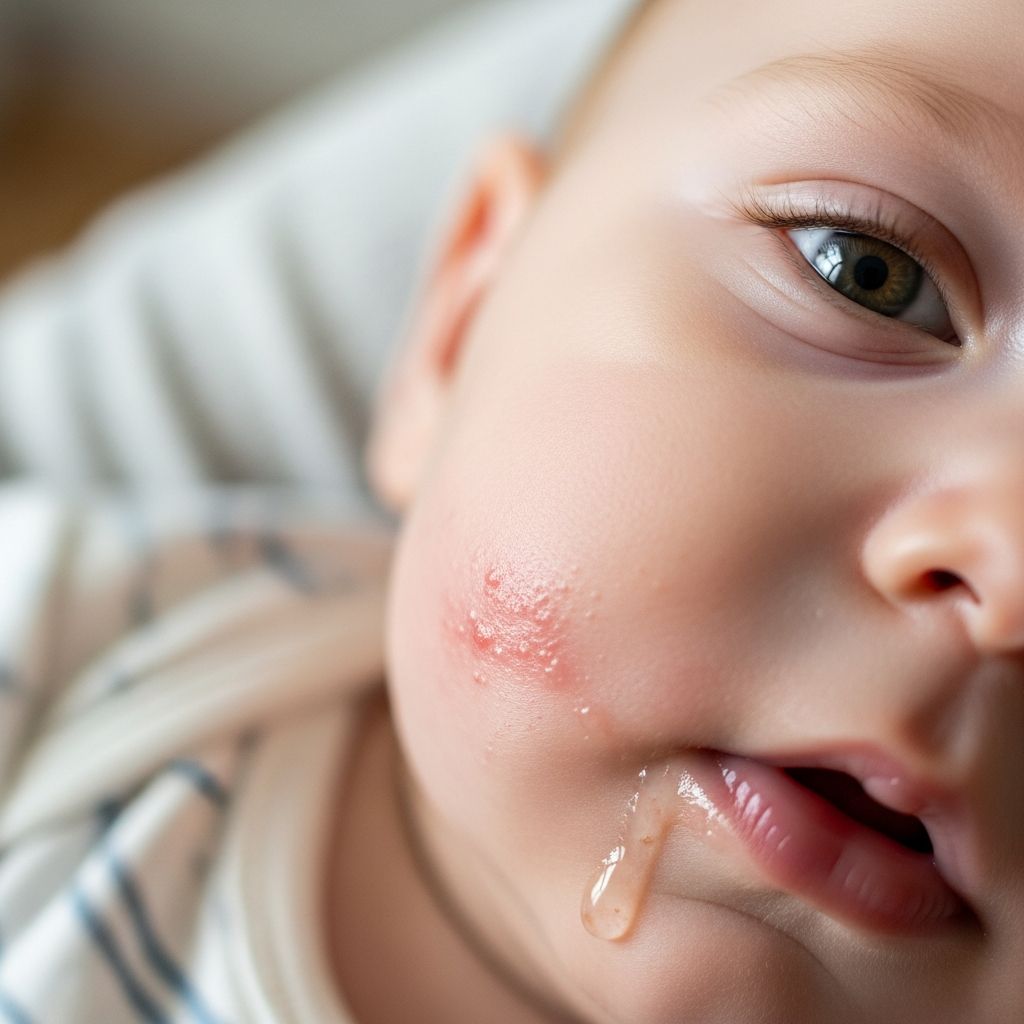
- Small red or pink bumps clustered together.
- Patches of dry, rough, or chapped skin.
- Shiny or slightly swollen areas where saliva sits the longest.
- Occasional mild flaking or peeling as the skin heals.
| Area | What You Might See | Why It’s Affected |
|---|---|---|
| Around the mouth | Redness, tiny bumps, shiny or irritated skin | Drool pools at the corners of the mouth and upper lip. |
| Chin and jawline | Chapped, rough patches; sometimes slightly crusty | Saliva runs down the chin and dries on the surface. |
| Cheeks | Pink or red patches, may feel warm to the touch | Drool spreads when baby rubs face on hands, clothes, or bedding. |
| Neck folds | Red, moist, or bumpy folds; sometimes with odor | Saliva and milk collect in skin folds where air flow is poor. |
| Upper chest | Random specks or blotches of redness | Drool drips down from chin and bib onto the chest area. |
How Your Baby Might Behave
- Extra drooling, wet shirts or bibs.
- Rubbing the face against your shoulder, bed sheets, or hands.
- General fussiness from teething discomfort, even if the rash itself is only mildly irritating.
Is It Really Teething Rash? Conditions That Look Similar
Because many baby skin problems appear as red bumps or patches, it can be hard to tell what you are looking at. A few simple clues can help you decide whether it is likely a teething rash or something that needs a medical check.
When in doubt, always consult a pediatric provider, especially if your baby seems unwell or the rash changes quickly.
| Condition | Typical Location | Key Features | When to Be Concerned |
|---|---|---|---|
| Teething (drool) rash | Face, chin, neck, upper chest | Red spots or patches where drool sits; skin may look chapped or shiny. | Spreads quickly, oozes, crusts thickly, or does not improve with moisture control. |
| Eczema | Cheeks, arms, behind knees, body folds | Dry, rough, itchy plaques; often appears in multiple body areas. | Intense itching, bleeding from scratching, or signs of infection. |
| Allergic contact rash | Where skin touches irritant (e.g., around mouth from new product) | Sudden onset; may sting or itch; linked to a new lotion, soap, or wipe. | Worsens after each use of the suspected product or spreads widely. |
| Yeast rash | Neck folds, diaper area, moist creases | Bright red patches with small “satellite” spots around edges. | Persists despite keeping the area dry or appears painful. |
| Viral rash | Usually body-wide | Rash plus fever, cough, or other illness symptoms. | Any fever in a young baby or rash that looks like blisters, bruises, or target spots. |
Home Care: How to Soothe a Teething Rash
The main goals in treating teething rash are to keep the skin as dry as reasonably possible and to rebuild a protective barrier. The following gentle steps usually improve mild to moderate drool rash within a few days.
Step-by-Step Daily Routine
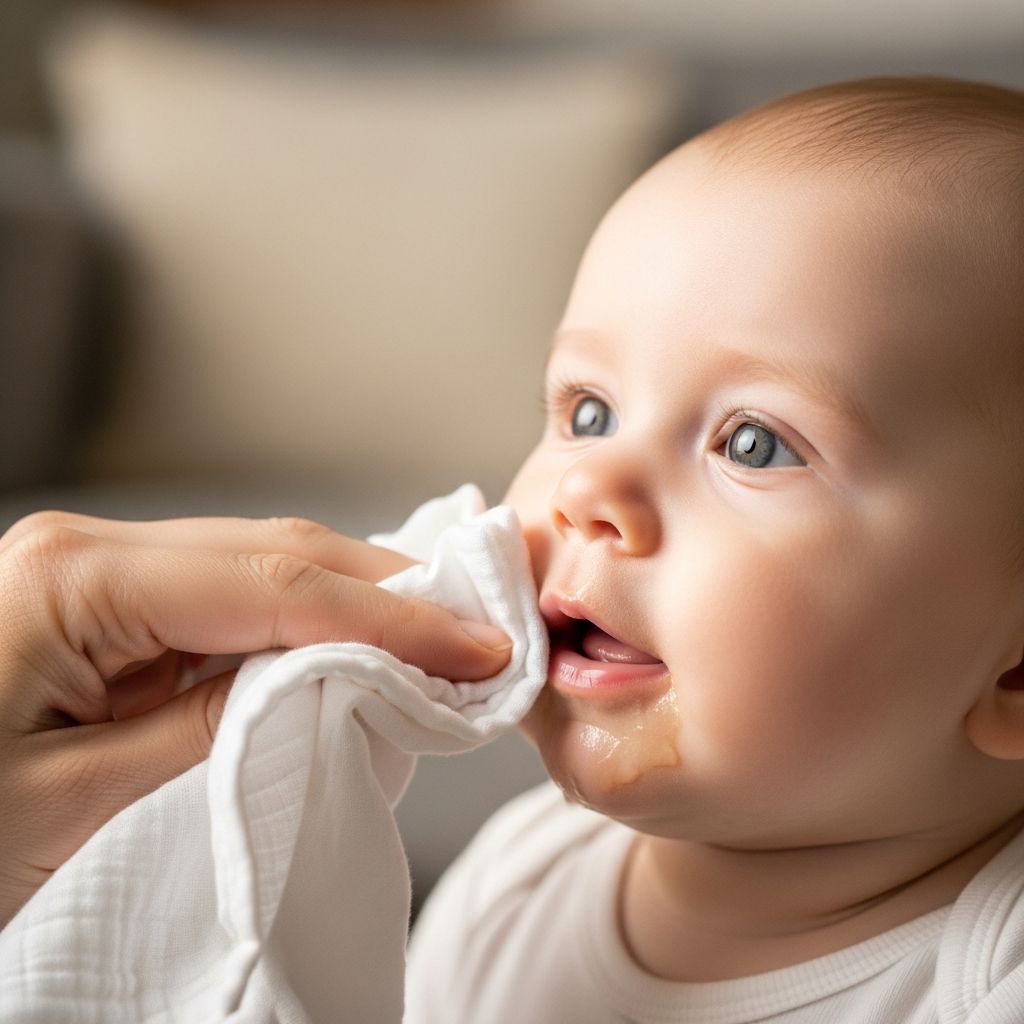
- Gently blot away drool: Use a soft cotton cloth or muslin to pat, not rub, the skin throughout the day.
- Clean with lukewarm water: Once or twice daily, rinse the face and neck with plain water, then pat dry.
- Apply a barrier layer: Use a baby-safe, fragrance-free ointment or cream to seal in moisture and protect from saliva.
- Change wet clothes quickly: Replace damp bibs and tops so your baby is not sitting in wet fabric.
- Let the skin breathe: Whenever possible, give your baby supervised time without bibs or high-neck clothing.
Barrier Creams and Ingredients to Look For
Select simple products formulated for babies or sensitive skin. Always patch-test a new product on a small area first and avoid anything with heavy fragrance or added dyes.
- Petrolatum-based ointments: Create a strong moisture barrier that helps prevent saliva from soaking in.
- Lanolin or gentle emollients: Help soften dry, cracked spots and support healing.
- Zinc oxide creams: Useful when the skin is very chapped or raw, as they offer thicker protection.
Comfort Measures for a Fussy Teething Baby
- Offer chilled (not frozen) teething toys or a cool washcloth to chew.
- Massage the gums gently with a clean finger.
- Provide extra cuddles, comfort, and distraction with songs or play.
- Discuss pain-relief medications with your healthcare provider before using any medicine.
What to Avoid on a Teething Rash
Because baby skin is thin and sensitive, some products and habits can actually make a drool rash worse. Being mindful of what goes on your baby’s skin can prevent prolonged irritation.
- Do not scrub: Rubbing the rash to “clean” it can further damage the surface layers.
- Avoid perfumed products: Scented lotions, bubble baths, and strong detergents can sting and inflame the skin.
- Skip adult acne or anti-itch creams: These may contain ingredients not safe for babies or for use near the mouth.
- Do not use steroid creams without guidance: Even low-dose steroid ointments should be used only under medical supervision on a baby’s face.
- Avoid tight, rough fabrics: Coarse bibs, scratchy wool, or stiff collars can rub against the rash and prolong healing.
Preventing Teething Rash Before It Starts
You may not be able to stop the drool, but you can minimize its effect on your baby’s skin. A few simple routines can greatly reduce how often teething rash appears and how severe it becomes.
Daily Prevention Checklist
- Keep several soft bibs on hand and swap them out whenever they become damp.
- Choose clothing with smooth fabrics and loose necklines that do not rub the chin.
- After meals and bottles, gently wipe away milk and food from the face and neck.
- Apply a thin layer of barrier ointment to high-risk areas before naps and bedtime.
- Wash your baby’s face with lukewarm water only; reserve soap for occasional full baths.
Supporting Healthy Skin from the Inside
While drool rash is mostly caused by outside moisture and friction, overall skin health still matters. Ensuring your baby is well hydrated, fed, and rested helps the skin heal and regenerate more effectively.
- Offer regular feeds so your baby stays hydrated.
- Encourage good sleep routines, as skin repairs itself during rest.
- Dress your baby for the room temperature to reduce sweating around the neck and chest.
When to Call the Doctor About a Rash
Even though teething rash is usually mild, some changes can signal infection, allergy, or a different type of rash that needs medical care. Trust your instincts—if something about the rash or your baby’s behavior feels off, contact a healthcare provider.
Red-Flag Symptoms
- Fever, lethargy, or your baby acting unusually sick.
- Blisters, open sores, or yellow crusting on or around the rash.
- Rash spreading rapidly to areas not exposed to drool.
- Rash that is very painful to touch or causes constant crying.
- No improvement after several days of gentle home care, or worsening despite your efforts.
If your baby has difficulty breathing, swelling of the lips or face, or a rash that resembles bruises or purple spots, seek emergency care immediately. These are not typical features of a simple teething rash and may indicate a serious condition.
FAQs About Teething Rash
1. Can teething rash appear on the body, not just the face?
Teething rash mainly affects areas that come into direct contact with saliva, such as the mouth, chin, neck, and upper chest. If your baby has a rash on the arms, legs, or torso where drool does not reach, it may be a different type of rash and should be evaluated by a healthcare professional.
2. Will teething rash leave scars?
Simple drool rash typically heals without scarring, especially if it is treated early and the skin is protected from further irritation. Avoid picking at scabs or peeling skin, and keep your baby’s fingernails trimmed to prevent scratching that could increase the risk of marks.
3. Is teething rash contagious?
No, teething rash is not contagious. It is caused by moisture and friction, not by a virus or bacteria that spreads between people. However, the skin can occasionally become secondarily infected, in which case a doctor may recommend treatment.
4. Can I use diaper cream on a teething rash?
Some mild, fragrance-free diaper creams containing zinc oxide or petrolatum can be safely used as a barrier on the chin and neck, as long as you avoid putting them directly on the lips or inside the mouth. Always check product labels and, if you are unsure, ask your pediatric provider before using a diaper product on the face.
5. How long does teething rash last?
The duration varies from baby to baby. Many rashes improve significantly within a few days of consistent moisture control and barrier protection, but they may recur as new teeth erupt and drooling increases again. Think of it as a cycle that can be managed rather than a one-time event.
6. Do I need to stop using a pacifier if my baby has a drool rash?
Pacifiers can contribute to drool around the mouth and chin, but they do not always have to be stopped. Try limiting pacifier use to sleep times, choosing a design that does not rub the skin excessively, and cleaning and drying the area around the mouth regularly.
Key Takeaways for Busy Parents
- Teething rash is usually a mild, drool-related irritation that affects the face, neck, and chest.
- Gentle wiping, barrier creams, and breathable clothing are your main tools for prevention and treatment.
- Watch for red-flag signs like fever, blisters, spreading rash, or a baby who seems very unwell.
- When in doubt, a quick call or visit to your pediatric provider can offer reassurance and tailored advice.
With patience, consistent skin care, and close observation, most families navigate the teething months with only minor skin bumps along the way.