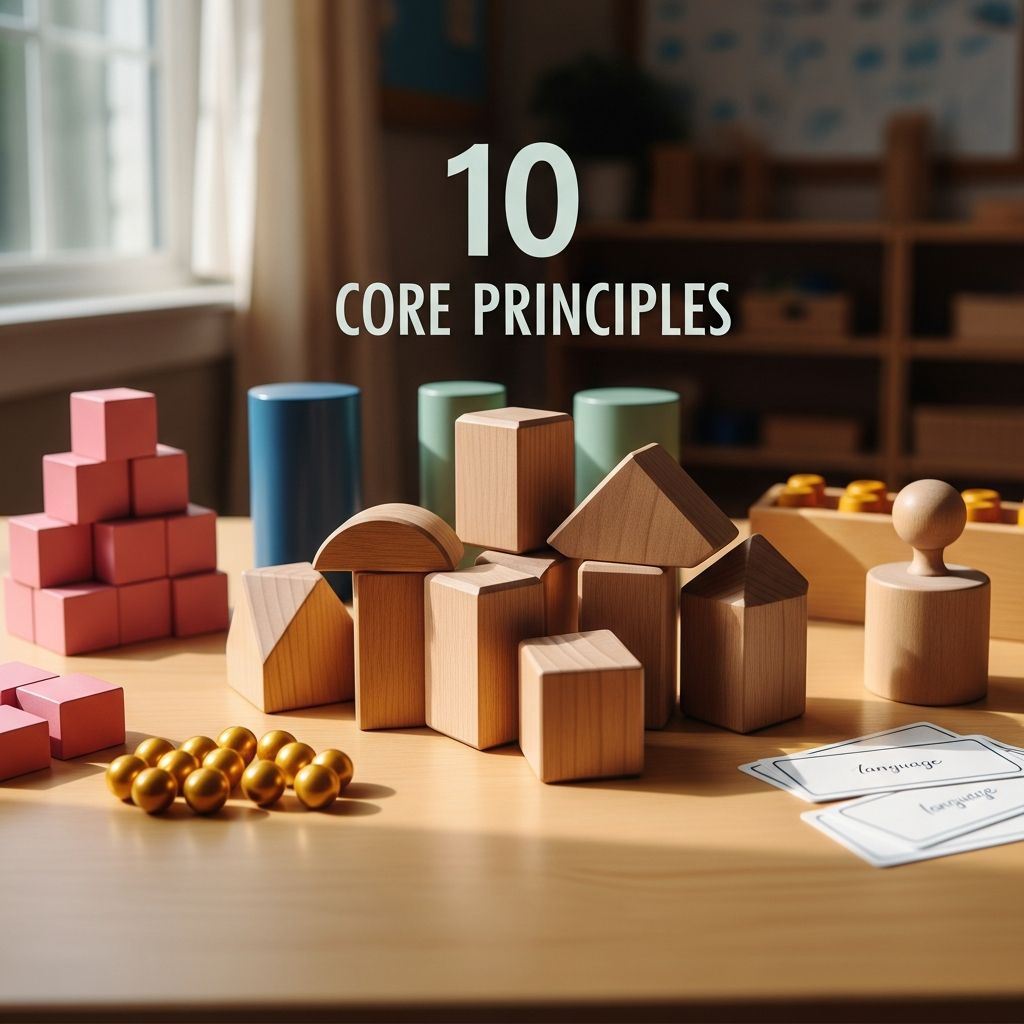
Montessori education, developed by Dr. Maria Montessori over a century ago, revolutionizes how children learn by emphasizing their innate abilities and natural curiosity. This approach shifts from traditional teacher-led instruction to a child-guided model that builds confidence, independence, and a love for learning. At its heart are ten interconnected principles that guide parents and educators in creating supportive home and school environments. These ideas draw from observations of children’s developmental stages, promoting holistic growth across cognitive, emotional, social, and physical domains.
Implementing Montessori at home doesn’t require expensive materials or perfect setups—it’s about mindset shifts and simple adjustments. Parents can apply these principles daily to help children flourish. Below, we delve into each principle with practical insights, real-world applications, and tips for integration into family life.
1. Honoring the Child’s Individuality
The cornerstone of Montessori is treating children as competent individuals worthy of respect. This means acknowledging their unique personalities, abilities, and paces without judgment or interruption. Dr. Montessori observed that children thrive when trusted to explore and make choices, fostering self-assurance from an early age.
In practice, avoid hovering or correcting minor errors immediately. Instead, step back and observe. For instance, if a toddler spills milk while pouring, offer a cloth nearby rather than intervening. This builds problem-solving skills and resilience. Research from educational bodies supports that such respect correlates with higher self-esteem and better emotional regulation in young learners.
2. The Power of Observation
Effective Montessori practice begins with careful watching. Adults must tune into a child’s interests, needs, and developmental ‘sensitive periods’—windows when children are primed for specific skills like language or order. By observing without preconceptions, parents tailor experiences to match these phases.
Start a daily observation journal: note what captivates your child for 10-15 minutes. If they’re repeatedly sorting objects, provide varied items like buttons or shapes. This principle ensures learning aligns with the child’s inner drive, making education engaging and efficient.
3. Tailored Learning Paths
No two children develop identically, so Montessori advocates personalized education. Lessons are one-on-one, paced to the child’s readiness, allowing deep mastery before advancing. This contrasts with group-paced classrooms, reducing frustration and boosting retention.
At home, assess readiness through play. Introduce letter sounds only after a child shows phonetic interest, using sandpaper letters for tactile learning. Track progress discreetly to introduce new challenges seamlessly.
4. Freedom Balanced with Boundaries
Children flourish with liberty to choose activities and move freely, but within clear, consistent limits that ensure safety and respect for others. This ‘freedom within limits’ cultivates self-discipline and responsibility.
- Designate accessible shelves with 4-6 activity choices.
- Set rules like ‘gentle hands’ for interactions.
- Allow 1-3 hour uninterrupted work cycles.
Such structure empowers decision-making, as evidenced by studies on self-regulated learning.
5. Crafting the Ideal Learning Space
The prepared environment is orderly, child-sized, and inviting, with materials arranged to encourage exploration. Everything has a place, promoting concentration and logical thinking.
Transform a corner: low shelves, real glassware for pouring, natural light. Rotate items weekly to maintain interest. Order in the space mirrors order in the mind, aiding cognitive development.
6. Hands-On, Self-Correcting Tools
Montessori materials are meticulously designed for discovery—beautiful, purposeful, and built-in error correction. Children manipulate objects to grasp concepts concretely before abstractly.
| Material Type | Purpose | Home Adaptation |
|---|---|---|
| Practical Life | Independence skills | Child-sized broom, spooning trays |
| Sensorial | Sensory refinement | Color grading tablets, sound cylinders |
| Math | Concrete numeracy | Golden beads for place value |
DIY versions keep costs low while delivering the same benefits.
7. Holistic Child Development
Montessori nurtures the whole child—intellect, body, emotions, and social skills. Curriculum spans practical life, sensorial, language, math, and cultural studies, viewing all as interconnected.
Integrate by linking activities: pouring tea teaches motor control and manners; geography puzzles build cultural awareness. This comprehensive approach yields well-rounded individuals.
8. Cultivating Inner Drive
Learning stems from intrinsic motivation, not external rewards like stickers. Focus on process and personal accomplishment builds lasting enthusiasm and confidence.
Praise effort: ‘You worked diligently on that puzzle!’ Avoid ‘good job’ to prevent reward dependency. Children internalize success, driving persistence.
9. Blending Ages for Growth
Mixed-age groupings (e.g., 3-6 years) allow peer teaching, modeling, and empathy. Older children reinforce skills by helping younger ones, while all learn at their pace.
Host playgroups with varied ages or include siblings in activities. This mirrors real-world dynamics, enhancing social competence.
10. Embracing Self-Directed Learning
Auto-education posits children can teach themselves with proper setup. Adults prepare, guide subtly, and step aside.
Trust the process: provide materials, observe, present lessons briefly. Children cycle through work independently, achieving profound growth.
Bringing Montessori into Your Home
Start small: establish routines, minimize toys, emphasize real tasks. Consistency matters more than perfection. Benefits include improved focus, creativity, and peace. Challenges like mess or resistance fade with patience.
Compare traditional vs. Montessori:
| Aspect | Traditional | Montessori |
|---|---|---|
| Learning Style | Teacher-directed | Child-led |
| Motivation | External rewards | Intrinsic |
| Environment | Uniform desks | Prepared, accessible |
| Outcomes | Standardized tests | Independence, lifelong learning |
Frequently Asked Questions (FAQs)
What age is Montessori best for?
Ideally 0-6 years, aligning with absorbent mind and sensitive periods, but principles apply lifelong.
Do I need special materials?
No—household items work; invest gradually in key tools for depth.
How does Montessori handle discipline?
Through natural consequences, clear limits, and modeling respect, not punishment.
Can I mix Montessori with other methods?
Yes, adopt principles selectively for hybrid approaches.
Does it prepare kids for traditional school?
Absolutely—strong self-regulation and focus ease transitions.
References
- 10 Guiding Principles of Montessori — Guide and Grow. 2023. https://www.guideandgrow.com/10-guiding-principles-of-montessori/
- Basic Montessori Principles — Montessori Generation. 2024-02-06. https://montessorigeneration.com/blogs/montessori/montessori-principles
- Key Montessori Principles Of Education — Montessori Academy. 2024. https://montessoriacademy.com.au/montessori-education/principles-of-montessori-education/
- Ten Principles — Nest Montessori. 2023. https://nestmontessori.com.au/ten-principles
- What is Montessori? 10 key principles parents should know — Montessori Hollywood. 2024-02-06. https://www.montessorihollywood.org/blog/2024/2/6/what-is-montessori-10-key-principles-parents-should-know