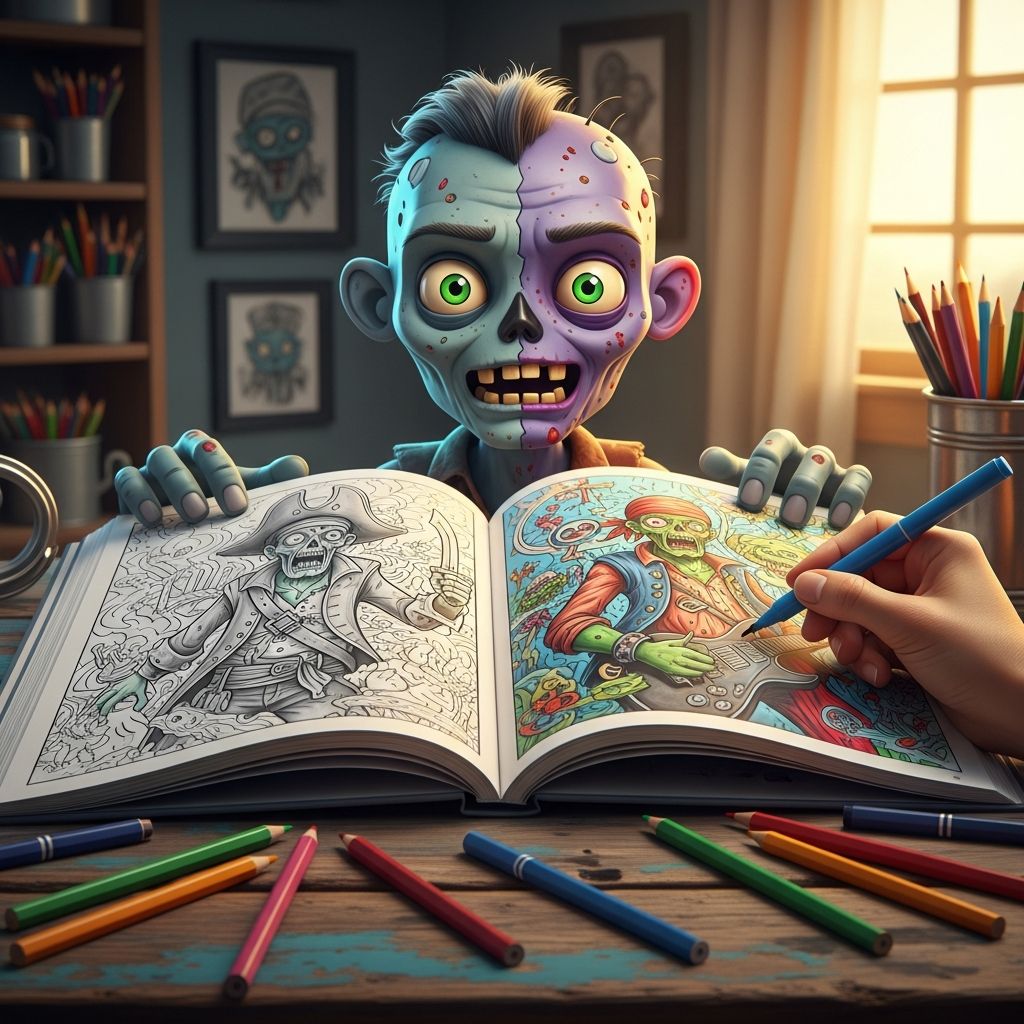
Zombie coloring pages blend spooky themes with creative play, turning creepy characters into a fun and harmless way for kids and adults to explore their imagination. Whether you prefer silly, cartoon-style zombies or more detailed scenes, these pages can be adapted to many ages, moods, and occasions.
Why Zombie Coloring Pages Are So Popular
Coloring zombies combines two things many kids love: the thrill of something a little scary and the comfort of an easy, hands-on activity. This mix makes zombie coloring sheets especially appealing around Halloween, birthday parties, and rainy days when children are looking for something different from the usual cute animals and princesses.
For older children, zombies feel more “grown up” than simple preschool themes, while still staying safely in the world of make-believe. Adults also enjoy zombie coloring books as a way to relax with darker, more complex designs without needing any special art skills.
Benefits of Coloring Spooky Characters
Zombie pages are not only entertaining; they also support important developmental and emotional skills. Because zombies often have exaggerated features, kids can experiment with bold lines and dramatic colors without the pressure of making anything look realistic.
- Fine motor practice: Holding crayons or colored pencils and staying inside the lines helps strengthen small hand muscles.
- Color exploration: Children can test unusual color combinations, like green skin or purple shadows, without worrying about accuracy.
- Emotional processing: Turning something “scary” into a colorful, silly character can help kids manage fears in a low-stakes way.
- Focus and patience: Detailed zombie scenes encourage longer attention spans as children work section by section.
Ages and Stages: Matching Zombie Pages to Your Child
Not all zombie illustrations are right for every age. By choosing the right style, you can keep the activity fun and avoid overwhelming younger or more sensitive children.
| Age Group | Best Zombie Style | Key Features |
|---|---|---|
| Preschool (3–5) | Cute, cartoon zombies | Big shapes, friendly faces, minimal detail, no graphic wounds |
| Early Elementary (6–8) | Silly spooky zombies | Goofy expressions, simple backgrounds, light “spookiness” |
| Older Kids (9–12) | Comic-style zombies | More detail, action poses, broken fences, graveyards, etc. |
| Teens & Adults | Detailed or horror-themed zombies | Complex shading, intricate backgrounds, more intense designs |
Creative Themes for Zombie Coloring Pages
Instead of using only generic “walking undead” scenes, try framing zombie coloring pages around fun themes. This adds variety and gives kids a story to imagine while they color.
- Zombie School Day: Students with mismatched shoes, messy backpacks, and silly expressions walking to school.
- Undead Sports Team: A zombie soccer match, basketball game, or skate park with dramatic action poses.
- Haunted Neighborhood: Houses with crooked fences, glowing windows, and wandering zombies on the sidewalk.
- Friendly Zombie Pets: Dogs, cats, or imaginary creatures with bandages, patches, and humorous expressions.
- Space Zombies: Astronaut zombies floating in space with broken helmets and drifting stars.
Turning Coloring Time into a Learning Activity
With a few simple ideas, zombie coloring pages can become part of everyday learning. The trick is to add one small challenge at a time, so kids still feel like they are playing.
- Color by code: Assign each area a letter, number, or word and match it to a color. This supports early math or reading skills.
- Shape hunt: Ask children to find and color all the circles, rectangles, or triangles hidden in the scene.
- Story prompts: After coloring, invite kids to name their zombie and explain what happened right before the picture was “taken.”
- Vocabulary building: Introduce gentle spooky words like “shadows,” “cobwebs,” or “mysterious” and use them to describe the picture.
Coloring Techniques for Extra Spookiness
Zombie pages are a great way to experiment with simple art techniques. You do not need expensive supplies; basic crayons or colored pencils can still create interesting effects.
- Layered greens and grays: Start with a light green base for skin, then add gray in the shadow areas, and blend gently with a lighter color.
- Glow effects: Use bright yellow or neon green around eyes, lanterns, or moonlight to make them look like they are glowing.
- Background blending: Choose two sky colors, such as purple and dark blue, and gently overlap them to create a dusky, eerie sky.
- Textured clothing: Use short, quick strokes in different directions to make clothing look torn, frayed, or dirty.
Zombie Coloring for Parties and Classrooms
Zombie coloring sheets can easily become the center of a themed event. They are inexpensive, easy to prepare, and flexible enough to fit many group sizes.
- Coloring station: Set up a table with a mix of cute and spooky designs, along with crayons, markers, and stickers.
- Time challenge: Give kids a short amount of time to finish a section, such as all the background or all the clothing.
- Zombie gallery walk: Tape finished pages to a wall and let children walk past like a mini art museum, pointing out their favorite details.
- Team coloring: Pair kids up to work on a large, multi-zombie scene so they can practice sharing materials and ideas.
Family-Friendly Ways to Keep Zombies Silly, Not Frightening
Because zombie imagery can sometimes be intense, it helps to keep the tone light and humorous, especially for younger kids. Focus on gentle details and playful stories rather than realistic gore.
- Choose pages with big eyes, goofy smiles, and rounded shapes instead of sharp, aggressive features.
- Encourage kids to give zombies funny accessories, like rainbow hats, oversized shoes, or cheerful scarves.
- Talk about zombies as clumsy, imaginary characters who love things like dance parties or snack time.
Supplies Checklist for Zombie Coloring Fun
Most families already have everything needed for a great zombie coloring session. Still, a short checklist can ensure you are ready before kids sit down at the table.
- Printed zombie coloring pages or a coloring book
- Crayons, colored pencils, or washable markers
- A flat, well-lit surface for coloring
- Optional extras: glitter glue, stickers, gel pens, or stencils for backgrounds
Going Beyond Paper: Creative Uses for Finished Pages
Colored zombie pages do not have to end up in a drawer. With some quick crafts, they can transform into decorations, games, or keepsakes.
- DIY wall art: Trim and frame finished pages to hang in a hallway or playroom during spooky season.
- Bookmarks: Cut zombies into long strips, laminate if possible, and punch a hole for a ribbon at the top.
- Party banners: String several colored zombies on a piece of twine to make a fun garland.
- Storybooks: Staple a few pages together and write a short sentence under each picture to create a homemade zombie comic.
Simple Safety and Sensitivity Tips
When working with spooky themes, it is important to keep each child’s comfort level in mind. What feels funny to one child might feel unsettling to another.
- Preview pages before printing, especially for very young children or those who dislike scary images.
- Avoid overly realistic wounds or dark, disturbing scenes if you are unsure how kids will react.
- Remind children that zombies are imaginary and part of stories, just like dragons or superheroes.
Ideas for Adults Who Love Zombie Coloring
Adults often turn to coloring as a form of stress relief, and zombie designs offer a unique twist on standard floral or mandala books. Detailed illustrations with crumbling buildings, tattered clothing, and dramatic shadows can be surprisingly relaxing to fill in.
- Experiment with shading skin, hair, and broken structures using colored pencils.
- Use zombie scenes as a base for mixed-media projects, adding ink, paint, or collage elements.
- Share finished pages online or in hobby groups for inspiration and encouragement.
SEO-Friendly FAQ About Zombie Coloring Pages
Are zombie coloring pages okay for young children?
Yes, as long as you choose gentle, cartoon-style zombies with friendly faces and avoid graphic or realistic images. It also helps to sit with younger kids at first so you can talk through any questions they might have.
What do kids learn from coloring zombie pages?
Children practice hand control, color recognition, and decision-making each time they choose how to decorate a zombie. They also develop storytelling skills as they imagine who the character is and what is happening in the scene.
Can zombie coloring pages be used in the classroom?
Many teachers use zombie coloring sheets during themed units, Halloween celebrations, or creative writing projects. As long as the designs are age-appropriate, they can add variety and fun to art or language lessons.
What supplies work best for detailed zombie designs?
Colored pencils are ideal for intricate lines and small spaces, while fine-tip markers can add bold color to larger areas. Some people like to start with light pencil shading and then add brighter accents with markers on top.
How can I make zombie coloring less scary for sensitive kids?
Look for pages with smiling or silly zombies, bright backgrounds, and playful props like balloons or musical instruments. You can also invite kids to add hearts, stars, or rainbows around the character to change the mood of the picture.
Bringing the Undead to Life with Color
Zombie coloring pages show that even the creepiest creatures can become a source of laughter, creativity, and connection. By choosing age-appropriate designs, encouraging imaginative stories, and exploring simple art techniques, families and individuals can turn these spooky scenes into memorable pieces of art.