Participating in youth sports offers children invaluable opportunities for physical development, social skills, and fun. However, with millions of kids engaging in organized activities annually, prioritizing safety is crucial to prevent injuries that could sideline young athletes. This guide equips parents, coaches, and organizers with evidence-based strategies to foster a secure environment, drawing from orthopedic experts, pediatric hospitals, and public health authorities.
Pre-Participation Health Checks
Before your child steps onto the field or court, a thorough pre-participation physical examination (PPE) is non-negotiable. This evaluation, conducted by a qualified physician or clinician, assesses overall health, identifies underlying conditions like asthma or heart issues, and ensures the child is fit for the sport’s demands. Share critical details with coaches, including emergency contacts, allergies, and medical history, to enable swift responses in crises.
Regular fitness conditioning tailored to the sport builds resilience against strains and overuse injuries. Encourage off-season training focusing on strength, flexibility, and endurance rather than jumping straight into games. Age-appropriate activities prevent overwhelming developing bodies, accounting for individual growth rates.
Protective Equipment Fundamentals
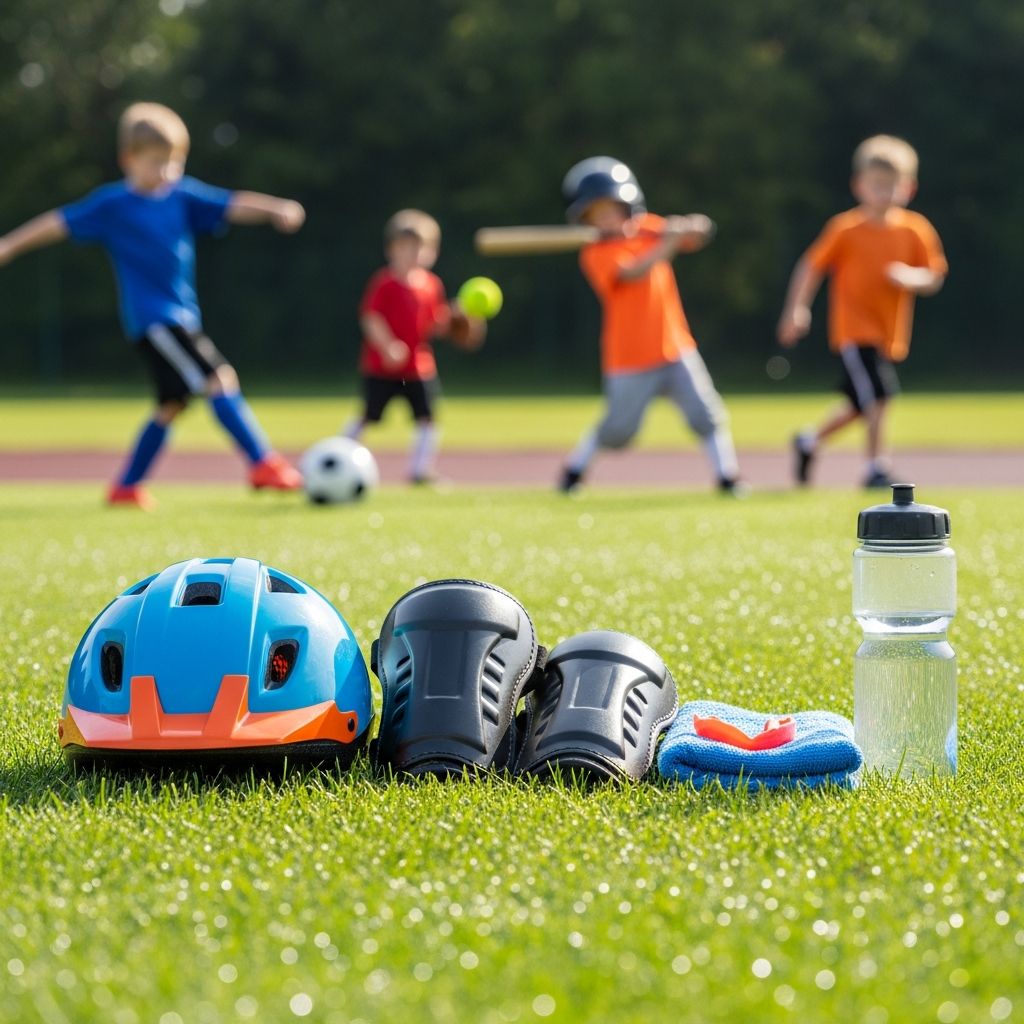
Selecting and maintaining the right gear forms the cornerstone of injury prevention. Helmets, shin guards, mouthguards, wrist guards, knee pads, and sport-specific footwear must fit properly—too loose or tight reduces effectiveness and comfort. Inspect equipment before every session for wear, cracks, or damage; replace as needed to uphold protection standards.
| Sport | Essential Gear | Fit Tips |
|---|---|---|
| Soccer | Shin guards, cleats, mouthguard | Guards cover shin from ankle to knee; cleats match field surface |
| Football | Helmet, shoulder pads, thigh/knee pads | Helmet snug without pressure points; pads contour to body |
| Basketball | High-top shoes, mouthguard | Ankle support; shoes with good traction |
| Ice Hockey | Helmet with cage, full body padding | Adjust straps for no movement; pads layer properly |
| Skateboarding | Helmet, wrist/elbow/knee pads | Helmet level, single-finger chin strap gap |
Use this table as a quick reference to outfit your young athlete correctly, ensuring gear aligns with sport rules and safety certifications.
Warm-Up, Hydration, and Conditioning Routines
Adequate preparation prevents many common injuries like sprains and heat-related illnesses. Start every practice or game with a dynamic warm-up: light jogging, arm circles, leg swings, and sport-specific drills for 10-15 minutes to increase blood flow and joint mobility. Follow with static stretches post-activity to enhance flexibility.
Hydration is equally vital—dehydration exacerbates fatigue and injury risk. Instruct children to drink 8-16 ounces of water 30 minutes before activity, then 4-8 ounces every 15-20 minutes during. Coaches should mandate breaks, especially in heat, monitoring for signs like dizziness, cramps, or dark urine. Acclimatize gradually to hot conditions over 7-14 days.
- Pre-activity: Hydrate 2 hours prior with 16-20 oz water.
- During: Sip every 15 min; use sports drinks for sessions over 60 min.
- Post: Rehydrate with 16-24 oz per pound lost.
Recognizing and Managing Common Injuries
Overuse injuries like stress fractures, tendonitis, and growth plate damage plague young athletes from repetitive motions. Rest, ice, compression, elevation (RICE) provides initial relief, but persistent pain demands professional evaluation. Concussions, signaled by headache, confusion, nausea, or balance issues, require immediate removal from play.
California’s AB 379 mandates sidelining suspects for the day, parental notification, and physician clearance via a 7-day graduated return protocol. Similarly, sudden cardiac arrest (SCA) symptoms like fainting or chest pain trigger the same process, with annual education for all involved.
Coach Preparation and Legal Compliance
Effective coaches prioritize safety through certification in CPR, first aid, and sport-specific training. They enforce rules, promote fair play, and cultivate positive environments emphasizing effort over victory. Stock first-aid kits with bandages, ice packs, splints, and AEDs at every event.
In California, youth programs must comply with strict laws: AB 506 requires background checks and abuse prevention training; the Federal Safe Sport Act demands reporting suspicions within 24 hours and limits adult-minor interactions. Develop written emergency action plans covering evacuation, medical contacts, and lightning protocols (suspend if within 10 miles).
Environmental Hazard Checks
Before play, survey fields for hazards: uneven turf, debris, puddles, or poor lighting. Ensure goals and equipment are secured to avoid collapses. In extreme weather, monitor heat index—cancel if over 100°F—and lightning risks. Indoor venues need ventilation to combat air quality issues.
Building a Safety-First Culture
Foster teamwork where athletes report discomfort early, avoiding “play through pain” mindsets. Parents model hydration and rest, while organizations schedule adequate recovery days to curb overuse. Track participation limits, like pitch counts in baseball, per expert guidelines.
Long-term, these habits reduce injury rates by up to 50%, per orthopedic studies, allowing kids to reap sports’ full benefits: improved fitness, discipline, and confidence.
Frequently Asked Questions (FAQs)
What should I do if my child shows concussion symptoms during a game?
Remove them immediately, notify parents, and seek medical evaluation. No return same day; follow a supervised 7-day protocol with physician clearance.
How often should kids replace sports helmets?
Every 5 years or after impact; check for cracks annually. Proper fit is key—replace if it shifts during activity.
Is it safe for kids under 6 to play contact sports?
Focus on non-contact versions; ensure parental consent and close supervision. Prioritize skill-building over competition.
What are signs of heat exhaustion in young athletes?
Heavy sweating, weakness, nausea, rapid heartbeat. Cool down, hydrate, and rest in shade; call 911 if severe.
Do coaches need specific certifications for youth sports?
Yes, CPR/first aid is essential; concussion/SCA training required in many states. Background checks are mandatory.
References
- A Guide to Safety for Young Athletes — American Academy of Orthopaedic Surgeons (AAOS). 2023-10-01. https://orthoinfo.aaos.org/en/staying-healthy/a-guide-to-safety-for-young-athletes/
- California Youth Sports Safety Laws: A Guide to Compliance — Sadler Sports & Recreation Insurance. 2024-05-15. https://www.sadlersports.com/blog/california-youth-sports-safety-laws-a-guide-to-compliance/
- Sports Safety — Children’s Hospital of Philadelphia (CHOP). 2024-01-12. https://www.chop.edu/centers-programs/injury-prevention-program/sports-safety
- Sports Safety Tips — Safe Kids Worldwide. 2023-08-20. https://www.safekids.org/tip/sports-safety-tips
- Youth Sports Safety Tips — Nationwide. 2024-03-05. https://www.nationwide.com/lc/resources/home/articles/sports-safety
- Youth Sports Safety — National Athletic Trainers’ Association (NATA). 2023-11-18. https://www.nata.org/advocacy/youth-sports-safety
- Extreme Heat Guidance for Schools — California Department of Public Health (CDPH). 2024-06-10. https://www.cdph.ca.gov/Programs/EPO/Pages/Extreme%20Heat%20Pages/extreme-heat-guidance-for-schools.aspx