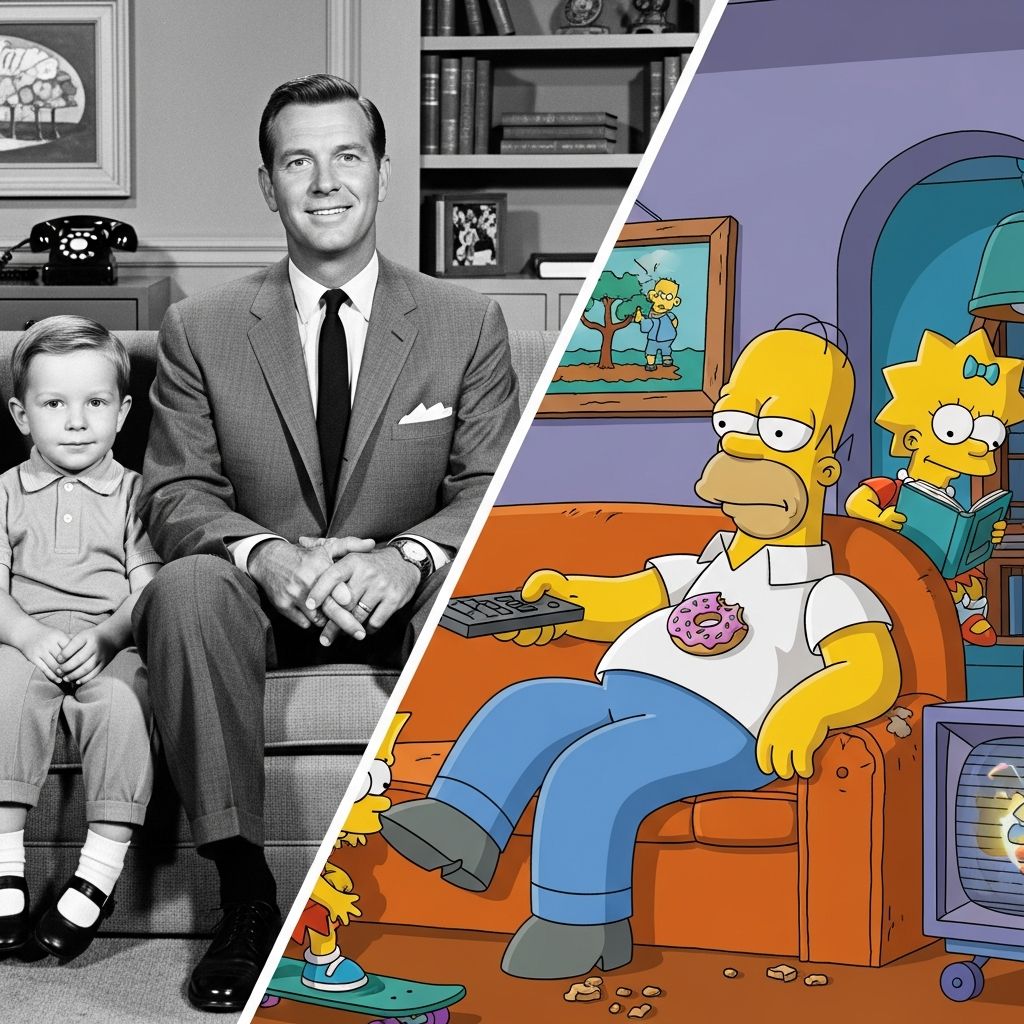
In the fourth season of The Simpsons, the episode commonly known as “Duffless” took on an unusually grounded topic for an animated comedy: a father’s dependence on alcohol and what it does to his family. Instead of playing Homer’s love of beer purely for laughs, the story pushed him to choose between instant gratification and the long-term health of his marriage and kids. Three decades later, it still feels like one of the sharpest portraits of a flawed TV dad trying, clumsily, to grow.
The Premise: A DUI, A Brewery Tour, And An Ultimatum
The episode opens with something we’ve seen countless times across the series: Homer planning to ditch work to chase free beer. A trip to the Duff Brewery turns into drunk driving, a police stop, and a suspended license. Marge, who has tolerated Homer’s drinking for years, finally lays down a clear boundary: if he wants her trust back, he has to give up booze for 30 days.
This simple setup does three important things at once:
- Names the behavior – Homer’s drinking isn’t just a running gag; it’s dangerous enough to put his family and others at risk.
- Centers Marge’s perspective – the conflict is framed not as the world punishing Homer, but as a spouse afraid of where his habits are taking them.
- Gives a measurable challenge – thirty days of sobriety turns into a concrete test of dependence, not a vague promise to “do better.”
How “Duffless” Fits Into Homer’s Long History With Beer
Long before this episode aired, Homer’s relationship with Duff Beer had already become a defining trait: the can in his hand, the tavern stool at Moe’s, the belch as a punchline. That depiction mirrored a broader media tradition where heavy drinking by men, especially fathers, was often normalized or celebrated. At the time, U.S. per capita alcohol consumption was high by historical standards, and drunk driving remained a major public health problem.
What The Simpsons did differently in “Duffless” was to keep the absurdity of that world—the beer factory tour, the relentless ads—while asking a serious question underneath: is Homer’s drinking still funny when it starts harming people he loves?
Satirizing Alcohol Culture Without Losing The Joke
The brewery scenes and recurring brand jokes are some of the most memorable images from the episode: surreal factory processes, hyperbolic slogans, slick commercials promising friendship and freedom, all attached to a cheap lager. The show skewers several elements of alcohol marketing that public health advocates had been criticizing for decades:
- Mixed moral messaging – “Don’t drink and drive” safety lines sit right next to images of carefree intoxication, echoing real-world campaigns where responsibility exists mainly as legal fine print.
- Emotional targeting – ads pair beer with community, romance, and masculinity, though research shows such advertising is associated with earlier onset of drinking and higher consumption among youth.
- Product ubiquity – Homer finds it nearly impossible to escape reminders of Duff—a reflection of how alcohol marketing pervades sports, TV, and urban spaces.
The humor lands because the exaggeration is only slightly beyond reality. The episode invites viewers to laugh with Homer at the ridiculousness of the brand, even as it quietly nudges us to recognize how tractionless “drink responsibly” messaging can be when wrapped in such relentless promotion.
From Gag To Problem: Is Homer An Alcoholic?
“Duffless” never uses the word alcoholism, but it puts Homer through something that closely resembles a brief, informal screening. Marge describes patterns—daily drinking, using beer to cope, risking legal trouble—that are commonly cited warning signs of alcohol use disorder by clinicians.
For context, the American Psychiatric Association’s diagnostic criteria for alcohol use disorder include behaviors like repeated failure to fulfill major obligations, using alcohol in hazardous situations (such as driving), unsuccessful attempts to cut down, and craving. Homer checks more than one of these boxes in the episode.
The power of the story is that it never offers a neat label. Instead, it focuses on what matters most for Marge and the children:
- Is Homer willing to accept that there’s a problem?
- Can he interrupt the habit long enough to notice what it costs him?
- Will he choose his family when put under pressure to go back to his old routine?
Living Sober (For A Month): Small Changes With Big Meaning
The next act follows Homer’s thirty days without beer. Much of it is played for comedy—withdrawal-style cravings, irritability, daydreams about foaming mugs. But alongside the jokes, the episode plants subtle markers of improvement that mirror real-world benefits of cutting down on alcohol.
| Area of Life | Change Shown In The Episode | What Research Suggests |
|---|---|---|
| Physical health | Homer appears slightly fitter and more energetic by the end. | Reducing heavy drinking can improve sleep, blood pressure, and weight over time. |
| Finances | He discovers how much money he saves by skipping Moe’s. | Spending on alcohol can meaningfully impact low- and middle-income households’ budgets. |
| Family time | He spends more evenings engaged with Marge and the kids. | Lower parental substance use is associated with more consistent parenting and better child outcomes. |
The episode condenses what studies observe over months or years into a single month-long arc, but the trajectory tracks with evidence: for many people, even a short break from alcohol leads to noticeable improvements in mood, sleep, and relationships.
Marge’s Line In The Sand: Boundaries In A Cartoon Marriage
Marge’s response to Homer’s DUI is neither passive nor vindictive. She refuses to pretend everything is fine, but she also avoids ultimata like “quit forever or I’m leaving.” Instead, she sets a specific, time-limited condition—”no beer for a month”—and ties it directly to trust.
This is significant from both a storytelling and a psychological standpoint:
- Clear expectations – research on couple dynamics around substance use suggests that explicit agreements (what’s allowed, what isn’t, and why) work better than vague disapproval.
- Focus on safety and care – Marge frames sobriety not as punishment, but as a demonstration that Homer values her fears.
- Room for change – a month-long trial invites experimentation rather than demanding immediate, permanent identity change, which can sometimes increase resistance in real-world settings.
In other words, the episode quietly models a healthier way to talk about substance use in a relationship than many live-action sitcoms of its era, where a wife’s objections might be brushed off as nagging.
The Kids’ Story: Science, Sibling Rivalry, And What Counts As “Smart”
Running parallel to Homer’s challenge is a school science fair plot involving Bart and Lisa. After Bart ruins Lisa’s original project, she retaliates by turning him into a test subject in an experiment comparing his decision-making to that of a hamster. The premise is simple: given rewards and mild deterrents, which one learns faster?
The subplot comments on several themes:
- Different kinds of intelligence – Lisa builds a rigorous experiment; Bart wins the crowd with a flashy, barely scientific display. The show contrasts methodical thinking with showmanship rather than declaring one “right.”
- Ethics of experimentation – Lisa’s willingness to humiliate her brother in public for academic gain raises real questions about how we treat human subjects, echoing debates in the history of psychology about informed consent and harm.
- Sibling rivalry – their feud escalates from pranks to psychological warfare, yet they remain recognizably affectionate siblings once the competition ends.
Thematically, the science fair mirrors Homer’s arc: both stories ask what it means to learn from experience. Homer, unlike Bart in Lisa’s lab, eventually alters his behavior in response to consequences—choosing to stay sober at a crucial moment.
The Final Choice: Beer Or Marge?
The emotional center of the episode arrives near the end, when Homer’s thirty days are up. He is finally “allowed” to drink again, and the old world of Moe’s Tavern beckons. Surrounded by friends, habit, and pressure, he faces a fork in the road: slip comfortably back into nightly drinking or walk away with Marge.
He chooses to leave the bar and walk home with his wife.
From a narrative perspective, it’s a small gesture—no grand speech, no dramatic relapse scene. Yet it carries weight because it subverts the audience’s expectation that the show will reset fully to the status quo. Even in a format famous for undoing change every week, this choice lingers: Homer has seen a different way to live, and, at least in this moment, he prefers it.
In the real world, recovery and moderation efforts are rarely linear; relapse is common, and single turning points seldom fix complex patterns. Still, individual decisions like this one—opting out of a drinking session, choosing family over the bar—are genuinely meaningful milestones for many people trying to change their relationship with alcohol.
Redefining The Sitcom Dad: Clown, Menace, Or Work-In-Progress?
“Duffless” arrived in an era when TV fathers were rapidly evolving. Earlier archetypes like the unflappable provider (think 1950s domestic sitcoms) had already given way to more flawed, sometimes bumbling dads in the 1980s and 1990s. Homer pushed that trend further: lazy, impulsive, frequently irresponsible—and yet, deeply attached to his family.
What sets this episode apart is how it threads a delicate needle:
- Homer’s flaws are real threats – drunk driving, emotional inconsistency, and neglect are not merely quirky traits; they are dangerous behaviors.
- His love is genuine – the script gives him moments of clarity where he recognizes the impact of his actions and sincerely wants to do better.
- Change is incremental – he does not become a model father; he simply makes a better choice in a specific moment.
This more nuanced picture arguably influenced later depictions of flawed, lovable dads in both animation and live-action, where redemption arcs and inner conflict became standard storytelling tools rather than occasional “special episodes.”
Why “Duffless” Still Resonates In Conversations About Alcohol
Modern public health organizations describe harmful drinking as a spectrum rather than a strict category, emphasizing that any level of alcohol consumption carries some risk, particularly regarding cancer and cardiovascular disease. Many people do not see themselves in the extremes of media portrayals of alcoholism, yet they may still struggle with patterns that worry partners or children.
“Duffless” taps into that gray area. Homer is not depicted as homeless, violent, or completely non-functional. He holds a job, participates in family life, and is capable of affection. Yet his drinking clearly leads to:
- Legal danger (a DUI stop)
- Financial strain (money spent at the bar)
- Emotional distance (choosing Moe’s over evenings at home)
By putting such a recognizable, beloved character in this murky middle space, the episode opens a conversation many viewers may have recognized in their own homes: when does a “harmless” habit stop being harmless?
Frequently Asked Questions (FAQs)
Q: Is “Duffless” meant to be a serious episode about alcoholism?
A: It remains a comedy episode, full of gags and surreal moments, but it treats Homer’s DUI and Marge’s fears with unusual seriousness. Rather than offering a clinical portrait of addiction, it focuses on how one family experiences a father’s drinking and what happens when he tries to stop for a short time.
Q: Does the episode say Homer is an alcoholic?
A: The script never labels Homer outright, but it clearly shows several warning signs recognized in clinical definitions of alcohol use disorder, including drinking in hazardous situations and difficulty cutting back. The emphasis is less on naming a diagnosis and more on showing consequences and choices.
Q: How realistic is Homer’s 30-day break from alcohol?
A: In real life, some people do manage month-long breaks to reassess their relationship with drinking (for example, “Dry January” campaigns), while others find it much more difficult. The show compresses the struggle for comedic timing but portrays genuine cravings, irritability, and social pressure, which many people attempting short-term abstinence report.
Q: What does the Bart and Lisa science fair plot add to the story?
A: The school subplot echoes the main theme of learning from consequences and questions what intelligence and growth really look like. While Homer eventually changes a behavior in response to danger and marital strain, Bart “wins” his competition without changing much at all, highlighting how charisma can sometimes outshine careful, ethical work.
Q: Did “Duffless” change how Homer was written in later seasons?
A: The Simpsons’ continuity is famously flexible, so later episodes often reset Homer’s drinking habits. Still, “Duffless” stands as an early example of the series probing his worst impulses more directly, influencing how future stories balanced his buffoonery with moments of introspection and genuine care.
References
- Duffless — Simpsons Wiki (Fandom). 2023-05-10. https://simpsons.fandom.com/wiki/Duffless
- The Simpsons (Classic): “Duffless” — The A.V. Club. 2011-06-05. https://www.avclub.com/the-simpsons-classic-duffless-1798173793
- Global status report on alcohol and health 2018 — World Health Organization. 2018-09-27. https://www.who.int/publications/i/item/9789241565639
- Alcohol Facts and Statistics — National Institute on Alcohol Abuse and Alcoholism (NIAAA). 2023-01-01. https://www.niaaa.nih.gov/alcohols-effects-health/alcohol-topics/alcohol-facts-and-statistics
- Alcohol Use Disorder: A Comparison Between DSM–IV and DSM–5 — American Psychiatric Association. 2013-05-18. https://www.psychiatry.org/File%20Library/Psychiatrists/Practice/DSM/APA_DSM-5-Alcohol-Use-Disorder.pdf