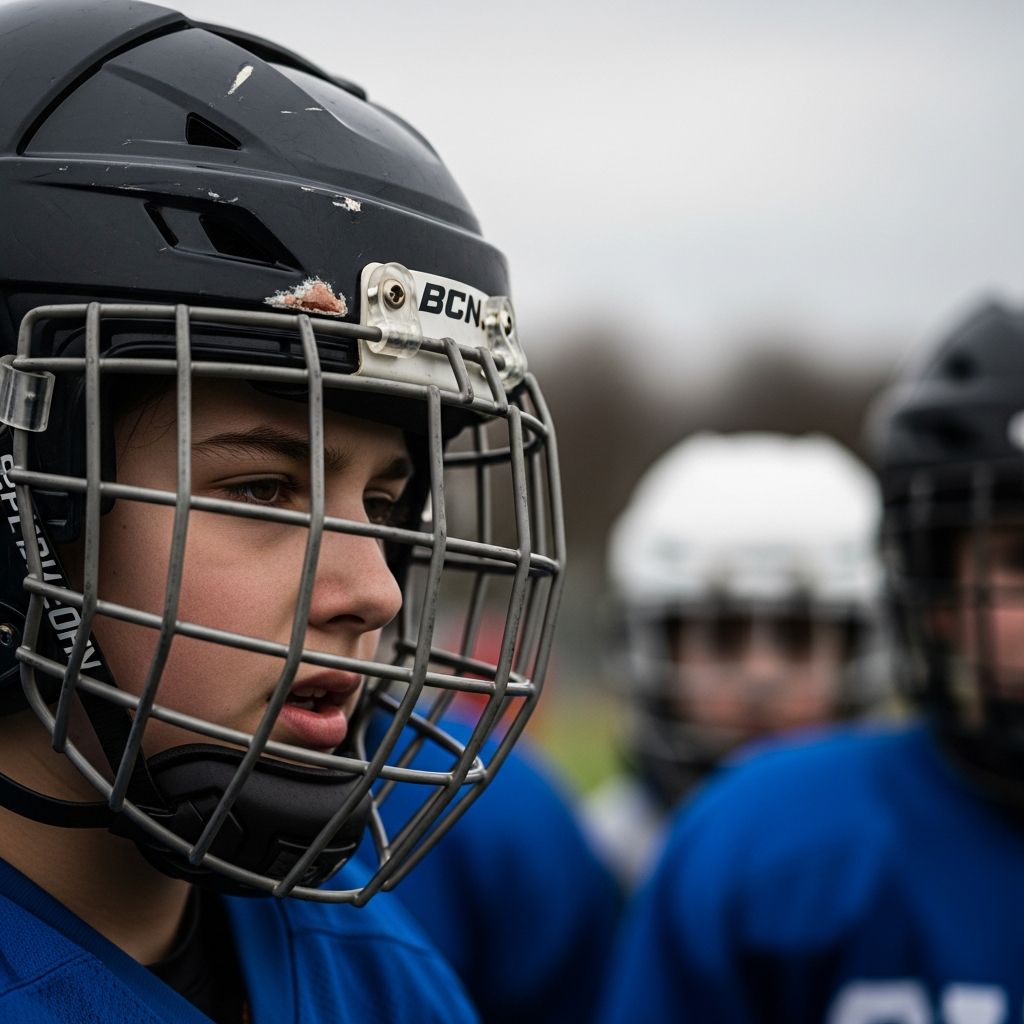
Participation in youth sports offers invaluable benefits like physical fitness, teamwork, and discipline, but it also carries significant risks of head injuries, particularly concussions and traumatic brain injuries (TBIs). Recent research underscores the urgency of addressing these dangers, revealing stark differences in impact exposure across sports and revealing promising interventions. With millions of children engaging in organized sports annually, understanding and mitigating these risks is paramount for parents, coaches, and policymakers.
Prevalence of Head Injuries in Youth Sports
Head injuries represent a leading concern in pediatric sports medicine. Contact sports such as football, soccer, basketball, and hockey account for a substantial portion of emergency department visits related to TBIs and concussions in children under 18. Data indicates that sports and recreation activities contribute to over 21% of all TBIs among American youth. More alarmingly, an estimated 1.6 to 3.8 million athletes suffer concussions each year, with many cases going unreported.
Over 3.5 million children aged 14 and younger sustain sports-related injuries annually, many involving the head. A large-scale study across various youth sports identified nearly 6,000 concussions among over 92,000 athletes, yielding an overall rate of 0.96 concussions per 1,000 athlete-exposures. These figures highlight the widespread nature of the problem, necessitating targeted awareness and action.
Football: A High-Risk Arena for Young Players
Tackle football stands out as one of the most hazardous sports for youth head health. A comprehensive CDC analysis compared head impacts in tackle versus flag football for athletes aged 6 to 14. Tackle players endured 15 times more head impacts overall and 23 times more high-magnitude impacts (those exceeding thresholds linked to injury risk) than their flag counterparts during practices and games.
Season-long medians paint a vivid picture: tackle athletes averaged 378 head impacts per season, while flag athletes experienced just 8. Games amplify the danger, with tackle players sustaining twice as many impacts as in practices—averaging 13 per game versus 7 per practice. High-magnitude impacts (≥40g) were also twice as common in games. Another investigation into youth football (ages 5-14) reported a 5% concussion rate per season, higher than prior estimates, with two-thirds occurring during games, often from head-to-head collisions.
| Sport Variant | Median Head Impacts per Season | High-Magnitude Impacts (per Practice/Game) |
|---|---|---|
| Tackle Football | 378 | 23x more than flag |
| Flag Football | 8 | Baseline |
This table summarizes key disparities, emphasizing flag football’s safer profile.
Soccer and the Impact of Header Restrictions
Soccer, while less overtly contact-heavy, poses risks through headers and collisions. Concussion incidence ranges from 0.19 to 0.28 per 1,000 athletic exposures, or about 0.5 per 1,000 playing hours. In response, the United States Soccer Federation (USSF) implemented a 2016 policy banning headers for under-10s and limiting 11-13-year-olds to 30 minutes weekly practice.
A 2025 study presented at the American Academy of Orthopaedic Surgeons meeting analyzed emergency department data via the National Electronic Injury Surveillance System (NEISS). It found a 25.6% relative risk reduction in soccer-related concussions as a proportion of all soccer injuries post-policy (2020-2023 vs. 2012-2015), dropping from 8% to 6%.
Age breakdowns reveal patterns: 4.9% of injuries in 6-9-year-olds were concussions (431 of 8,793); 6.6% in 10-13-year-olds (1,527 of 23,275); and 8.9% in 14-17-year-olds (2,397 of 26,907). Notably, females faced higher concussion proportions (9.6% of their injuries vs. 6.2% for males), despite fewer overall injuries.
- Pre-policy (2012-2015): 8% concussion proportion.
- Post-policy (2020-2023): 6% concussion proportion.
- Females: Peak 10.5% in 2012; 7.8% in 2023.
- Males: Peak 8.4% in 2012; 4.3% in 2023.
These trends suggest policy efficacy, though not all concussions stem from headers.
Long-Term Brain Health Concerns
Beyond immediate concussions, repetitive head impacts (RHI) raise alarms for chronic conditions. A JAMA Neurology study of 152 deceased contact sports athletes under 30 found CTE in 41.4% (63 cases), linking RHI in sports like football, soccer, hockey, rugby, and wrestling to this progressive, fatal brain disease.
Prior concussion history doubles future risk, while depression history increases it fivefold. CDC data confirms contact sports drive 45% of youth sports-related TBI ED visits. Head impacts elevate TBI risks, with tackle football showing the highest exposure.
Effective Prevention Strategies for Safer Play
Reducing risks requires multifaceted approaches. Flag football emerges as a compelling alternative, slashing impacts by over 95%. Soccer’s header limits demonstrate policy-driven gains.
Key tactics include:
- Rule Modifications: Ban or limit high-risk maneuvers by age; enforce strict officiating in games.
- Equipment Upgrades: Use properly fitted helmets and mouthguards; ensure fields are impact-absorbing.
- Training Protocols: Teach safe tackling (e.g., heads-up football), body contact avoidance, and fair play huddles.
- Medical Oversight: Deploy athletic trainers for surveillance; mandate baseline testing and return-to-play guidelines.
- Education: Inform parents, coaches on symptoms (headache, dizziness, confusion) and when to sideline.
Games demand extra vigilance, as impacts peak there. Non-contact variants and gradual contact introduction minimize early exposure.
Role of Parents, Coaches, and Leagues
Parents should prioritize leagues with safety protocols, monitor for symptoms, and advocate for flag/non-contact options. Coaches must model safe techniques, limit contact drills, and prioritize fun over wins. Leagues benefit from trainer presence and data tracking, as in the Northwest Junior Football League study.
Policymakers can expand successful models like USSF’s, scaling evidence-based rules nationwide.
Frequently Asked Questions (FAQs)
Are flag football and tackle football equally risky for concussions?
No, CDC research shows tackle football involves 15x more head impacts and 23x more high-magnitude ones than flag.
Has the soccer header ban reduced youth concussions?
Yes, a 25.6% relative reduction in concussion proportion post-2016 policy, per NEISS data.
What increases concussion risk in young athletes?
Prior concussions (2x risk), depression history (5x risk), and game participation over practice.
Can repeated headers in soccer cause long-term brain damage?
Yes, linked to CTE in studies of young contact sport athletes.
How can parents spot a concussion in their child?
Watch for headache, nausea, balance issues, sensitivity to light/noise, or confusion; remove from play immediately.
Building a Safer Future for Youth Sports
By integrating research insights, innovative policies, and community commitment, we can preserve sports’ joys while shielding young brains. Ongoing studies and interventions promise continued progress in athlete protection.
References
- Comparing Head Impacts in Youth Tackle and Flag Football — CDC. 2023. https://www.cdc.gov/traumatic-brain-injury/data-research/comparing-head-impacts/index.html
- Header Restriction Policy in Youth Soccer Shows Promising Impact on Concussion Rates — AAOS Annual Meeting Presskit. 2025-03-10. https://aaos-annualmeeting-presskit.org/2025/research-news/header-restriction-policy-in-youth-soccer-shows-promising-impact-on-concussion-rates/
- Youth football concussion rate is 5%, study finds — UW Medicine Newsroom. 2023-12-13. https://newsroom.uw.edu/news-releases/youth-football-concussion-rate-5-study-finds
- Study Raises Questions about Long-Term Consequences to Brain Health of Young Athletes in Contact Sports — Brain Injury Association of America. 2023. https://biausa.org/public-affairs/public-awareness/news/study-raises-questions-about-long-term-consequences-to-brain-health-of-young-athletes-in-contact-sports
- Data on Sports and Recreation Activities | HEADS UP — CDC. 2023. https://www.cdc.gov/heads-up/data/index.html
- Concussion Epidemiology in Youth Sports: Sports Study of a Lifetime — NIH/PMC. 2020-12-14. https://pmc.ncbi.nlm.nih.gov/articles/PMC7734362/