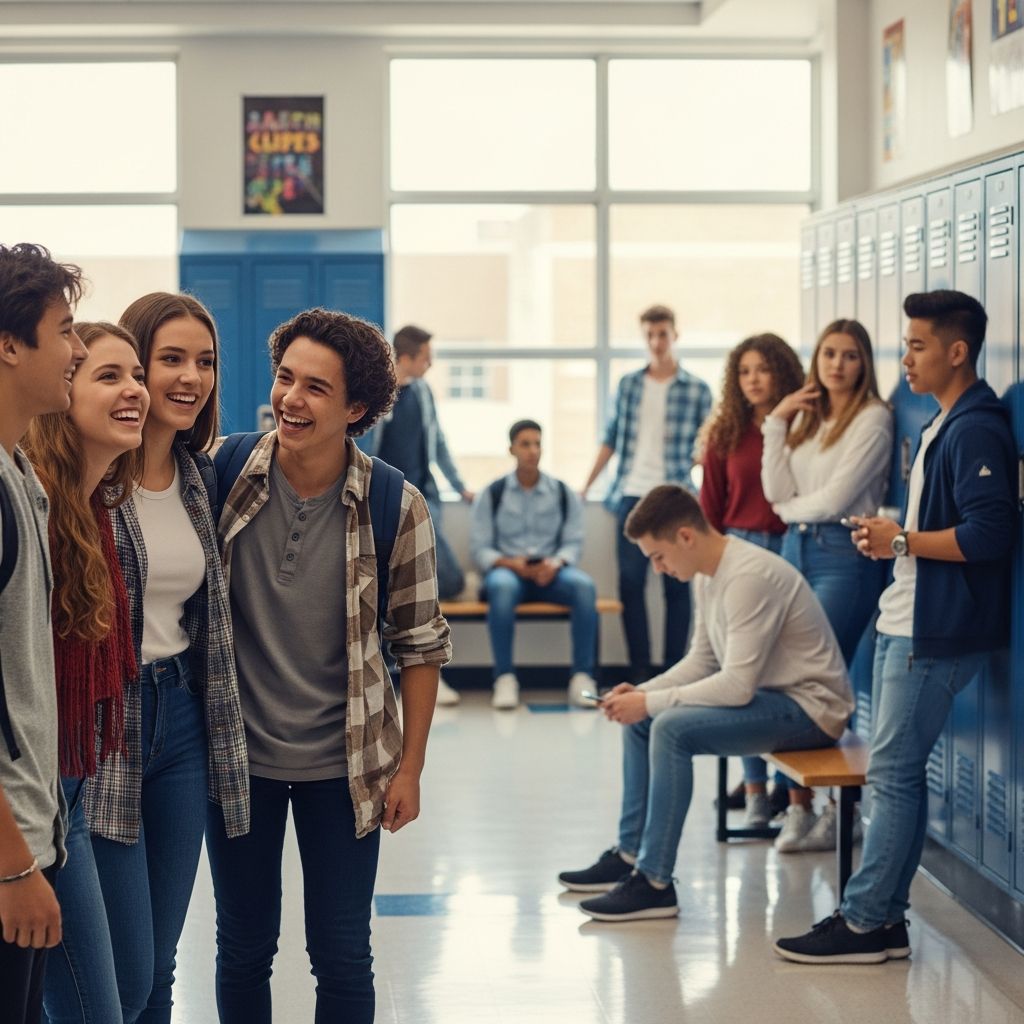
Youth cliques represent a natural yet complex aspect of social development during childhood and adolescence. These small, tight-knit groups often form around shared interests or identities, providing a sense of security for members while potentially alienating others. While cliques can offer support and belonging, they frequently introduce challenges like exclusion, conformity pressures, and mental health strains. This article breaks down the nature of cliques, their psychological consequences, and actionable steps for parents and educators to promote positive social experiences.
What Defines a Youth Clique?
A youth clique is typically a small group of 6 to 12 individuals who interact more frequently and intensely with each other than with outsiders. These groups emerge prominently in middle and high school, driven by adolescents’ need for identity and peer validation. Unlike broader friend circles, cliques enforce stricter boundaries, often based on superficial traits like appearance, hobbies, or academic status.
Cliques differ from healthy friend groups by their emphasis on exclusivity. Members may share mutual support, such as helping with homework or providing rides, which strengthens bonds and aids persistence in school. However, this closeness can foster an “us versus them” mentality, leading to rigid hierarchies and rejection of newcomers.
- Common Characteristics: Intense loyalty, shared activities, uniform styles or attitudes.
- Typical Size: 5-12 members, peaking in early adolescence.
- Formation Triggers: School tracking, neighborhoods, or extracurriculars that segregate peers by background or ability.
Psychological Effects on Those Inside the Group
For insiders, cliques can be a double-edged sword. On one hand, they deliver a vital sense of community, buffering against isolation. Research shows clique membership often correlates with better social adjustment, particularly protecting against internalizing issues like excessive withdrawal.
Yet, pressures abound. Members face intense conformity demands, suppressing personal values to fit in. High-achieving cliques, for instance, amplify stress from academic and extracurricular expectations, elevating group-wide anxiety. Insiders may also grapple with guilt over excluding others or perpetuating stereotypes against diverse backgrounds.
| Positive Effects for Insiders | Negative Effects for Insiders |
|---|---|
| Sense of belonging and identity | Conformity pressure and loss of individuality |
| Mutual support in academics/life | Hierarchies causing internal power struggles |
| Protection from broader rejection | Guilt from exclusivity or bullying |
Challenges Faced by Outsiders and the Isolated
Exclusion from cliques hits hardest for those on the periphery. Isolated youth experience profound loneliness, social anxiety, and diminished self-esteem, which longitudinal studies link to escalating depressive symptoms in early adolescence. A study of 310 children aged 11-14 found clique isolation independently predicted depression at age 14, even after controlling for prior rejection or friendlessness.
Outsiders often internalize feelings of inadequacy, worrying constantly about judgment. This dynamic reinforces racial, socioeconomic, or cultural divides, as cliques cluster similar peers, limiting cross-group interactions. Girls, in particular, may show more behavioral issues when isolated compared to boys.
- Loneliness leading to anxiety and depression
- Low perceived social acceptance eroding self-worth
- Increased risk of internalizing problems over time
The Link Between Cliques and Bullying Dynamics
Cliques do not directly cause bullying, but their structure creates fertile ground for it. The exclusivity breeds power imbalances, where insiders tease, ignore, or target “inferiors.” This manifests as relational aggression—gossip, cold-shouldering—or overt hostility, affecting all genders.
Aggressive cliques, often forming in unsupervised settings, escalate antisocial behaviors rapidly. Observational data on boys shows neighborhood-based groups amplify aggression through shared delinquency. Even non-aggressive cliques can normalize mean behaviors to maintain superiority.
Distinguishing Healthy Friendships from Harmful Cliques
Not all groups are problematic. Healthy friendships emphasize inclusivity, mutual respect, and personal growth, welcoming newcomers without rigid rules. Harmful cliques, conversely, demand conformity, enforce hierarchies, and actively exclude.
| Healthy Friend Groups | Harmful Cliques |
|---|---|
| Open to new members | Strict exclusivity |
| Encourage individuality | Enforce uniform behaviors |
| Support diverse interests | Reject differences |
| Promote positive behaviors | Tolerate or encourage negativity |
Parents can teach children to spot these differences by discussing group dynamics openly.
Long-Term Developmental Implications
Empirical research underscores cliques as normative, not inherently negative. A four-year study of 451 children found clique membership shielded against internalizing problems but raised externalizing issues, especially in boys. Interventions targeting parents prove more effective than direct peer programs, which can backfire.
In educational settings, cliques influence persistence; supportive ones boost engagement, while divisive ones hinder it. Understanding these patterns helps mitigate risks like psychopathology or entrenched biases.
Practical Strategies for Parents to Support Their Children
Parents play a pivotal role in navigating cliques. Start by fostering open conversations about school social life, validating feelings without judgment. Encourage broad friendships through diverse activities like clubs or sports.
- Model Inclusivity: Demonstrate welcoming behaviors at home.
- Build Resilience: Teach coping skills for rejection, emphasizing inherent worth.
- Monitor Dynamics: Watch for signs of unhealthy pressure or isolation.
- Promote Extracurriculars: Expose kids to varied peers beyond school tracks.
- Seek Professional Help: If anxiety or depression emerges, consult counselors.
For insiders, guide reflection on group impacts; for outsiders, affirm strengths and facilitate connections.
Role of Schools and Communities in Fostering Inclusion
Educators can counter cliques via mixed-group projects, anti-bias training, and inclusive events. Policies reducing tracking minimize segregation. Community programs uniting diverse youth disrupt homogeneous clustering.
Frequently Asked Questions About Youth Cliques
Are cliques always bad for kids?
No, cliques can provide belonging and support, but exclusivity and pressure make some harmful. Focus on dynamics over existence.
How can I tell if my child is in a toxic clique?
Signs include sudden behavior changes, secrecy, anxiety about fitting in, or reports of exclusion/bullying others.
What if my child is excluded from cliques?
Reassure them, encourage solo interests and broad activities. Isolation risks depression, so nurture one-on-one friendships.
Do cliques affect boys and girls differently?
Yes, boys in cliques may show more externalizing problems; isolated girls often face greater behavioral challenges.
Can cliques lead to long-term mental health issues?
Yes, isolation predicts depression; insider pressures can foster anxiety. Early intervention is key.
This guide equips parents with insights to help children thrive socially. By addressing cliques thoughtfully, we pave the way for resilient, empathetic youth.
References
- The Mental Health Impact of Teen Cliques — Newport Academy. 2023 (approx., based on content recency). https://www.newportacademy.com/resources/mental-health/teen-cliques/
- Adolescent clique — Wikipedia (sourced from peer-reviewed studies cited therein, e.g., Witvliet et al.). Last edited 2025. https://en.wikipedia.org/wiki/Adolescent_clique
- Early Adolescent Depressive Symptoms: Prediction from Clique Isolation — Prinstein MJ et al. PMC. 2010-10-29. https://pmc.ncbi.nlm.nih.gov/articles/PMC2964501/
- Cliques — Stanford University. N/A (academic resource). https://web.stanford.edu/class/e297c/poverty_prejudice/gangcolor/cliques.htm
- Why We Form Cliques: The Sociology of Campus Friend Groups — The Hilltop Online. 2024-10-21. https://thehilltoponline.com/2024/10/21/why-we-form-cliques-the-sociology-of-campus-friend-groups/