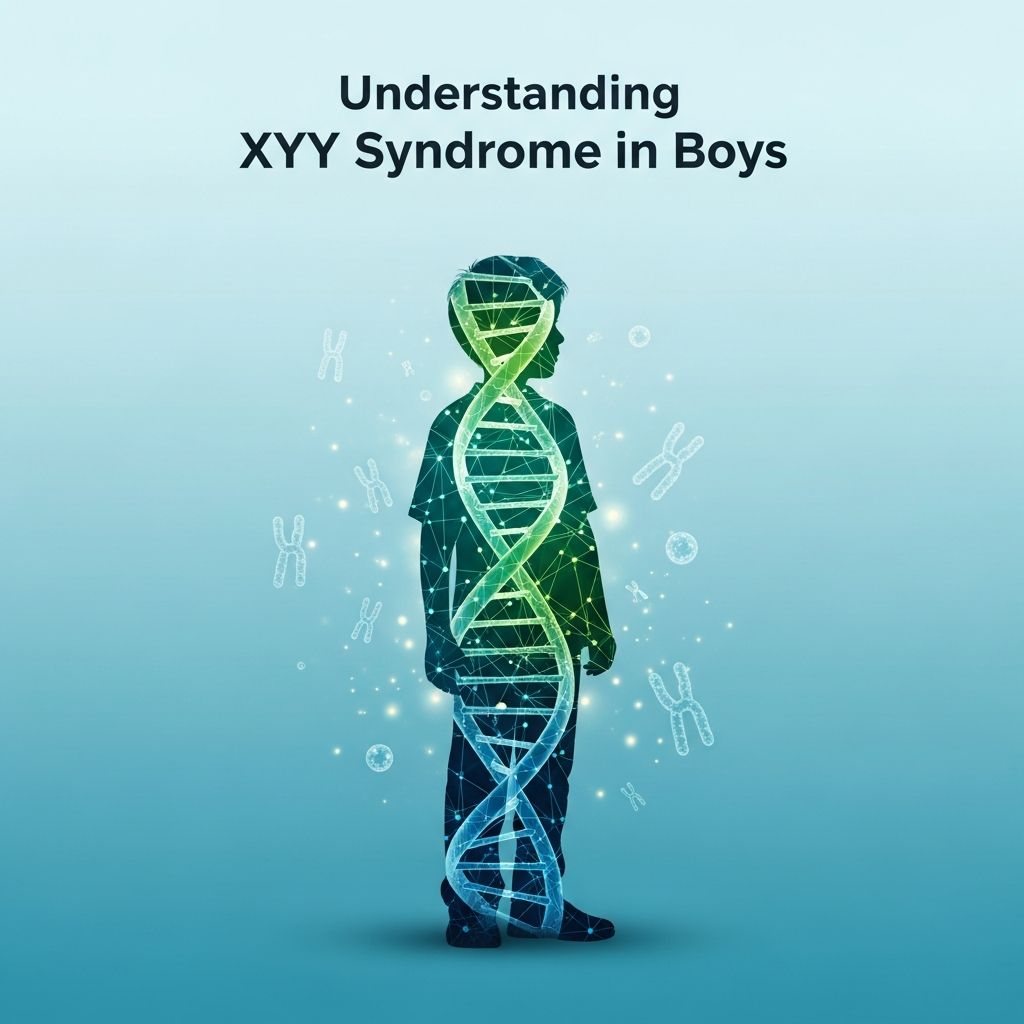
XYY syndrome, also referred to as 47,XYY syndrome or Jacobs syndrome, is a genetic condition where males possess an additional Y chromosome, resulting in 47 chromosomes per cell instead of the typical 46. This variation occurs sporadically during sperm formation and impacts approximately 1 in 1,000 newborn boys, though many remain undiagnosed due to subtle features.
Genetic Foundations of XYY Syndrome
Human cells normally contain 46 chromosomes, including one X from the mother and one Y from the father in males. In XYY syndrome, nondisjunction—an error in cell division—leads to a sperm cell carrying two Y chromosomes. Fertilization with a normal X-carrying egg produces a 47,XYY karyotype. This is not inherited; it arises de novo in about 1% of cases as mosaicism, where only some cells have the extra Y.
The extra Y chromosome influences gene expression, particularly those on the Y linked to height regulation, but its full mechanisms remain under study. Unlike other sex chromosome disorders like Klinefelter (XXY), XYY does not typically impair fertility or hormone production.
Physical Characteristics and Growth Patterns
The hallmark physical trait of XYY syndrome is accelerated growth, becoming evident around age 4-6. Affected boys often exceed peers in height, reaching an average adult stature of 6 feet 3 inches (188 cm). Head circumference may be larger (macrocephaly), and some exhibit widely spaced eyes (hypertelorism), curved pinky fingers (clinodactyly), flat feet, or mild scoliosis.
Severe acne during puberty affects many, but sexual development proceeds normally with typical testosterone levels and fertility. Rare features include tremors, seizures, asthma, or genitourinary issues like hypospadias, though these are not universal. A table summarizing common physical traits:
| Feature | Prevalence | Description |
|---|---|---|
| Tall stature | ~90% | Average adult height 6’3″ |
| Acne | Common in adolescence | Cystic, severe |
| Macrocephaly | Variable | Large head size |
| Scoliosis | Occasional | Mild spinal curvature |
| Asthma/Seizures | Increased risk | Manageable with treatment |
Cognitive and Developmental Aspects
Intelligence in boys with XYY syndrome falls within the normal range, averaging 10-15 IQ points below siblings, often due to specific learning challenges rather than global impairment. Up to 50% experience delays in speech, language, motor skills like sitting or walking, and reading (dyslexia common).
- Speech delays: Difficulty articulating, leading to frustration.
- Reading/writing needs: Extra educational support benefits most.
- Motor hypotonia: Weak muscle tone improves with therapy.
Early milestones may lag mildly, but with intervention, academic progress aligns with peers.
Behavioral and Emotional Challenges
Behavioral issues appear in some boys, including impulsivity, hyperactivity, explosive temper, or defiance, with elevated risks for ADHD (up to 50%), autism spectrum traits, anxiety, or depression. Contrary to outdated ‘superman’ myths, aggression is not inherent; problems stem from learning frustrations or neurodevelopmental overlaps.
Socially, initiating conversations or understanding nuances can challenge, persisting mildly into adulthood for some. Positive environments and therapies mitigate these effectively.
Diagnosis Pathways
Most cases go undetected as symptoms are nonspecific. Diagnosis involves karyotyping—analyzing 20-30 cells via blood for the 47,XYY pattern. Prenatal detection occurs through amniocentesis or CVS if anomalies suggest it, but routine screening is absent.
Clues prompting testing include extreme height, developmental delays, or family concerns. Genetic counseling follows confirmation, emphasizing the non-hereditary nature and variable expression.
Management and Therapeutic Interventions
No cure exists, but tailored supports optimize outcomes:
- Educational plans: IEPs for speech therapy, reading tutors, smaller classes.
- Behavioral therapy: CBT for impulsivity, social skills training.
- Medical care: ADHD meds if diagnosed, acne treatments, asthma management.
- Physical therapy: For motor delays or hypotonia.
Regular pediatric monitoring tracks growth, puberty, and health risks. Most men with XYY lead independent, fertile lives, holding jobs and families.
Long-Term Prognosis and Adult Life
Outcomes are favorable; undiagnosed individuals often thrive unaware. With support, employment rates match norms, though some prefer structured roles. Fertility is unimpaired, and life expectancy equals general population, barring comorbidities like asthma.
Historical misconceptions linked XYY to criminality, debunked by studies showing no such correlation.
Frequently Asked Questions (FAQs)
Is XYY syndrome inherited?
No, it results from random errors in sperm production, not parental genes.
Do all boys with XYY have learning problems?
No, while risks are higher, many excel academically with minimal aid.
Can boys with XYY have children?
Yes, fertility and sexual function are typically normal.
Is XYY syndrome the same as autism?
No, but there’s increased autism risk; each is distinct.
How common is diagnosis?
About 10-20% are identified, as features are mild.
Living Positively with XYY Syndrome
Families play key roles by advocating early. Support groups connect parents, sharing strategies. Emphasize strengths like physical prowess in sports, leveraging height advantages. Open discussions normalize the condition, fostering resilience.
Research advances, including gene therapies, may refine future care, but current interventions suffice for thriving.
References
- XYY Syndrome | Male Chromosome Disorder — NORD (rarediseases.org). 2023. https://rarediseases.org/rare-diseases/xyy-syndrome/
- 47,XYY syndrome – Genetics – MedlinePlus — NIH (medlineplus.gov). 2024-01-15. https://medlineplus.gov/genetics/condition/47xyy-syndrome/
- XYY syndrome – Wikipedia — Wikipedia (informed by primary sources). 2025. https://en.wikipedia.org/wiki/XYY_syndrome
- XYY – RareChromo.org — Rare Chromosome Disorder Support Group. 2022. https://www.rarechromo.org/media/information/Chromosome_Y/XYY%20FTNW.pdf
- 47,XYY Syndrome (Jacobs Syndrome): What It Is & Symptoms — Cleveland Clinic (my.clevelandclinic.org). 2024-06-20. https://my.clevelandclinic.org/health/diseases/xyy-syndrome-jacobs-syndrome
- Jacobs Syndrome – StatPearls — NCBI Bookshelf (ncbi.nlm.nih.gov). 2023-07-17. https://www.ncbi.nlm.nih.gov/books/NBK557699/