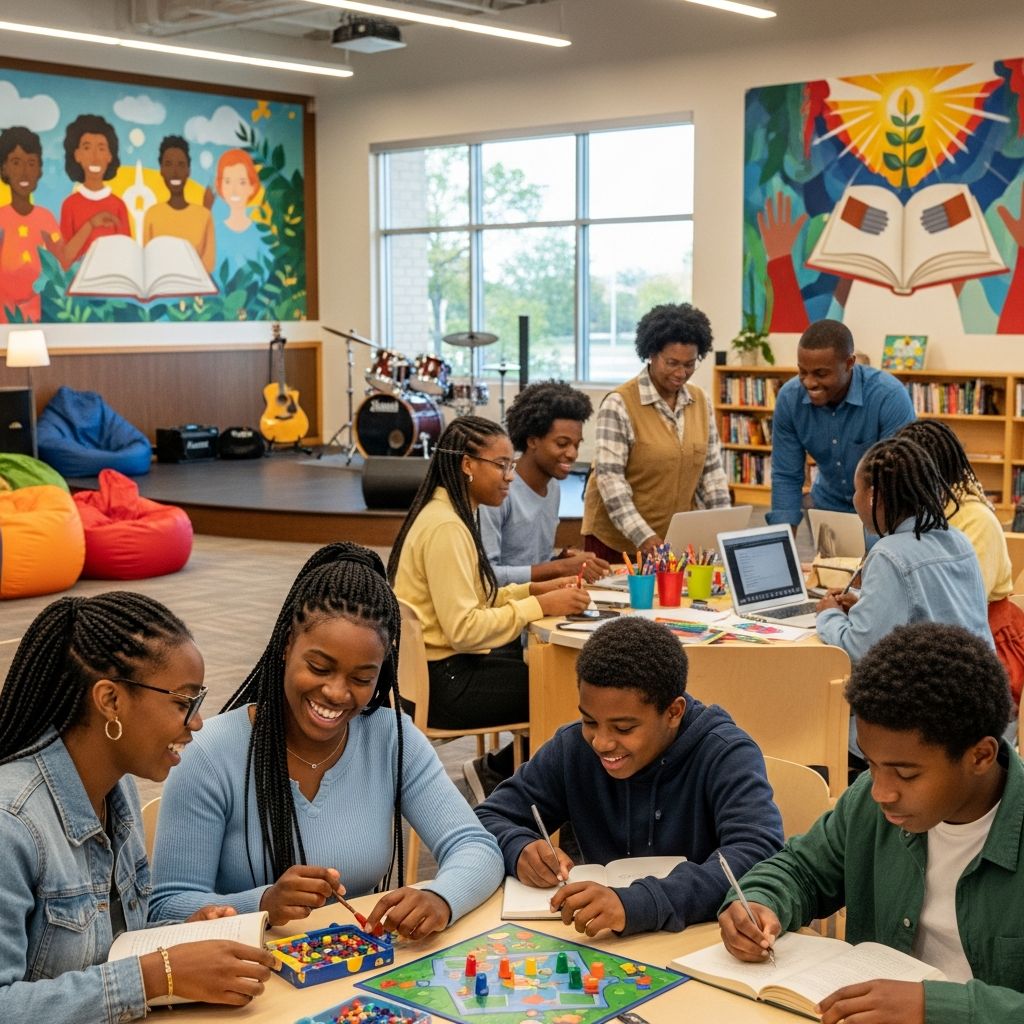
Third spaces serve as essential community anchors for Black teenagers, providing neutral grounds outside home and school where they can forge connections, explore identities, and build resilience. These environments counteract isolation and systemic barriers, fostering holistic development through voluntary gatherings and meaningful interactions.
Understanding the Concept of Third Spaces
The notion of third spaces originates from sociologist Ray Oldenburg’s framework, distinguishing them from primary spaces like home and secondary ones like school or work. These informal locales—community centers, libraries, parks, or cultural hubs—encourage free association, low-pressure socializing, and relationship-building on participants’ terms.
For Black youth, third spaces hold amplified importance. They offer refuge from racial stressors, microaggressions, and limited opportunities in conventional settings, enabling authentic self-expression and peer solidarity.
- Neutral territory free from institutional rules
- Accessible and inclusive for diverse groups
- Platforms for intergenerational dialogue
- Catalysts for creativity and leadership
Critical Benefits for Black Adolescents’ Development
Participation in third spaces yields profound advantages, particularly for Black teens navigating identity formation amid societal pressures. Research underscores enhanced social-emotional skills, reduced risky behaviors, and bolstered academic motivation.
| Benefit | Impact on Black Youth | Supporting Evidence |
|---|---|---|
| Social Connection | Combats isolation, builds trust networks | Stronger community ties buffer stress |
| Identity Exploration | Affirms cultural heritage, boosts self-esteem | Autonomy fosters agency |
| Mental Health Support | Reduces anxiety, promotes coping skills | Lower hyperactivity, better adjustment |
| Risk Prevention | Decreases delinquency, teen pregnancy | Structured yet flexible environments |
These outcomes stem from environments prioritizing belonging over judgment, allowing Black youth to thrive.
Real-World Examples Tailored for Black Communities
Innovative third spaces across the U.S. demonstrate practical applications, blending recreation, mentorship, and cultural affirmation.
- Urban Arts Collectives: Studios where Black teens create murals, music, and spoken word, channeling creativity into empowerment.
- Barbershop Mentorship Circles: Traditional hubs evolving into forums for life advice from elders on manhood, education, and resilience.
- Faith-Inspired Youth Lounges: Church basements hosting game nights, discussions on faith and race, nurturing spiritual and communal bonds.
- Library Teen Advisory Boards: Platforms for Black youth to curate events, advocate for diverse books, and lead peer workshops.
- Community Recreation Hubs: Parks with basketball courts and picnic areas facilitating informal gatherings and sports leagues.
These venues emphasize accessibility, cultural relevance, and safety, drawing from models like YMCA programs proven to elevate civic engagement.
Overcoming Barriers to Access and Inclusion
Despite benefits, Black teens face hurdles: underfunded facilities in low-income areas, safety concerns, and institutional biases.
Communities counter this through:
- Targeted funding for neighborhood centers
- Staff training on cultural competence
- Partnerships with schools for seamless transitions
- Digital outreach to boost awareness
Evidence from youth assessments highlights the need for spaces welcoming to marginalized groups, including LGBTQIA+ Black youth seeking acceptance.
Parental and Community Strategies for Creation
Parents play pivotal roles in guiding Black teens to third spaces while advocating for their expansion.
- Assess Local Options: Map nearby libraries, clubs, and parks; prioritize culturally affirming ones.
- Encourage Participation: Discuss interests, provide transport, celebrate involvement.
- Volunteer and Advocate: Join boards, donate time, lobby for equitable resources.
- Foster Home Extensions: Host block parties or family game nights mimicking third-space vibes.
- Monitor Digital Balance: Pair online hangs with offline meetups to enhance real-world skills.
Schools can integrate by designating wellness rooms or after-school clubs as third spaces, extending support beyond bells.
Research Insights on Long-Term Impacts
Studies affirm third spaces’ role in resilience-building. High schoolers engaged in such venues show lower dropout rates and higher college attendance. For Black youth, they mitigate trauma effects, enhancing emotional regulation and peer relations.
A conceptual model posits third places cultivate social capital and community sense, countering marginalization via affirming interactions. Longitudinal data links them to reduced juvenile arrests and improved citizenship.
Building Sustainable Third Spaces Moving Forward
Sustainability demands multi-stakeholder investment: governments revitalizing public areas, nonprofits scaling programs, and families nurturing participation. Metrics like attendance and youth feedback guide improvements.
Policymakers should prioritize grants for inclusive designs, ensuring spaces reflect Black youth voices—from skateparks to tech makerspaces.
Frequently Asked Questions
What exactly qualifies as a third space for Black teens?
Any informal, accessible spot outside home and school, like community centers, parks, or cultural clubs, where voluntary socializing and growth occur without pressure.
How do third spaces specifically help Black youth with identity?
They provide low-stakes arenas for cultural expression, peer validation, and mentorship, strengthening self-concept amid external biases.
Are third spaces safe for all Black teens, including LGBTQ+?
Yes, when designed inclusively; they offer vital acceptance for those facing rejection elsewhere, building supportive networks.
Can parents create third spaces at home?
Partially, through open-door policies for friends or hosted events, but true third spaces thrive in public, neutral settings.
What if no third spaces exist locally?
Advocate via petitions, partner with libraries, or start small groups; online directories and school resources can help identify hidden gems.
References
- Beyond the Bell: Why Third Spaces Matter for Whole-Community and School Well-Being — University of Iowa SCSMH. 2025-12-01. https://scsmh.education.uiowa.edu/news/2025/12/beyond-bell-why-third-spaces-matter-whole-community-and-school-well-being
- How Can “Third Place” Settings Support Young People who Endure Marginalization — Community Psychology. N/A. https://www.communitypsychology.com/third-places/
- Offline Oasis: Why Teens Need non-digital Third Spaces — EditCM. 2024-01-12. https://www.editcm.com/blog/2024/1/12/offline-oasis-why-teens-need-non-digital-third-spaces
- December 2025 Blog: Why Children Need Third Places — Kohl Children’s Museum. 2025-12-01. https://www.kohlchildrensmuseum.org/december-2025-blog-why-children-need-third-places-whats-that/
- Youth Third Space Facilities Assessment — Grays Harbor County Public Health. 2024-03-15. https://healthy-gh.squarespace.com/s/Grays-Harbor-County-Public-Health-Youth-Third-Space-Final-31524-gk8s.pdf
- What are Third Places and Why Do They Matter? — Shanker Institute. N/A. https://www.shankerinstitute.org/blog/what-are-third-places-and-why-do-they-matter