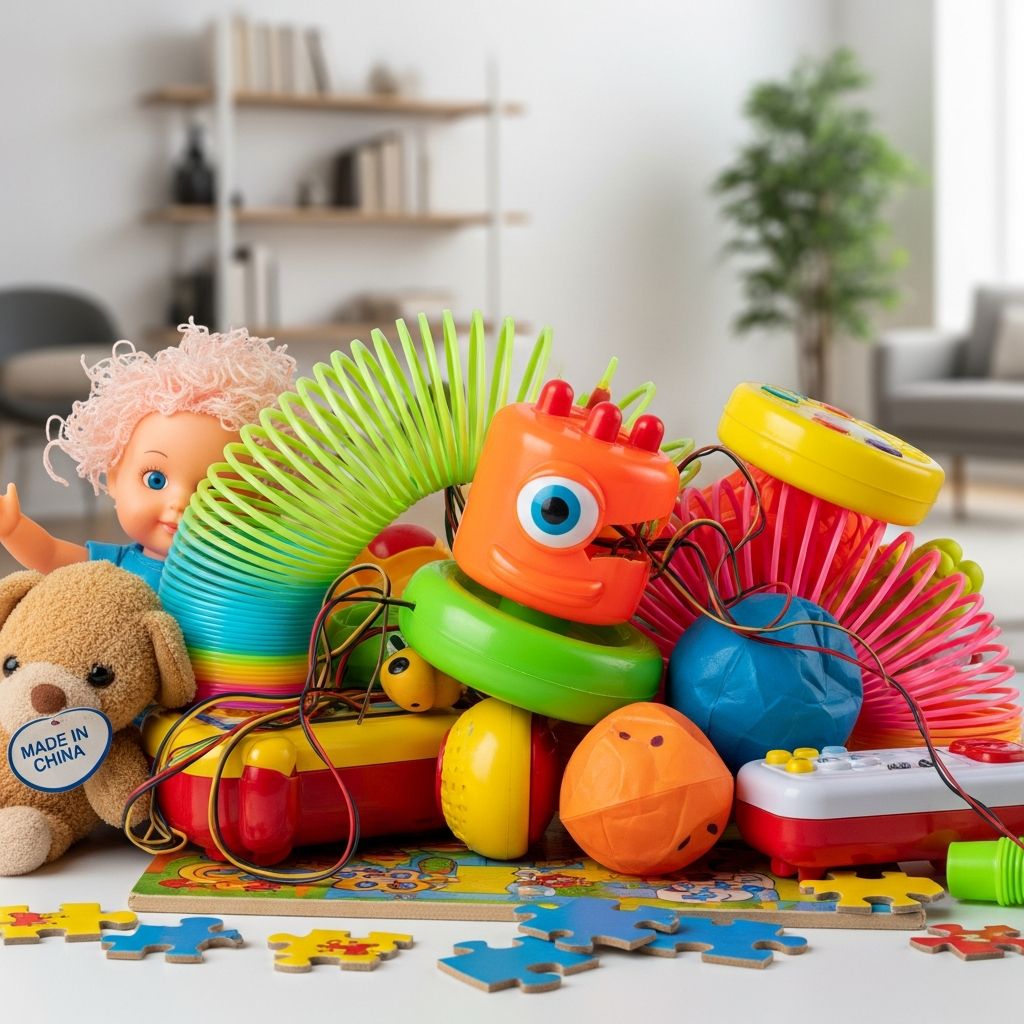
Some toys delight children and give parents a moment of peace; others deliver batteries, noise, and regret in equal measure. This guide explores the toys that most often backfire, why they cause trouble, and how to choose better gifts without killing the fun.
Why Some Toys Are a Terrible Idea
Not every brightly colored box on the shelf deserves a spot in your living room. Certain toys are more likely to break, annoy, over-stimulate, or even harm children, no matter how charming the packaging looks. Understanding the patterns behind these bad buys helps you shop with a clear head instead of a panicked holiday brain.
When you know what makes a toy frustrating or unsafe, you can still give playful, exciting gifts without sacrificing your child’s sleep schedule, your floor space, or your sanity. Think of this as an “anti-gift guide”: not to ruin the fun, but to point it in a healthier, happier direction.
Major Red Flags in Kids’ Toys
Before diving into categories, it helps to notice recurring warning signs that make toys more trouble than they are worth. These red flags can show up in almost any product, from stuffed animals to electronic gadgets.
- Overly complicated parts: Tiny components that fall off, require adult assembly with tools, or vanish under the couch within three minutes.
- Excessive noise and lights: Toys that shout, beep, or flash constantly with no volume control or on/off switch in sight.
- Questionable age labels: Packaging that claims a toy is safe for younger kids when it clearly contains small pieces, projectiles, or fragile plastic.
- One-dimensional play: Items that do only one thing, in exactly one way, and become boring very quickly once the novelty wears off.
- Cheap construction: Flimsy materials, sharp seams, rough edges, or parts that bend or crack under normal play.
- Hidden maintenance costs: Toys that devour batteries, demand special refills, or need an app subscription to work properly.
Noise Machines in Disguise: The Loud Toy Problem
Some toys don’t just make noise; they take over your entire soundscape. Musical gadgets, talking dolls, and battery-powered vehicles can quickly morph from amusing to exhausting, especially when a child presses the same button forty-seven times in a row.
Beyond irritation, very loud toys can contribute to sensory overload for children and can even exceed safe volume levels at close range. A toy that shouts in your child’s ear is not a small concern; it’s a potential health issue disguised as a party.
Questions to Ask Before You Buy a Noisy Toy
- Does it have a clear volume control or mute button?
- Can the toy still be used and enjoyed with the sound turned off?
- Is the sound variety broad enough to avoid repetitive annoyance?
- Is the speaker placed away from where a child will hold it close to their ears?
Safety Nightmares: Toys That Put Kids at Risk
Some of the worst toys are those that seem harmless at first glance but hide serious safety issues. These problems range from choking hazards to sharp edges and poorly secured batteries. Safety should always outrank cuteness or clever marketing.
Even trusted brands can occasionally release flawed products, so it is important to examine each toy on its own merits, not just the name on the box. A few minutes of inspection can prevent emergencies later.
Common Hazard Types
- Choking hazards: Detachable small parts, accessories, beads, and poorly attached eyes or buttons on plush toys.
- Sharp or rigid edges: Hard plastic corners, brittle parts that splinter, and accessories shaped like tiny weapons.
- Strangulation risks: Long cords, strings, and necklace-type accessories that tighten when pulled.
- Battery dangers: Loose battery covers, especially for button batteries, which are highly dangerous if swallowed.
- Chemical exposure: Low-quality plastics, strong chemical odors, and unlabelled slime or cosmetic kits.
Quick Safety Check Table
| Hazard Type | What to Look For | Better Choice |
|---|---|---|
| Choking | Small pieces that fit inside a toilet paper tube; loose buttons or beads | Large, single-piece toys with securely attached features |
| Sharp edges | Rough seams, thin plastic that bends or cracks, exposed metal | Rounded edges, thick material, smooth seams |
| Strangulation | Long cords, lanyards, strings, or elastic loops | Cord-free or very short-strap designs with quick releases |
| Batteries | Battery doors without screws, easily opened compartments | Screw-secured compartments, clearly labeled battery safety warnings |
| Chemicals | Strong chemical smell, unlabeled slime or cosmetics | Non-toxic, tested products with clear ingredient information |
Clutter Creators: Toys That Take Over Your Home
Some gifts are not dangerous; they are just overwhelming. Oversized plastic castles, kits with a thousand tiny beads, and multi-part playsets can spread from the playroom into every corner of your home. The more pieces a toy has, the more likely it is that half of them will disappear, leaving a broken, incomplete set.
Clutter-heavy toys also create more work for parents who end up sorting, storing, and rescuing tiny accessories from under couches and behind furniture. After a while, the child stops playing with an incomplete toy, and the entire set becomes yet another bulky object to trip over.
How to Spot Clutter-Prone Toys
- Multiple trays of tiny accessories or “collectible” parts.
- Large plastic structures that do not fold or store compactly.
- Products that require extra refills, packs, or expansion sets to stay interesting.
- Toys advertised as part of a huge series you are expected to keep adding to.
Overstimulating Gadgets: When Play Becomes Too Much
Some toys try to do everything at once: talk, sing, light up, spin, and quiz your child all within the same thirty seconds. While this can be briefly captivating, constant stimulation does not automatically equal better learning. For young children especially, too much flashing and noise can lead to restlessness and difficulty calming down.
Simple, open-ended toys invite a child to use imagination, language, and problem-solving skills. Overly busy electronics often leave kids as passive observers pressing buttons instead of active creators leading the play.
Signs a Toy May Be Overstimulating
- It has multiple soundtracks, flashing lights, and motion all happening at once.
- Your child seems wired, frustrated, or more irritable after playing with it.
- The toy controls the pace and sequence of play, leaving no room for free exploration.
- The main activity is pushing the same button repeatedly to get the same effect.
Disposable Fads and One-Week Wonders
Trendy toys tied to a specific meme, show, or viral video may burn bright for a moment and then vanish from your child’s interest almost overnight. These purchases can feel disappointing when you realize you paid premium prices for something that now lives at the back of a closet.
Fad toys are not always bad—in moderation they can be fun—but building your entire gift strategy around them invites waste. A balanced approach mixes a few trendy items with classic toys that remain useful long after the current craze ends.
How to Evaluate a Fad Toy
- Ask whether the child can enjoy the toy even after the related show or game is no longer popular.
- Consider how many distinct ways the toy can be used, not just how cool it looks out of the box.
- Check reviews for durability; fad items are often rushed to market with flimsy construction.
- Set a budget limit for trend-based gifts and stick to it.
Age Mismatch: Too Advanced or Too Babyish
Another common reason a toy becomes a “worst gift” is that it does not match the child’s age or developmental stage. Toys that are too advanced can frustrate kids, while toys that are too babyish can feel insulting and quickly abandoned.
Age ranges on packages are rough guidelines, not rigid rules, but they do point to safety expectations and typical skill levels. Combining the label with your actual knowledge of the child leads to better choices.
Age-Appropriate Toy Checklist
- Can the child use the toy independently after a brief introduction?
- Are the pieces safe for the youngest sibling in the household?
- Does the toy offer a reasonable challenge without causing constant frustration?
- Would the child still be interested in it a year from now, as skills grow?
Toxic Messaging: Toys That Teach the Wrong Lessons
Not all problems involve physical hazards. Some toys promote limiting stereotypes or unrealistic expectations about appearance, gender roles, or money. A gift can be technically safe yet still send messages that contradict the values you want to share with your child.
Choosing toys that reflect diversity, cooperation, and creativity helps children build a healthier view of themselves and others. A bit of thought about the story behind a toy can matter as much as the toy itself.
Things to Consider About Toy Messaging
- Does the toy imply that only certain genders enjoy certain activities?
- Are body shapes and appearances varied and realistic, or heavily distorted?
- Does the play pattern encourage empathy, teamwork, or problem-solving instead of aggression alone?
- Is the main goal of play simply “collect more and buy more”?
Better Alternatives to the Worst Kids’ Toys
Once you know what to avoid, the natural next question is what to choose instead. Fortunately, there are many categories of toys that offer long-lasting fun, encourage creativity, and do not drive adults to the brink of madness.
These suggestions are not specific brand endorsements, but general directions to look in when you want gifts that stay well-loved and frequently used.
High-Value Toy Ideas
- Building and construction sets: Blocks, magnetic tiles, and modular systems that promote problem-solving and open-ended design.
- Art and craft supplies: Washable paints, markers, clay, and simple craft kits that can be used in many different ways.
- Pretend play items: Play kitchens, tool sets, costumes, and doctor kits that support imaginative role-play.
- Outdoor toys: Balls, jump ropes, chalk, balance bikes, and simple sports equipment that encourage movement.
- Board and card games: Age-appropriate games that foster turn-taking, strategy, and family connection.
Side-by-Side Gift Comparison
| Problem Toy Type | Typical Issue | Healthier Alternative |
|---|---|---|
| Ultra-loud musical gadget | Noise overload and minimal creative choice | Simple instrument set (drum, xylophone, shaker) with parent-controlled volume |
| Massive plastic playset with dozens of accessories | Clutter, lost pieces, short-lived interest | Compact building set or modular track that can be reconfigured |
| Flashy quiz toy that does all the talking | Passive learning, overstimulation | Storybooks, puzzles, and activity cards that invite discussion |
| Trendy collectible blind bags | Encourages endless buying and lots of small parts | Single, high-quality figure or set that supports ongoing pretend play |
| Cheap battery-operated robot with fragile parts | Breaks quickly, frustrating and wasteful | Durable mechanical or STEM kit that kids can assemble and repair |
Practical Shopping Tips for Parents and Gift-Givers
Turning all of this into action at the store or online can feel overwhelming, especially during the busy holiday season. A simple checklist and a few habits can help you avoid the worst toys without spending hours researching every single product.
Think of each purchase as casting a vote for the kinds of toys you want manufacturers to keep making. When families consistently choose safer, more meaningful products, the market gradually responds.
Quick Decision Checklist
- Read reviews that mention durability, noise level, and how long kids stayed interested.
- Look for independent safety certifications and clear age labels.
- Ask yourself if the toy encourages imagination, movement, or problem-solving.
- Mentally picture storing it: where will it live when not in use, and how many parts does it have?
- Set a limit for noisy or electronic gifts and stick to that boundary.
FAQs About the Worst Kids’ Toys
Are electronic toys always a bad idea?
No, electronic toys are not automatically bad. The problem appears when a toy replaces rather than supports imaginative play, or when it is too loud, overstimulating, or poorly made. A balanced mix of low-tech and higher-tech toys usually works best.
How can I tell if a toy is truly safe?
Start by checking age recommendations and safety warnings, then look closely at the physical design. Avoid small detachable parts for younger children, insist on securely closed battery compartments, and steer clear of toys with sharp edges or long cords. Independent reviews can also highlight hidden issues that packaging does not mention.
What should I do if my child really wants a toy I dislike?
It can help to talk about what your child likes about the toy and search together for a safer or more durable version that captures the same appeal. You can also limit certain toy types to specific occasions rather than making them a major part of every gift-giving event.
Is it rude to ask relatives not to buy certain toys?
Clear boundaries are part of caring for your child. A polite message or wish list that highlights preferred categories—like books, art supplies, or outdoor toys—can guide relatives without sounding ungrateful. Most people appreciate knowing their gift will be genuinely useful and welcome.
How many toys does a child actually need?
There is no magic number, but children often play more deeply with fewer, well-chosen items. Rotating toys in and out of sight can make old favorites feel new again, reduce clutter, and help you notice which toys truly add value to your child’s days.
The goal is not to eliminate fun or judge anyone’s purchase history. Every parent has bought a noisy, flashing regret at least once. With a bit of reflection and planning, you can steer future gift-giving toward toys that support safety, creativity, and calmer homes—for both the kids who play with them and the adults who live with them.