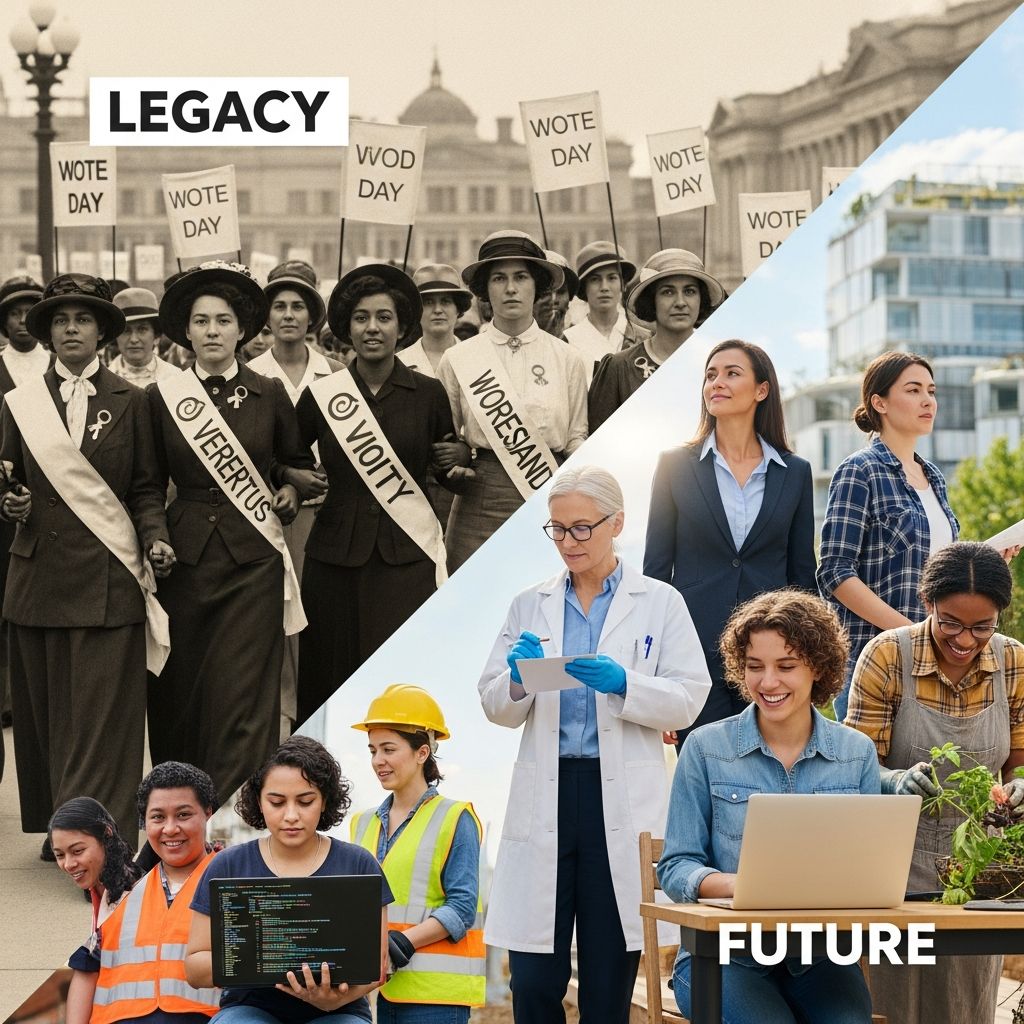
Women’s Equality Day, observed annually on August 26, honors the certification of the 19th Amendment in 1920, which granted women the right to vote in the United States. This day not only celebrates a hard-won victory but also underscores the persistent pursuit of full gender equity.
Roots of the Suffrage Struggle
The journey toward women’s voting rights began in the mid-19th century, ignited by the 1848 Seneca Falls Convention in New York, recognized as the first organized women’s rights gathering. Activists like Elizabeth Cady Stanton and Lucretia Mott drafted the Declaration of Sentiments, mirroring the Declaration of Independence to demand equal political participation.
Over decades, suffragists faced arrests, hunger strikes, and public ridicule. Key figures such as Susan B. Anthony and Alice Paul led relentless campaigns. The National American Woman Suffrage Association unified efforts, culminating in the 19th Amendment’s ratification on August 18, 1920, and certification by Secretary of State Bainbridge Colby on August 26.
The amendment states: “The right of citizens of the United States to vote shall not be denied or abridged by the United States or by any State on account of sex.” This legal milestone enfranchised millions, though barriers persisted for women of color due to discriminatory practices like poll taxes and literacy tests.
Establishing Women’s Equality Day
The formal recognition of August 26 as Women’s Equality Day emerged in the 1970s amid a resurgence of feminist activism. On the 50th anniversary in 1970, Betty Friedan and the National Organization for Women (NOW) organized the Women’s Strike for Equality, drawing over 100,000 participants in rallies across 90 cities, including a massive march down New York City’s Fifth Avenue.
This momentum prompted Representative Bella Abzug (D-NY) to introduce a bill in 1971, passed by Congress in 1973, designating August 26 as Women’s Equality Day. The joint resolution highlighted women’s historical second-class status and called for presidential proclamations to commemorate both the 1920 suffrage victory and the 1970 strike.
President Richard Nixon’s 1972 proclamation marked the first official nod, evolving into an annual tradition. Today, presidents issue statements reaffirming commitments to equality, linking past triumphs to contemporary issues.
Impact on American Democracy
The 19th Amendment transformed U.S. democracy by doubling the electorate and amplifying women’s voices in policy. Post-ratification, women entered politics: in 1920, over 300 ran for office, though few won initially. By the 21st century, this paved the way for figures like Nancy Pelosi as the first female Speaker of the House.
- Voter Turnout Surge: Women’s participation rates often exceed men’s, influencing elections on issues like education and healthcare.
- Legislative Gains: Suffrage correlated with laws on child labor, public health, and Prohibition.
- Inclusivity Gaps: Black women like Mary Church Terrell fought intersecting racism and sexism, gaining federal voting protections via the 1965 Voting Rights Act.
Women’s Equality Day emphasizes these democratic expansions while critiquing exclusions, such as Native American women denied citizenship until 1924 and ongoing voter suppression concerns.
Women Breaking Barriers in Military Service
Beyond voting, equality extends to defense. Women Veterans highlight progress: the 2013 repeal of the combat exclusion policy opened all roles, including elite units, to women.
From World War I “Hello Girls” operators to modern pilots and cyber experts, women have served valiantly. On Women’s Equality Day, their stories underscore inclusive liberty, with over 2 million women Veterans today advocating for equitable benefits and recognition.
| Era | Milestone | Impact |
|---|---|---|
| 1917-1918 | Women in Signal Corps | First official non-nurse roles abroad |
| 1948 | Women’s Armed Services Integration Act | Permanent military status |
| 2013 | Combat Exclusion Lifted | Full career path access |
| 2020s | Increased Leadership | First female service academy grads in top roles |
This table illustrates phased integration, reflecting broader equality themes.
Persistent Challenges to Gender Parity
Despite milestones, gaps remain. The gender pay gap hovers at 82 cents on the dollar for women overall, wider for mothers and women of color. Political representation lags: women hold 28% of congressional seats, far from parity.
Institutional biases persist in education, where STEM fields see underrepresentation, and workplaces, with maternity penalties. Globally, Women’s Equality Day aligns with International Women’s Day (March 8), calling for cultural shifts toward parity.
- Pay Equity: Equal work undervalued by 18-37% based on demographics.
- Leadership: Only 10% of Fortune 500 CEOs are women.
- Voting Access: Recent laws in some states disproportionately affect women voters.
These disparities demand renewed action, as suffragists envisioned comprehensive rights.
Global Echoes of the Suffrage Movement
U.S. achievements inspired worldwide reforms. New Zealand led with full suffrage in 1893; Saudi Arabia followed in 2015. Yet, 50 countries still bar married women from passports without permission, per UN data.
Women’s Equality Day spotlights transnational solidarity, paralleling UN Sustainable Development Goal 5 on gender equality. Collective efforts accelerate change, from #MeToo to climate activism led by women.
Pathways Forward: Actionable Steps
Honoring Women’s Equality Day requires commitment:
- Vote and Mobilize: Register, encourage others, support pro-equity candidates.
- Advocate Locally: Push for paid family leave and equal pay audits.
- Educate Youth: Teach suffrage history in schools to inspire future leaders.
- Amplify Voices: Elevate women in STEM, politics, and business.
- Address Intersections: Tackle racism, ableism compounding sexism.
Organizations like the League of Women Voters reframe August 26 as a reminder of unfinished work, urging “Women’s Inequality Day” awareness for targeted reforms.
Frequently Asked Questions (FAQs)
What is Women’s Equality Day?
It’s an annual U.S. observance on August 26 commemorating the 19th Amendment’s 1920 certification, granting women suffrage, and ongoing equality efforts.
Who led the 1970 Women’s Strike for Equality?
Betty Friedan and NOW organized it, with 100,000+ participants demanding job, education, and childcare equity.
Does the 19th Amendment apply to all women?
No, it excluded many women of color until later laws like the Voting Rights Act; disparities persist.
How has Women’s Equality Day evolved?
From suffrage focus to broader issues like military integration and pay equity, with presidential proclamations annually.
What can individuals do on this day?
Reflect on history, register to vote, support women’s initiatives, and advocate for policy changes.
Conclusion: Sustaining the Momentum
Women’s Equality Day bridges 1920’s triumph with today’s imperatives. By studying leaders like Abzug and Friedan, and confronting gaps, society advances toward true equity. This day calls all to action, ensuring suffrage’s promise endures.
References
- Women’s Equality Day — Wikipedia. 2023-08-26. https://en.wikipedia.org/wiki/Women’s_Equality_Day
- Celebrating Women’s Equality Day: A journey toward inclusive liberty — U.S. Department of Veterans Affairs (news.va.gov). 2022-08-26. https://news.va.gov/134226/celebrating-womens-equality-day-a-journey-toward-inclusive-liberty/
- The USA’s Women’s Equality Day provides an important platform for change — International Women’s Day. Accessed 2023. https://www.internationalwomensday.com/Missions/15559/The-USA-s-Women-s-Equality-Day-provides-an-important-platform-for-change
- Women’s Equality Day — National Women’s History Alliance. Accessed 2023. https://nationalwomenshistoryalliance.org/resources/commemorations/womens-equality-day/
- Women’s Equality Day — National Women’s History Museum. Accessed 2023. https://www.womenshistory.org/articles/womens-equality-day
- 10 Things to Know about Women’s Equality Day — Work Shield. Accessed 2023. https://workshield.com/10-things-to-know-about-womens-equality-day/
- Women’s Inequality Day — League of Women Voters. Accessed 2023. https://www.lwv.org/WID