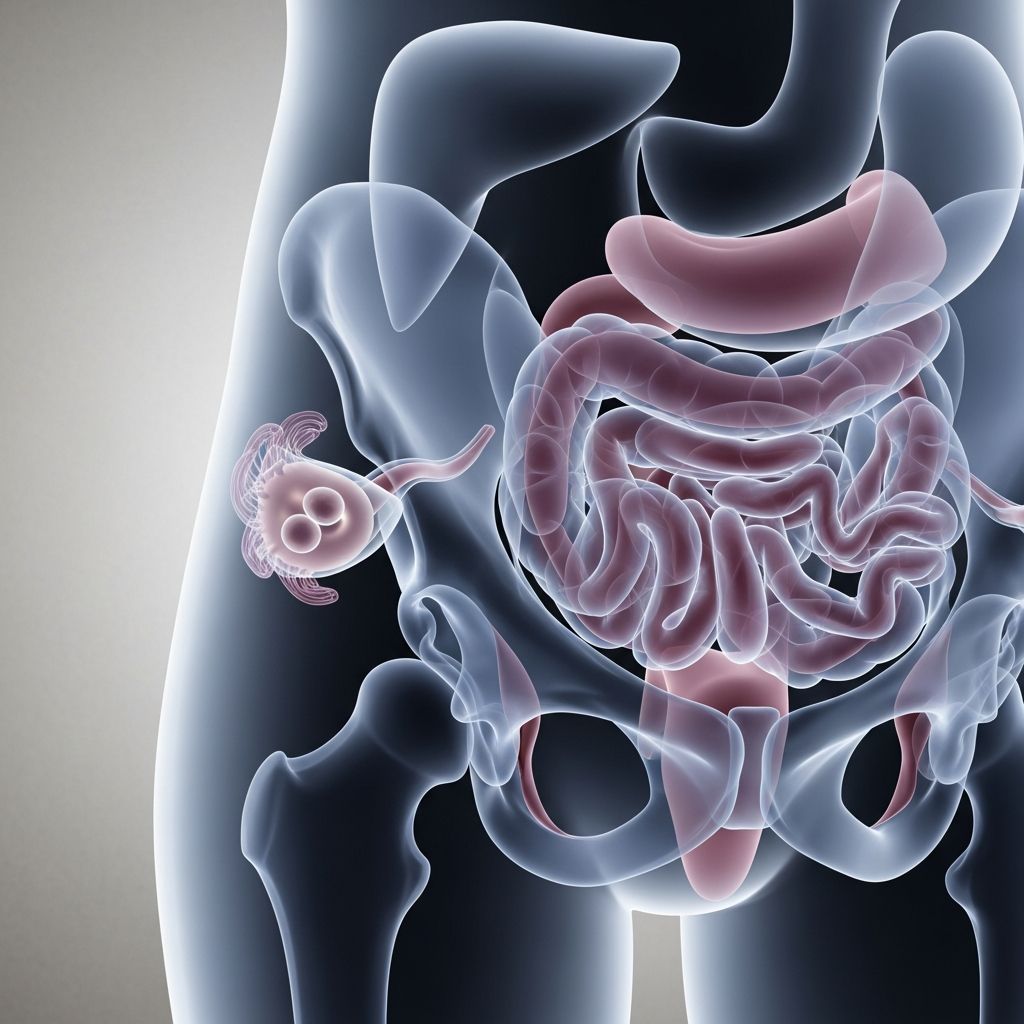
Ovarian cysts can sound frightening to any parent, especially when they are discovered in a child or teenager. In reality, many cysts are a normal part of growth and the menstrual cycle, and most go away without treatment. Still, some cysts can cause pain or complications and need careful medical attention. This guide explains what parents and caregivers need to know in clear, practical language.
What Is an Ovarian Cyst?
An ovarian cyst is a sac filled with fluid (and sometimes blood or other material) that forms on or inside an ovary. Children and teens typically have two ovaries, one on each side of the lower abdomen. Cysts can:
- Develop on one or both ovaries
- Appear as a single sac or as several sacs together
- Range from very small to several centimeters across
- Contain clear fluid, blood, or thicker material
Most ovarian cysts in children and adolescents are benign (non-cancerous). Cancerous ovarian tumors are rare in this age group, but doctors still evaluate cysts carefully to rule out anything serious.
Why Do Ovarian Cysts Happen in Young People?
Cysts can form for several reasons. Many are linked to normal ovulation, while others arise from unrelated growths or medical conditions.
1. Functional (Normal Cycle) Cysts
Functional cysts are the most common type in girls who have started menstruating. They form as part of the monthly cycle:
- Follicular cysts – develop when a follicle (the tiny sac containing an egg) grows but does not release the egg as expected.
- Corpus luteum cysts – form after ovulation, when the follicle that released the egg seals and fills with fluid or blood, like a small bruise.
These cysts are usually:
- Small
- Harmless
- Temporary, often disappearing within a few menstrual cycles without treatment
2. Nonfunctional or Growth-Related Cysts
Some cysts arise from tissue growth rather than normal hormone cycles. Common examples include:
- Cystadenomas – cysts that form on the ovary’s surface; they may contain thin, watery fluid or thicker mucus-like material.
- Dermoid cysts (teratomas) – growths that develop from early embryonic cells and can contain fat, hair, or even teeth; these are usually benign but can become large and twist the ovary.
- Endometriotic cysts – fluid-filled pockets caused by endometriosis, when tissue similar to the uterine lining grows outside the uterus and attaches to the ovary.
3. Other Risk Factors and Conditions
Doctors see ovarian cysts more often in young people who have:
- Begun having regular menstrual cycles
- Hormonal conditions that affect ovulation
- Endometriosis or severe pelvic infections
- A history of previous ovarian cysts
- Pregnancy (in older teens)
Even infants can have small ovarian cysts detected before or soon after birth, often due to temporary hormone exposure during pregnancy. Many of these resolve without treatment.
Common Signs and Symptoms
Many ovarian cysts cause no symptoms at all and are discovered by chance during an ultrasound or exam done for a different reason. When symptoms do occur, they depend on the cyst’s size, type, and whether complications are present.
Possible Symptoms of an Ovarian Cyst
- Dull or sharp pain in the lower abdomen or pelvis, often on one side
- Pain that occurs around the time of ovulation or between periods
- Pelvic pain that lingers and does not fully go away
- Bloating, a feeling of fullness, or visible swelling in the lower abdomen
- A frequent need to urinate or trouble emptying the bladder because a larger cyst presses on nearby organs
- Changes in menstrual cycles, such as delayed periods, irregular bleeding, or unusually heavy flow
- Nausea, vomiting, or loss of appetite when pain is significant
- Discomfort with certain movements, exercise, or sexual activity (in older teens)
Symptoms of Possible Emergency Complications
Rarely, a cyst can lead to sudden, serious problems. Parents should seek urgent care or call emergency services if a child or teen has:
- Sudden, severe pelvic or lower abdominal pain, especially on one side
- Pain with nausea and vomiting that appears quickly
- Fainting, extreme dizziness, or signs of shock (pale, clammy skin, fast heartbeat)
- Very tender abdomen that hurts to touch or move
These can be signs of ovarian torsion (twisting of the ovary) or a ruptured cyst with internal bleeding, both of which can require emergency surgery.
Ovarian Torsion and Cyst Rupture
Two important complications worry pediatric specialists the most: torsion and rupture.
| Complication | What It Is | Key Symptoms | Why It Matters |
|---|---|---|---|
| Ovarian torsion | The ovary twists around the tissues that support it, often due to the weight of a large cyst. | Sudden severe pain, usually on one side; nausea and vomiting; sometimes fainting or extreme distress. | Cuts off blood flow to the ovary; can permanently damage the ovary if not treated quickly; typically needs emergency surgery. |
| Cyst rupture | A cyst bursts, releasing its fluid or blood into the pelvic cavity. | Sudden sharp pain; sometimes internal bleeding with dizziness, weakness, or dropping blood pressure. | Some ruptures are mild and improve with rest; heavier bleeding may be life-threatening and require urgent care. |
How Doctors Diagnose Ovarian Cysts
Because many symptoms overlap with other conditions (such as appendicitis, urinary infections, or stomach problems), careful evaluation is important. Doctors usually follow these steps:
1. Medical History and Physical Exam
- Ask about recent pain, timing with periods, nausea, bowel or bladder changes, and past health issues.
- Review menstrual history and any use of hormonal medication.
- Perform a gentle abdominal exam to look for tenderness, swelling, or guarding.
2. Imaging Tests
The main test for ovarian cysts is a pelvic ultrasound. Using sound waves, this painless scan shows:
- Whether a cyst is present
- The cyst’s size and approximate shape
- Whether it appears filled with clear fluid, blood, or solid material
- The position of both ovaries and nearby structures
For complex cases or very large cysts, doctors may order additional imaging such as MRI to better define the anatomy.
3. Laboratory Tests
Lab work is tailored to the child’s situation and might include:
- Hormone tests – to assess menstrual and reproductive hormones
- Pregnancy test – for sexually active teens
- Blood counts and chemistry – if internal bleeding or infection is suspected
- Tumor markers – specific blood tests sometimes used when a tumor is suspected; abnormal results do not always mean cancer but guide further care
Treatment Options for Ovarian Cysts
Treatment depends on the child’s age, symptoms, cyst size, and the ultrasound appearance. In many cases, the safest plan is careful observation.
Watchful Waiting (Observation)
For typical, fluid-filled functional cysts that are small and not very painful, doctors often recommend:
- Monitoring symptoms at home
- Repeat ultrasounds after several weeks or months to confirm that the cyst has shrunk or disappeared
- Pain relief with over-the-counter medications (such as ibuprofen or acetaminophen) if advised by the clinician
Observation is common because many functional cysts resolve on their own in two to three menstrual cycles.
Medical Management
In some older children and teens, doctors may prescribe hormonal therapy (often birth control pills) to help:
- Regulate the menstrual cycle
- Reduce the chance of new functional cysts forming in the future
These medications usually do not make an existing cyst disappear instantly but can prevent additional cysts from developing.
Surgical Treatment
Surgery may be recommended when:
- The cyst is large or continues to grow over time
- Pain is severe or persistent despite conservative treatment
- The ultrasound suggests a nonfunctional cyst, such as a dermoid cyst or cystadenoma
- There is concern about ovarian torsion or rupture
- There are features that raise concern for a tumor
Pediatric surgeons and gynecologists aim to preserve as much normal ovarian tissue as possible to protect future fertility. When appropriate, surgery is often done using minimally invasive laparoscopy, involving small cuts and a tiny camera.
Impact on Fertility and Long-Term Health
Parents often worry that an ovarian cyst will harm their child’s ability to have children later. The reassuring news is:
- Most ovarian cysts do not affect long-term fertility.
- Functional cysts that come and go with the menstrual cycle are part of normal ovarian function.
- Even after surgery, doctors usually remove only the cyst and leave healthy ovarian tissue in place whenever it is safe to do so.
In rare situations where an entire ovary must be removed (for example, with severe torsion damage), the remaining ovary can still often produce hormones and release eggs.
Helping Your Child Cope
For children and teens, pelvic pain and tests involving the reproductive organs can be confusing or embarrassing. Parents can help by:
- Explaining in age-appropriate terms what the ovaries do and why doctors are checking them
- Encouraging questions and involving the child in decisions when possible
- Reassuring them that most cysts are not cancer and that many disappear without surgery
- Tracking symptoms in a diary, including pain, timing in the cycle, and any bleeding patterns, to share with the care team
When to Call the Doctor
Contact your child’s doctor or pediatric gynecologist if your child or teen has:
- Repeated or ongoing lower abdominal or pelvic pain
- New pain around mid-cycle or between periods
- Changes in menstrual patterns such as very heavy bleeding or prolonged cycles
- Bloating, a feeling of pressure, or a noticeable lump in the lower abdomen
- Pain that interferes with school, sports, or sleep
Seek emergency care right away for sudden severe pain, intense nausea and vomiting, fainting, or signs of shock, as these may indicate torsion or significant bleeding.
Frequently Asked Questions (FAQs)
Q: Are ovarian cysts common in children and teenagers?
Yes. Ovarian cysts are relatively common in girls and teens, especially after puberty. Many are normal functional cysts related to the menstrual cycle and go unnoticed because they cause no symptoms.
Q: Do ovarian cysts in teens usually mean cancer?
No. Most ovarian cysts in children and adolescents are benign and not cancerous. Although ovarian tumors can occur, especially when cysts appear complex or solid, cancer is rare in this age group. Ultrasound and, when needed, blood tests help doctors assess risk.
Q: Can my child still have children in the future if she has an ovarian cyst?
In most cases, yes. Functional cysts do not damage the ovaries, and many nonfunctional cysts can be removed surgically while preserving normal ovarian tissue. Even if one ovary is damaged or removed in rare cases, the remaining ovary often provides enough function for normal puberty and potential fertility.
Q: Will birth control pills cure an existing ovarian cyst?
Hormonal contraceptives typically do not make a current cyst disappear right away. Instead, they are used to reduce the risk of new functional cysts forming by preventing ovulation. Your child’s doctor will decide whether this approach is appropriate.
Q: How often will my child need follow-up if a cyst is found?
Follow-up depends on the cyst’s size, type, and symptoms. Many children have a repeat ultrasound in a few weeks or months to ensure the cyst is shrinking or gone. More complex or larger cysts may require closer monitoring or consultation with a pediatric gynecologist.
Q: Is there anything we can do at home to prevent ovarian cysts?
There is no guaranteed way to prevent all cysts, especially functional ones associated with normal cycles. Maintaining regular check-ups, tracking symptoms, and following your doctor’s guidance on hormonal treatments (when recommended) are the best steps. Healthy habits like balanced nutrition, regular exercise, and managing stress support overall reproductive health.
References
- Ovarian Cysts in Children and Teens — Mass General for Children. 2019-11-22. https://www.massgeneral.org/children/ovarian-cysts
- Adolescent Ovarian Cysts and Tumors — Children’s Health. (Accessed 2025). https://www.childrens.com/specialties-services/conditions/ovarian-cysts
- Ovarian Cyst and Torsion: Symptoms, Diagnosis and Treatment — Nationwide Children’s Hospital. (Accessed 2025). https://www.nationwidechildrens.org/conditions/ovarian-cyst-and-torsion
- Ovarian Cysts — Children’s Hospital Colorado. (Accessed 2025). https://www.childrenscolorado.org/conditions-and-advice/conditions-and-symptoms/conditions/ovarian-cysts/
- Ovarian Cysts — Boston Children’s Hospital. (Accessed 2025). https://www.childrenshospital.org/conditions/ovarian-cysts
- My Daughter Has an Ovarian Cyst — Texas Children’s Hospital. 2016-01-11. https://www.texaschildrens.org/content/wellness/my-daughter-has-ovarian-cyst