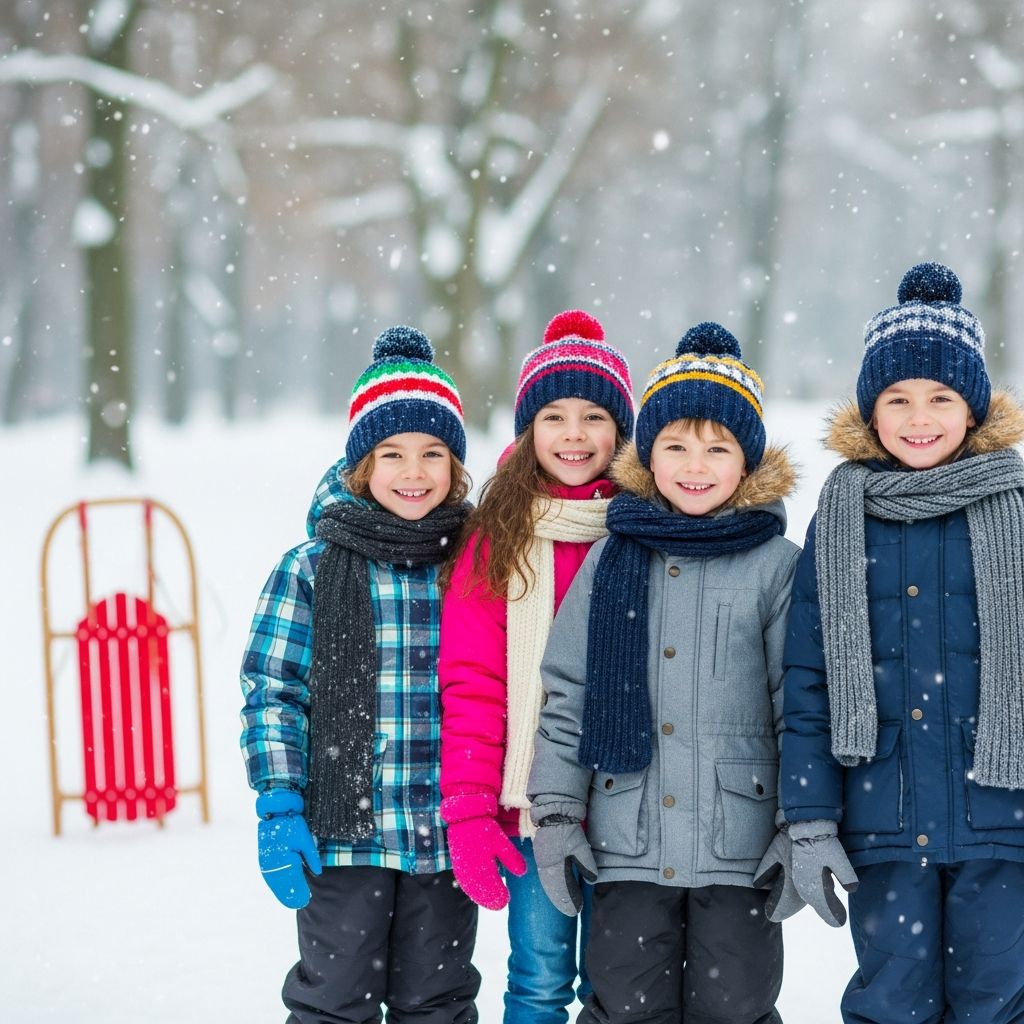
Winter brings joyful activities like building snowmen and sledding down hills, but it also poses risks such as hypothermia, frostbite, and injuries from slips or collapses. Parents play a crucial role in supervising play and selecting safe gear to minimize dangers. This guide draws from pediatric and safety experts to help families enjoy the season securely.
Mastering Layered Clothing for Optimal Warmth
The foundation of winter safety starts with dressing children appropriately to trap body heat and repel moisture. Opt for multiple thin layers rather than a single heavy coat, allowing kids to adjust as they heat up during play. Begin with a moisture-wicking base layer like synthetic fabrics or wool, followed by an insulating fleece middle layer, and top with a windproof, waterproof shell.
- Use hats that cover ears fully, as up to 40% of body heat escapes from the head.
- Choose mittens over gloves for better insulation, ensuring fingers stay together for warmth.
- Fit boots with waterproofing and extra room for thick socks, enabling toe movement to boost circulation.
- Replace scarves with neck gaiters to avoid choking hazards from loose strings or drawstrings.
Infants require one extra layer beyond what adults wear, and always swap wet clothes immediately to prevent chilling. Bright colors enhance visibility near roads or in low light.
Recognizing and Preventing Cold-Related Injuries
Frostbite and hypothermia threaten young bodies faster than adults due to smaller size and higher surface-area-to-volume ratio. Frostbite appears as pale, numb skin on extremities, ears, or nose; hypothermia brings shivering, confusion, and drowsiness. Limit outdoor time when wind chill drops below -28°C (-18°F), keeping children indoors during storms.
| Condition | Warning Signs | First Aid Steps |
|---|---|---|
| Frostbite | Pale or waxy skin, numbness, blisters | Warm affected area in lukewarm water (not hot), do not rub, seek medical help |
| Hypothermia | Intense shivering, slurred speech, fatigue | Move to warm place, remove wet clothes, wrap in blankets, offer warm fluids |
Schedule frequent indoor breaks for hot drinks and dry clothing changes. Apply broad-spectrum sunscreen to exposed skin, as UV rays reflect off snow even on cloudy days.
Guidelines for Safe Sledding Adventures
Sledding thrills children but demands clear rules to avoid collisions or spinal injuries. Select gentle slopes free of trees, fences, roads, ponds, or parking lots, ensuring a soft landing zone.
- Mandate helmets designed for skiing or hockey, not biking, for impact protection.
- Insist on sitting upright or kneeling to maintain control and reduce head injury risk.
- Choose sleds with secure handholds and no sharp edges; avoid saucers for better steering.
- Supervise younger kids closely and ban headfirst sliding.
Steer clear of crowded hills to prevent pile-ups, and never sled in streets, even if closed.
Essential Rules for Ice Skating Security
Ice skating requires verified thick ice—at least 10 cm (4 inches)—checked by adults via local authorities. Avoid rivers or areas near moving water where thickness varies unpredictably.
- Equip with properly fitted skates offering ankle support and a certified helmet.
- Obey signage: yellow for caution, red for prohibition.
- Constant adult supervision prevents falls into thin spots.
For backyard rinks, test ice daily and clear debris.
Skiing and Snowboarding Best Practices
These sports demand lessons from certified instructors, especially for beginners under 10 whose coordination is developing. Helmets with side vents aid hearing, and wrist guards protect against common fractures.
- Stick to marked trails matching skill levels; heed closure signs.
- Wear vibrant clothing, warm layers, and avoid icy or obstructed slopes.
- For backcountry, monitor weather and pack extra gear against sudden frostbite risks.
Younger children should snowboard only with professional guidance.
Safe Snow Play and Construction Tips
Snow forts and tunnels risk collapse and suffocation; prohibit their construction. Keep play away from plowed snow banks where vehicles might intrude unseen.
- Ban snowball fights to safeguard eyes from impacts, particularly with packed snow.
- Select open yards distant from roads, fences, or water for snowmen and angels.
- Buddy systems for kids over 8; direct supervision for under 8.
Teach avoidance of cold metal surfaces to prevent tongue adhesion.
Snowmobile Operation and Passenger Rules
Head injuries dominate snowmobile fatalities, so helmets are non-negotiable. Children under 5 never ride; under 16 never drive. Require formal safety training for operators and ban towing kids on inner tubes.
Stick to trails, avoiding roads and frozen waterways.
Indoor and Home Winter Preparedness
Prepare homes with emergency kits: blankets, flashlights, batteries, water, non-perishables, first aid, and medications. Winterize heating systems and use cat litter on icy walkways.
- Remove puffy coats before car seat buckling for secure harness fit.
- Stock vehicles with kits including hats, gloves, and snacks for stranding.
- Ensure hydration; cold air dries out little ones quickly.
Check smoke detectors and carbon monoxide alarms amid increased indoor heating.
Frequently Asked Questions (FAQs)
What temperature is too cold for kids outside?
When wind chill hits -28°C (-18°F) or below, keep children indoors to avoid frostbite.
Should kids wear sunscreen in winter?
Yes, snow reflects UV rays; apply to exposed skin daily.
Are bicycle helmets safe for sledding?
No, use ski or hockey helmets for better winter impact protection.
How often should kids take breaks during snow play?
Every 20-30 minutes for under 5s, more frequently if wet or windy.
Can young kids ride snowmobiles?
No, under 5s prohibited; under 16s cannot operate.
Quick Winter Safety Checklist
| Category | Key Actions |
|---|---|
| Clothing | Layers, hat, mittens, waterproof boots, no drawstrings |
| Play Areas | Away from roads, water, plows; supervised |
| Activities | Helmets always; check ice thickness; no forts/tunnels |
| Emergency | Kits ready, wet clothes off, warm drinks |
References
- Winter safety tips for parents and children — PMC – NIH. 2009-12-01. https://pmc.ncbi.nlm.nih.gov/articles/PMC2794526/
- Winter safety tips for kids — Michigan State University Extension. 2023-01-15. https://www.canr.msu.edu/news/winter-safety-tips-for-kids
- Playing Outside in Winter: Tips to Keep Kids Warm & Safe — American Academy of Pediatrics. 2024-11-20. https://www.healthychildren.org/English/safety-prevention/at-play/Pages/Winter-Safety.aspx
- Keeping Children Safe During Winter Break — Prevent Child Abuse America. 2023-12-10. https://preventchildabuse.org/resources/keeping-children-safe-during-winter-break/
- Winter Safety Tips for Children — Cardinal Pediatrics. 2024-01-05. https://www.cardinalpd.com/blog/winter-safety-tips-for-children
- Winter Health and Safety Tips for Kids — Children’s Hospital Colorado. 2024-12-01. https://www.childrenscolorado.org/just-ask-childrens/articles/winter-safety-tips-for-kids/
- Winter Safety Tips — Seattle Children’s Hospital. 2024-10-15. https://www.seattlechildrens.org/health-safety/injury-prevention/winter-safety-tips/