Wildfire smoke contains fine particles and chemicals that deeply penetrate young lungs, making children far more vulnerable than adults to immediate and lasting health effects amid intensifying climate-driven fires.
Why Children Face Greater Risks from Wildfire Smoke
Children’s physiology heightens their susceptibility to wildfire pollutants. They inhale more air per pound of body weight due to faster breathing rates and higher activity levels outdoors, drawing in higher doses of harmful PM2.5 particles—tiny specks that lodge deep in developing lungs.
Unlike adults, kids’ nasal passages filter fewer particles, allowing more toxins into the bloodstream. Their immune systems, still maturing, trigger stronger inflammation and infection risks. Wildfire-specific PM2.5 proves about 10 times more damaging to respiratory health than typical urban pollution.
- Higher breathing rates increase pollutant intake per hour.
- Smaller airways absorb particles more readily.
- Greater outdoor time amplifies exposure.
- Developing organs face stunted growth from repeated hits.
Globally, around 270,000 children under age 5 die yearly from landscape fire smoke, mostly in low-resource areas, with respiratory diseases as the top killer.
Immediate Health Effects on Young Lungs and Bodies
Smoke inhalation sparks acute reactions in kids, overwhelming emergency rooms with respiratory distress cases. Common signs include persistent coughing, wheezing, chest tightness, and labored breathing—worse for those with asthma or allergies.
| Symptom | Description | High-Risk Groups |
|---|---|---|
| Wheezing or Coughing | Noisy breathing, frequent coughs signaling airway irritation. | Asthma sufferers |
| Shortness of Breath | Rapid, heavy breathing; rib retractions in infants. | Children with allergies |
| Eye/Nose/Throat Irritation | Burning, stinging sensations; runny eyes. | All exposed kids |
| Fatigue or Dizziness | Lethargy, lightheadedness from oxygen deprivation. | Active outdoor players |
Beyond breathing woes, smoke triggers headaches, sore throats, and heightened infection susceptibility as particles inflame airways. Ozone spikes from fires add chest pain and further lung damage.
Prenatal and Early Developmental Impacts
Exposure starts harming before birth: Pregnant individuals breathing smoke in early pregnancy face higher preterm birth odds, low birth weights, reduced infant height, and a 43% spina bifida risk. Postnatally, black carbon from fires appears in breast milk, potentially disrupting infant brain, organ, and immune growth.
Studies link childhood exposure to bronchitis surges, chronic respiratory diseases, and pneumonia in regions like central Chile. Repeated hits may permanently impair lung capacity, raising lifelong illness risks.
Mental Health Toll of Wildfire Smoke and Fires
Beyond physical strain, wildfires breed psychological strain in youth. Climate anxiety, displacement trauma, and acute stress hit hard, especially unhoused kids. Smoke’s lingering haze fosters fear, compounding respiratory woes with emotional distress.
Effective Strategies to Shield Kids from Smoke
Parents can drastically cut exposure through proactive steps, prioritizing indoor safety when air quality plummets.
- Monitor Air Quality: Use apps tracking AQI; avoid outdoors above 150.
- Seal the Home: Close windows/doors, run AC on recirculate, use HEPA filters.
- Limit Outdoor Time: Keep play indoors during poor air; reschedule events.
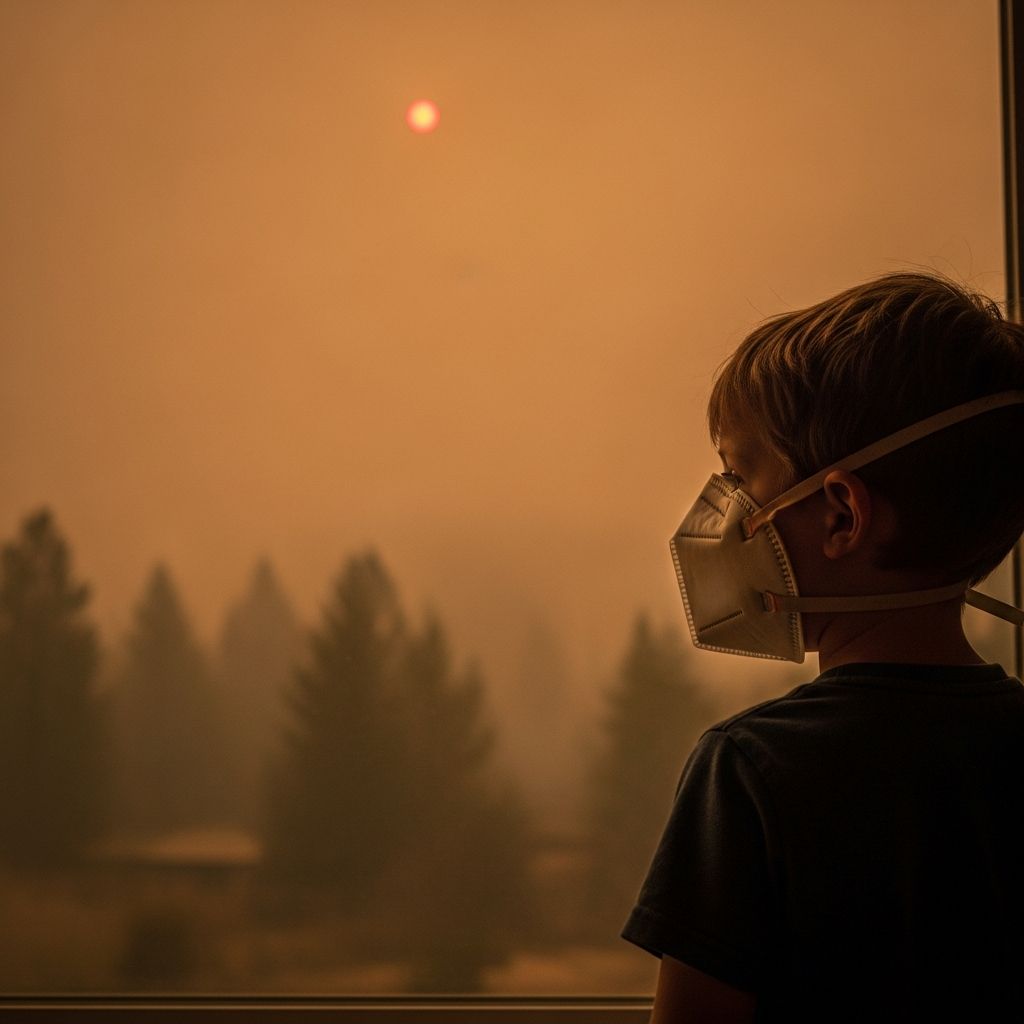
- Protect During Evacuation: Wear N95 masks if available; cover noses/mouths.
For high-risk kids, stock rescue inhalers and consult pediatricians early.
Recognizing When to Seek Urgent Medical Help
Act fast on severe signs: unrelenting wheezing, blue lips, extreme fatigue, or rescue meds needed over every 4 hours signal emergencies—call 911 immediately.
- Ribs sucking in during breaths (retractions).
- Pale or bluish skin tone.
- Unusual drowsiness despite rest.
Long-Term Protection Amid Rising Wildfires
As climate change fuels fiercer fires, repeated exposures worry experts for kids’ lung development. Advocate for better global monitoring, borderless protections, and research—especially in vulnerable nations bearing 99% of child smoke deaths.
Build resilience: Maintain updated asthma plans, invest in quality air purifiers, and educate schools on smoke protocols.
Frequently Asked Questions About Wildfire Smoke and Children
Why are kids hit harder by wildfire smoke than grown-ups?
Children breathe faster, spend more time outside, and have developing lungs that absorb PM2.5 deeply, making smoke 10x more toxic to their respiratory systems.
What symptoms demand a doctor’s visit right away?
Heavy wheezing, chest pain, rapid breathing with retractions, or dizziness—especially if inhalers fail—require immediate ER care.
Can wildfire smoke affect unborn babies?
Yes, early pregnancy exposure links to preterm births, low weights, and birth defects like spina bifida.
How do I make my home smoke-proof?
Seal gaps, use HEPA filters, recirculate AC, and avoid fans pulling in outside air during high AQI.
Does smoke harm linger after the fire ends?
Ash and fine particles persist, damaging airways and raising infection risks even in seemingly clear air.
Building Community Resilience to Smoke Events
Schools and neighborhoods must prepare: Indoor recess policies, air quality alerts, and community purifier shares save lives. Policymakers need to fund monitoring and equity-focused protections for low-income areas.
By staying informed and vigilant, parents safeguard their children’s health against this growing threat.
References
- The world’s children suffer brunt of wildfire smoke health impacts — Mongabay. 2025-07-01. https://news.mongabay.com/2025/07/the-worlds-children-suffer-brunt-of-wildfire-smoke-health-impacts/
- Wildfire Smoke Is a Threat to Children’s Health — Public Policy Institute of California (PPIC). 2023. https://www.ppic.org/blog/wildfire-smoke-is-a-threat-to-childrens-health/
- Wildfires and Health | Climate, Kids, and Health — Harvard T.H. Chan School of Public Health. Accessed 2026. https://hsph.harvard.edu/research/climate-health-c-change/climate-kids-and-health/wildfires-and-health/
- Wildfire smoke exposure and early childhood respiratory health — National Institutes of Health (PMC). 2023-06-12. https://pmc.ncbi.nlm.nih.gov/articles/PMC10294519/
- Protect Children from Wildfires, Smoke, and Volcanic Ash — US Environmental Protection Agency (EPA). Accessed 2026. https://www.epa.gov/children/protect-children-wildfires-smoke-and-volcanic-ash
- Wildfire Smoke and Kids: Health Effects — Children’s Hospital Colorado. Accessed 2026. https://www.childrenscolorado.org/just-ask-childrens/articles/wildfire-smoke/
- Wildfires: What Parents Need to Know — American Academy of Pediatrics (HealthyChildren.org). Accessed 2026. https://www.healthychildren.org/English/safety-prevention/at-home/Pages/Wildfires-Information-for-Parents.aspx
- Wildfire Smoke and Children — Centers for Disease Control and Prevention (CDC). Accessed 2026. https://www.cdc.gov/wildfires/risk-factors/wildfire-smoke-and-children.html