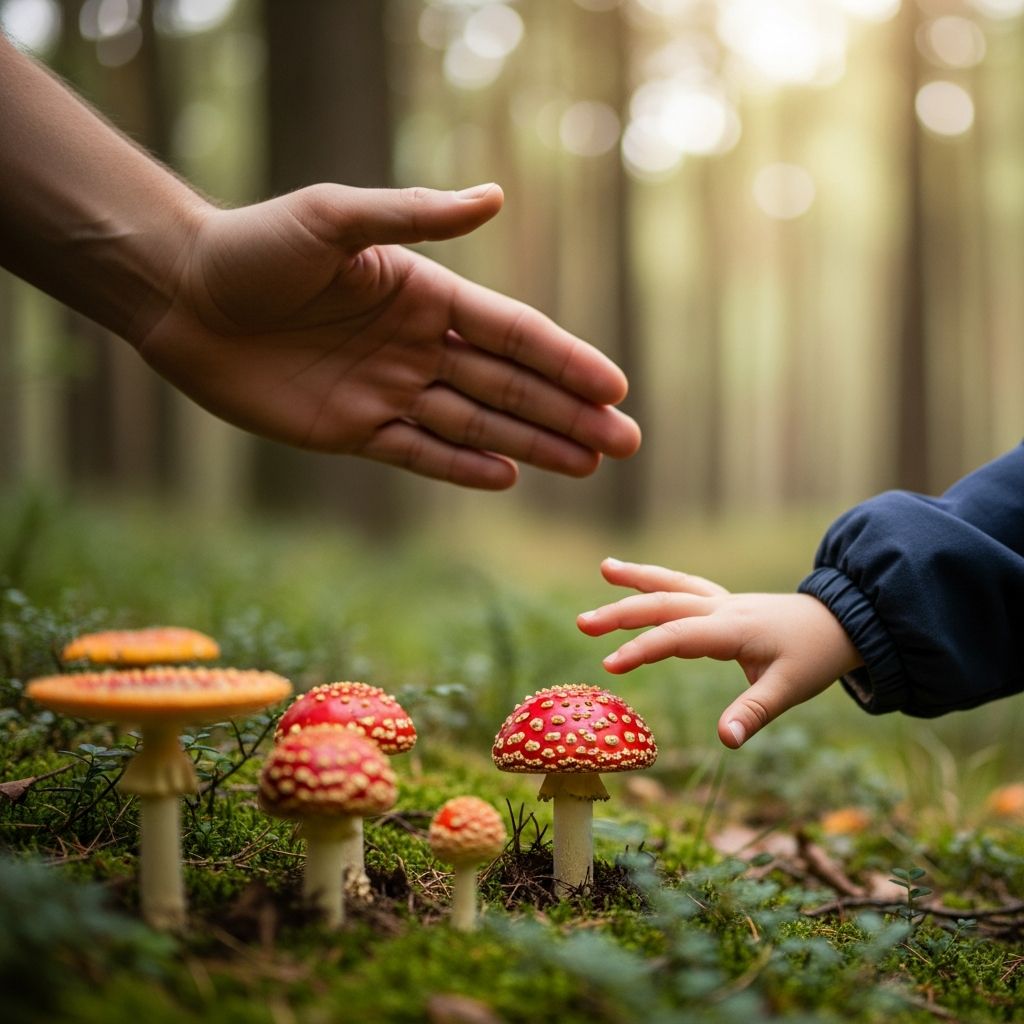
Wild mushrooms appear in lawns, parks, and woodlands, especially after rain, posing significant risks to children who may mistake them for toys or snacks. These fungi can cause severe illness or death, with young kids under six being particularly vulnerable due to their curiosity and small body size. Parents must prioritize education and vigilance to safeguard their families from these deceptive natural hazards.
Why Children Face Greater Risks from Fungi
Children’s natural inclination to explore outdoors exposes them to wild mushrooms sprouting in backyards, playgrounds, and forests. Unlike adults, kids often lack the judgment to avoid touching or tasting unfamiliar growths. Data from poison control centers shows most pediatric cases involve children younger than six, who frequently ingest mushrooms while playing unsupervised.
Mushrooms thrive in damp conditions, such as those following fall rains, leading to sudden proliferations in Northern California and similar regions. Even seemingly harmless-looking varieties can harbor potent toxins that mimic edible types, making visual identification unreliable without expert knowledge.
- Young children explore with their hands and mouths, increasing accidental ingestion chances.
- Toxins affect small bodies more intensely, amplifying symptoms like vomiting and organ damage.
- Many toxic species emerge alongside safe ones, heightening confusion during family nature walks.
Common Toxic Mushrooms Lurking in Everyday Areas
Several deadly fungi blend seamlessly into familiar environments. The death cap (Amanita phalloides), a frequent culprit in recent California outbreaks, grows near oaks, pines, and hardwoods. Its greenish cap and white gills resemble safe edibles, but even a single bite can trigger liver failure.
Other hazards include false morels and Amanita species, which cause delayed symptoms that complicate timely treatment. In Michigan, over 50 toxic fleshy mushrooms exist, ranging from gastric upset inducers to lethal varieties.
| Mushroom Type | Appearance | Key Risks | Common Locations |
|---|---|---|---|
| Death Cap | Greenish cap, white stem | Liver damage, death | Near oaks, pines |
| False Morels | Brain-like cap, irregular | Seizures, organ failure | Woodlands, lawns |
| Yellow-Staining | White cap, yellows when bruised | Gastrointestinal distress | Grassy areas |
| Fly Agaric | Red cap with white spots | Hallucinations, coma | Under trees |
Even ‘edible’ mushrooms like raw morels or those from certain trees can sicken people, underscoring that no amateur foraging is safe.
Symptoms of Mushroom Poisoning: Act Fast
Ingestion effects vary by species but often start subtly. Initial signs include nausea, vomiting, diarrhea, and abdominal pain, appearing 6-24 hours post-exposure for death caps. Deceptively, these may subside, masking severe liver and kidney damage emerging 48-96 hours later.
Hallucinogenic types like those with psilocybin or muscimol cause dizziness, confusion, heightened heart rate, and perceptual distortions. High doses risk seizures, psychosis, or coma, especially in kids.
- Early phase: Stomach upset, dehydration (within hours).
- Delayed phase: Jaundice, organ failure (days later).
- Neurological: Hallucinations, drowsiness, panic.
Recent 2025 California cases reported 21 poisonings, including child hospitalizations and one death, highlighting the urgency.
Prevention Strategies for Families
The simplest rule is never consume wild mushrooms; purchase only from reputable stores. Supervise children outdoors rigorously, teaching them fungi are off-limits.
In yards, remove mushrooms promptly upon sighting, using gloves to avoid spore spread. Educate kids: “Mushrooms are not food or toys.” Keep pets away, as they too succumb easily.
- Inspect play areas daily after rain.
- Store purchased mushrooms securely.
- Avoid areas with heavy fungi growth during outings.
- Teach refusal of unknown ‘candies’ resembling mushroom edibles.
For foragers, consult mycologists only; even experts err, as toxic look-alikes abound.
Navigating Edible Mushroom Products and Trends
Commercial ‘edible mushroom’ snacks, like gummies or bars sold in shops, often contain unregulated hallucinogens such as psilocybin or muscimol. Marketed for mental health, they evade FDA oversight, risking contaminants or mislabeling—critical concerns for households with kids.
Parents should lock away supplements, verify packaging, and discuss stranger dangers extending to novelty foods. If discovered, discard immediately.
Emergency Response: What to Do If Ingestion Occurs
Suspect ingestion? Do not induce vomiting. Contact poison control at 1-800-222-1222 immediately for guidance. Provide mushroom details, photos, or samples if possible—refrigerate a portion for medical review.
Rush to the ER if symptoms appear; treatments like activated charcoal or antidotes work best early. In severe cases, liver transplants become necessary.
Frequently Asked Questions
Can cooking make wild mushrooms safe?
No, toxins in death caps and similar species resist boiling, frying, or drying. Always avoid wild ones entirely.
Are store-bought mushrooms risk-free?
Yes, when from trusted retailers, but check unregulated ‘edible’ products for hidden hallucinogens.
How do I child-proof my yard against fungi?
Mow frequently, remove growths with gloves, and supervise play closely after rains.
What if my pet eats a mushroom?
Contact a vet urgently; pets suffer similar poisonings. Prevent access.
Is mushroom foraging ever safe for families?
Only with certified experts, but experts advise against it due to misidentification risks.
Building Long-Term Awareness in Children
Turn safety into teachable moments: Use books, apps, or park walks to identify dangers. Role-play refusal scenarios. Community programs on local flora enhance knowledge without encouraging picking.
Seasonal vigilance peaks in wet months, but year-round habits prevent complacency. Empower kids with facts: Fungi families vary, with thousands of Michigan species alone, only dozens reliably safe when expertly handled.
Even safe edibles demand caution—inky caps clash with alcohol, chicken of the woods varies by host tree. Allergies add unpredictability.
Regional Hotspots and Climate Influences
Wet falls boost growth, as seen in 2025 Sonoma and Bay Area clusters. Victoria, Australia, notes autumn surges of yellow-stainers and death caps.
Parents in mushroom-prone areas should monitor advisories from health departments like CDPH.
By fostering caution, families enjoy nature safely, avoiding tragedies from these silent threats.
References
- Sonoma County Health Officer Issues Advisory to Not Eat Wild Mushrooms — Sonoma County Government. 2023-12-01. https://sonomacounty.gov/sonoma-county-health-officer-issues-advisory-to-not-eat-wild-mushrooms-after-death-of-county-resident
- Edible Mushroom Products: What Parents Should Know — Cincinnati Children’s Hospital Medical Center. 2024-05-15. https://blog.cincinnatichildrens.org/safety-and-prevention/edible-mushroom-products-what-parents-should-know/
- Did You Know Some Edible Mushrooms Can Still Make You Sick? — Michigan State University Extension. 2023-04-10. https://www.canr.msu.edu/news/did_you_know_some_edible_mushrooms_can_still_make_you_sick
- California Warns Against Foraging Mushrooms After Cluster of Poisonings — CBS News. 2025-11-28. https://www.cbsnews.com/sanfrancisco/news/california-warning-wild-foraged-mushroom-poisonings-death-caps/
- Severe, Potentially Fatal Liver Damage in Children and Adults After Eating Foraged Wild Mushrooms — California Department of Public Health. 2025-12-05. https://www.cdph.ca.gov/Programs/OPA/Pages/CAHAN/Foraged-Wild-Mushrooms.aspx
- Mushroom Poisoning — Better Health Channel, Victoria Government. 2023-09-20. https://www.betterhealth.vic.gov.au/health/healthyliving/mushroom-poisoning