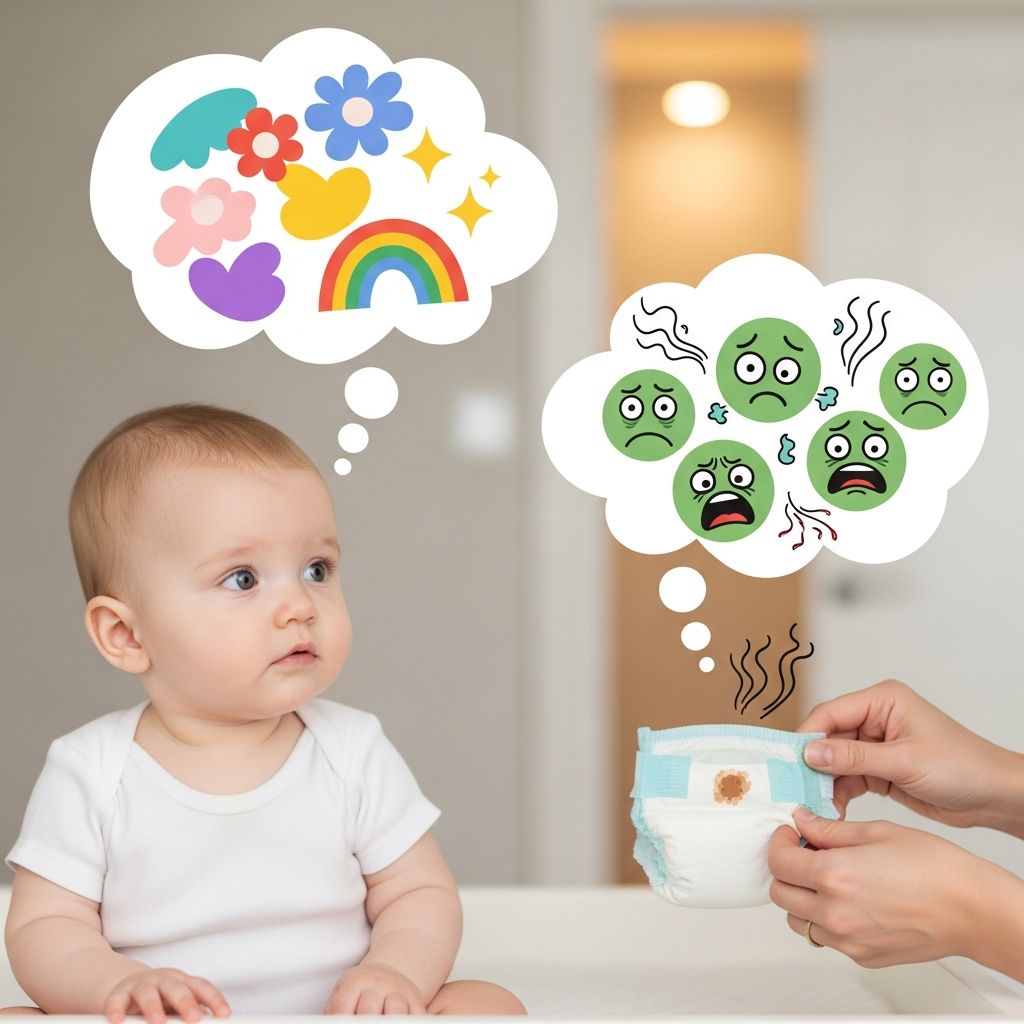
Most new parents eventually notice a strange truth: their own baby’s dirty diaper seems almost tolerable, while another child’s mess can feel unbearable. This isn’t denial or wishful thinking. It is a real, measurable effect shaped by biology, psychology, and the daily realities of caregiving.
The Odd Comfort of Familiar Stink
Disgust exists to protect humans from germs, parasites, and disease. Feces, spoiled food, and rot typically trigger a strong disgust reaction that helps people avoid danger. Yet parenting requires working directly with many of these disgusting cues, especially poop, on a daily basis.
Over time, your baby’s specific smell profile becomes familiar, predictable, and emotionally linked to nurturance. That combination can make the same odor that would repulse a stranger feel merely unpleasant, or even oddly tolerable, to a parent.
How the Brain Learns to Tolerate Poop
The brain constantly updates its responses to repeated experiences. When the same odor appears over and over without catastrophic consequences, the brain may quiet its alarm signals. In the context of parenting, this means the smell of one particular baby’s poop can become less intense over time.
This process, often described as desensitization or habituation, does not mean the smell disappears. Instead, the brain classifies it as familiar, expected, and manageable, which softens the emotional punch of disgust.
Disgust: A Protective Emotion with a Parenting Problem
Disgust evolved as an early-warning system, encouraging people to avoid things that can transmit illness, such as excrement, bodily fluids, and decomposing matter. If this system were rigid and inflexible, it could interfere with crucial caregiving behaviors—for example, changing a diaper promptly or cleaning up a sick child’s mess.
Humans appear to have a flexible disgust system that adjusts for situations where care and contact are necessary. Parenting is one of the clearest examples, because raising a helpless infant requires frequent exposure to disgust-eliciting substances.
Love, Bonding, and the Nose–Heart Connection
Emotions strongly shape how smells are perceived. Love, attachment, and a sense of responsibility can reduce the intensity of disgust, even when the underlying odor has not changed. The brain blends sensory input with emotional context to form the final experience.
When a parent looks at their baby, the feelings of warmth, protectiveness, and bonding can dampen the negative emotional reaction to unpleasant smells. The same diaper on a stranger’s child does not benefit from that emotional cushion, so it smells far worse.
Why Your Baby’s Poop Smells “Less Bad” Than Others
Studies that ask parents to rate the odor of dirty diapers usually find a consistent pattern: people judge their own child’s feces as less disgusting than another child’s. This difference persists even when labels are removed or swapped, suggesting that parents can often recognize something unique about their baby’s smell.
Two explanations are commonly discussed. First, repeated exposure trains parents to accept their baby’s odor as normal. Second, subtle chemical cues could help signal genetic relatedness, quietly influencing how the odor is perceived.
Key factors behind the “less bad” effect
- Familiarity: Constant exposure makes your baby’s specific odor profile feel predictable rather than shocking.
- Emotional bond: Strong feelings of attachment soften the emotional impact of gross smells.
- Biological cues: Body odors often carry information about kinship, and the brain may respond differently to related versus unrelated scents.
- Context: A diaper change is framed as care and responsibility, not as an attack on your senses, which alters the whole experience.
Nature, Nurture, and the Smell of Kin
Human body odors—breath, sweat, skin, and feces—carry biological information. Research shows that people can often tell close relatives from unrelated individuals using only scent. Parents may also recognize developmental stages or changes in their child’s body odor.
This sensory information can support bonding and help guide caregiving. Even if parents are not consciously aware of these cues, the brain may be using them to adjust emotional responses, including how intensely disgust is felt.
Everyday Parenting: How Your Nose Adapts
Daily routines slowly train parents’ noses. The first few diaper changes might feel overwhelming, but over the weeks and months, many parents report that the discomfort becomes easier to manage. This shift is a sign that the brain is adjusting to a new normal.
That does not mean you are immune to odor. Rather, you have become more efficient at processing it, in the same way that people adapt to the smell of their own home, workplace, or favorite foods.
Common experiences parents report
- Early diaper changes provoke strong gag reflexes, but this response fades with time.
- Your own baby’s diaper seems manageable, yet another child’s diaper at daycare feels far worse.
- Smells from your baby that would horrify an unaccustomed visitor might barely register for you.
- You notice subtle changes in odor that signal illness or a new food, even while outsiders simply smell “gross.”
When Poop Smell Becomes a Health Clue
Although familiarity can soften the disgust reaction, parents often become excellent at detecting changes in their baby’s normal odor pattern. Sudden shifts in smell, color, or consistency can indicate infections, dietary reactions, or other health issues.
Because your baseline tolerance is higher for your own child, you may be quicker to notice when something seems off. This sensitivity can be helpful when deciding whether to call a pediatrician or monitor symptoms at home.
| Observation | Possible Meaning | Action for Parents |
|---|---|---|
| Sudden, unusually foul odor compared to typical diapers | Digestive upset, infection, or a reaction to new formula or food | Monitor for fever, vomiting, or behavior changes; contact a healthcare professional if concerned. |
| Very sour or acidic smell with frequent loose stools | Possible viral illness or temporary intolerance to certain foods | Watch hydration, diaper rash, and frequency; seek medical advice if symptoms persist or worsen. |
| Metallic, chemical, or extremely unusual odor | Less common but potentially significant dietary or medical issue | Call a pediatrician, especially if accompanied by other unusual symptoms. |
| Gradual change after starting solids | Normal transition as the gut adjusts to new foods | Expect stronger smells; track which foods cause noticeable changes. |
Practical Tips to Cope with Diaper Duty
Even if your baby’s poop smells relatively tolerable to you, diaper changes can still be challenging. Good preparation, smart strategies, and a sense of humor can make the job more manageable and less stressful.
These tips support both physical comfort and emotional resilience, especially during the early months when everything feels new and overwhelming.
Strategies for easier diaper changes
- Keep supplies within reach so the process is quick and efficient.
- Use disposable bags or a tightly sealing pail to contain odors after each change.
- Crack a window, use a fan, or light a safe, unscented or mild-scent candle away from the changing area.
- Breathe through your mouth briefly during the worst moments to reduce the intensity of the smell.
- Use fragrance-free wipes and products if your baby has sensitive skin, even if scented items might mask odor.
- Change diapers promptly to reduce prolonged exposure to strong smells and prevent diaper rash.
Partner Dynamics and the “Who Changes More Diapers?” Debate
In many households, one caregiver often changes more diapers than the other, whether due to parental leave, work schedules, or personal comfort. The more frequently someone handles diaper duty, the more quickly their disgust response tends to soften for that particular baby.
This can fuel playful arguments about who is more “immune” or who deserves more credit. Recognizing that adaptation is partly a function of exposure can help couples divide responsibilities more fairly and understand why one partner may genuinely struggle more at first.
When You Still Can’t Stand the Smell
Not every parent quickly adjusts to diaper odors. Some individuals are more smell-sensitive, have a stronger gag reflex, or are dealing with pregnancy-related nausea or other conditions that amplify scent sensitivity. This does not mean they love their baby less or are failing as a caregiver.
If diaper changes consistently cause intense distress, couples can negotiate a more balanced arrangement, such as trading certain chores for more frequent diaper duty by the less sensitive partner, or using extra odor-control strategies during the most challenging periods.
Emotional Reframing: From “Gross Task” to “Care Ritual”
How a task is framed in the mind alters how it feels. Seeing diaper changes as an act of care—similar to feeding, bathing, or soothing—can reduce feelings of resentment and magnify feelings of purpose. This shift can make even the smellier diapers feel like part of a meaningful routine.
Some parents use diaper time to talk, sing, or play brief games with their baby, turning a potentially unpleasant task into a moment of connection. The stronger the positive association, the weaker the disgust reaction tends to feel over time.
Key Takeaways for New Parents
Understanding why your baby’s poop smells less awful to you can be oddly reassuring. It means your brain and body are doing exactly what they are designed to do: balancing protection from germs with the need to care for a vulnerable child.
- Your disgust system is flexible enough to allow you to nurture your baby without being paralyzed by revulsion.
- Familiarity, love, and possible biological cues all combine to soften your perception of your own baby’s smells.
- Over time, most parents become better at both tolerating and interpreting their child’s unique odor patterns.
- Struggling with diaper duty is normal; it improves with practice, support, and a bit of humor.
Frequently Asked Questions
1. Is it normal that my baby’s poop doesn’t bother me much?
Yes. Many parents report that their own baby’s poop smells noticeably less disgusting to them than another child’s. This response reflects a mix of emotional bonding, repeated exposure, and the brain’s ability to adjust its disgust reaction to support caregiving.
2. Why does someone else’s baby’s diaper smell so much worse?
Because you do not share the same level of familiarity or emotional bond with another child, your brain treats that odor as more foreign and potentially threatening. Without the cushioning effect of attachment and repeated exposure, disgust reactions are typically stronger.
3. Can my baby’s poop smell tell me if they are sick?
Changes in smell, especially when combined with shifts in color, texture, or frequency, can sometimes signal illness or digestive issues. If the odor suddenly becomes unusually strong, sour, metallic, or otherwise alarming, and you notice other symptoms such as fever, lethargy, or poor feeding, it is wise to contact a healthcare professional.
4. I still gag during diaper changes. Is something wrong with me?
No. People vary widely in their sensitivity to smell and their threshold for disgust. Some parents adapt quickly, while others continue to find diapers difficult. Using practical strategies like good ventilation, quick changes, and task-sharing with a partner can help.
5. Does tolerance to my baby’s poop mean I am less careful about hygiene?
Not necessarily. Feeling less disgust does not have to translate into being less responsible. As long as you wash your hands thoroughly, dispose of diapers properly, and clean the changing area, you can be both comfortable and careful. In fact, feeling less overwhelmed by smell can make it easier to maintain a calm, consistent hygiene routine.
6. Will this “nose immunity” last forever?
Your nose adapts to what you experience regularly. As your child grows and their diet changes, their odor profile will shift too. You may continue to feel more tolerant of their smells than of others’, but specific odors can still surprise you if they are particularly intense or new.
Ultimately, the mystery of why your baby’s poop smells less terrible to you than to anyone else is not a sign that you are overlooking something. It is a sign that your brain, body, and emotions have aligned to make hands-on care possible, even when that care involves the messiest parts of parenthood.