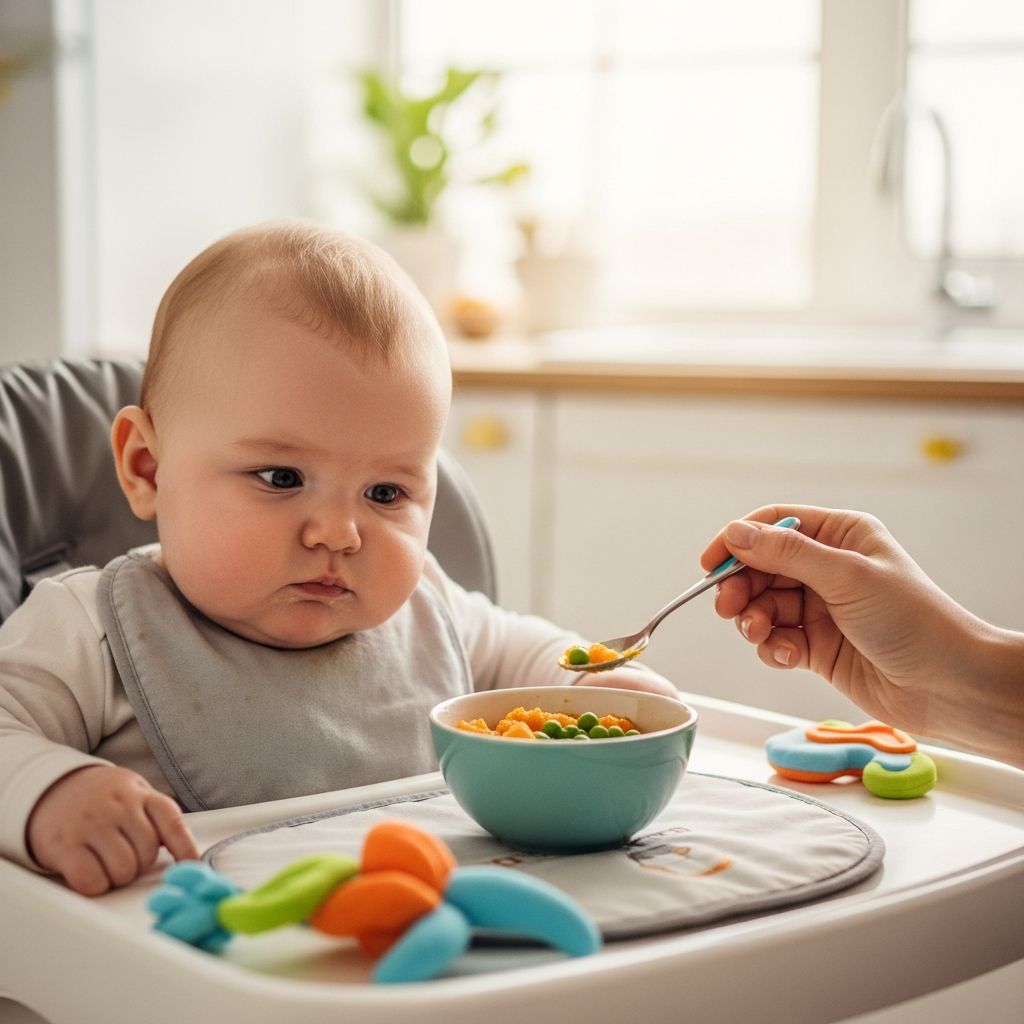
Few things worry parents more than a baby who turns away from a lovingly prepared meal. You measure, mash, steam, and stir, only to watch your little one clamp their mouth shut, bat the spoon away, or happily fling food on the floor. If this sounds familiar, you are not alone—and it rarely means anything is “wrong” with your baby.
This guide explains why some babies resist solids, how to check that your child is ready, and what you can gently change in your routine and mindset to help food feel safe, fun, and pressure-free. You will also find a sample schedule, practical tips, and FAQs to ease anxiety and prevent mealtime battles.
Understanding What “Refusing Solids” Really Means
“Refusal” can look very different from one baby to another, and sometimes what seems like rejection is actually normal exploration. Before assuming there is a serious problem, it helps to define what is actually happening at the table.
- True refusal: Baby consistently turns their head, pushes food away, or cries when solids are offered, over a period of days or weeks.
- Low interest: Baby tastes a little, plays with food, or only eats a few bites before losing focus and preferring milk.
- Food play: Smearing, squishing, dropping, and examining food is a key part of learning, not poor eating. It can still feel stressful, but it is actually progress.
Rather than judging a meal by how much your baby swallows, try to notice whether they are calm, curious, and willing to come to the table. Those are powerful early wins.
Is Your Baby Ready For Solids Yet?
Age alone does not guarantee readiness. Many babies are offered solids around six months, but some need more time. What matters most is your child’s development, not the calendar or what older relatives did decades ago.
Key signs of readiness
- Can sit with minimal support and keep head and neck steady.
- Shows interest in what others are eating—watching, grabbing, or leaning toward food.
- Opens mouth when food is offered and can move it around rather than pushing it straight back out.
- Has largely lost the strong tongue-thrust reflex that automatically pushes food out.
If several of these signs are missing, your baby may simply not be developmentally ready yet. In that case, stepping back for a week or two and trying again can be more effective than pushing harder.
Common Reasons Babies Turn Down Solids
There is rarely a single cause, but understanding the most common reasons can help you brainstorm small, realistic changes in your routine.
1. Still filling up on milk
Breast milk or formula remains the main source of nutrition in the first year, but if your baby takes large feeds right before solid meals, they may simply not be hungry enough to care about food.
- Very full babies often lick or taste small amounts and then lose interest quickly.
- Spacing milk feeds away from mealtimes can help babies arrive to the table with a gentle appetite instead of a full stomach.
2. Texture and taste feel overwhelming
Some babies dislike thin, runny purées, while others are wary of lumps or chewy textures. Strong flavors or unexpected temperatures can also spark resistance.
- Babies who gag easily may benefit from gradual exposure to thicker textures.
- Others eat far better when they can pick up soft pieces with their hands instead of being spoon-fed.
3. Teething, illness, or general discomfort
Sore gums, ear infections, colds, reflux, and constipation can temporarily reduce interest in food. In those moments, a baby who normally enjoys solids may suddenly refuse, which can be confusing if you are not expecting it.
- During discomfort, cool, soft foods may be accepted better than firm or scratchy textures.
- Once your baby feels better, interest in solids often returns on its own.
4. Tiredness, distractions, and big feelings
Learning to eat requires focus. If solids are offered when your baby is about to nap, overstimulated, or intensely distracted, food is unlikely to win their attention.
- Overly busy environments with screens, toys, or constant movement can pull attention away from eating.
- A baby who feels pressured or rushed may resist food as a way to assert control.
5. Negative or confusing past experiences
A choking scare, repeated gagging, or being forced to finish bites can make a baby wary of solids. Even one frightening experience can lead to tension, both for the child and for the adult.
- Babies are highly sensitive to caregiver stress; tension at the table can reinforce avoidance.
- Rebuilding trust often requires going slower, offering easier textures, and removing all pressure to swallow.
Building a Calm, Responsive Feeding Approach
A responsive feeding style focuses on reading your baby’s cues and respecting them, instead of deciding in advance how much they “should” eat. This approach may take patience, but it lays the foundation for a healthy relationship with food.
Core principles of responsive feeding
- You decide what food is offered, where, and when.
- Your baby decides whether to eat and how much.
- Pressure, coaxing, and bribing are replaced with gentle repetition and calm routines.
When babies feel in control of what happens in their mouths, they are more likely to explore food, even if it takes many exposures before they truly dive in.
Setting Up Mealtimes for Success
Small environmental changes can make solids feel safer and more appealing. Think of mealtimes as learning sessions rather than performance tests.
Practical setup tips
- Use a supportive high chair where baby sits upright with feet resting on a footrest or stable surface for better control.
- Keep the table mostly clear: a few pieces of food and a cup are plenty for a new eater.
- Turn off screens and minimize background noise so your baby can focus.
- Eat together whenever possible so your child can watch you chew, smile, and enjoy your own food.
Smart Scheduling: Balancing Milk and Solids
A thoughtful routine can help your baby arrive to meals a little hungry but not desperate. The exact timing depends on age, nap schedules, and feeding style, but a consistent rhythm makes solids more predictable for both of you.
Sample day for a baby around 6–9 months
| Time of Day | What to Offer | Goal |
|---|---|---|
| Morning wake-up | Breast or bottle feed | Meet primary hunger with milk |
| 1–2 hours later | Breakfast solids | Gentle hunger, low pressure exploration |
| Midday | Milk feed, then nap | Comfort and rest |
| After nap | Lunch solids | Practice with new textures and flavors |
| Late afternoon | Milk feed | Top up energy |
| Early evening | Dinner solids (optional at first) | Extra exposure if baby is in good mood |
| Bedtime | Milk feed | Wind-down and overnight nutrition |
This is only an example. Some babies start with one small meal per day and build up gradually; others jump in with more enthusiasm. Follow your child’s cues instead of forcing a schedule to match anyone else’s routine.
Choosing Foods That Encourage Exploration
When a baby is hesitant, the goal is not to create the “perfect” menu, but to offer foods that are safe, easy to handle, and nutritionally meaningful over time. You can use purees, soft finger foods, or a combination, depending on what suits your baby best.
Gentle starter foods
- Very soft vegetables such as steamed carrots or sweet potato, cut into easy-to-grip shapes.
- Ripe fruits like banana or avocado, either mashed or in thick strips for self-feeding.
- Iron-rich options such as smooth meats, mashed lentils, or enriched cereals mixed to a thicker texture over time.
- Protein-rich foods like scrambled egg (if already cleared by your health provider) or soft tofu cubes.
Offer the same foods many times, in slightly different forms, rather than constantly introducing entirely new items. Familiarity builds comfort, and most babies need multiple exposures before accepting a new taste.
Managing Gagging, Mess, and Parent Anxiety
One of the biggest barriers to relaxed mealtimes is caregiver fear. Gagging sounds scary, mess feels overwhelming, and well-meaning comments from others can leave you doubting yourself. Addressing these emotional pieces matters just as much as choosing the right foods.
Gagging versus choking
- Gagging is noisy and often comes with coughing or retching; it is the body’s way of learning where food can safely go.
- Choking is quieter and far more serious; learning infant first aid and cutting food to safe sizes can help you feel more confident.
If gagging is frequent, stick with softer textures and avoid distractions while your baby eats, so they can concentrate on moving food safely in their mouth.
Accepting the mess
- Use a large bib, a washable mat under the chair, and easy-to-wipe surfaces to lower stress.
- Remind yourself that squishing, rubbing, and dropping food is part of sensory learning, not misbehavior.
The more comfortable you become with the learning process, the easier it is to keep your tone light and your expectations realistic.
When to Pause and Seek Professional Advice
Most babies who resist solids for a short season eventually warm up with time and repeated, low-pressure exposure. Still, certain signs mean it is wise to ask a pediatrician, dietitian, or feeding specialist for personalized guidance.
Red flags to discuss with a professional
- Persistent refusal of nearly all solids beyond several weeks, despite calm, repeated attempts.
- Noticeable difficulty swallowing, frequent coughing during feeds, or a history of significant choking.
- Poor weight gain, dehydration, or fewer wet diapers than usual.
- Signs of pain with eating, such as arching, crying, or pulling at the ears or mouth.
- Concerns about possible food allergies, digestive issues, or developmental delays.
Getting support is not a sign of failure. It is simply one more way of caring well for your child and for yourself.
Gentle Progress: What Improvement Can Look Like
Progress with a cautious eater rarely looks like a sudden jump from zero bites to full baby-sized meals. It tends to be subtle and gradual. Watching for small changes can keep you encouraged and help you notice what is working.
Small wins to celebrate
- Your baby now touches the food willingly, even if they do not eat much yet.
- They bring food to their lips, lick it, or hold it in their mouth for a moment.
- They stay at the table more calmly, even when they decline some foods.
- They start accepting one or two familiar foods more regularly, even if variety is limited at first.
By focusing on these markers instead of grams or spoonfuls, you reinforce that mealtimes are about learning and connection, not perfection.
Frequently Asked Questions
How long is it “normal” for a baby to live mostly on milk?
Milk remains the main source of nutrition through most of the first year, so it is common for babies to take only small amounts of solids at first. As long as growth, hydration, and development are on track, gradual progress with solids over months is usually acceptable.
Should I ever withhold milk so my baby eats more solids?
Withholding milk in a strict or punitive way can backfire and increase anxiety around both breast and bottle feeds. A better approach is to gently adjust timing—offering solids when your baby is a little hungry, but still ensuring overall milk intake stays appropriate for their age.
What if my baby will only eat one or two foods?
Many babies cling to favorite foods for a while as they build confidence. Continue to serve those “safe” foods alongside one or two other options without fanfare; over time, familiarity and curiosity often pull them toward a slightly wider menu.
Is it okay to use toys or screens to distract my baby so they eat more?
Distraction may seem to work in the short term, but it makes it harder for children to listen to their own hunger and fullness cues. Focusing on connection, conversation, and modeling healthy eating usually supports better long-term habits.
How can I stay calm when family members are pressuring me?
Try to remember that older relatives often carry advice from a different era, when feeding guidelines were not the same as today’s. You are allowed to set gentle boundaries, such as thanking them for caring and explaining that you are following current medical recommendations and your pediatric provider’s guidance.
Final Thoughts for Worried Parents
A baby who resists solids can stir up guilt, frustration, and fear, especially when it feels like everyone else’s child is sucking down purées or devouring finger foods. Yet feeding is not a race, and your baby’s pace does not reflect your worth as a parent.
By checking for developmental readiness, making small adjustments to your routine, and approaching meals with patience and curiosity, you give your child what they need most: a sense of safety at the table. Over time, that safety is what opens the door to real enjoyment of food—and that matters far more than how many bites they take today.