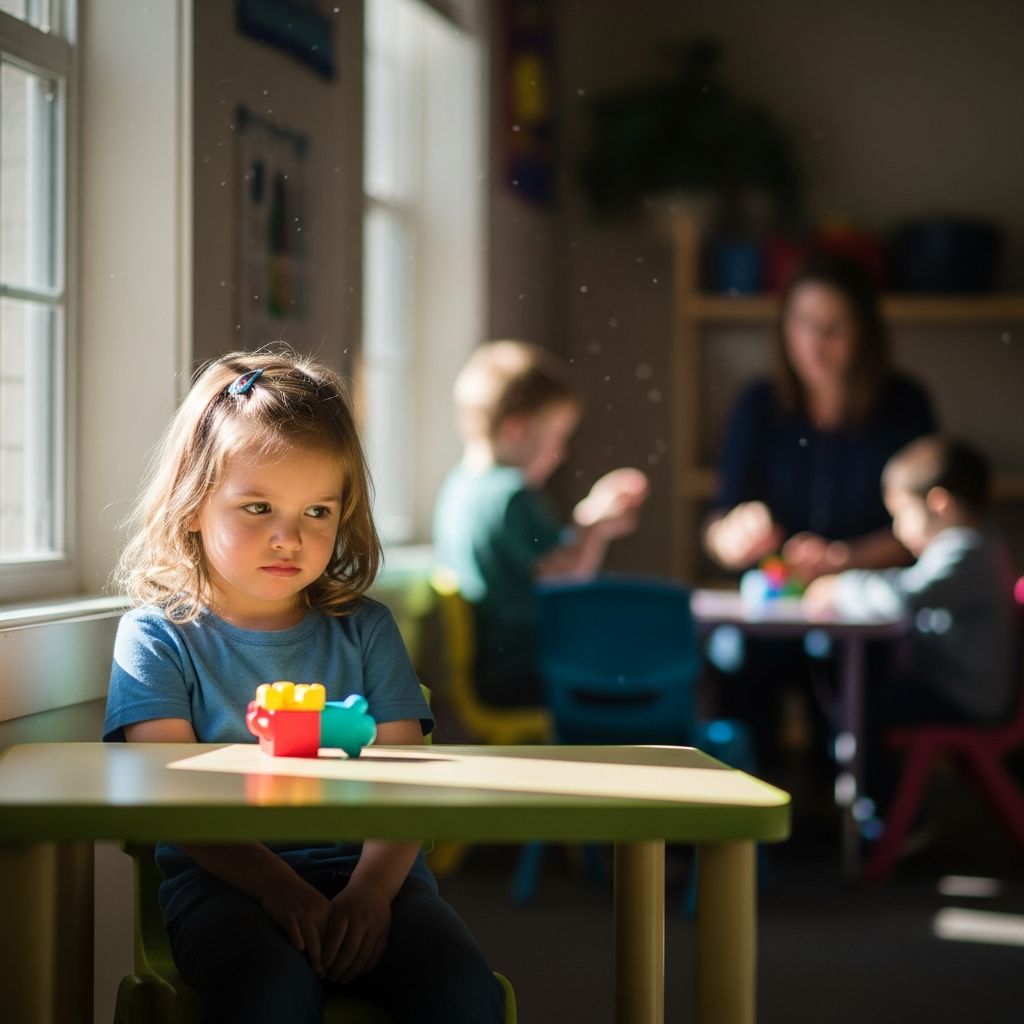
It can be confusing and upsetting to hear that your lively, talkative child barely whispers a word in preschool. At home, your 3-year-old may sing, argue, tell long stories, and shout for snacks. In the classroom, the same child might freeze, avoid eye contact, and seem almost unable to speak. This mismatch often leaves parents wondering: Is my child just shy, being stubborn, or is something else going on?
For many children, this pattern is not defiance—it is a form of intense anxiety often described as selective mutism. Understanding what is happening beneath the silence is the first step toward helping your child feel safer, more confident, and eventually more talkative in school.
What Is Selective Mutism in Young Children?
Selective mutism is usually described as a consistent pattern where a child talks comfortably in some situations—such as at home with family—but rarely or never speaks in other settings where speech is expected, like school, playdates, or activities. The key point is that the child can speak but feels unable to do so when anxiety is high.
In preschoolers, this may look like:
- Speaking freely with parents and siblings at home but staying silent with teachers.
- Answering questions at home but only nodding, shrugging, or pointing at school.
- Talking to one special friend at school but going quiet around the rest of the class.
Selective mutism is not laziness or manipulation. It is a fear-based response, similar to a “freeze” reaction. The child may want desperately to say something and yet feel physically blocked from getting words out.
Shyness, Speech Delay, or Something More?
Some children are naturally slow to warm up in new environments, and many toddlers pass through phases where they cling or go quiet. That is not automatically a problem. The difference with selective mutism is that the silence is:
- Persistent: It shows up over weeks or months, not just on the first few days of school.
- Situation-specific: The child talks in some places but feels unable to speak in others.
- Interfering: The child’s ability to learn, make friends, or participate in class is clearly affected.
It is also possible for a child to have both selective mutism and other challenges, such as language delay or social communication difficulties. That is one reason a careful, supportive evaluation can be so helpful: it clarifies what is anxiety, what might be a language issue, and what the child needs most right now.
Why a 3-Year-Old Might Stop Talking at School
There is no single cause of selective mutism, and parents do not create it by being either “too strict” or “too soft.” Instead, several factors tend to overlap. Common contributors include:
- Temperament: Many children with selective mutism are naturally cautious, sensitive, and easily overwhelmed by new situations or crowds.
- Anxiety: Fear of being watched, judged, or making a mistake can lead a child to freeze as soon as attention is directed their way.
- Change and separation: Starting preschool, separating from parents, or moving homes can all amplify anxiety.
- Language or speech challenges: If a child struggles with pronunciation or grammar, they may worry about being laughed at and become more hesitant to speak.
- Sensory sensitivities: Loud, busy classrooms can feel chaotic to a sensitive child, making their body go into high-alert mode where speech feels impossible.
The important theme here is that the child is not making a conscious choice to be mute. Silence, for them, has become a protective shield against overwhelming feelings.
How Selective Mutism Can Show Up in Everyday Life
Every child’s pattern is different, but many parents notice some of the following “split personality” traits:
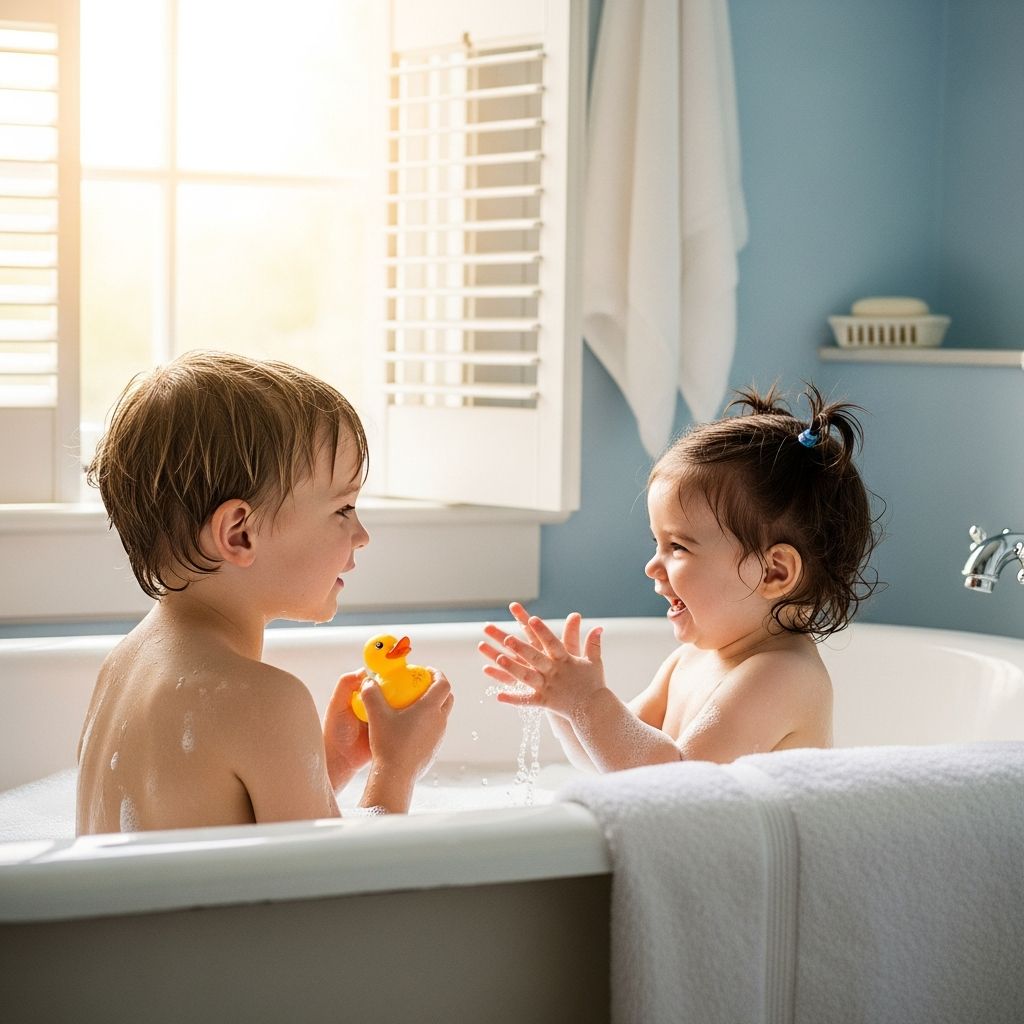
- At home, the child can be energetic, strong-willed, and loud.
- In public, the same child clings to a parent, looks down, and avoids speaking.
- Teachers may describe the child as “sweet and well behaved” because they never cause trouble—but they also rarely speak.
Some children look visibly tense in school, with a stiff posture, flat facial expression, or wide eyes. Others appear simply quiet and compliant, which can make the problem easy to overlook. Parents often feel that teachers are seeing a completely different child than the one they know at home.
| At Home | At Preschool or Daycare |
|---|---|
| Talks freely, sings, argues, jokes. | Rarely speaks, or whispers only to a parent. |
| Shows big emotions and strong opinions. | Appears very quiet, passive, or easygoing. |
| Initiates play and conversation with family. | Waits for others to approach or follows silently. |
| Asks many questions. | Relies on gestures, nods, or facial expressions. |
What Not to Do: Common Reactions That Backfire
Parents naturally want to help their child connect and participate. Unfortunately, some well-meant approaches increase pressure and make speaking even harder. If your 3-year-old is very quiet at school, try to avoid:
- Publicly urging “Say hi!” or “Use your words!” when your child is already anxious.
- Comparing your child to more outgoing classmates or siblings.
- Labeling your child as “rude,” “dramatic,” or “manipulative.”
- Speaking for them instantly in every anxious moment, which can unintentionally confirm that they “can’t” talk.
- Criticizing teachers in front of your child, which can make school feel even less safe.
These reactions come from love and worry, but they signal to the child that speaking is a test they keep failing, instead of a skill they will grow into with support.
Creating a Calm Base at Home
Home is the child’s safest place. Strengthening this base does not mean avoiding all stress; it means helping your child feel seen, understood, and capable. Some foundational steps include:
- Normalize feelings: Use simple language like, “Sometimes your voice gets shy at school. That is okay. Grown-ups can help.”
- Separate the child from the challenge: Instead of “You are shy,” try “Your talking muscles feel tight at school right now.”
- Protect sleep and routines: Tired children have less capacity to handle anxiety. Predictable mornings and evenings lower overall stress.
- Play out school scenes: Use dolls, stuffed animals, or toy figures to act out drop-off, circle time, and saying “no” or “stop” in play. This gives your child a sense of control.
When home feels emotionally safe, children are more ready to tackle small, manageable challenges in the wider world.
Partnering with Teachers Without Blame
Preschool staff can be powerful allies. The goal is not to pressure them into “fixing” the problem overnight, but to build a shared understanding. Consider:
- Scheduling a calm conversation outside of drop-off or pick-up time.
- Briefly sharing what your child is like at home, so teachers see the whole picture.
- Explaining that your child’s silence is driven by anxiety, not defiance.
- Discussing simple, concrete supports the teacher can offer (see the next section).
Most educators have worked with very quiet children before and appreciate being trusted partners rather than blamed or criticized. When home and school respond consistently, children learn that adults understand and can help.
Practical Strategies Teachers Can Use
Each classroom is different, but some approaches tend to reduce pressure and help anxious children warm up. You can gently suggest strategies such as:
- Warm-up time: Allow the child to arrive a few minutes early to settle in with a trusted adult before the room fills up.
- Nonverbal participation: Let the child point, nod, show picture cards, or place objects in a basket to answer questions.
- Small-group moments: Offer activities in pairs or tiny groups, where speaking may feel less intimidating than in front of the whole class.
- No spotlight calling-on: Avoid sudden “Now you speak in front of everyone” moments; instead, invite and accept any small attempt the child is ready for.
- Neutral reactions: When the child doesn’t answer, the teacher can simply move on without scolding or fussing.
Small adjustments like these reduce the sense that speaking is a high-stakes performance, making it more likely that the child will experiment with using their voice when ready.
Step-by-Step Support: Building Tiny Speaking Wins
Helping a child with selective mutism is not about one big breakthrough moment. It is more like physical therapy for a tight muscle: gentle, repeated practice in situations that are challenging but not overwhelming. This often includes:
- Starting where the child already speaks: For example, playing with a parent and the teacher in a quiet corner after school.
- Adding one small challenge at a time: Maybe the teacher listens from slightly farther away, then later joins more directly.
- Using playful tasks: Games like “telephone,” puppets, or silly sound games can make speech feel less serious.
- Reinforcing effort, not volume: Celebrate even a whisper or a single word as a brave step, without making a huge fuss.
This gradual approach is sometimes called “shaping” or “stepladder” work. The idea is to keep your child on the edge of their comfort zone—challenged but not flooded with fear.
Using Rewards Thoughtfully (Without Bribing)
Rewards can support progress if they are used to acknowledge courage rather than to pressure performance. Some guidelines:
- Focus on bravery: “You tried to answer when Ms. Lee asked your name. That was brave. Let’s put a sticker on your courage chart.”
- Keep rewards small and consistent: Stickers, special time with a parent, or choosing the bedtime story work better than big prizes.
- Avoid bargaining in the moment: Threats or last-minute deals (“ If you don’t talk today, no tablet later”) increase anxiety and shame.
Think of rewards as spotlights for effort: they highlight steps your child has already taken rather than trying to force steps they are not ready for.
When to Seek Professional Help
Some children gradually warm up with gentle support from parents and teachers. Others remain very silent across months or show intense distress at school. In those situations, it is wise to consult a professional who has experience with young children and anxiety.
You might consider reaching out if:
- Your child has spoken very little or not at all in school for more than a month or two after settling in.
- The silence is interfering with learning, friendships, or basic needs (for example, refusing to ask to use the bathroom).
- Your child seems highly anxious in many settings, not just school.
A child psychologist, pediatric mental health clinician, or speech-language pathologist familiar with selective mutism can help map out a tailored plan. Seeking help is not an admission of failure; it is a way of giving your child extra tools and support.
Looking After Yourself as a Parent
Watching your child struggle can trigger deep worry, guilt, or even anger. Many parents of selectively mute children feel judged, misunderstood, or torn between pushing and protecting. It helps to remember:
- Your child’s silence is not a direct reflection of your parenting.
- Change with anxiety tends to be slow and uneven; progress often comes in tiny steps.
- You deserve support too—whether from a partner, friend, parenting group, or counselor.
Taking care of your own stress level is not selfish. Children are very sensitive to adult tension; when you have more emotional reserves, you will be able to offer the calm, steady presence your child needs.
Frequently Asked Questions
Is my child just being stubborn?
It may look like refusal from the outside, but for most children with selective mutism, silence is not a choice. They often describe feeling “stuck” or “frozen,” even when they want to speak. Treating the problem as defiance usually adds shame and fear, which makes talking even harder.
Will my child grow out of it?
Some children improve as they become more comfortable in school and as their language skills grow. However, when intense anxiety is involved, simply waiting can allow the pattern to become more entrenched. Gentle, proactive support—at home, at school, and, if needed, with a professional—gives your child the best chance to gain confidence sooner.
Should I tell my child’s classmates about the problem?
In most cases, it is helpful for teachers to quietly set the tone that everyone has different comfort levels with talking. This can be done without labeling your child. Simple messages like, “Some friends use quiet voices and some use loud voices; both are okay,” can reduce social pressure and prevent teasing.
Is selective mutism the same as autism?
No. Selective mutism is primarily related to anxiety about speaking in certain situations. Autism involves broader differences in social communication, flexibility, and sensory processing. A child can have one, the other, or both, which is why a professional evaluation is valuable if you are unsure.
What can I do this week to help?
Start small. Choose one or two strategies that feel manageable: perhaps a short, positive check-in with your child’s teacher; a simple courage chart at home; or five minutes a day of pretend school play with dolls or stuffed animals. Consistency matters more than intensity. Over time, these small steps build a sense of safety and capability that supports your child’s emerging voice.
Helping Your Child Find Their Voice
When a 3-year-old will not talk in school but chatters constantly at home, it is easy to feel stuck between worry and frustration. Yet silence does not mean your child is being willful or unkind. It is a signal of how big and loud the world feels to them right now. With understanding, patience, and a collaborative plan between home, school, and—when needed—professionals, most children can gradually move from frozen quiet to cautious whispers, and from whispers to a voice that feels safer to share.
Your job is not to force that voice out, but to stand beside your child as they discover that the world is a little less scary than it feels—and that their words are welcome when they are ready.