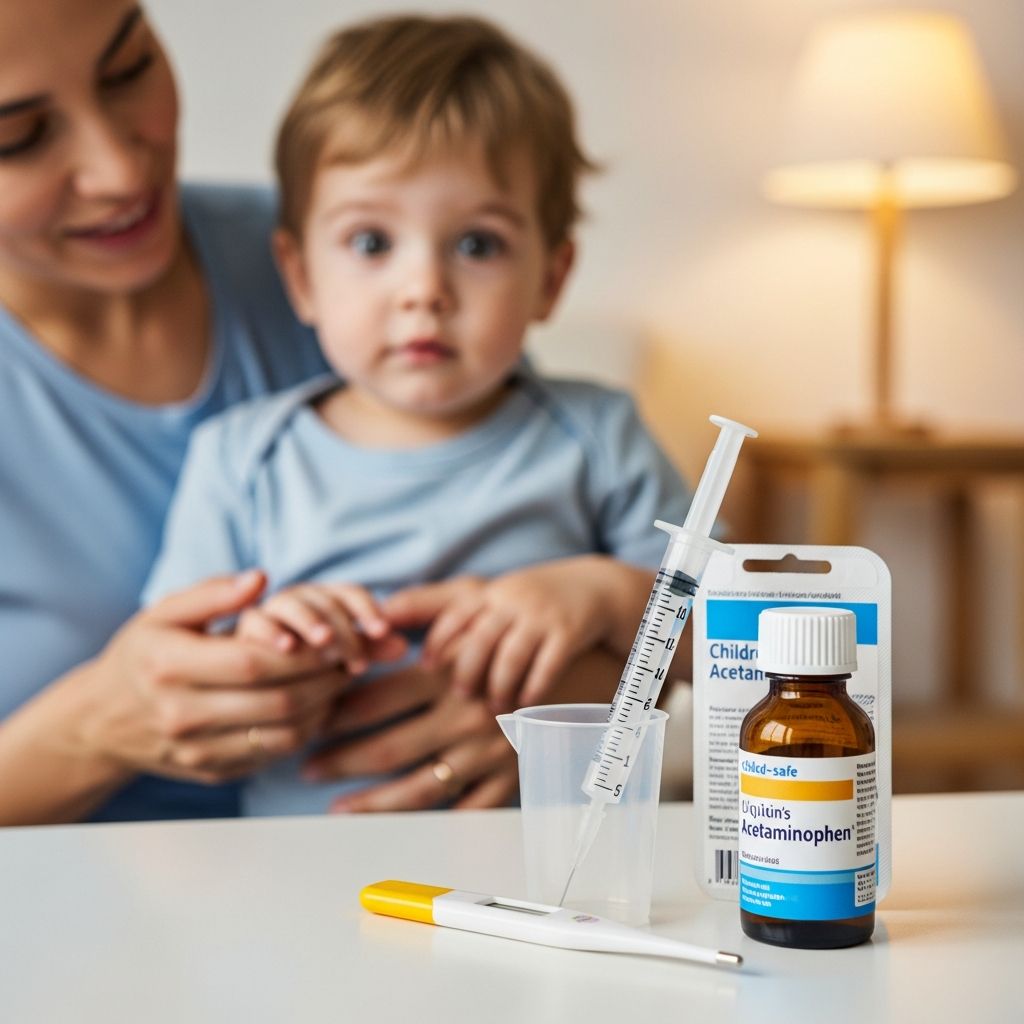
Acetaminophen is one of the most common medicines parents reach for when a child has a fever or pain, and when used correctly, it is considered safe and effective. Understanding how it works, how much to give, and how often to use it helps protect your child from accidental overdose and avoidable side effects.
What Acetaminophen Is and How It Helps Kids
Acetaminophen is a pain reliever and fever reducer that works on the brain’s temperature and pain centers rather than directly on the site of injury or infection. It is often recommended for children because it is gentle on the stomach and can usually be taken with or without food. Unlike some other pain medicines, it does not reduce swelling, but it can make children feel more comfortable while their body fights an illness or recovers from minor injuries.
Common Reasons Parents Use Acetaminophen
Parents typically use acetaminophen when a child is uncomfortable due to fever or mild to moderate pain. It does not cure the cause of the fever or pain, but it can improve how a child feels and help them rest, drink fluids, and recover more easily.
- Fever associated with colds, flu, or minor infections.
- Pain from earaches, sore throat, headache, or toothache.
- Discomfort after immunizations, if recommended by a health professional.
- Mild pain from bumps, sprains, or other minor injuries.
Always remember that fever itself is a sign the immune system is working; the goal is comfort, not necessarily getting the temperature to a specific number.
Forms of Acetaminophen Available for Children
Children’s acetaminophen comes in several forms so that families can choose the option that best matches a child’s age and ability to swallow. Regardless of form, the most important rule is to match the dose to your child’s weight and to check the medicine’s strength on the label.
- Liquid suspension or syrup: Commonly used for babies and younger children who cannot chew or swallow tablets.
- Chewable tablets: Designed for older children who can safely chew and swallow tablets without choking.
- Regular tablets or caplets: Usually intended for older children and adults; these are not appropriate for young children who cannot swallow pills.
- Rectal suppositories: Sometimes used if a child is vomiting, cannot keep medicine down, or refuses oral medication.
Each product may have a different concentration, so never assume that all liquids or tablets contain the same amount of acetaminophen per dose.
Understanding Weight-Based Dosing
Dosing acetaminophen by weight is more accurate than dosing only by age because children of the same age can vary widely in size. Most pediatric recommendations are based on a milligram (mg) amount per kilogram (kg) of body weight, but parents typically use pre-measured household dosing tools to translate this into milliliters (mL) or tablets.
For many children, typical guidance falls within a range such as 10–15 mg of acetaminophen per kilogram of body weight per dose, but the exact dose, maximum daily amount, and interval should always be confirmed with a health professional or the product label. Never guess the correct dose, especially for infants and toddlers; when in doubt, contact your child’s doctor or pharmacist.
Sample Weight-Based Dosing Overview
The table below gives an example of how weight-based dosing might look in practice for standard-strength children’s liquid acetaminophen products. This is for educational illustration only and does not replace professional advice or the directions on your child’s specific medicine.
| Child’s Approximate Weight | Typical Dose Range (mg) | Example Liquid Dose* (160 mg/5 mL) | How Often |
|---|---|---|---|
| 24–35 lb (about 11–16 kg) | 110–240 mg | About 3.5–7.5 mL | Every 4–6 hours as needed |
| 36–47 lb (about 16–21 kg) | 160–320 mg | About 5–10 mL | Every 4–6 hours as needed |
| 48–59 lb (about 22–27 kg) | 220–400 mg | About 7–12.5 mL | Every 4–6 hours as needed |
| 60–71 lb (about 27–32 kg) | 270–480 mg | About 8.5–15 mL | Every 4–6 hours as needed |
*This table is a simplified example. Always check the exact strength of your product and confirm the right dose with a health professional or the package instructions.
Maximum Daily Dosing and Timing
Most guidance recommends spacing acetaminophen doses at least 4 hours apart and not giving more than a limited number of doses within 24 hours. For many over-the-counter pediatric products, the maximum is typically 4 or 5 doses in a 24-hour period, but the precise limit depends on the child’s weight, medicine concentration, and any underlying health issues.
Exceeding the total daily limit can seriously damage the liver, even if each individual dose does not seem very high. Keeping a written dosing log with times and amounts—especially when more than one caregiver is involved—helps prevent accidental extra doses.
Essential Safety Rules for Parents
Good habits around medicine use significantly reduce the risk of problems. Because acetaminophen is widely available and included in many combination products, accidental overdoses often happen when families underestimate how powerful it is.
- Use only one acetaminophen-containing product at a time unless a doctor specifically instructs otherwise.
- Always read the Drug Facts or instructions every time, even if you have used the product before.
- Measure liquid doses with the syringe or cup that comes with the product, not household spoons.
- Confirm whether a product is meant for infants, children, or adults before giving it to a child.
- Check with a health professional before giving acetaminophen to babies younger than 3 months, or any child with chronic liver disease or other medical conditions.
Acetaminophen vs. Ibuprofen in Children
Acetaminophen and ibuprofen are both used for fever and pain in children, but they work differently. Acetaminophen acts on the brain to reduce fever and relieve pain, while ibuprofen also reduces inflammation and may be chosen for swelling from sprains, strains, or ear infections if recommended by a health professional.
Ibuprofen is generally not used in very young infants or in children who are dehydrated or have certain kidney problems. Parents should avoid alternating or combining acetaminophen and ibuprofen frequently without clear instructions from a pediatrician, because mixing schedules can increase the risk of dosing errors.
| Feature | Acetaminophen | Ibuprofen |
|---|---|---|
| Main effects | Reduces pain and fever | Reduces pain, fever, and inflammation |
| Typical dosing interval | Every 4–6 hours as needed | Every 6–8 hours as needed |
| Primary safety concern | Liver damage if overdosed | Stomach and kidney irritation, especially with dehydration |
| Use in infants | Often used with medical guidance, especially in young infants | Not recommended for very young infants without specific medical advice |
Combination Products and Hidden Acetaminophen
Many cold, flu, and multi-symptom products include acetaminophen along with other ingredients like cough suppressants, decongestants, or antihistamines. Giving a child these products at the same time as a separate acetaminophen dose can accidentally double or triple the total amount.
Before giving any new medicine, carefully scan the active ingredient list for the word “acetaminophen” or its abbreviations. If you are uncertain, ask a pharmacist to help you identify whether a product already contains acetaminophen so that you do not overlap therapies.
Recognizing Possible Side Effects
Most children tolerate appropriate doses of acetaminophen very well, but like all medicines, it can cause unwanted effects in some situations. Mild issues such as stomach upset are uncommon and often short-lived, but more serious reactions require urgent care.
- Possible mild symptoms can include nausea, decreased appetite, or general discomfort.
- Serious reactions may involve signs of liver injury such as unusual tiredness, yellowing of the skin or eyes, dark urine, or pain in the upper right side of the abdomen.
- Rarely, allergic-type reactions such as rash, swelling, or trouble breathing can occur and require emergency attention.
Warning Signs of Overdose
Acetaminophen overdose can be accidental, especially when multiple caregivers give medicine or when a child receives more than one product with acetaminophen. Sometimes early symptoms are mild or delayed, which is why prompt evaluation is so important if an overdose is suspected.
- Nausea, vomiting, or loss of appetite that starts several hours after dosing.
- Pale skin, sweating, or unusual tiredness.
- Pain or tenderness in the upper abdomen.
- Yellowing of the skin or eyes, dark urine, or confusion that may appear later.
If you suspect your child took too much acetaminophen, contact emergency services or a poison control center immediately, even if your child seems fine. Early treatment greatly improves the chance of protecting the liver from permanent damage.
Practical Tips for Measuring Doses
Measuring medicine accurately is one of the easiest ways to avoid problems. Household teaspoons and tablespoons can vary in size and usually do not match the exact measurement needed for children’s medicines.
- Use the syringe, dropper, or dosing cup that comes with the product and keep it together with the bottle.
- Check the markings carefully at eye level when measuring liquid.
- For babies and toddlers, give the liquid slowly along the inside of the cheek rather than squirting straight toward the back of the throat.
- Record the time and amount after each dose, especially if more than one adult cares for the child.
Storing Acetaminophen Safely
Because children’s medicine often has a pleasant flavor, curious kids may drink it if they find a bottle left open or within reach. Treat acetaminophen like any other potentially dangerous household product and store it securely.
- Keep all medicines in a high, locked cabinet, out of sight and reach.
- Replace child-resistant caps securely after each use.
- Do not call medicine “candy,” even to encourage a reluctant child to take a dose.
- Dispose of expired or unused medicines according to local pharmacy or community guidelines.
Special Considerations for Infants and Children with Health Conditions
Newborns and young infants process medicines differently than older children, and some may be more vulnerable to side effects. For this reason, acetaminophen use in babies younger than around 3 months should be guided directly by a pediatrician, especially when fever is involved.
Children with chronic liver disease, metabolic disorders, or who take other medications that affect the liver may need lower doses or different treatment plans. Always tell your child’s doctor about any prescription medicines, over-the-counter drugs, and supplements before giving acetaminophen.
When to Call the Doctor About Fever or Pain
Medicine is only part of the picture when caring for a sick or injured child. Sometimes, the pattern of fever or pain itself is a sign that a doctor should evaluate your child, regardless of how well acetaminophen seems to control the discomfort.
- Fever in young infants, particularly under 3 months of age.
- Fever that lasts more than a few days, or returns after going away.
- Severe pain, pain that is getting worse instead of better, or pain that does not improve after several doses.
- Other worrisome symptoms such as difficulty breathing, stiff neck, rash, or persistent vomiting.
Frequently Asked Questions (FAQs)
Can I give my child acetaminophen and ibuprofen at the same time?
Some health professionals occasionally recommend alternating acetaminophen and ibuprofen for certain situations, but this approach can easily lead to confusion about timing and dose. Without clear written instructions from your child’s doctor, it is safer to choose one medicine and use it carefully according to the directions.
Is it okay to wake my child to give another dose?
If your child is resting comfortably and does not appear distressed, it is often reasonable to allow them to sleep and wait until they wake up to reassess the need for medicine. However, if a doctor has given specific instructions due to a particular illness or post-surgery situation, follow that guidance and clarify any questions directly with the medical team.
What if my child spits out or vomits after taking acetaminophen?
If your child spits out a dose immediately, you may be able to repeat some or all of it, but this depends on how much you think was swallowed. When vomiting occurs after dosing, it is usually best to contact a health professional before giving more, because repeated doses may add up if some medicine was absorbed before the vomiting started.
Can I use adult acetaminophen tablets for my child?
Some older children may be able to take adult-strength tablets safely, but only with correct weight-based dosing and when they can swallow pills reliably. For most younger children, dedicated pediatric products are safer and easier to measure; never break or crush adult tablets for a child without guidance from a pharmacist or doctor.
How long can I keep giving acetaminophen for the same illness?
Short-term use for a few days is common during colds, ear infections, or after minor injuries, but prolonged or frequent use warrants medical evaluation. If your child still needs regular doses beyond a few days, or if new symptoms appear, contact your child’s health care provider to check for underlying problems and to discuss updated treatment options.
Key Takeaways for Parents
- Acetaminophen is effective for reducing fever and relieving mild to moderate pain in children when used at the correct dose and interval.
- Weight-based dosing, accurate measurement, and avoiding multiple products with acetaminophen are essential to prevent liver damage and overdose.
- Keep a written record of doses, store medicine securely, and seek medical help quickly if you suspect an overdose or your child’s symptoms are severe or persistent.
With thoughtful, informed use, acetaminophen can be a helpful tool in your home medicine cabinet, giving your child relief while you and your health care team focus on the cause of their illness or discomfort.