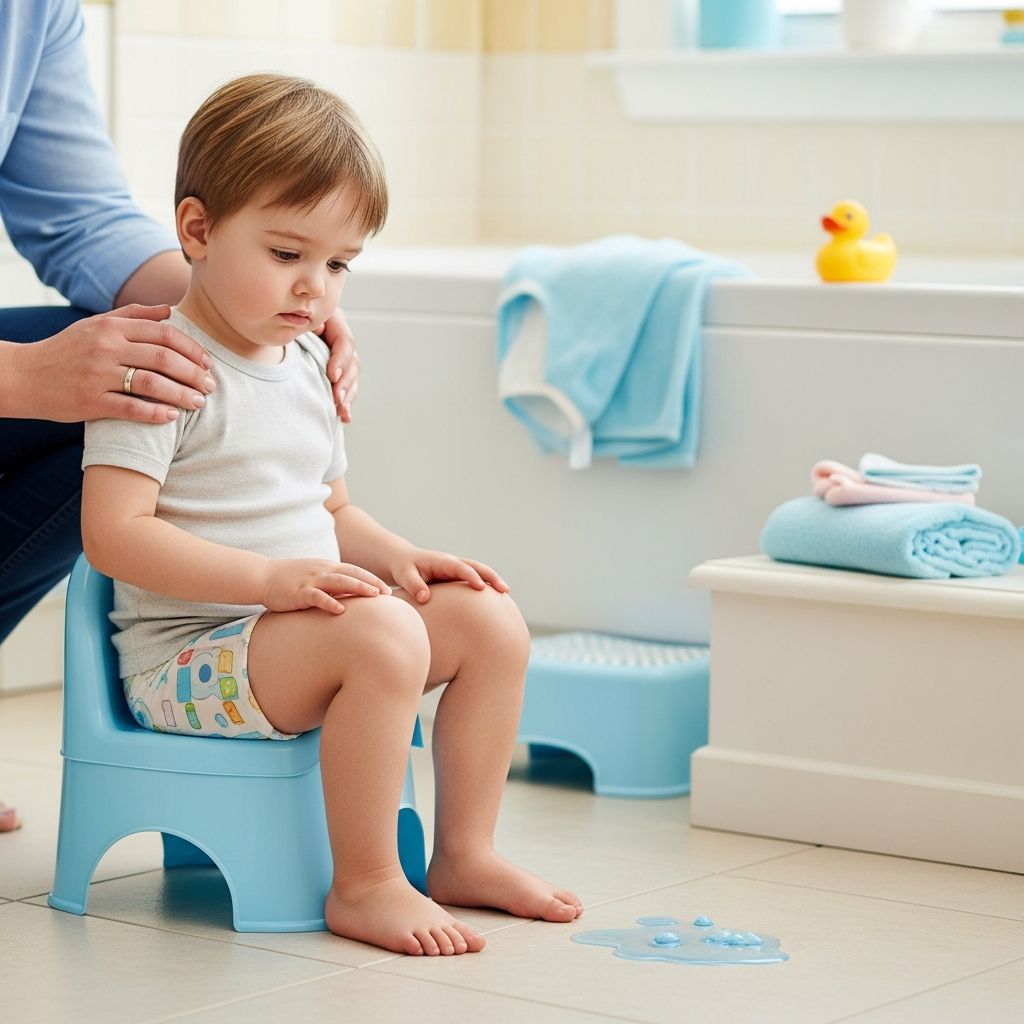
Just when it seemed like diaper days were over, your three-year-old suddenly starts having wet underwear, frequent drips, or full-on potty accidents again. This can be confusing and stressful, but it is almost always solvable with calm attention, empathy, and a bit of detective work.
This guide explains common reasons for urine leakage and accidents in three-year-olds, how to rule out medical concerns, and how to respond in a way that protects your child’s confidence and your relationship.
Why Your Three-Year-Old May Be Leaking Urine or Having Accidents
Preschoolers are still learning to read their body signals and manage big feelings. A child who was mostly dry can suddenly begin leaking urine for reasons that are physical, emotional, or environmental.
- Bladder control is still developing: Three-year-olds can usually stay dry for stretches, but their timing and awareness are not yet as steady as an older child.
- Distraction and play: Many children simply do not want to stop playing to use the bathroom until it is almost too late.
- Changes or stress: A move, new sibling, daycare change, or tension at home can show up as potty accidents.
- Possible constipation: A full rectum can press on the bladder and cause frequent urges or dribbling.
- Medical issues: Urinary tract infections or other conditions can cause urgency, burning, or leakage and always deserve medical attention.
Understanding which of these is most likely for your child is the first step toward a solution.
Common Patterns of Potty Accidents at Age Three
Not all accidents look the same. Paying attention to the pattern can offer important clues about what is going on.
| Pattern you notice | What it might suggest | What to observe next |
|---|---|---|
| Small leaks or damp underwear several times a day | Waiting too long, distraction, or possible mild constipation | How often your child pees, stool pattern, and whether they rush or dance around before going |
| Full accidents after being dry for months | Toilet training regression due to stress, change, or fatigue | Recent changes in routine, sleep, childcare, family dynamics |
| Sudden urgency with pain or burning | Possible urinary tract infection or other medical condition | Fever, odor, complaints of pain, changes in frequency or color of urine |
| Frequent tiny pees or hesitancy, with hard stools or infrequent bowel movements | Constipation affecting bladder function | How often your child poops, stool consistency, straining or withholding behavior |
| Accidents mainly at daycare or only at home | Environment-specific stress, routines, or power struggles | Differences in bathroom rules, schedules, and emotional climate in each setting |
When to Call the Doctor About Urine Leakage
Most potty accidents at three are not serious, but some signs call for medical guidance. It is always appropriate to ask a health professional if you are unsure.
- Your child complains of pain, burning, or itching when peeing.
- There is blood in the urine or a strong, unusual odor.
- Your child suddenly needs to pee very frequently, with only small amounts each time.
- Accidents are constant despite frequent bathroom trips and calm reminders.
- There is a history of urinary tract problems, kidney issues, spinal anomalies, or developmental conditions.
Before your visit, it can help to keep a simple log of how often your child pees, how much they drink, when accidents happen, and what their stools are like. This gives the doctor a clearer picture and often speeds up getting help.
Checking for Constipation and Its Hidden Role
Parents usually think of constipation as rare, dry stools or skipped days, but many constipated preschoolers still poop daily. The problem is the stool can be large, hard, or only partially emptied, leaving the rectum stretched and full.
- Watch for large, hard, or painful stools or streaks of stool in underwear.
- Notice if your child avoids pooping, hides to stool, stands on tiptoe, or clenches.
- Ask your doctor how to soften stools with diet, fluids, or medications when needed.
When constipation improves, pee accidents often decrease because the bladder is no longer squeezed by a packed rectum.
Responding Calmly: Your Attitude Matters More Than the Accident
For a three-year-old, wet pants already feel uncomfortable, embarrassing, or confusing. A harsh reaction can turn a simple accident into a shame-filled memory or a power struggle.
Helpful principles to keep in mind:
- Accidents are not misbehavior: They are signals and information, not proof of laziness or defiance.
- Your calm teaches safety: When you handle accidents without anger, your child learns that their body is not something to be ashamed of.
- Focus on solutions, not blame: The goal is dry, confident days, not perfect performance today.
A simple, neutral script like, “Oops, your pants are wet. Let’s get you clean and comfy,” keeps things light while still addressing the issue.
Practical Daily Strategies to Reduce Potty Accidents
Once medical issues are ruled out, small adjustments to routine, environment, and communication can significantly reduce leakage and accidents.
1. Build Predictable Bathroom Routines
- Offer bathroom trips at natural transition times: after waking, before leaving the house, before meals, after snack, and before sleep.
- Use gentle invitations instead of commands: “Let’s try a quick pee before we go outside.”
- Keep sits short and pressure-free: a minute or two, then praise the effort rather than the result.
Predictable routines reduce the need for constant reminders and help your child’s body get used to peeing at regular intervals.
2. Make It Easy to Get to the Toilet
- Use a child-sized potty or a toilet insert plus a stable step stool for security.
- Choose clothing that is easy to pull down quickly: elastic waistbands, no tricky snaps or belts.
- Keep the bathroom light on or use a nightlight if your child is nervous about dark rooms.
When the physical setup is simple and safe, children can focus on listening to their bodies instead of worrying about falling or struggling with clothing.
3. Watch for Early Body Signals
Many children do not realize they need the toilet until the sensation feels urgent. As a parent, you can gently point out pre-accident signs without shaming.
- Notice leg crossing, squirming, or grabbing at the crotch and calmly ask, “Is your pee trying to come out?”
- Invite a bathroom break at the first sign of discomfort rather than waiting for an accident.
- Use a kind tone and a matter-of-fact attitude to keep your child from feeling judged.
Over time, this helps your child link early sensations with the action of using the toilet.
4. Adjust Fluids Without Restricting
Children need enough water for healthy bladders and bowels, but timing can matter.
- Offer water regularly during the day instead of large amounts all at once.
- Limit sugary drinks and juice, which can irritate some children’s bladders and lead to frequent urges.
- Encourage a bathroom trip 20–30 minutes after larger drinks.
A consistent pattern of steady hydration and regular toilet visits is easier on the bladder than big bursts of fluids with infrequent trips.
Protecting Your Child’s Confidence and Dignity
How you talk about accidents can either build resilience or create shame. At three, children are just forming beliefs about their bodies and their worth.
- Avoid labels such as “baby,” “naughty,” or “lazy” in connection with accidents.
- Separate your child’s identity from their behavior: “You are learning, and your body is still figuring this out.”
- Allow your child to help with cleanup in a simple, respectful way (placing wet clothes in a hamper, choosing fresh underwear).
Involving your child in the solution, rather than punishing them, communicates that they are capable and supported.
Sample Gentle Phrases to Use During Accidents
In stressful moments, having a few ready phrases helps you stay grounded and kind. You can adjust the wording to match your own voice.
- “Accidents happen. Let’s get you into dry clothes.”
- “Looks like you didn’t feel the pee in time. Your body is still learning.”
- “Next time you feel that funny feeling in your tummy or between your legs, tell me and we’ll go together.”
- “Your pee goes in the potty. I’m here to help you remember.”
- “You are safe. We can always clean up a mess.”
These kinds of statements calm your child’s nervous system, strengthen connection, and keep the door open for cooperation.
Handling Setbacks After Major Life Changes
Potty regressions often show up around big changes: a new sibling, moving homes, starting preschool, or parental separation. Accidents can be your child’s way of expressing, “Everything feels different and I’m not sure I’m safe.”
- Increase one-on-one connection: extra snuggles, special playtime, and predictable rituals.
- Explain changes in simple, honest terms and invite questions.
- Loosen expectations temporarily: more reminders, more patience, and possibly a short-term return to training pants if it reduces pressure.
When your child feels emotionally secure and connected, potty skills generally return to their previous level without force.
If Power Struggles Have Already Started
Sometimes, repeated battles over the toilet lead children to refuse to go, hold urine, or have accidents as a way of asserting control. Fortunately, you can reset the dynamic by shifting your role.
- Stop lecturing, bribing, or threatening about the potty.
- Return responsibility to your child’s body while staying supportive: “You are in charge of when the pee comes out. My job is to help you.”
- Focus on connection, routines, and environment rather than pressure and consequences.
If a power struggle is deeply entrenched or accidents are severe, consider asking a child therapist or pediatric specialist for guidance tailored to your family.
Quick-Reference Action Plan for Parents
When your three-year-old is leaking urine or having frequent accidents, the following step-by-step approach can help you move from worry to effective action.
- Stay calm: Remind yourself that accidents are common at this age and do not mean you failed.
- Observe patterns: Note when accidents occur, how much your child drinks, and their bowel habits for a few days.
- Rule out medical concerns: Talk with a healthcare professional if there is pain, dramatic change, or constant leakage.
- Support healthy bowels: Ask about constipation and how to keep stools soft and regular.
- Strengthen routines: Add calm, predictable bathroom visits throughout the day.
- Adjust environment: Make toilets accessible, clothing easy, and bathrooms less intimidating.
- Protect connection: Use gentle language, avoid shame, and spend regular playtime together unrelated to potty training.
Following these steps consistently over weeks (not just days) gives your child’s body and nervous system time to settle and succeed.
Frequently Asked Questions About Three-Year-Old Potty Accidents
Is it normal for a three-year-old to still have accidents?
Yes. Many fully toilet-trained preschoolers still have occasional daytime accidents, especially when tired, distracted, or adjusting to new environments. Consistent, gentle routines and a calm response typically reduce accidents over time.
Should I put my child back in diapers or pull-ups?
That depends on how your child reacts. Some children feel relieved by temporary protection during intense regressions; others feel discouraged or “like a baby.” You can choose to use training pants for outings or naps while still inviting regular toilet trips and emphasizing that their body is learning.
What if my child refuses to sit on the potty?
Refusal often signals fear, power struggles, or feeling pushed too hard. Instead of forcing, step back, focus on connection, and invite very short, low-pressure sits. You can read a quick story, sing a song, or even allow your child to sit on the potty fully clothed at first to rebuild safety.
How long should I wait before worrying that this is not just a phase?
If your child has frequent accidents for more than several weeks despite calm routines, or if there are concerning symptoms like pain, constant dribbling, or significant behavior changes, consult a healthcare professional. Earlier support is easier than waiting until everyone is exhausted and upset.
How can I cope with my own frustration?
Caring for a preschooler is demanding, and repeated accidents can feel overwhelming. It helps to remind yourself that your child is not doing this to you; they are doing the best they can with the skills and nervous system they have right now. Prioritize your own rest where possible, share responsibilities with other caregivers, and talk with trusted friends or professionals about your feelings.
Supporting Your Child, One Accident at a Time
Potty accidents and urine leakage at three are rarely a sign that something is “wrong” with your child. Most of the time, they are a temporary bump on the path of development, especially when families respond with curiosity instead of criticism.
By looking for patterns, ruling out medical concerns, building gentle routines, and protecting your child’s sense of dignity, you help them grow into a confident, capable bathroom user—and preserve your connection in the process.